When to start baby proofing your home
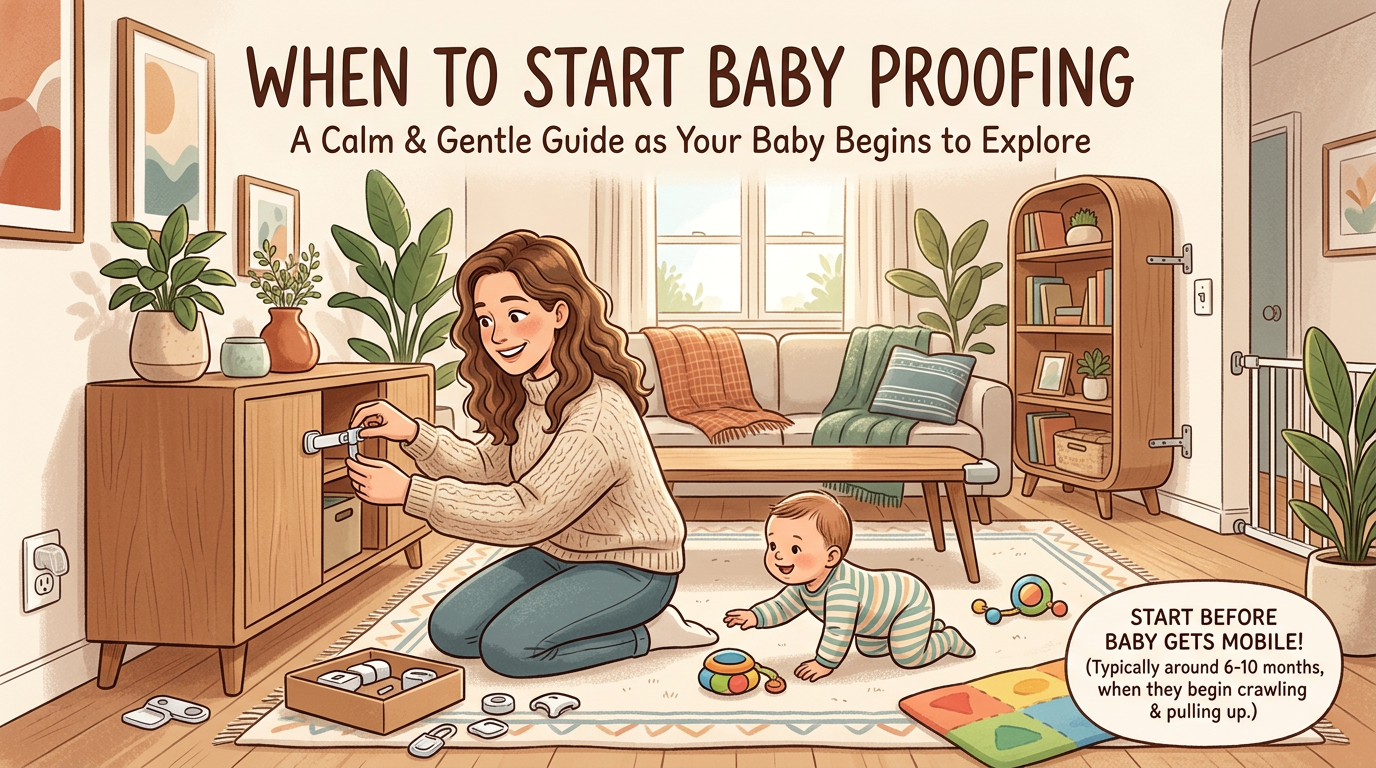
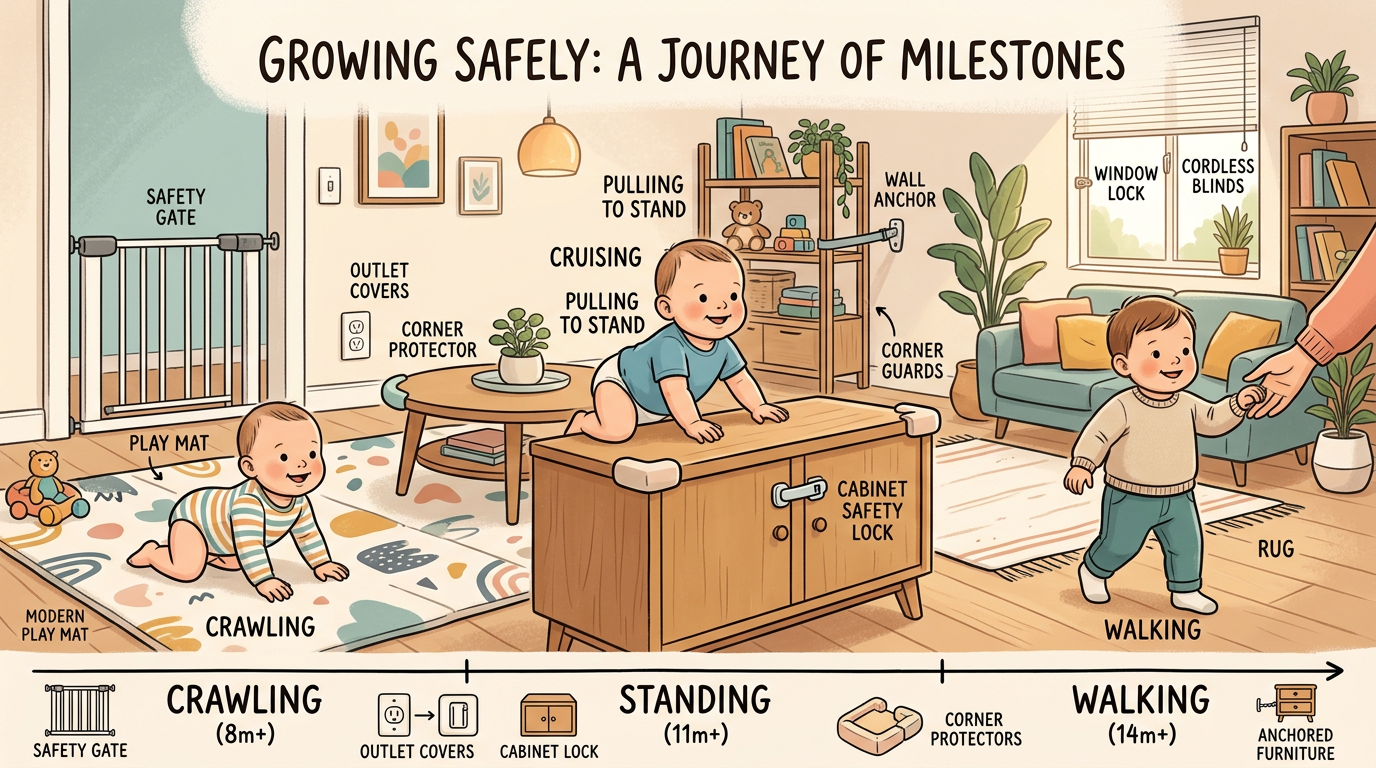
The best time to start baby proofing is before your baby is fully mobile. Once a child can roll, scoot, crawl, or pull to stand, household hazards stop being theoretical and become reachable within days. Parents usually feel behind because development jumps happen quickly, especially around eight to twelve months.
A strong baby proofing checklist does not try to solve every future problem in one weekend. It helps you secure the highest-risk hazards first, then add room-by-room improvements as your child learns new skills. Think in layers: falls and tip-overs first, poison and burn risks second, then access control and everyday convenience upgrades.
This guide is built for a typical family home, apartment, condo, or rental. If you have unusual layouts, pets, a pool, older siblings, or frequent visitors, use this checklist as the base and tighten the plan anywhere your child could gain access faster than expected.
Quick checklist
- ✓Anchor heavy furniture and TVs before your child starts pulling up.
- ✓Install stair gates or block unsafe transitions before crawling starts.
- ✓Move medications, cleaners, and choking hazards out of reach immediately.
- ✓Check every room from floor level because that is how your child will experience it.
Living room checklist: focus on falls, cords, and tip-overs
The living room often looks harmless because it is familiar, but it usually contains the highest number of reachable hazards.
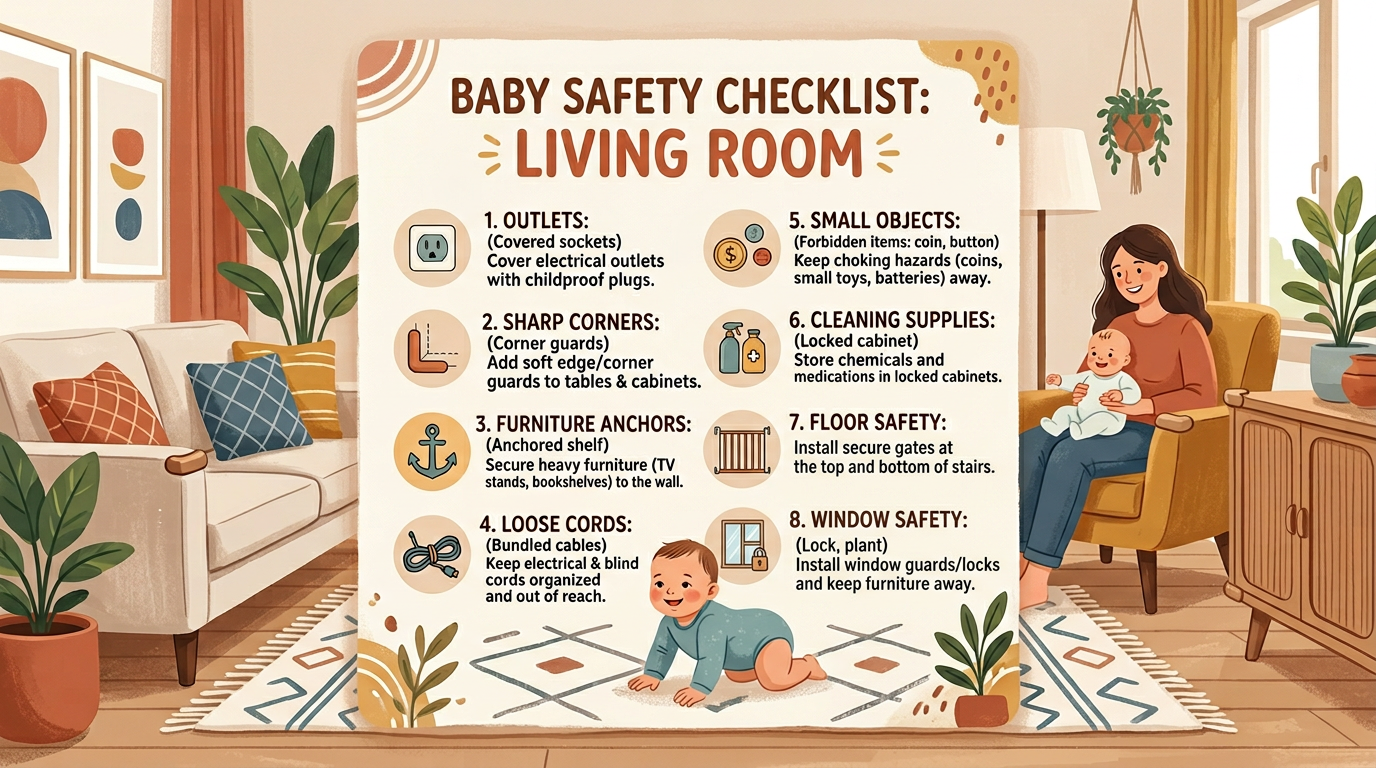
Coffee tables, TV stands, floor lamps, blind cords, remotes with button batteries, bookshelves, and decorative objects all live in the same room where babies first practice pulling up. That combination makes the living room one of the most important places to audit early.
Start with anything that can fall. Dressers, media consoles, freestanding TVs, and bookshelves should be anchored or mounted securely. CPSC and Safe Kids guidance consistently emphasize furniture tip-over prevention because children climb faster than adults expect and a single unstable piece can cause severe injury.
After that, clear the low zone. Remove breakables, choking hazards, and anything with strings, cords, or batteries from tables and shelves within reach. Then add corner protection where sharp surfaces are unavoidable and cover accessible outlets and loose wires.
Quick checklist
- ✓Anchor bookshelves, dressers, and televisions.
- ✓Wind or secure blind cords and lamp cords out of reach.
- ✓Add corner guards to sharp tables, hearths, and media stands.
- ✓Cover unused outlets and keep power strips behind furniture.
Kitchen checklist: control access to heat, sharp tools, and chemicals
The kitchen has high-consequence hazards, so the goal is controlled access, not perfect convenience.
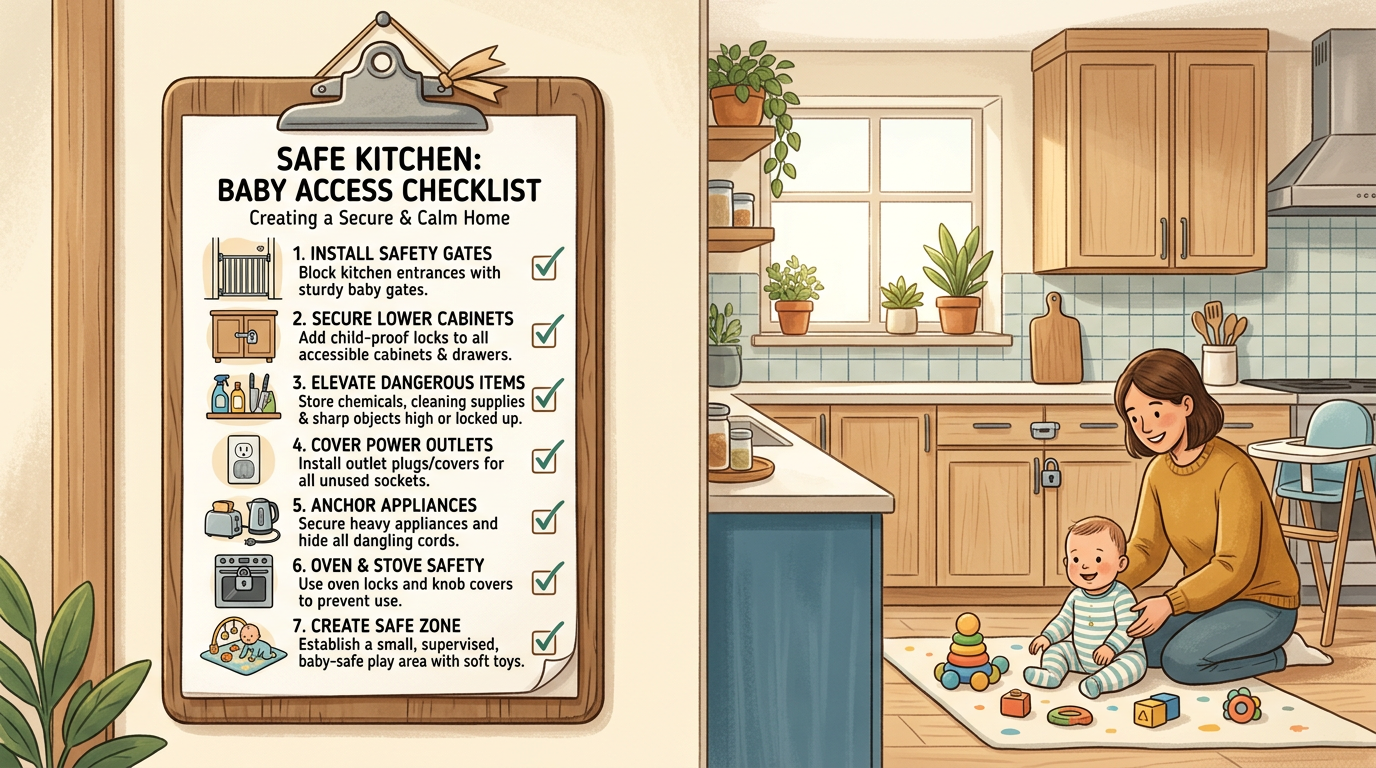
Cabinets and drawers are tempting because they open, close, and often contain exactly what toddlers should not touch: knives, cleaners, dishwasher pods, and small gadgets. Lock low storage first and assume your child will test every handle repeatedly.
The stove area needs its own plan. Knob covers, oven locks, and clear rules about turning pot handles inward all reduce the chance of burns. Keep hot drinks, appliances with cords, and heavy cookware away from the edge of counters. Babies who cruise along cabinets can grab farther than most adults realize.
Food zones matter too. Trash cans, pet food, alcohol, and vitamins should be treated like hazards, not neutral household items. If something would be a serious problem in your child’s mouth, move it higher or lock it up.
Quick checklist
- ✓Install locks on low cabinets and drawers.
- ✓Use stove knob covers and secure the oven door if needed.
- ✓Move cleaners, alcohol, dishwasher pods, and sharp tools out of reach.
- ✓Keep appliance cords, tablecloths, and hot items away from edges.
Bathroom checklist: prevent drowning, poisoning, and scalds
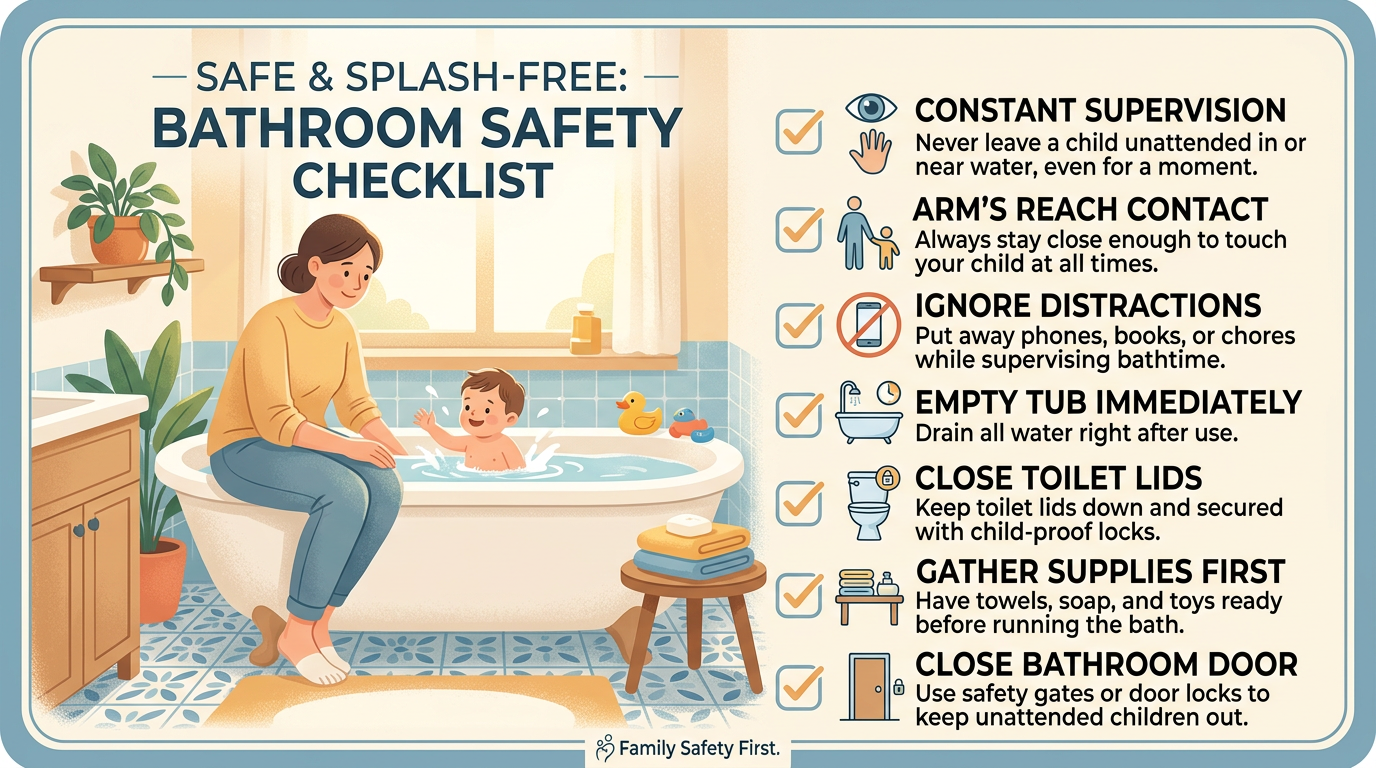
Bathrooms combine slippery floors, hard edges, water access, medications, cosmetics, and cleaning products in one compact space. Because the room is small, it is easy to underestimate how much danger is packed into it.
Lock the toilet, secure medicine and cleaning storage, and use non-slip surfaces for bath time and transitions out of the tub. Set water heater temperature thoughtfully and test tap water before bathing. Even a short lapse in supervision around standing water is too much with babies and toddlers.
Look beyond the tub. Razor cartridges, hair tools, mouthwash, medications in purses, and laundry pods stored nearby can all become fast-access hazards if the door is open or the room is left unattended.
Quick checklist
- ✓Use a toilet lock and keep the bathroom door controlled.
- ✓Store medications and cleaners high up or locked.
- ✓Add a spout cover and non-slip surfaces near the tub.
- ✓Check water temperature and never rely on quick reactions around water.
Bedroom, stairs, windows, and doors: block access before curiosity turns into climbing
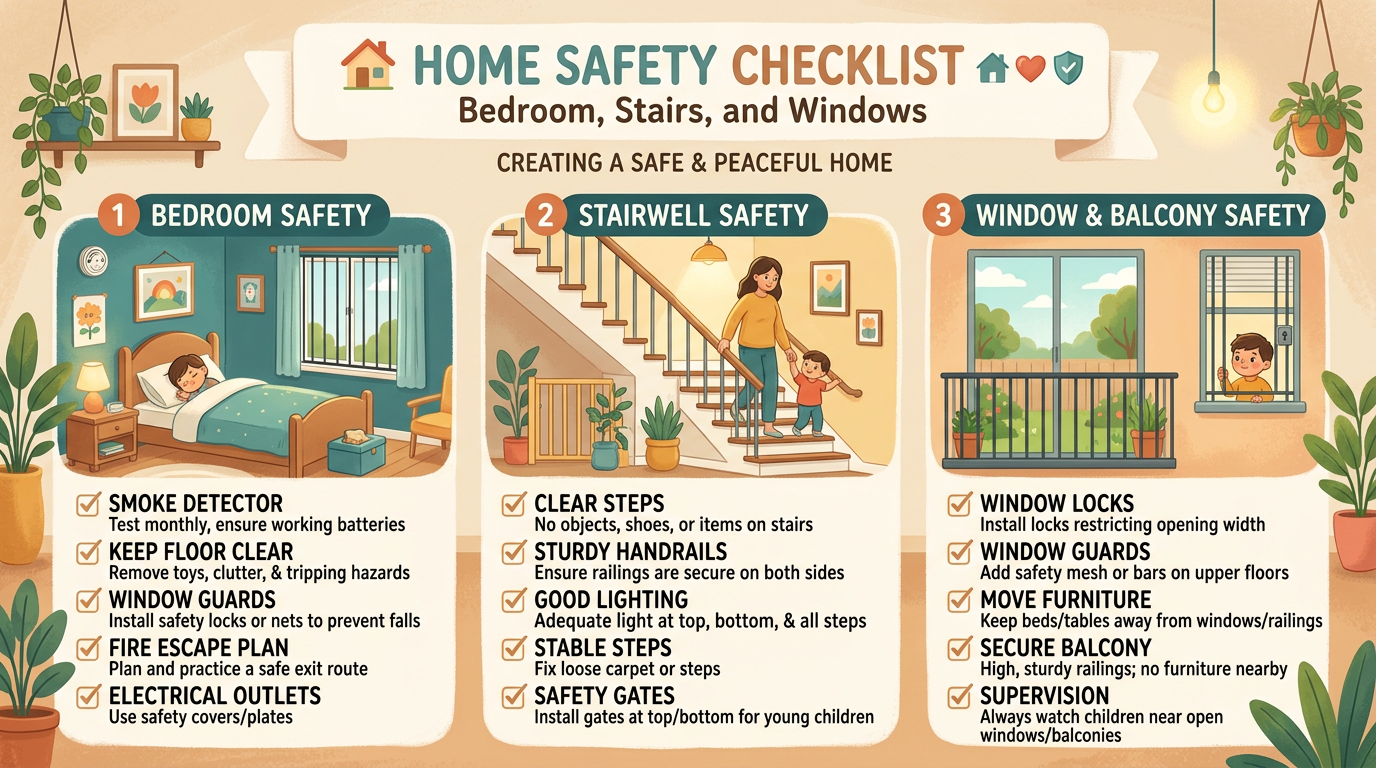
Bedrooms often contain dressers, unstable decor, cords, chargers, laundry baskets, and window hazards. Anchor furniture, secure window access, and remove climbable temptation near windows. Nursery safety matters just as much after the newborn stage as it does before birth.
Stairs and transitions deserve immediate attention once your baby starts chasing movement around the house. Gates at both the top and bottom of stairs create a safer flow, but product choice matters. CPSC guidance warns that only wall-mounted gates should be used at the top of stairs, and pet gates are not a substitute for child safety gates.
Doors create finger-pinch injuries and give toddlers access to rooms that are not yet secured. Use lever locks, pinch guards, and intentional closed-door habits to keep unsafe spaces off limits while your child is still learning boundaries.
Quick checklist
- ✓Anchor bedroom furniture and use window locks or guards where appropriate.
- ✓Install approved child gates at the top and bottom of stairs.
- ✓Use wall-mounted hardware at the top of stairs.
- ✓Add pinch guards or lever locks to doors leading to unsafe spaces.
How to turn this checklist into a realistic weekend plan
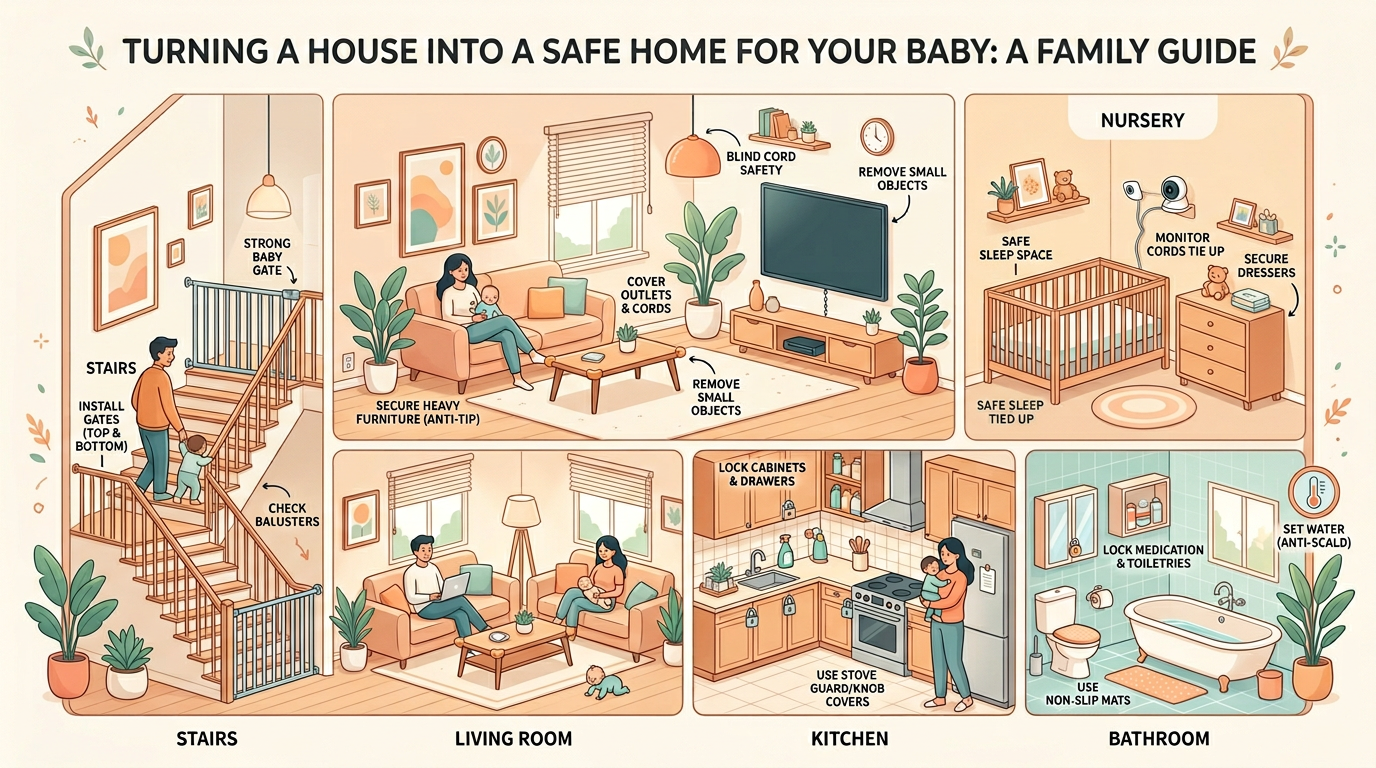
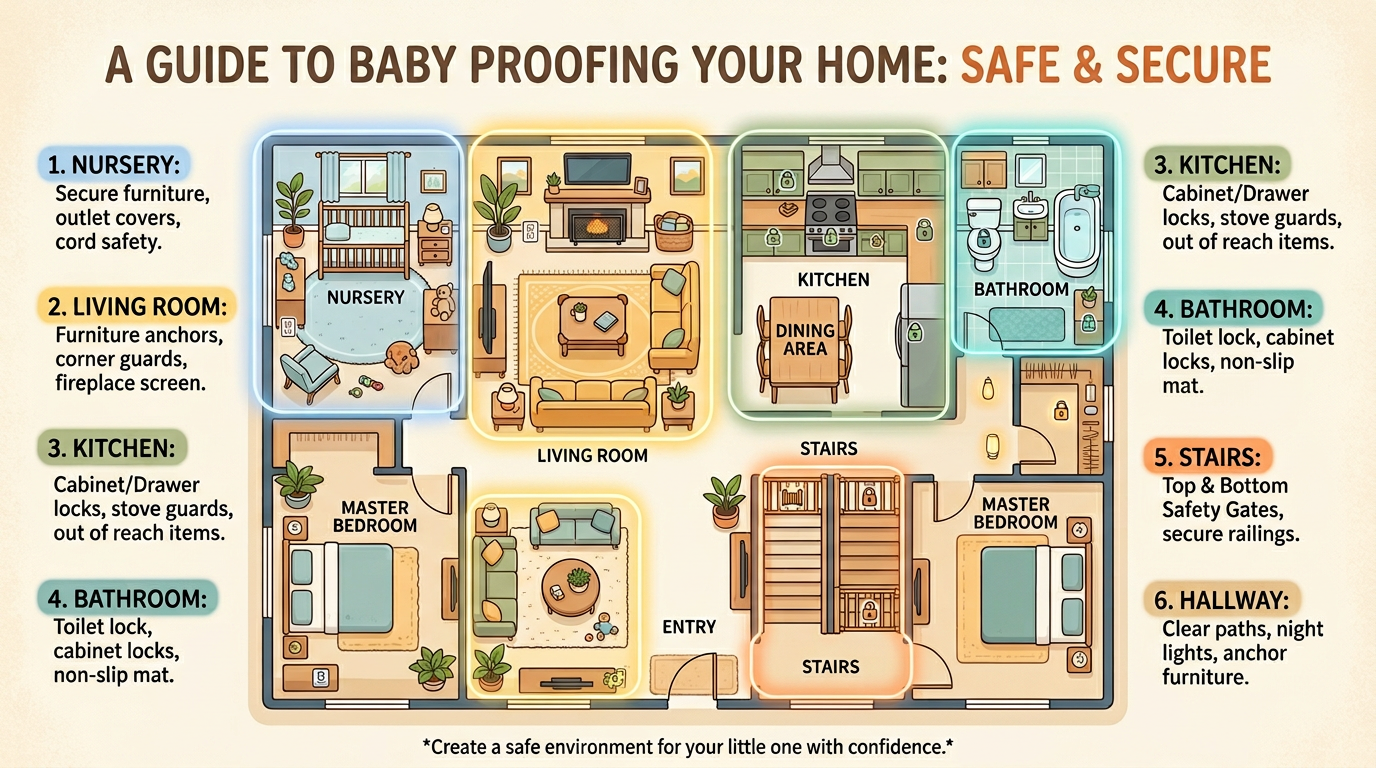
If your home still feels overwhelming, do not try to baby proof everything at once. Start with the routes your child uses every day: the room where they play, the kitchen, the bathroom, and the stairs. Those changes produce the biggest risk reduction fastest.
Next, walk the home once during daylight and once after bedtime. Daytime shows floor hazards and climbing paths; evening highlights cords, charging stations, and rooms that are usually left open. Make a short punch list and install the highest-risk items first.
Finally, keep revisiting the checklist every few months. Baby proofing is not a one-time event. It changes as your child grows from crawler to early walker to determined climber, and the safest homes are the ones that keep adapting.
Quick checklist
- ✓Secure your most-used rooms first.
- ✓Buy only the products needed for the next development stage.
- ✓Reassess after each new mobility leap.
- ✓Treat grandparents' homes, rentals, and travel spaces as separate safety checklists.
Frequently asked questions
Start with tip-over risks, stairs, poisons, burns, and water access. In practical terms, that usually means anchoring furniture, adding gates, locking low cabinets, controlling bathroom access, and moving dangerous items out of reach.
Start before your baby is crawling. Many families begin the basic safety pass around the time rolling and scooting become consistent, then add more controls before pulling to stand and cruising.
You should secure every space your child can enter or reach, even if it is not meant to be a play area. Doors get left open, older siblings move between rooms, and curious toddlers do not respect the original plan.
The kitchen, bathroom, living room, and stair areas usually deserve the earliest attention because they contain the highest mix of heat, water, heavy furniture, and reachable dangerous objects.
Yes. Renters often rely more on adhesive locks, removable cord control, pressure-mounted gates for low-risk openings, and furniture anchoring methods that fit lease constraints. You still need the same safety priorities, but the installation methods may change.
Featured products
Affiliate linksProducts that support this guide
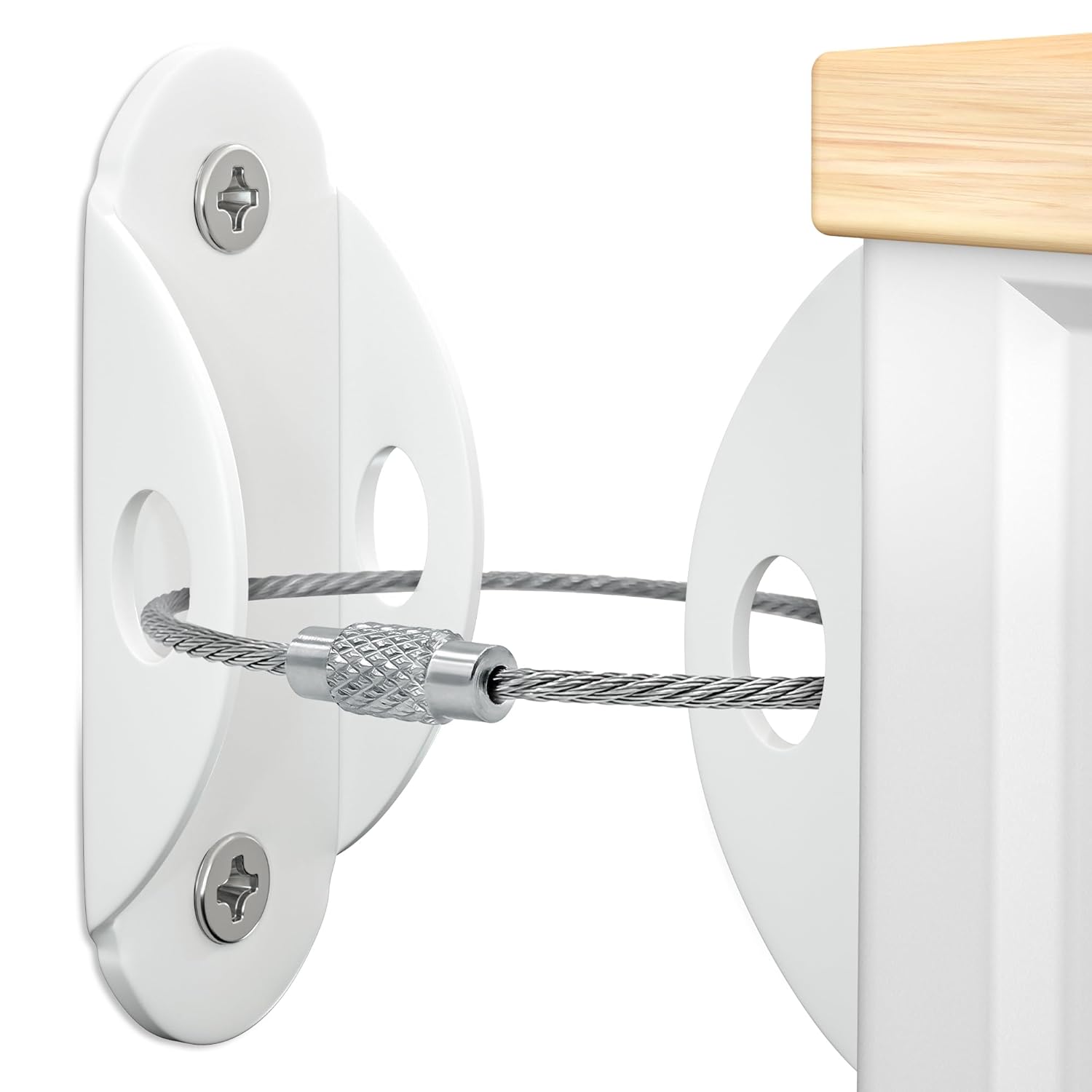
Booda Brand Furniture Anchors (10 Pack) Anti Tip Straps
Steel anti-tip straps for tall furniture and televisions, sold as a multi-pack so you can do a whole room in one afternoon. Tip-overs are one of the most common serious household injuries for toddlers, and we recommend anchoring anything taller than a child even if it feels stable when you push on it. The included hardware works for wood studs and most wall anchors; for plaster or masonry you may need different fasteners.
View product→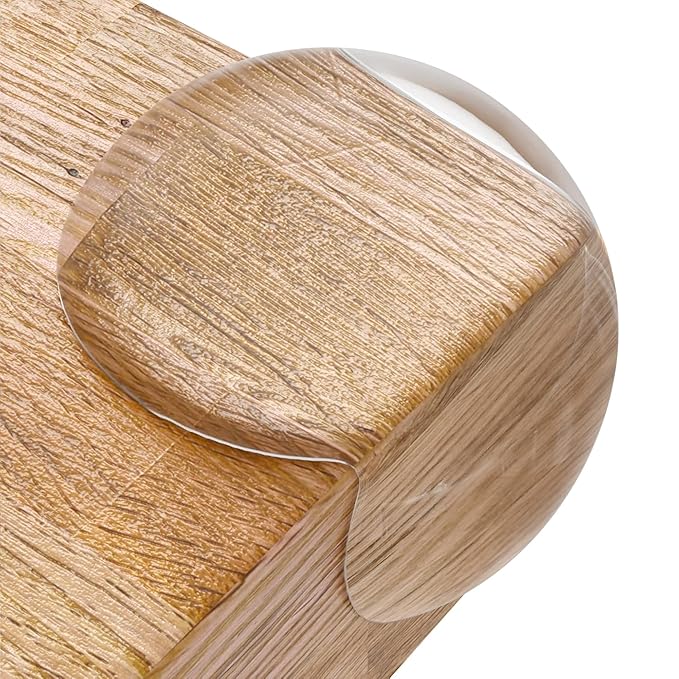
12-Pack Corner Protectors Baby Proof, Furniture Corner and Edge Safety Bumpers
Soft foam corner guards with 3M adhesive backing to cushion sharp furniture edges.
View product→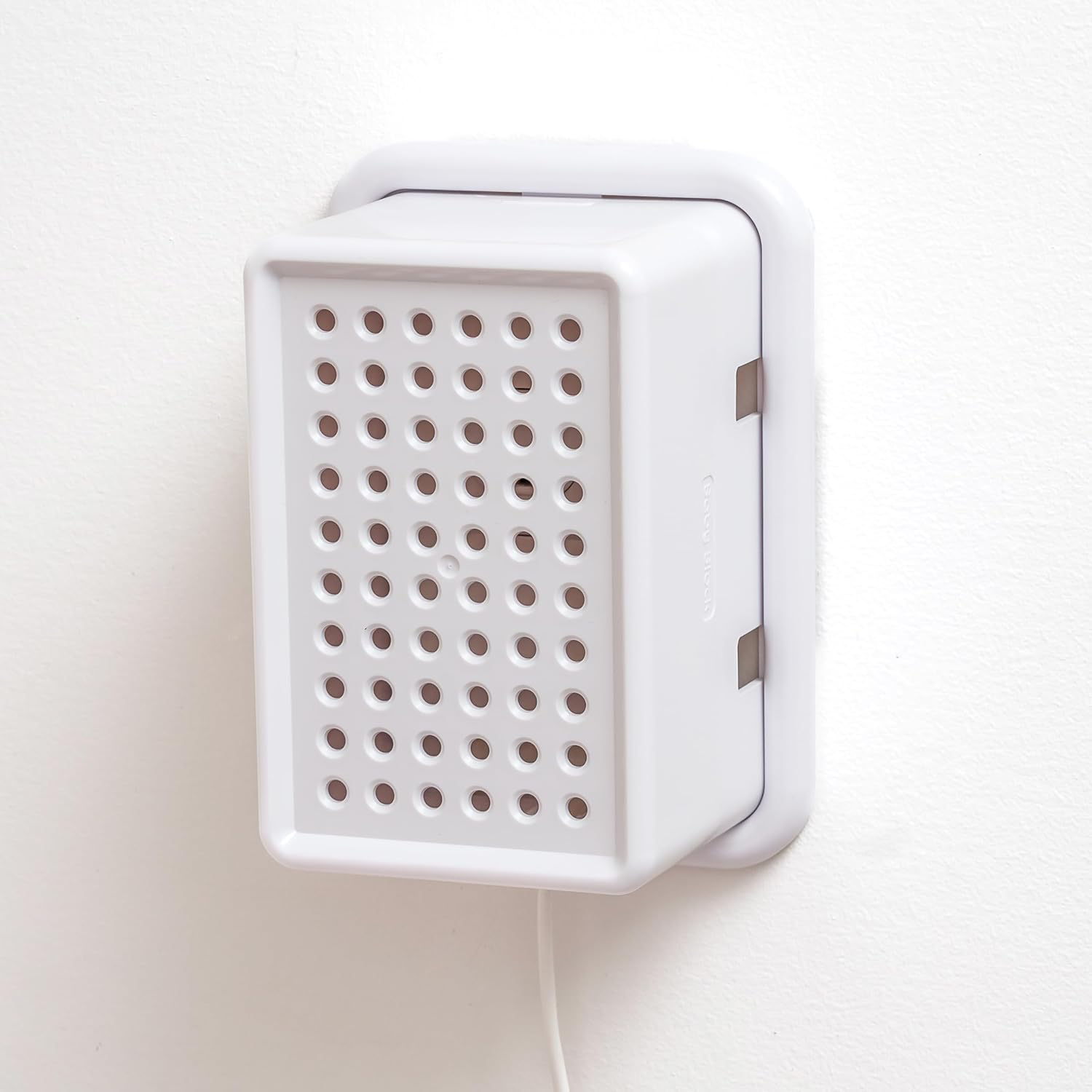
Outlet Plug Covers (24-Pack) Childproof Socket Protectors
Simple press-fit outlet caps that block unused electrical sockets from curious little fingers.
View product→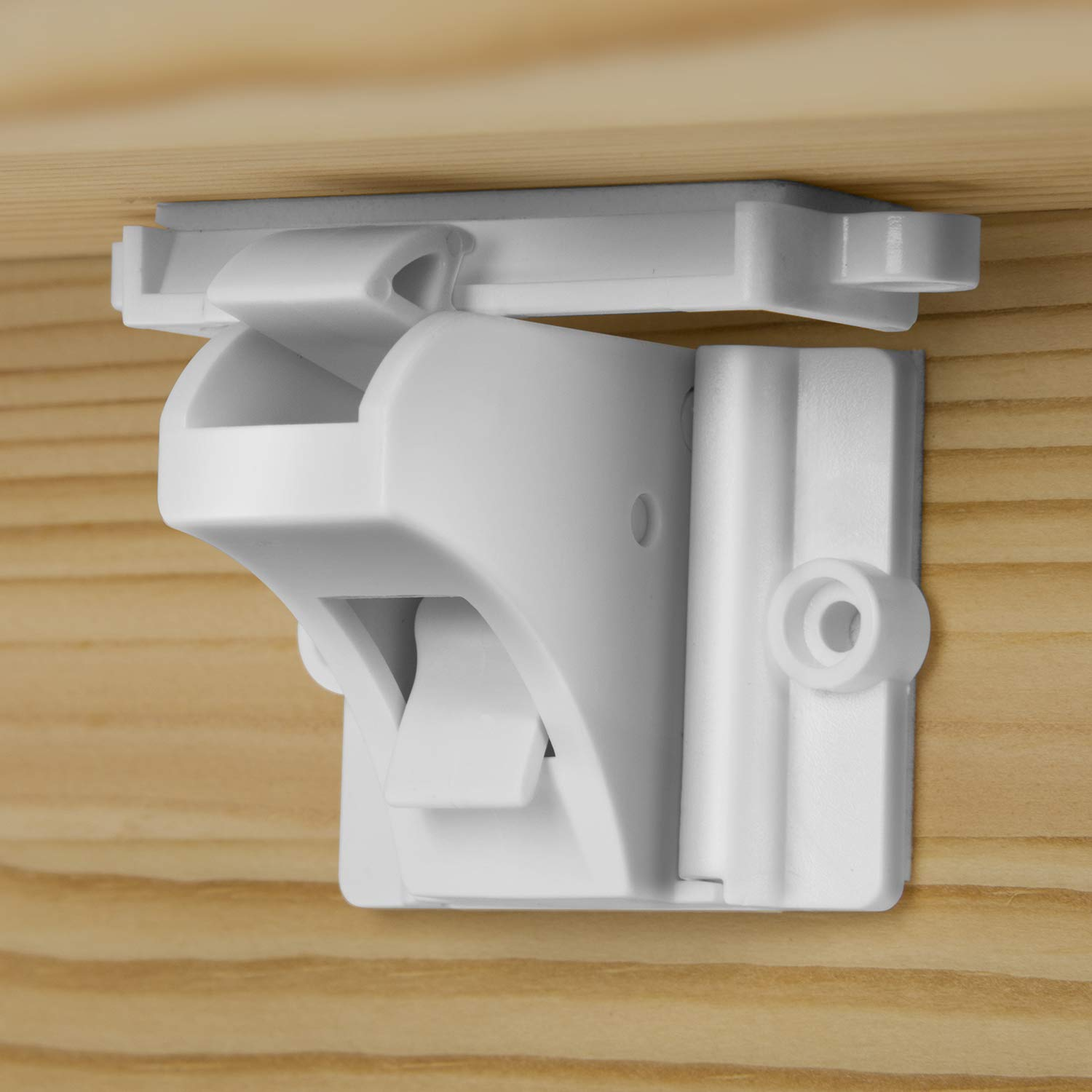
Vmaisi 20 Pack Magnetic Cabinet Locks Baby Proofing
Hidden magnetic cabinet locks that install inside cabinets and drawers for a clean look. Opened with a magnetic key, adhesive installation with no drilling required. 20-pack with keys included.
View product→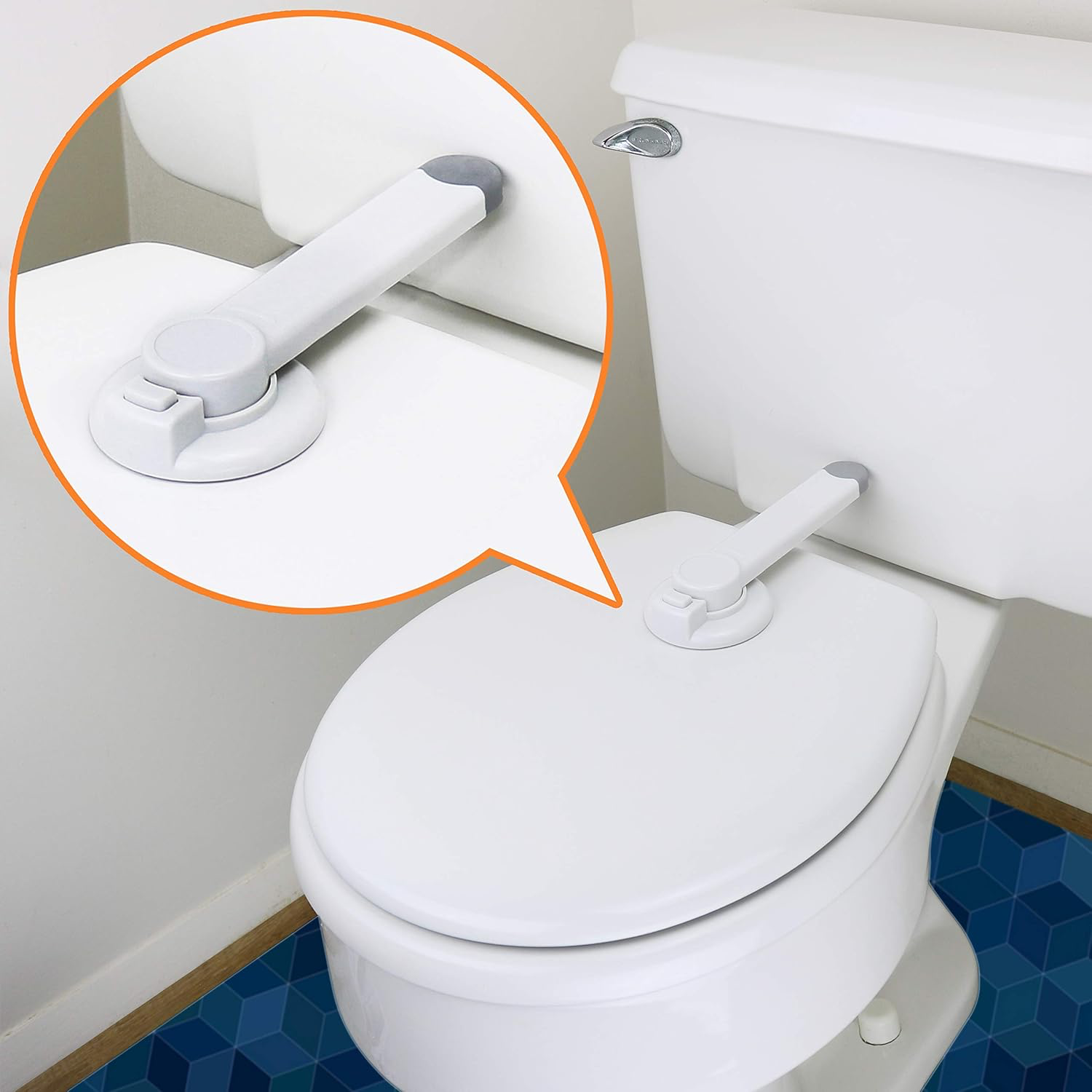
Wappa Baby Toilet Lock
Adhesive toilet lid lock that keeps curious toddlers from opening the toilet. No tools needed for installation, uses strong 3M adhesive, fits most standard toilets.
View product→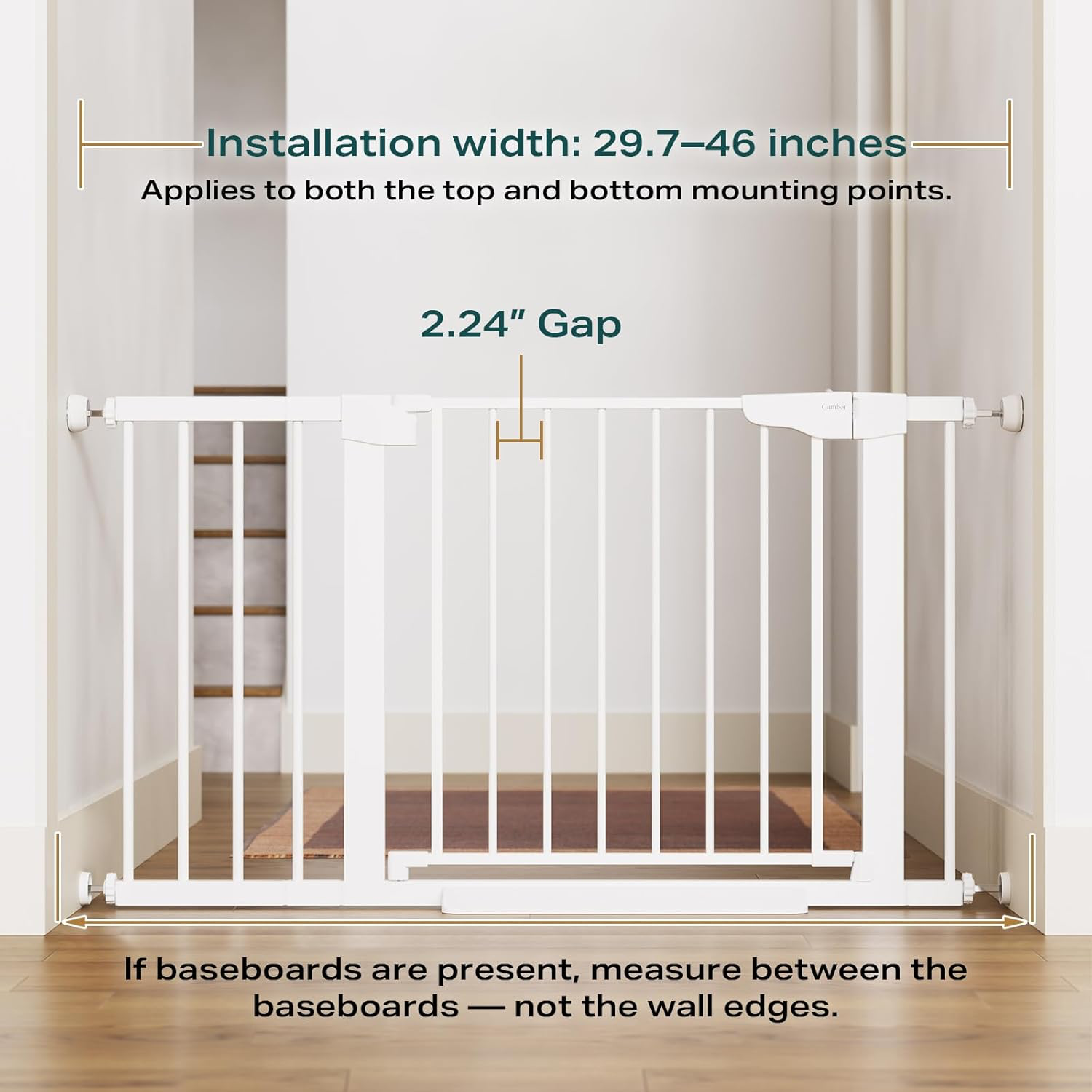
Cumbor 29.7-46 Baby Gate for Stairs
A pressure-mounted barrier sized for typical hallway and stairway openings between roughly 30 and 46 inches. We like it for renters because it sets up without drilling, and the auto-close latch helps when you walk through with a baby on your hip. Confirm it fits your specific opening before you buy.
View product→Last reviewed
Sources used for this guide
Reviewed on March 17, 2026. This content is educational and practical, but it is not a substitute for professional safety inspections or medical advice.
HealthyChildren.org / American Academy of Pediatrics
Safety for Your Child: 6 to 12 MonthsU.S. Consumer Product Safety Commission
Anchor It! furniture tip-over safetyU.S. Consumer Product Safety Commission
Childproofing your home: 12 safety devices to protect childrenSafe Kids Worldwide
Safe Kids home furniture and falls safety guidanceHealthyChildren.org / American Academy of Pediatrics
Make Baby's Room Safe