Cumbor 29.7-46 Baby Gate for Stairs
Stairs & Doors

Cumbor 29.7-46 Baby Gate for Stairs

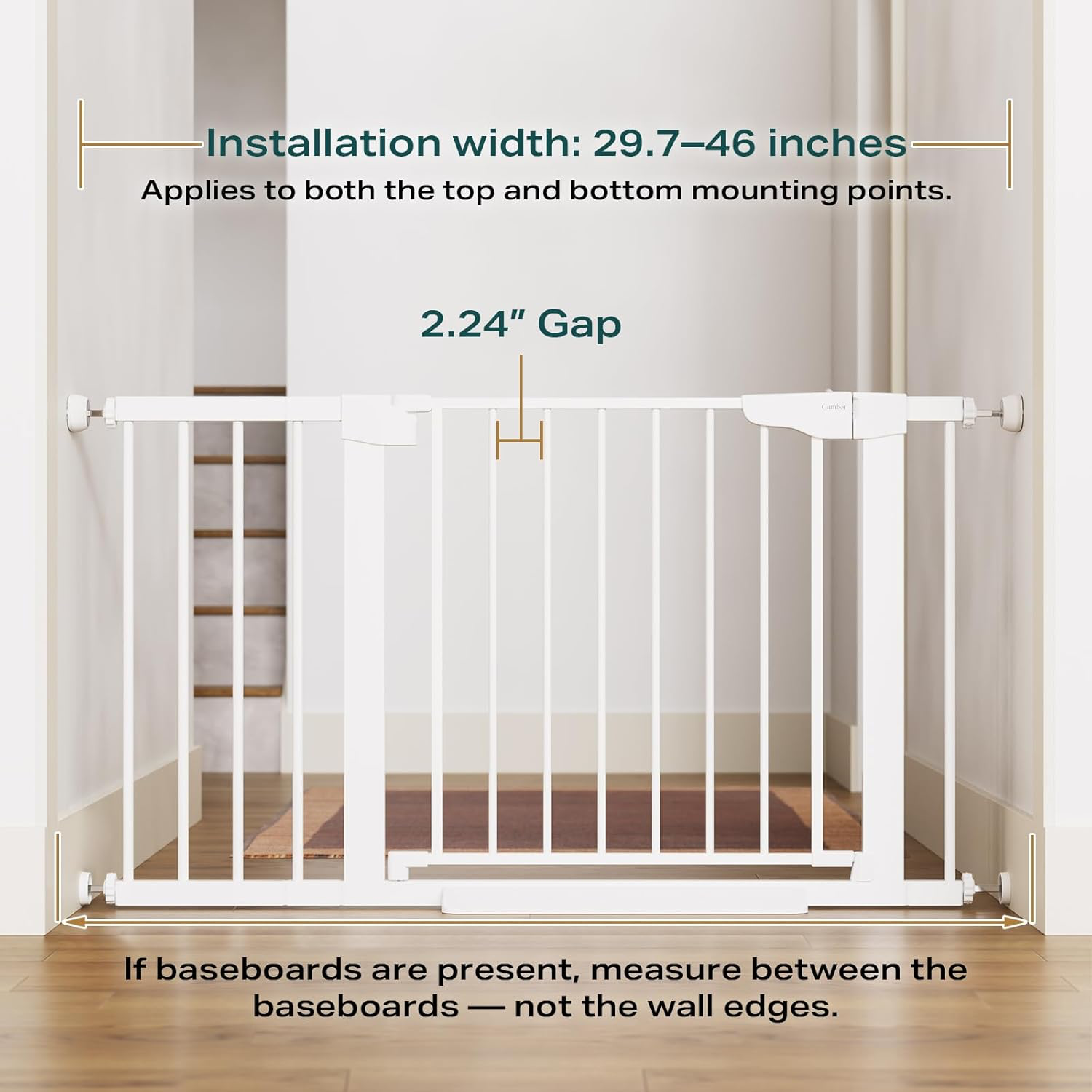
A pressure-mounted barrier sized for typical hallway and stairway openings between roughly 30 and 46 inches. We like it for renters because it sets up without drilling, and the auto-close latch helps when you walk through with a baby on your hip. Confirm it fits your specific opening before you buy.

Commonly used in

HallwayStairsKitchenLiving Room

Why we feature it

The wide adjustment range fits both standard hallways and awkward openings created by half-walls. The auto-close function is the feature that actually changes outcomes - any gate that requires the adult to remember to latch fails on the third sleep-deprived night.

Installation notes

Use hardware mounting (not pressure) at the top of any staircase. The kit includes both options - read the included instructions twice. Studs aren't always behind the trim; use heavy-duty drywall anchors if no stud is available.

Renter-friendly?

Partly. Pressure-mounted use is renter-friendly. Hardware-mounted at stair tops requires four screws into the wall - patchable but not invisible. We recommend hardware-mounting at stair tops anyway and patching at move-out.

Best for

Crawling (8m) through about 3y, depending on climbing skill.

Honest tradeoffs

  • Pressure-mount only at doorways and bottoms of stairs - never the top
  • Wide auto-close gates can rebound and clip a trailing toddler - watch the swing path
  • Wall-mounting cups can dent soft drywall - use anchors
  • Heavy-duty enough to also corral large dogs, which is a side benefit some parents value

When to consider an alternative

For openings wider than 46 inches, a freestanding play yard panel system is more practical than a single gate.

As an Amazon Associate I earn from qualifying purchases.

We may receive a commission if you buy through this link, at no additional cost to you.

Opens amazon.com in a new tab. View latest price and details on Amazon.

Prices and availability are accurate as of the date/time indicated and are subject to change. Any price and availability information displayed on Amazon at the time of purchase will apply.

Editorial independence

We choose products based on safety relevance and parent-tested suitability, not commission rates. Read more about our selection methodology.

Reviewed by NestProof AI · April 2026
Buying guide

What to know before buying

Why a stair-rated baby gate matters

Falls on stairs are a leading cause of injury for young children. The window of risk opens early — once a baby is crawling, stairs are reachable — and stays open until a child is reliably navigating them, which is usually well into the third year. A purpose-built stair gate is the most important barrier in most multi-story homes.

Top-of-stairs gates are different from doorway gates. The fall risk behind a top-of-stairs gate makes the attachment method non-negotiable.

What to look for when buying

For the top of stairs, choose a hardware-mounted gate or a hybrid model that uses screws into the wall framing. Confirm the listed opening range covers your stairwell width with a few inches of slack. A one-handed walk-through latch is essential.

Auto-close features prevent the most common real-world failure: a gate left propped open. Look for a clear visual indicator that the gate has fully latched.

Installation tips

Mount into wall studs or banister posts wherever possible. If you have to mount into drywall, use heavy-duty toggle anchors rated for the gate weight under impact load. Test by leaning into the gate with full adult body weight before letting your child near it.

Recheck mounting hardware every few months. Wood expands and contracts seasonally, and screws can back out slightly over time.

Who this is best for

Any home with stairs and a child between roughly six months and three years. Also valuable in homes with sunken living rooms or step-down transitions.

When this is not the right pick

A pressure-mounted gate alone is not the right pick for the top of stairs. If the gate's installation method does not include hardware mounting at that location, it is the wrong tool for that location.

Common questions

Cumbor 29.7-46 Baby Gate for Stairs FAQ

What is the difference between pressure-mounted and hardware-mounted baby gates?+
Pressure-mounted gates use spring tension to hold themselves in place and require no drilling. Hardware-mounted gates screw into the wall or door frame for a stronger hold. Use hardware-mounted gates at the top of stairs and pressure-mounted gates in doorways and lower-risk locations.
How wide can a baby gate span?+
Standard baby gates fit openings between 28 and 42 inches. Extra-wide gates with extensions can span up to 72 inches or more. Measure your opening before purchasing and check whether the gate includes extensions or if they need to be bought separately.
When can I stop using baby gates?+
Most children outgrow baby gates between ages two and three, when they can reliably navigate stairs and understand household boundaries. Remove gates when your child starts climbing over them, as a falling gate becomes a greater hazard than the one it was preventing.

More in Stairs & Doors

Affiliate links

The products below contain Amazon affiliate links. As an Amazon Associate I earn from qualifying purchases.