Product category
Stairs & Doors Baby Proofing
Gates, locks, and guards for high-risk transition areas. Use this page to compare products in this category, then jump into the related education guides for installation tips and room planning.
Best fit rooms
Buying guide
What to know before baby proofing stairs and doors
Stairs and doors are transition spaces — short stretches of the home that families pass through dozens of times a day, often without a second thought. That casual familiarity is exactly why they pose so much risk. Falls down stairs are one of the most common causes of childhood injury, and doors create a constant stream of pinches, slams, and access to rooms that should be off-limits.
The most important product decision in this category is also the most often-misunderstood: gate type matters, and location dictates type. At the top of stairs, use a hardware-mounted gate that screws into wall studs or banister posts. The fall behind that gate is severe enough that pressure-mounted alone is not the recognized standard. At doorways, in low-risk transitions, and at the bottom of stairs, pressure-mounted gates work well and avoid permanent installation.
Doors deserve their own audit. The bathroom door is usually the most important to control, followed by any door that opens onto unsafe rooms — a home office, a laundry room, a basement stairwell. Lever locks and door knob covers add friction that toddlers cannot easily overcome, while pinch guards prevent the everyday finger injuries from doors swinging shut.
Re-walk this category after every mobility leap. A gate that worked when your child was crawling may need supplementing when they start climbing. A door lever lock that stopped them at eighteen months may not stop them at two and a half. Stairs and doors are the spaces that age the fastest in a baby-proofing plan.
Related guides
Learn how to use stairs & doors products well
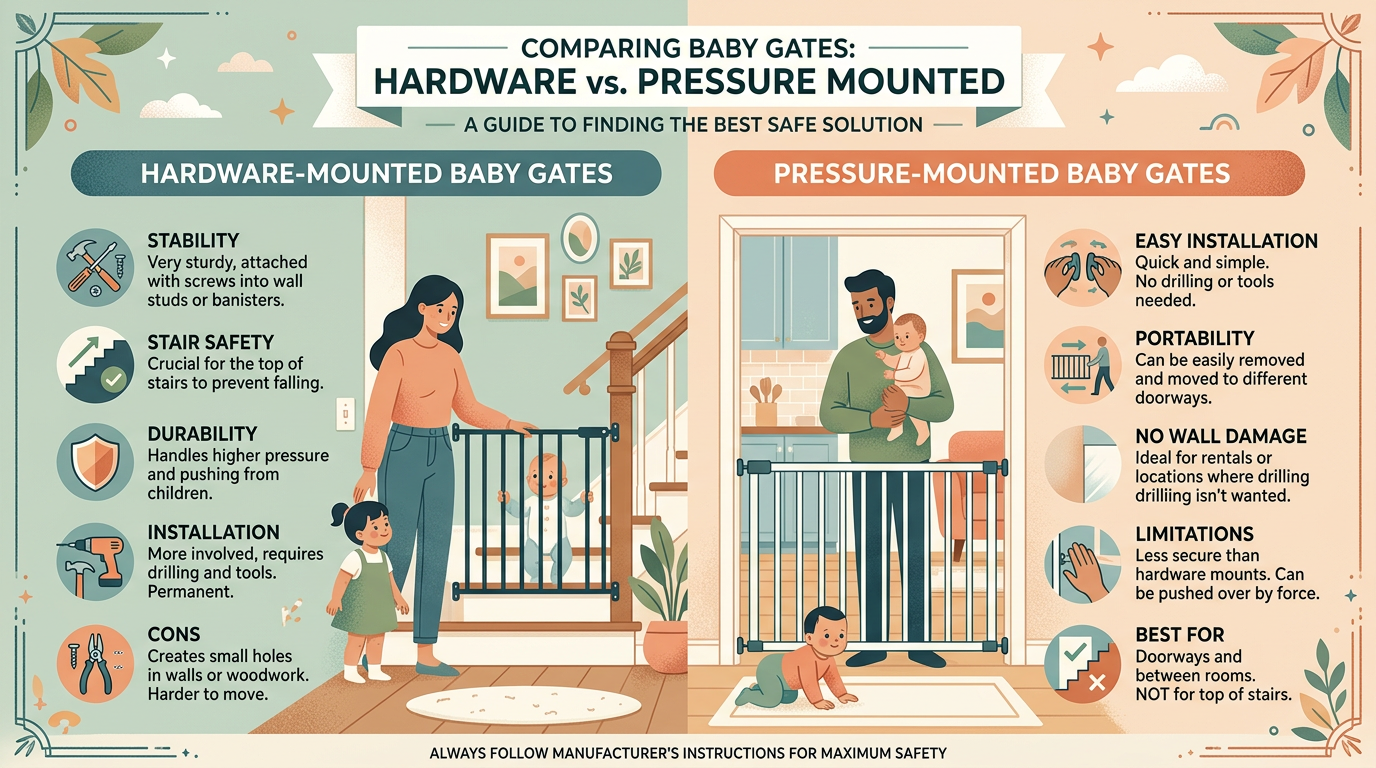
How to Choose a Baby Gate: Stair Safety, Doorways, and the Biggest Buying Mistakes
A clear guide to picking the right baby gate for stairs, doorways, and open layouts, with practical advice on mounting, sizing, and common mistakes parents make.
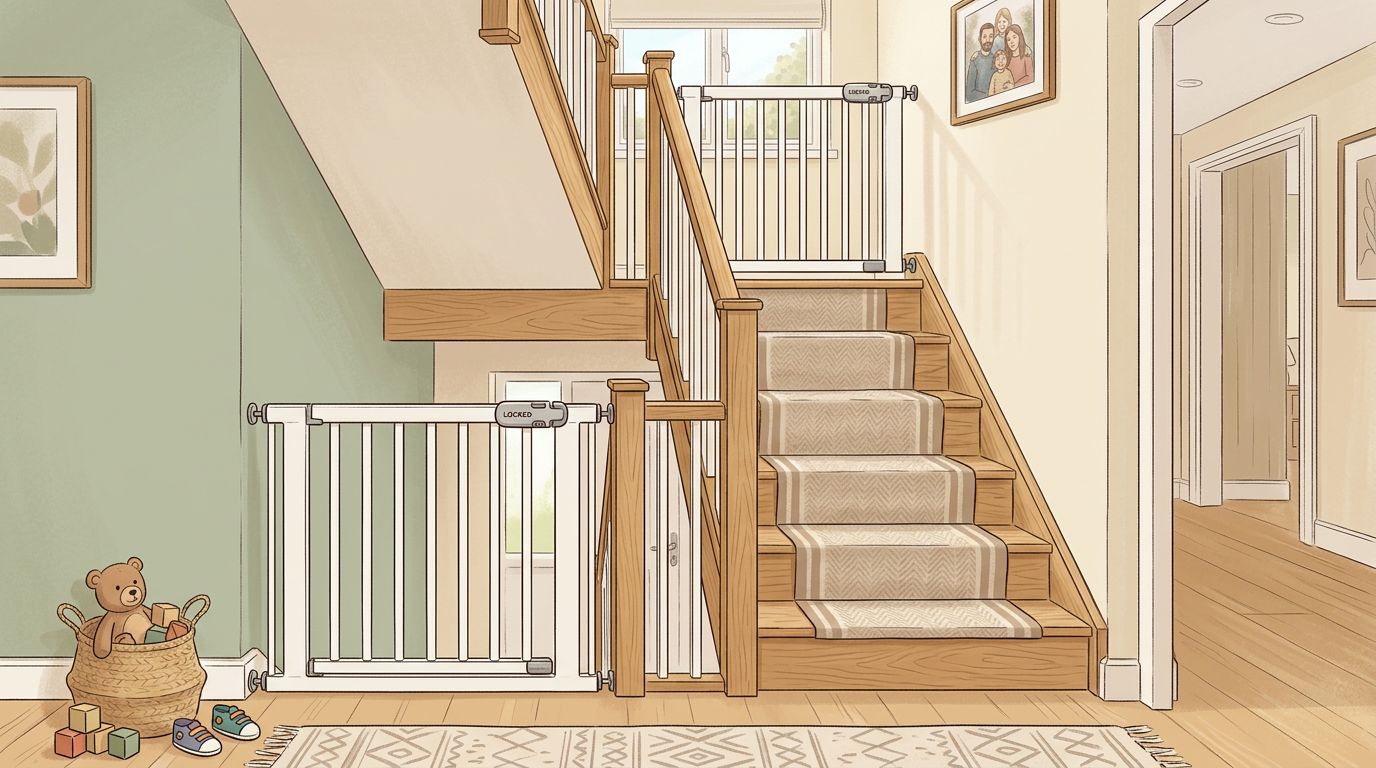
Stairs and Door Safety for Babies: Gates, Locks, and Pinch Prevention
A practical guide to making stairs, doors, and room transitions safer for babies and toddlers, covering gate placement, door hardware, pinch prevention, and access control strategies.
Stairs & Doors products
Compare the products in this category and click through for room fit, descriptions, and purchase links.
Pressure-Mounted Baby Gate for Doorways
No-drill pressure gate for doorways and low-risk openings to create clear child-safe zones.
View details →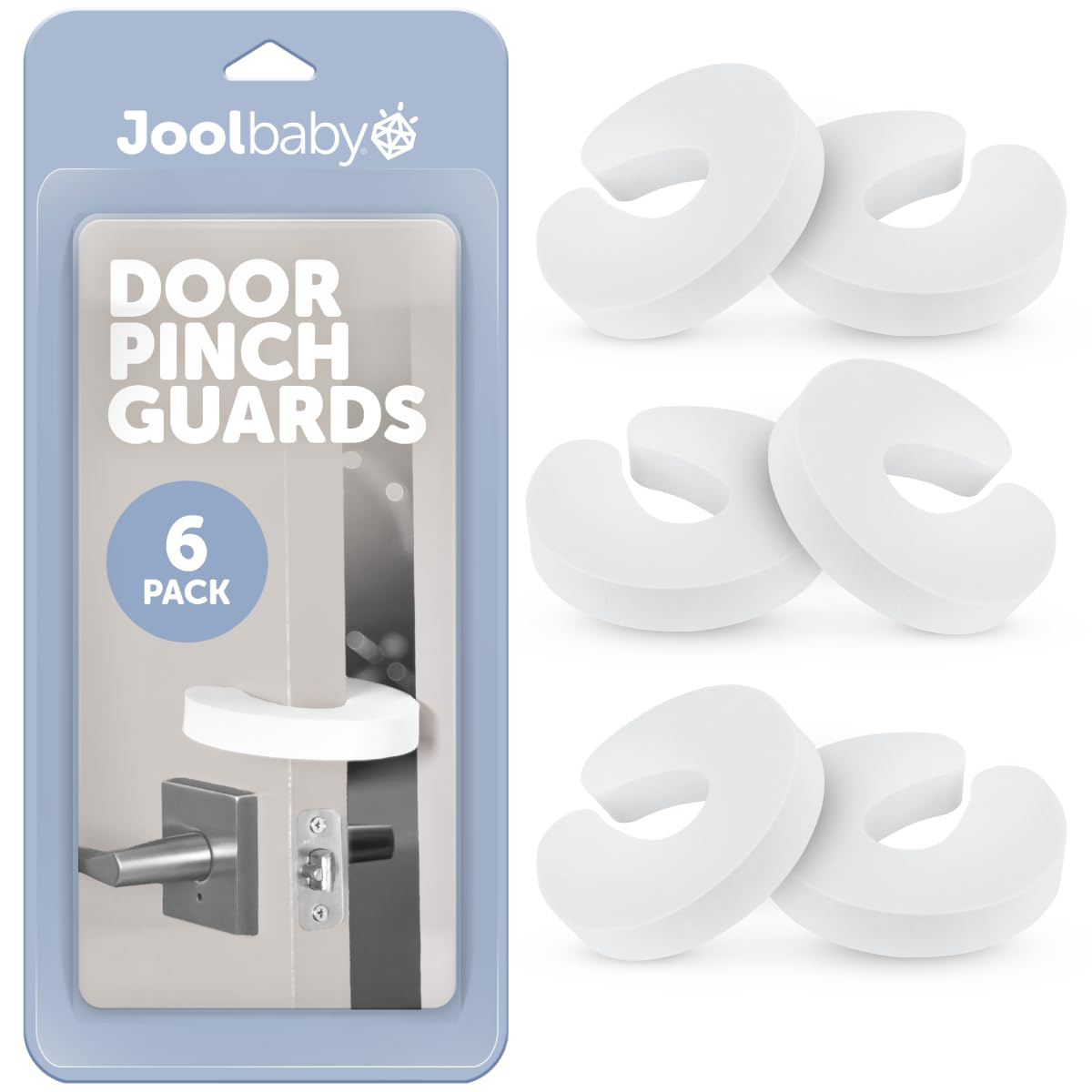
Jool Baby Door Pinch Guards (6 Pack)
Soft EVA foam door stoppers that prevent doors from fully closing, protecting little fingers from getting pinched. Also prevents door slamming and keeps pets from getting locked in rooms.
View details →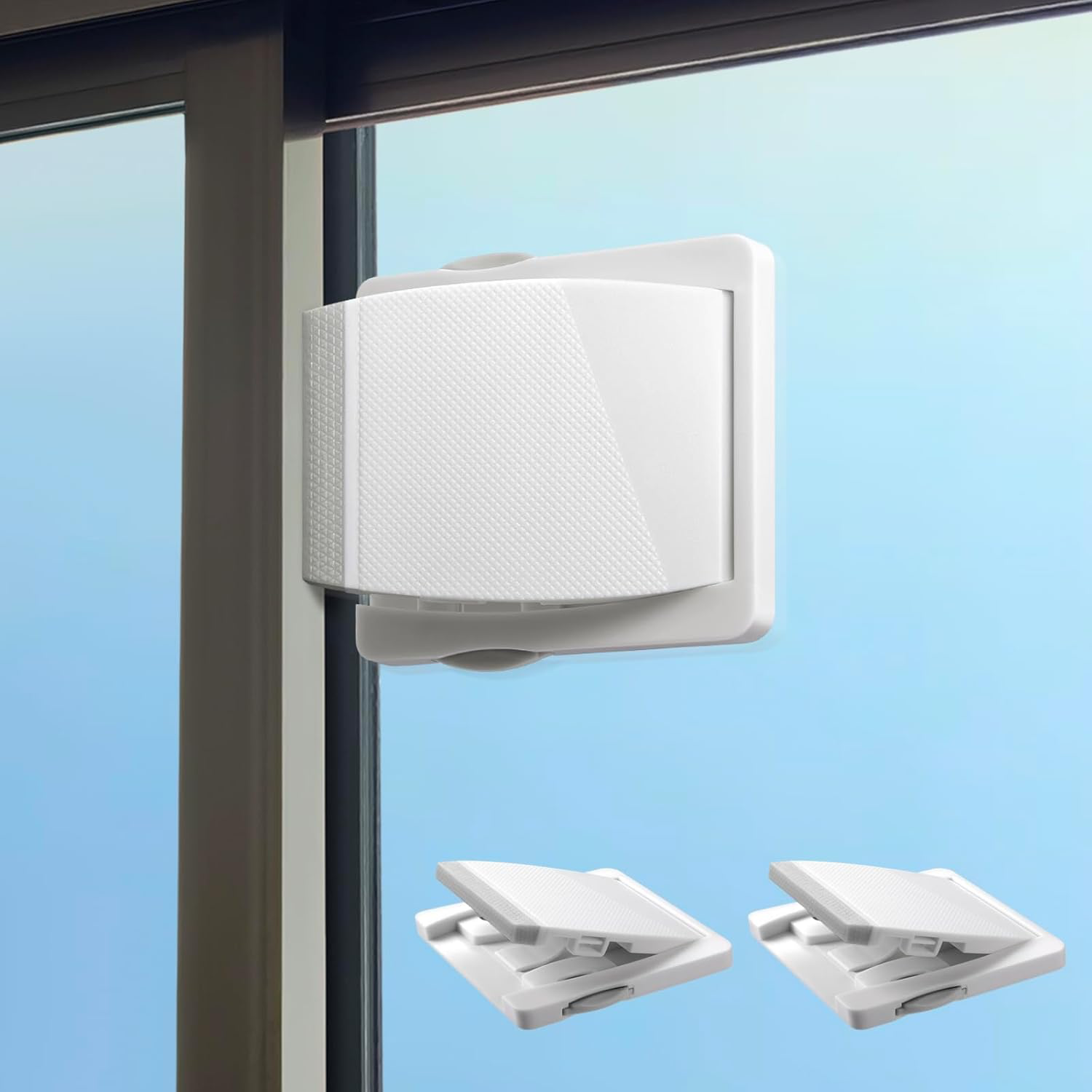
OKEA Sliding Glass Door Lock
Childproof lock designed specifically for sliding glass doors, keeping them securely shut.
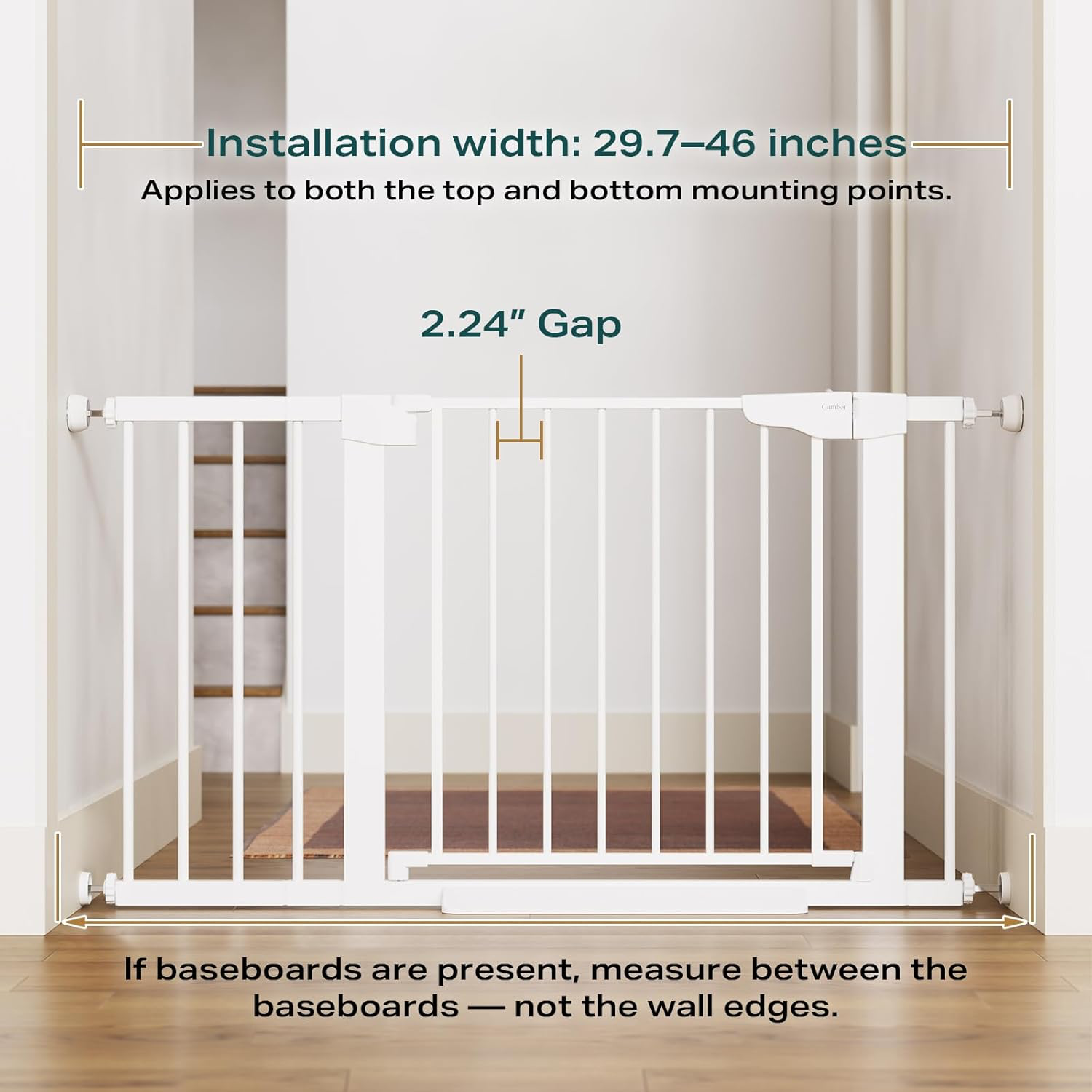
View details →Cumbor 29.7-46 Baby Gate for Stairs
A pressure-mounted barrier sized for typical hallway and stairway openings between roughly 30 and 46 inches. We like it for renters because it sets up without drilling, and the auto-close latch helps when you walk through with a baby on your hip. Confirm it fits your specific opening before you buy.
View details →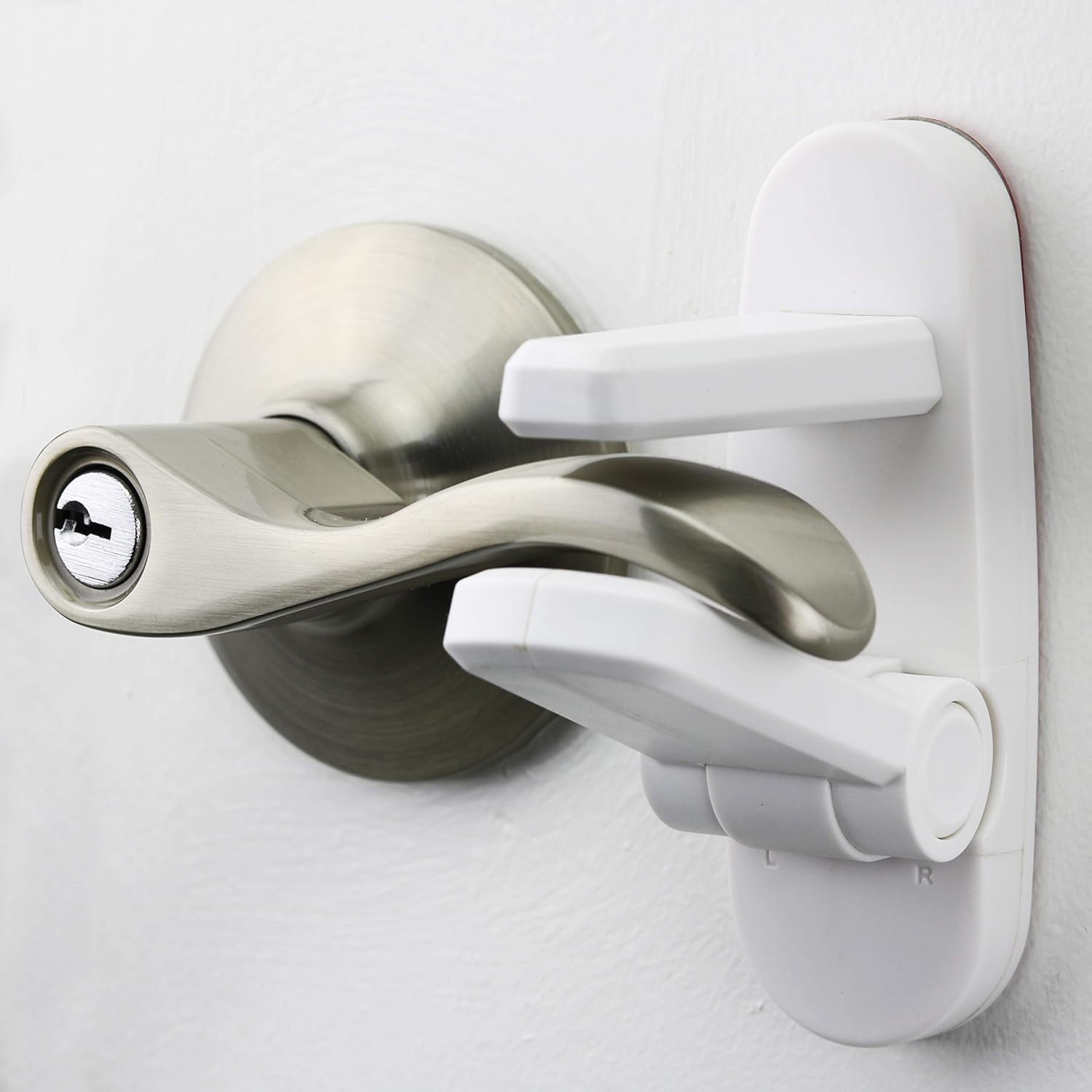
Wappa Baby Door Lever Lock (2 Pack)
Adhesive door lever locks that keep toddlers from opening lever-handle doors while still allowing adult one-hand operation.
View details →
Stair Safety Net for Banisters and Railings
A flexible mesh net that ties to a banister or balcony railing to keep small toys, sippy cups, and curious arms from slipping through the spindles.
View details →Common questions