Start with location, not aesthetics
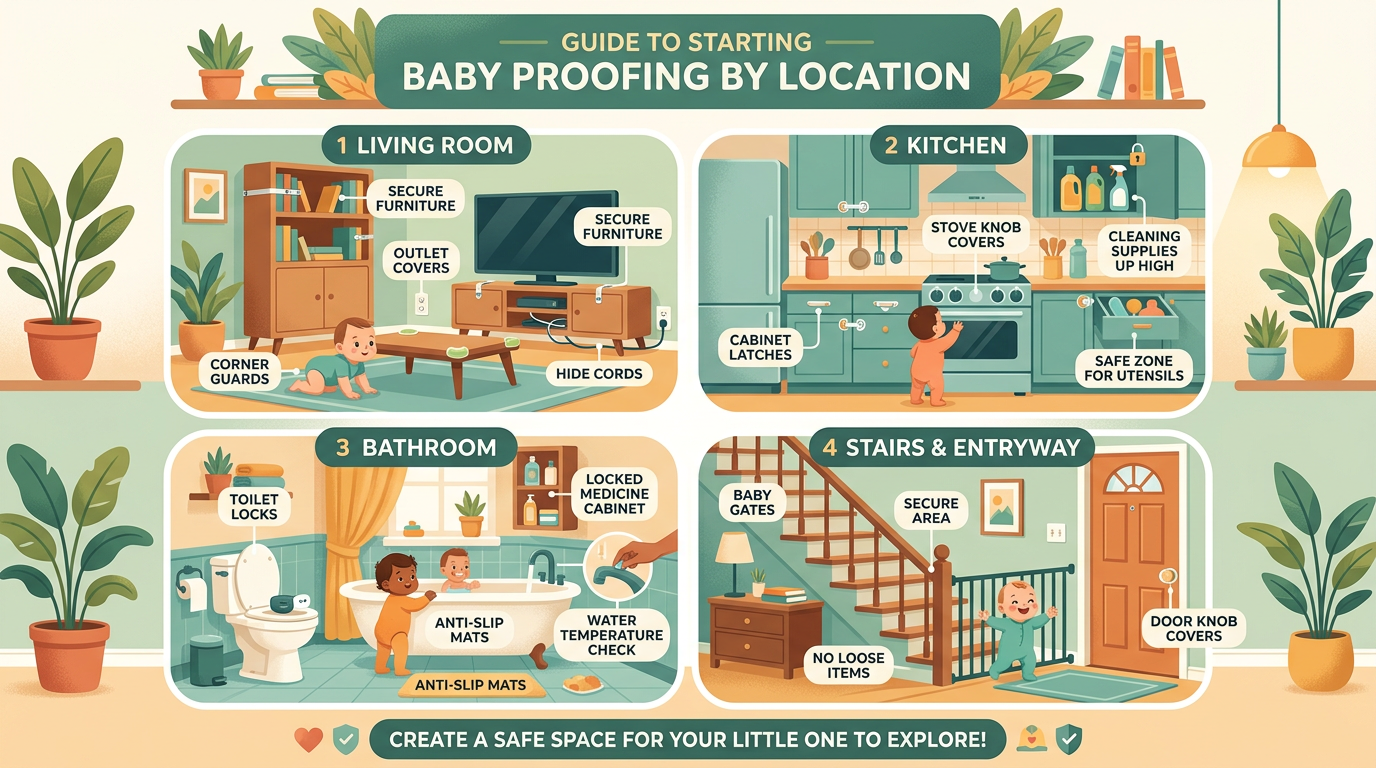
The biggest baby gate buying mistake is shopping by style before deciding exactly where the gate will go. A gate for the top of stairs solves a different problem than a gate for a hallway, kitchen threshold, or room divider. Start with the location and the risk level, then work backward to the product type.
Measure the opening, note nearby walls or banisters, and think about traffic flow. Adults will use this gate many times a day, often while carrying a child, laundry basket, or groceries. A gate that is technically safe but so annoying that people leave it open is not a good fit for real life.
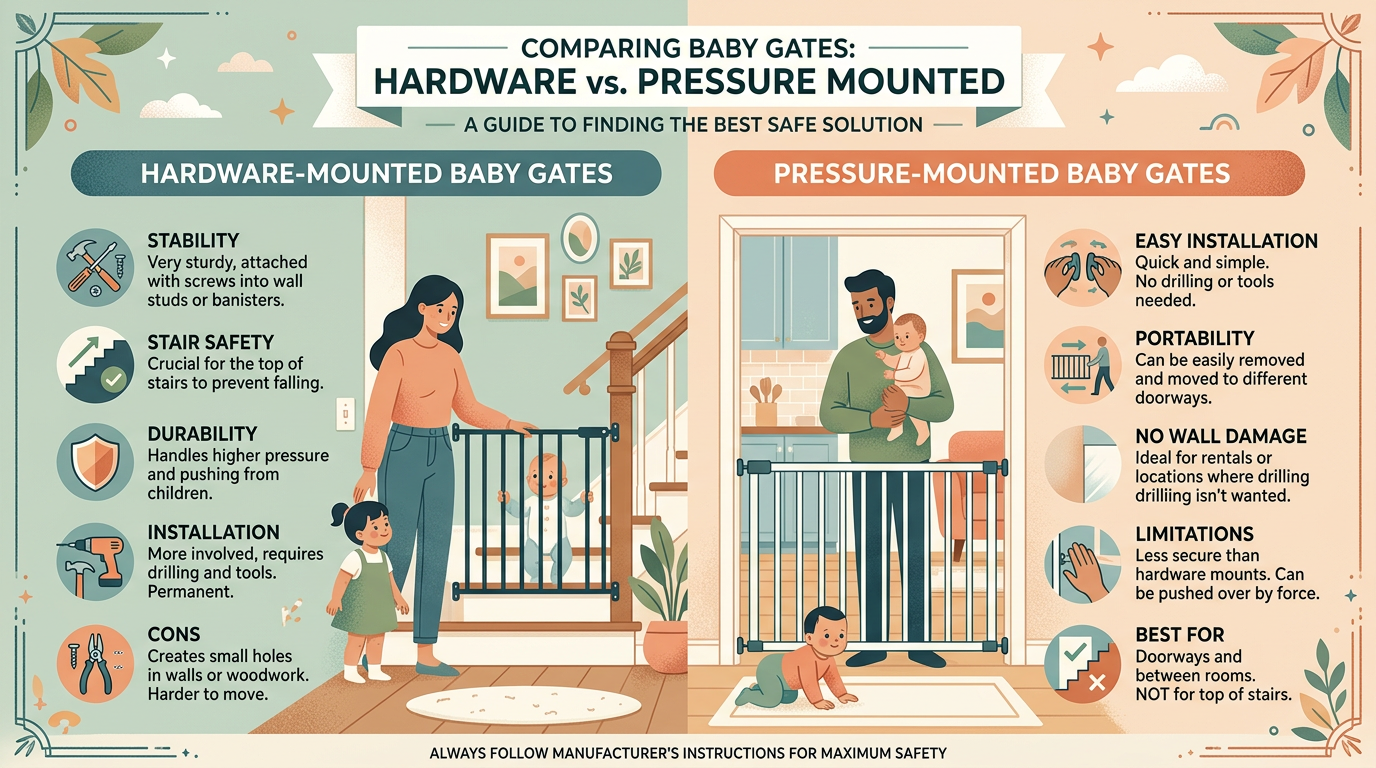
Hardware-mounted vs pressure-mounted baby gates
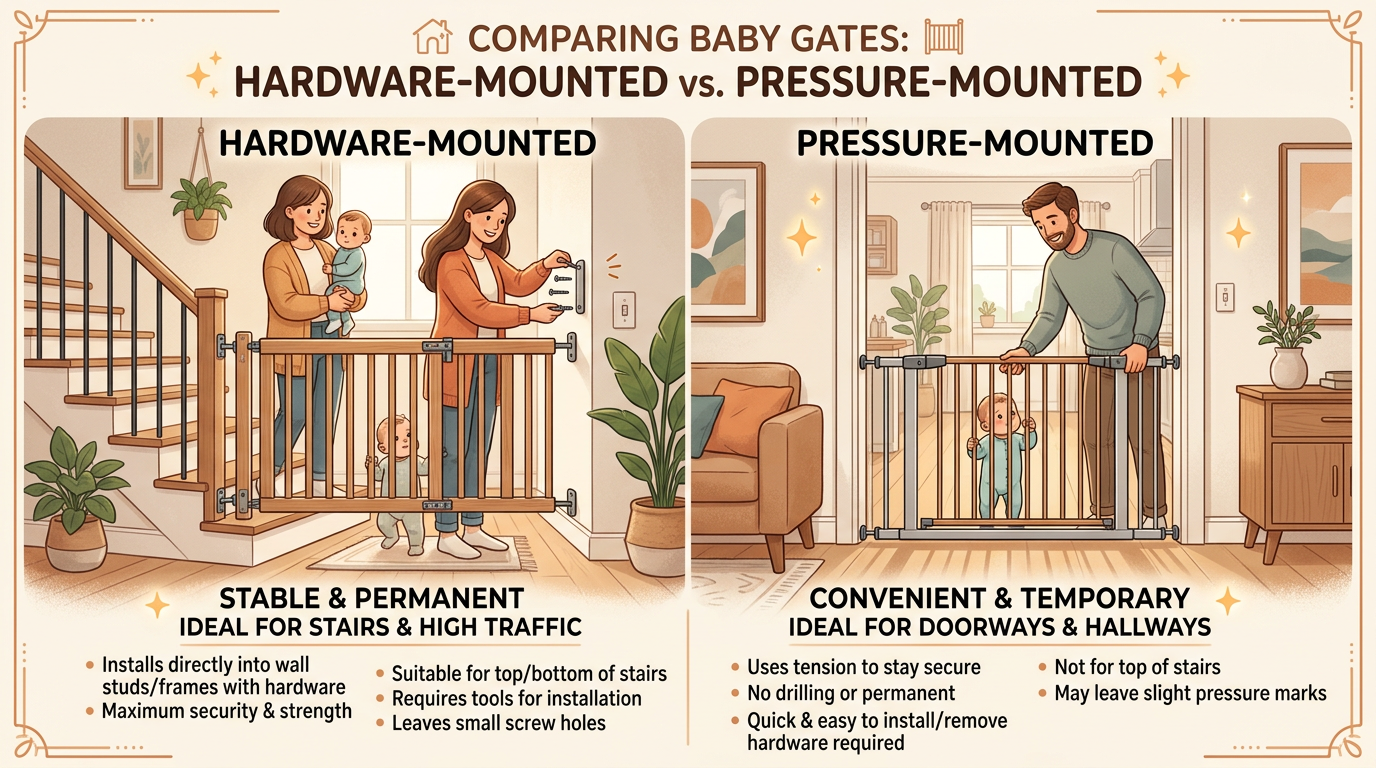
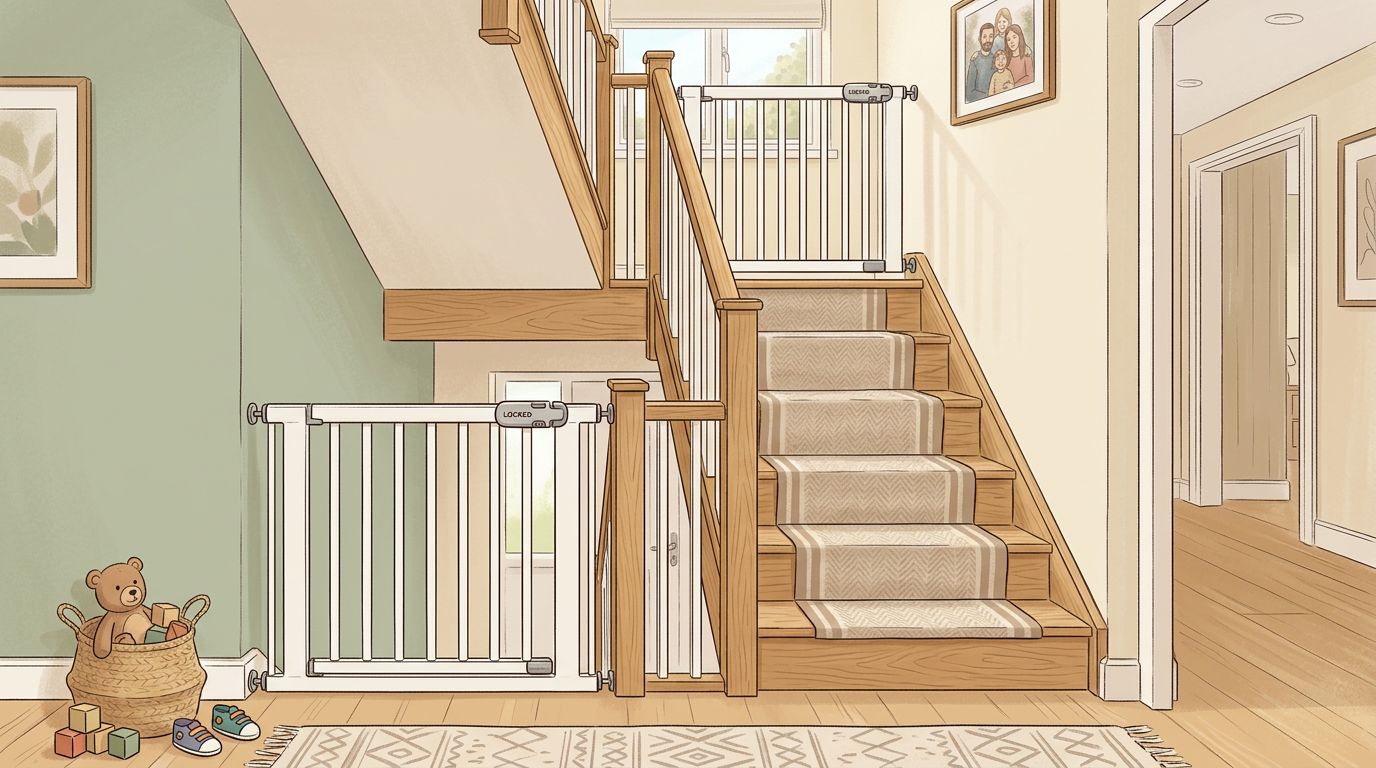
Hardware-mounted gates attach more securely and are the better choice for high-risk locations, especially the top of stairs. CPSC childproofing guidance specifically says that for the top of stairs, you should only use gates that screw to the wall. That guidance is worth treating as a firm rule rather than a suggestion.
Pressure-mounted gates are often convenient for doorways and lower-risk openings because they install without drilling and are easy to move. They can be a solid option for renters or for temporary use in parts of the home where a fall down stairs is not the consequence of failure.
In short: if a gate failure could send a child down stairs, prioritize stronger fixed hardware. If the goal is simply to define a boundary between rooms, a pressure-mounted option may be appropriate if used as directed.
Quick checklist
- ✓Use hardware-mounted gates at the top of stairs.
- ✓Use pressure-mounted gates only where the manufacturer allows and the location is appropriate.
- ✓Do not use pet gates as child safety gates.
- ✓Re-check the fit after installation instead of trusting it at first glance.
Features that matter most when you actually live with the gate
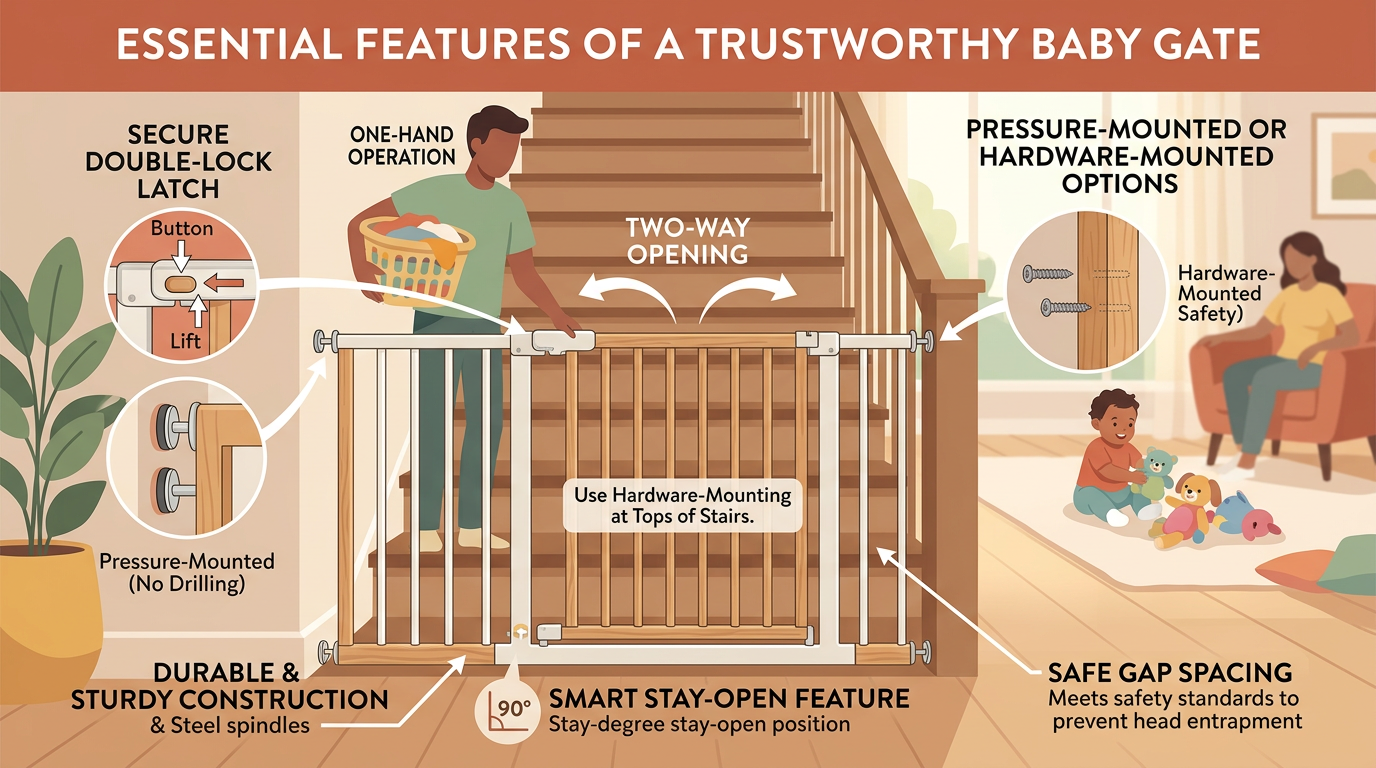
Look for dependable latching, a width range that truly fits your opening, and an opening mechanism adults can manage one-handed when needed. Walk-through gates often make daily life easier than step-over designs, especially in busy hallways or kitchens.
Height matters too. A determined toddler and a large dog can both challenge a low gate. If your home has baseboards, odd trim, or banisters, think through whether you need installation accessories or a different style to keep the fit stable and aligned.
Do not be distracted by a long feature list if the basics are weak. Secure mounting, proper sizing, and consistent adult use matter more than decorative finishes or marketing claims.
Common baby gate mistakes parents make
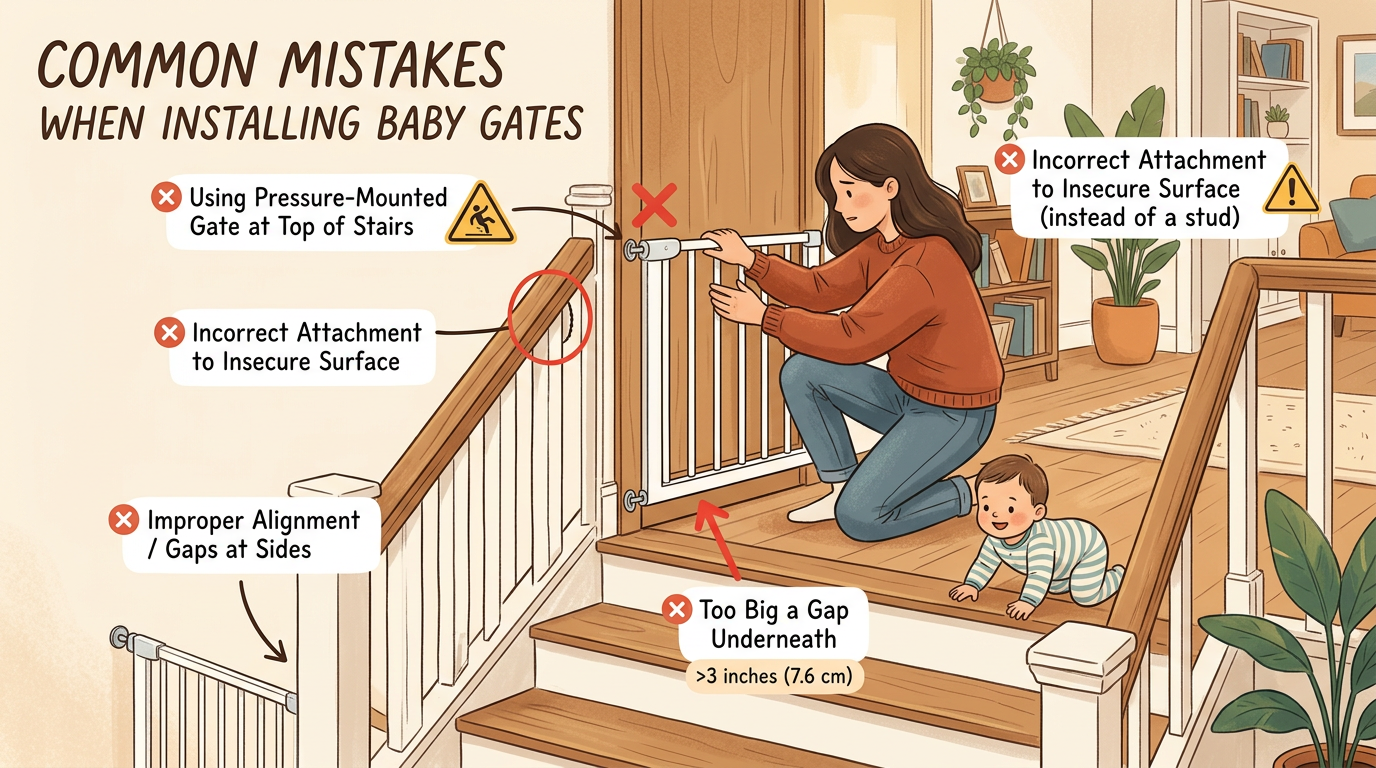
One common mistake is using the wrong type of gate in the wrong place, especially at the top of stairs. Another is underestimating installation details, such as baseboards, uneven walls, or banister spacing. Those small fit issues can affect stability more than people expect.
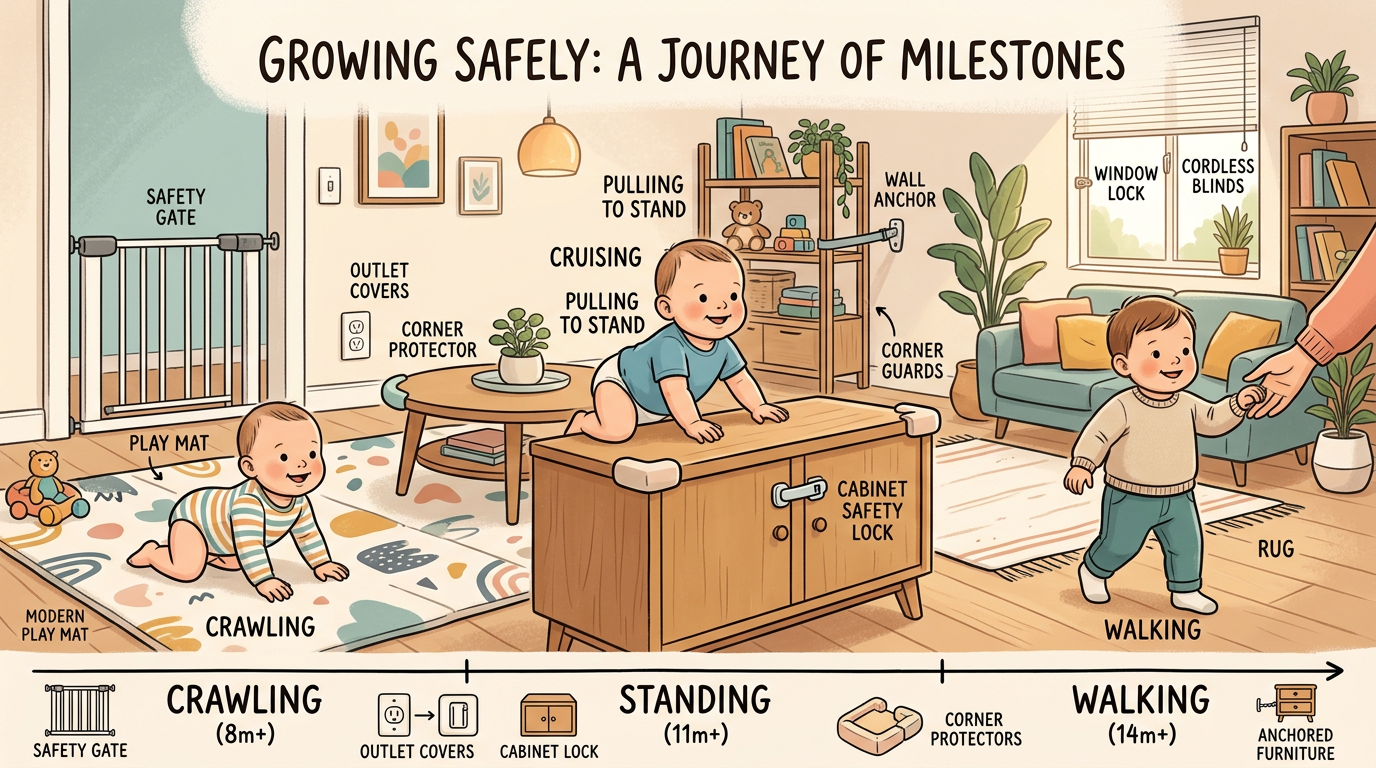
Parents also sometimes keep using a gate after a child has learned to climb it or after the latch becomes inconsistent. Gates are not permanent set-and-forget products. They need periodic checks, especially in high-use spots.
Finally, remember that the best gate placement works with the rest of the room. If a stool, toy bin, or chair sits right next to the barrier, your child may treat the whole setup like a climbing challenge.
Quick checklist
- ✓Avoid top-of-stairs pressure-only installations.
- ✓Check for climbing aids near the gate.
- ✓Inspect latches and mounting points regularly.
- ✓Replace or rethink the setup once your child can climb over it.
How to choose the best gate for your space
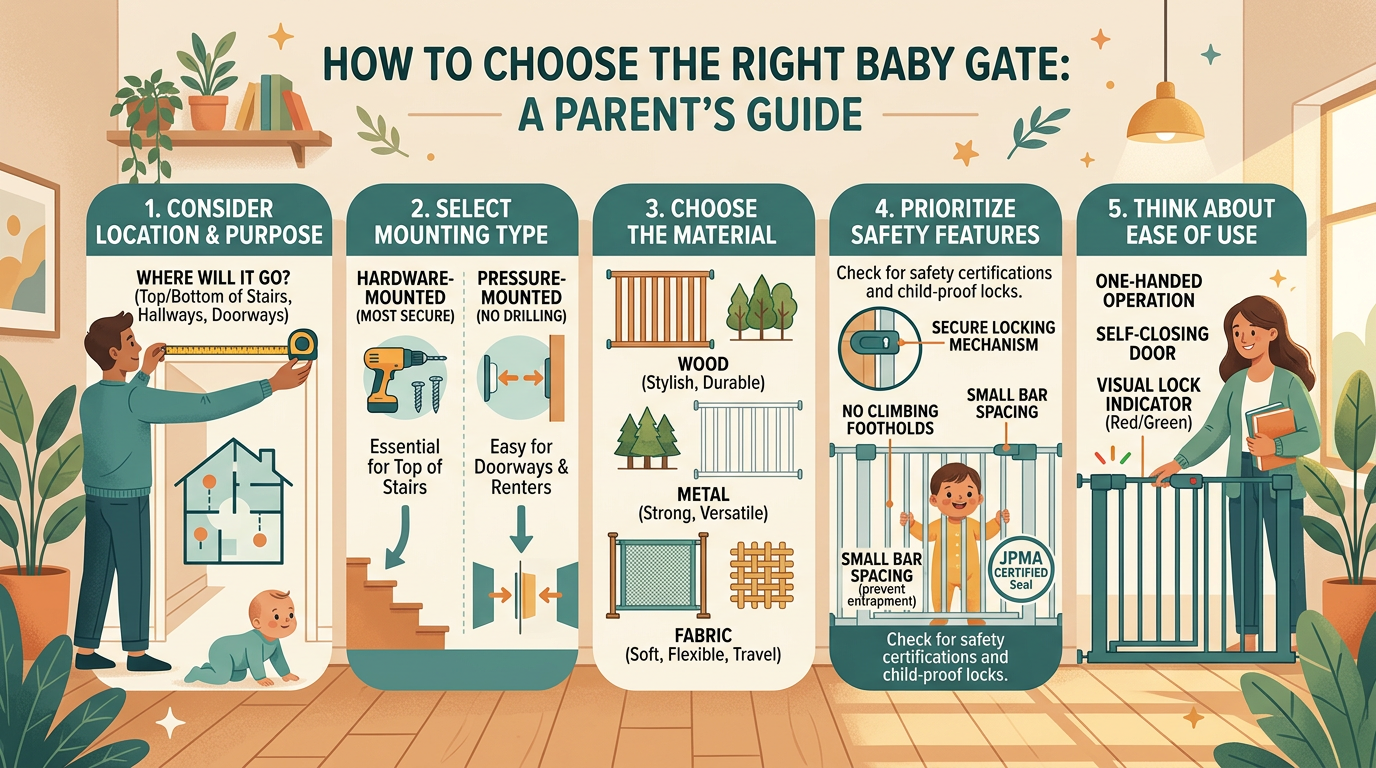
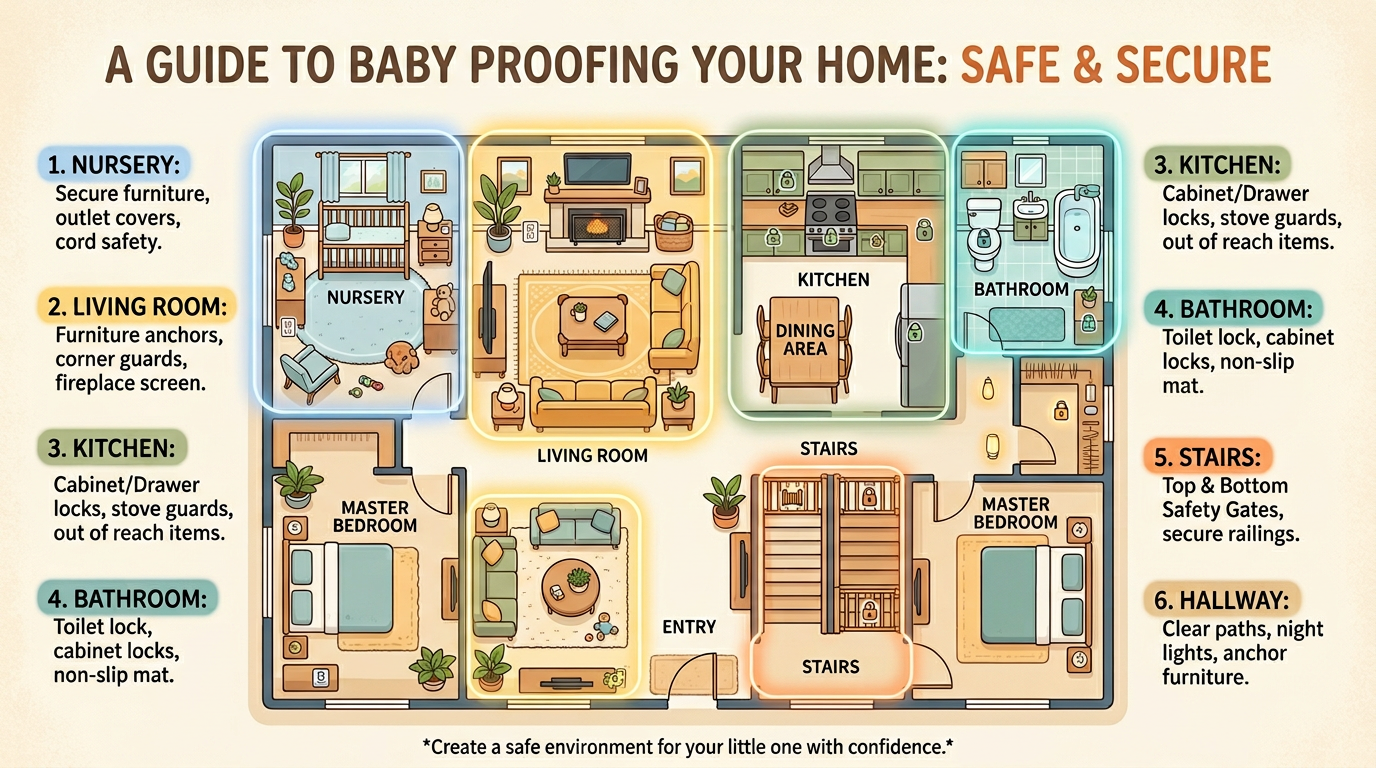
For the top of stairs, default to hardware-mounted. For the bottom of stairs or a doorway between rooms, a pressure-mounted gate may make more sense if the opening and usage pattern fit the product instructions. For wide openings or open-concept layouts, you may need a gate designed for extra width or a barrier system rather than forcing a standard gate into the space.
If you rent, weigh convenience against risk honestly. It is fine to prefer low-damage options, but not in a way that lowers meaningful safety where the consequences are serious.
The right baby gate is the one that matches your opening, your traffic pattern, your child’s development, and the severity of the hazard it is blocking.
Frequently asked questions
A hardware-mounted gate is the safer default for the top of stairs because it provides stronger attachment. CPSC guidance specifically says to use gates that screw to the wall at the top of stairs.
They can be appropriate in some lower-risk openings such as certain doorways, but they are not the right choice everywhere. Always use them only in the locations and ways the manufacturer allows.
No. Pet gates are not the same as child safety gates, and CPSC guidance specifically warns against using pet gates as child safety gates.
Reassess once your child can climb over it, defeat the latch, or use nearby furniture to get around it. The safest timeline depends on your child’s behavior and the hazard the gate is controlling.
Featured products
Affiliate linksProducts that support this guide
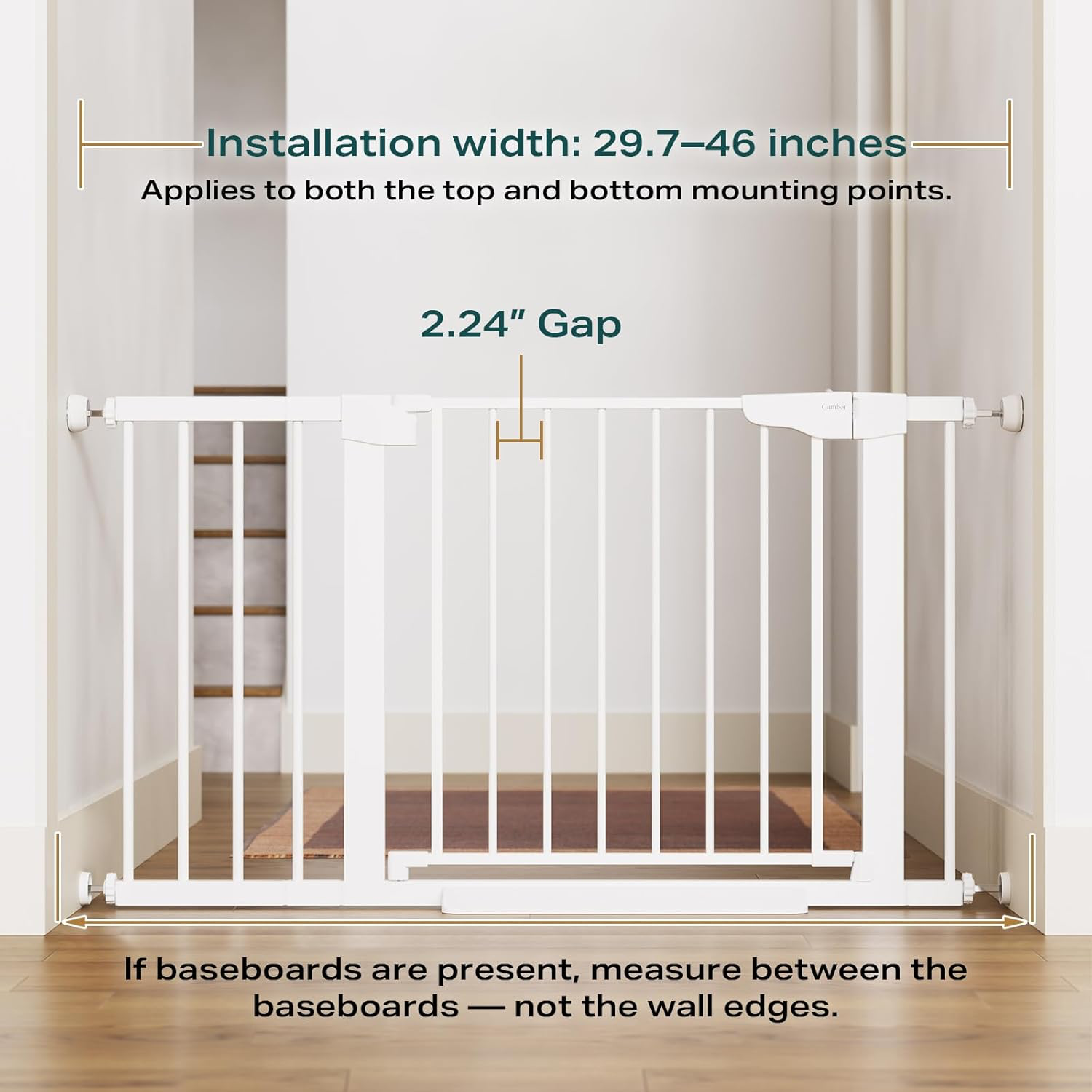
Cumbor 29.7-46 Baby Gate for Stairs
A pressure-mounted barrier sized for typical hallway and stairway openings between roughly 30 and 46 inches. We like it for renters because it sets up without drilling, and the auto-close latch helps when you walk through with a baby on your hip. Confirm it fits your specific opening before you buy.
View product→Pressure-Mounted Baby Gate for Doorways
No-drill pressure gate for doorways and low-risk openings to create clear child-safe zones.
View product→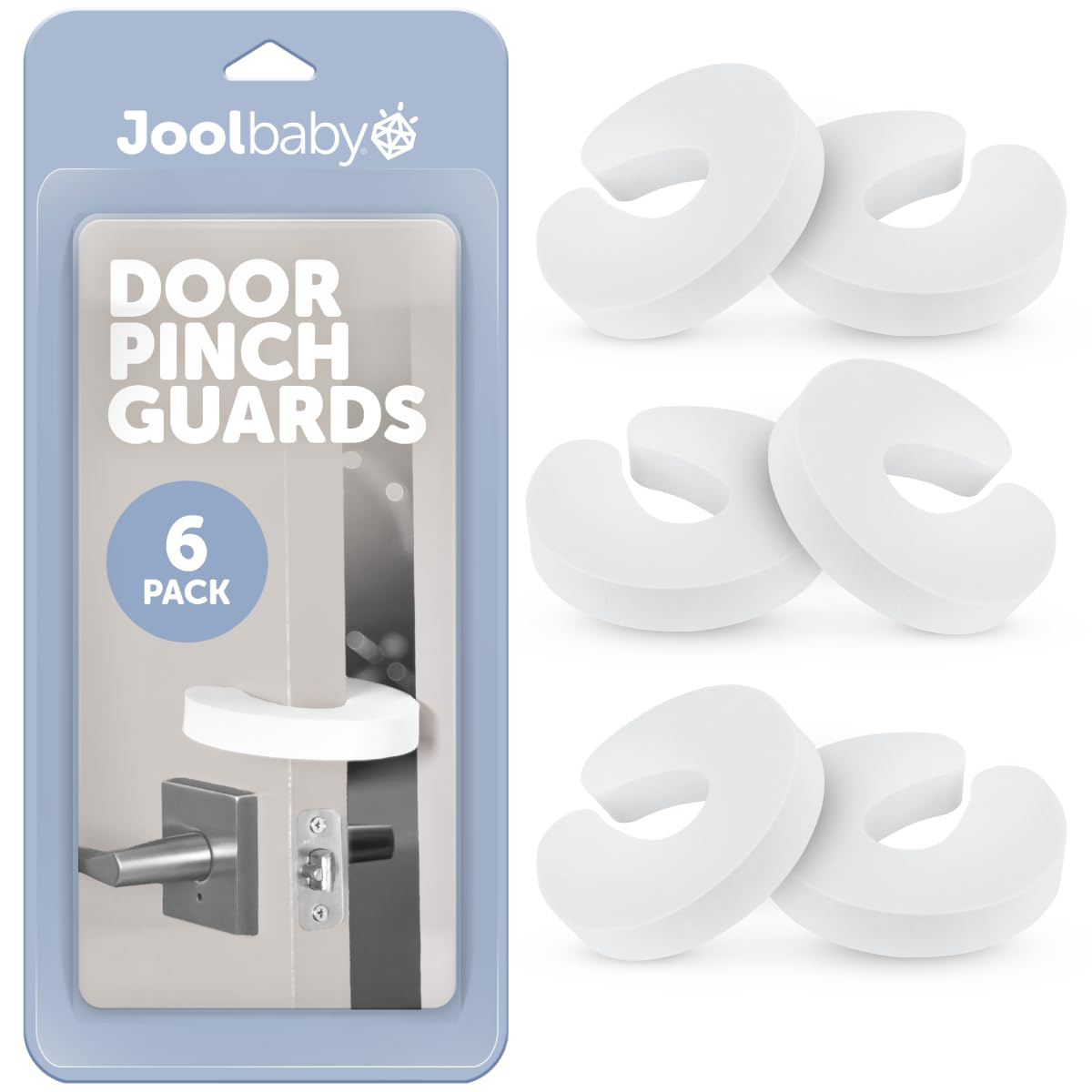
Jool Baby Door Pinch Guards (6 Pack)
Soft EVA foam door stoppers that prevent doors from fully closing, protecting little fingers from getting pinched. Also prevents door slamming and keeps pets from getting locked in rooms.
View product→Last reviewed
Sources used for this guide
Reviewed on March 17, 2026. This content is educational and practical, but it is not a substitute for professional safety inspections or medical advice.
U.S. Consumer Product Safety Commission
Childproofing your home: 12 safety devices to protect childrenHealthyChildren.org / American Academy of Pediatrics
Movement: Babies 8 to 12 MonthsHealthyChildren.org / American Academy of Pediatrics
Safety for Your Child: 6 to 12 MonthsSafe Kids Worldwide
Protecting children in your home