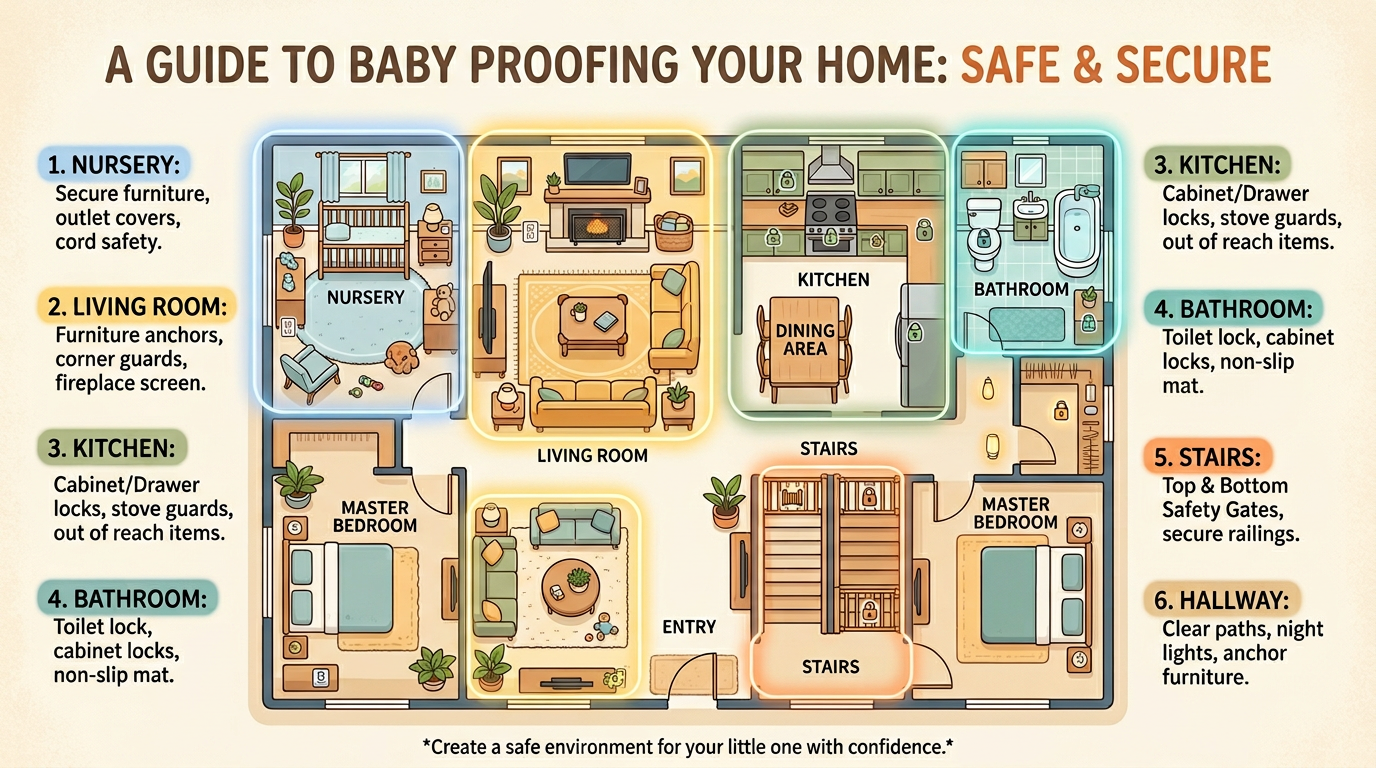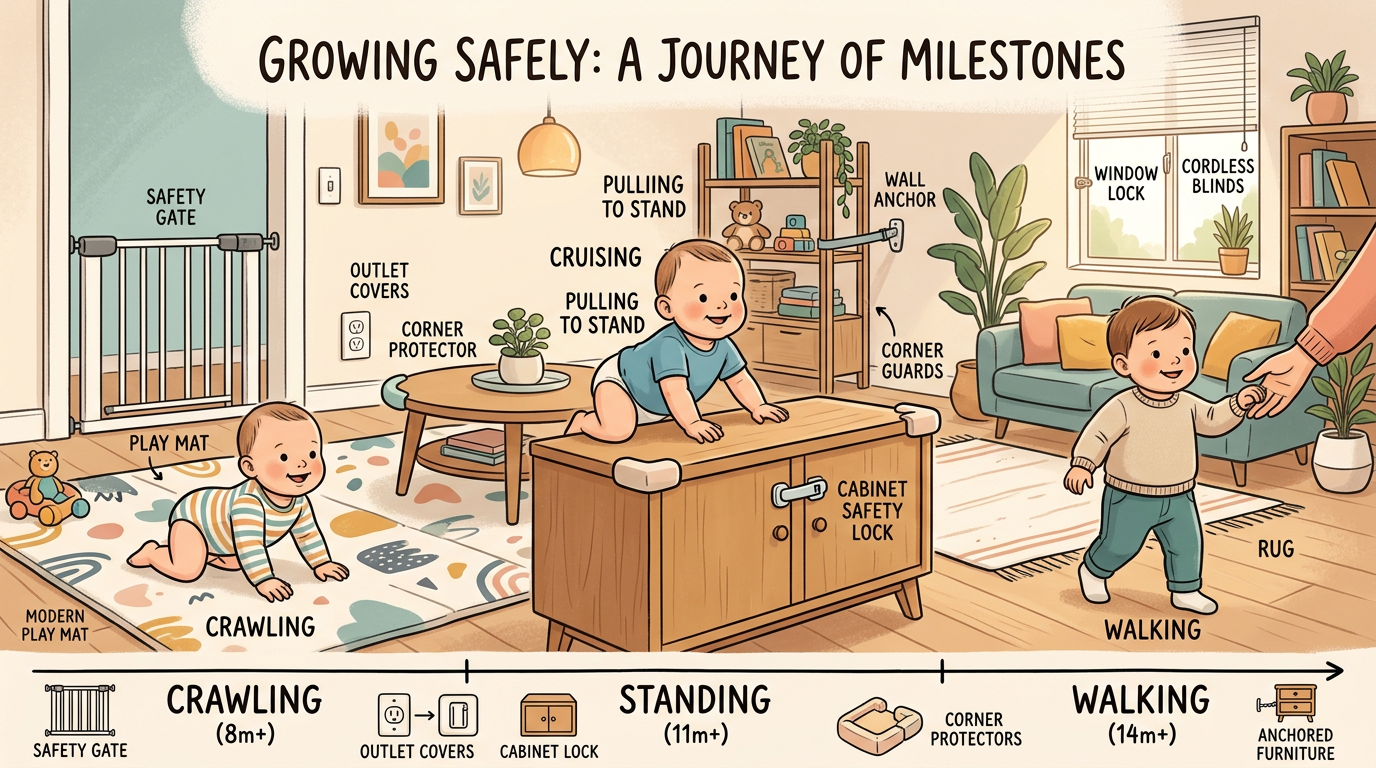
Before crawling: create the safe base layer
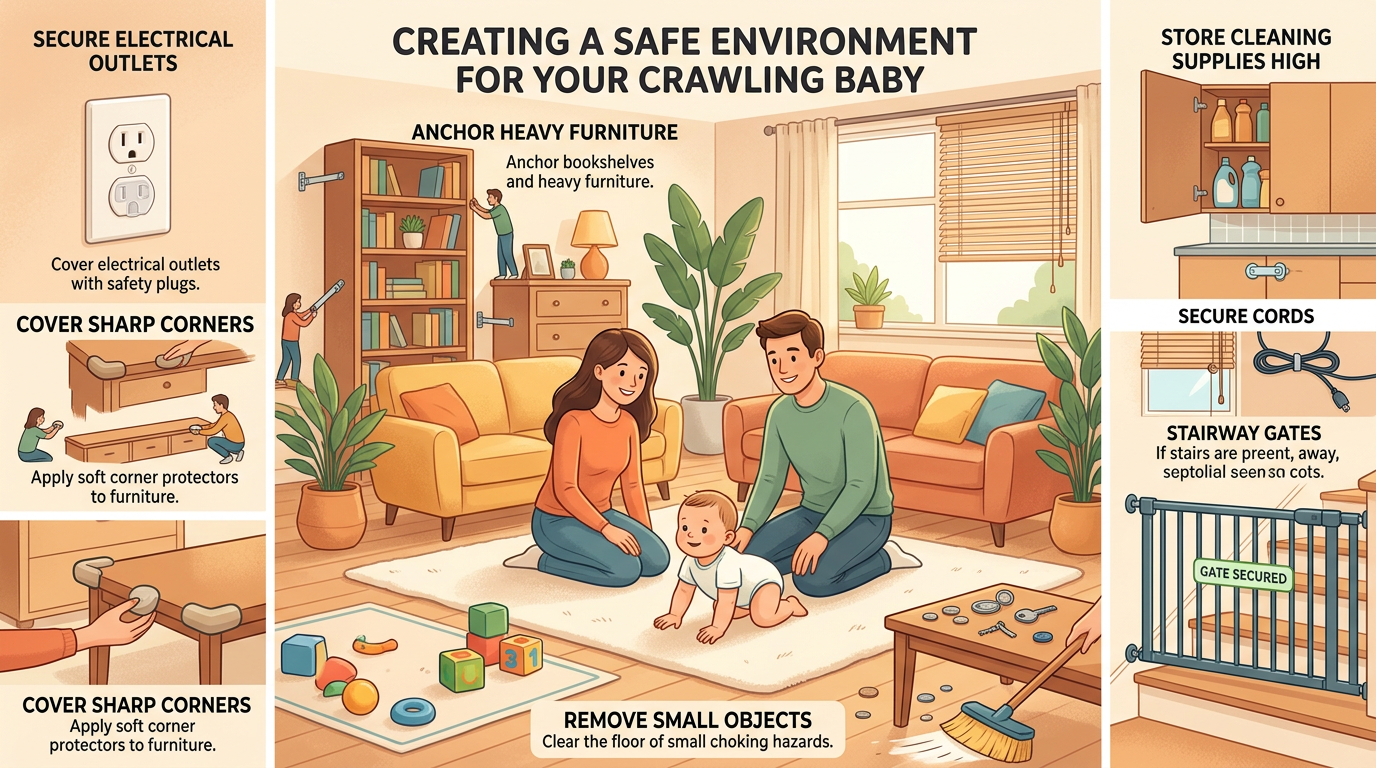
Before your baby is fully mobile, you have the best window to handle the structural work. This is when anchoring furniture, checking cribs and sleep spaces, mounting televisions, and clearing low choking hazards feels easy compared with doing it while a fast crawler follows you around.
Even babies who are not crawling yet can roll, scoot, and reach farther than expected. That means button batteries, cords, medications left on side tables, and sharp furniture edges should already be on your radar. Nursery safety should include stable furniture, cord-free sleep surroundings, and a plan for window access as your baby grows.
This stage is also a good time to notice family habits that will matter later. Where do purses land? Where are chargers plugged in? Which doors stay open? The habits you clean up now make later childproofing much easier.
Quick checklist
- ✓Anchor furniture and mount TVs.
- ✓Remove small objects, batteries, magnets, and breakables from low surfaces.
- ✓Review nursery layout for furniture stability and cord safety.
- ✓Cover unused outlets and route cords away from floor level.
Crawling and pulling up: secure the floor-level world
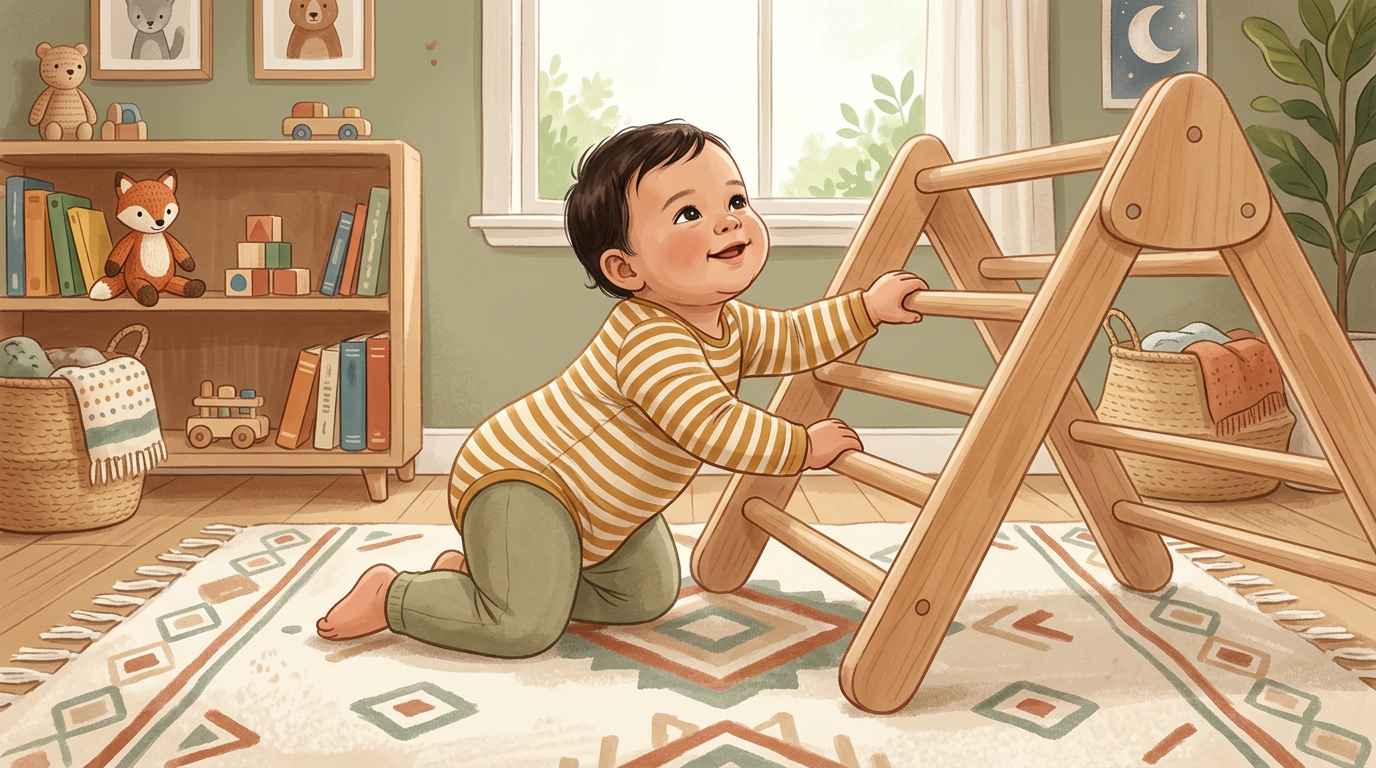
Once crawling begins, your child’s universe expands to every reachable cabinet, stair opening, trailing cord, and pet water bowl. HealthyChildren guidance emphasizes that new abilities often arrive suddenly, so it helps to assume your baby can do tomorrow what they first attempted today.
This is the stage when gates, cabinet locks, and bathroom controls become urgent. Focus on barriers and low storage because curiosity is sensory and repetitive: your child will open, tug, bang, and revisit the same hazard again and again.
Pulling to stand also changes furniture risk. Items that seemed stable may wobble when used as climbing tools. Re-check anchors, remove climbable objects near windows, and make sure freestanding lamps or decor cannot be pulled down.
Quick checklist
- ✓Install gates at stairs and dangerous transitions.
- ✓Lock low cabinets and drawers in kitchens, bathrooms, and laundry areas.
- ✓Re-check furniture anchors once your child starts pulling up.
- ✓Move cords, plants, pet supplies, and purses out of the crawl zone.
Cruising and early walking: plan for falls and faster access
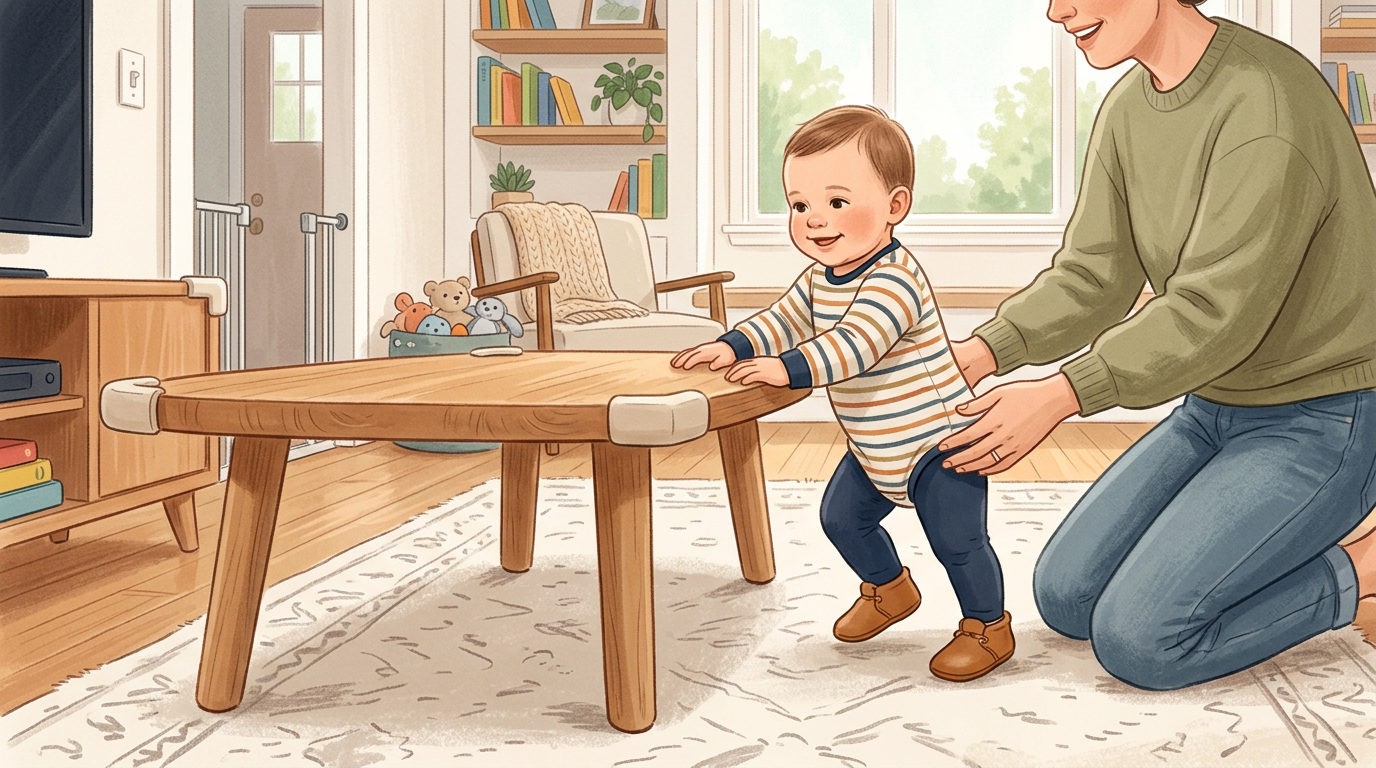
Cruising changes the map again because your child can now reach counters, coffee tables, and door hardware while moving quickly. Falls become more frequent, and your baby can carry objects from one room to another. That is why corner protection, stair security, and deliberate clutter control start to matter more.
The kitchen often becomes dramatically riskier in this stage because toddlers can reach handles, tug tablecloths, and grab hot beverages left within range. Bathrooms also require more intentional supervision because children who can toddle independently can enter standing-water spaces fast.
This is a good time to simplify. If a room needs constant verbal correction to stay safe, it probably needs a better barrier, better storage, or fewer tempting objects within reach.
Quick checklist
- ✓Reposition hot drinks, glassware, and heavy objects away from edges.
- ✓Use door controls for rooms that are not fully childproofed.
- ✓Keep gates closed consistently, not occasionally.
- ✓Audit every reachable surface from your child’s standing height.
Climbing toddler stage: the biggest hazard is confidence
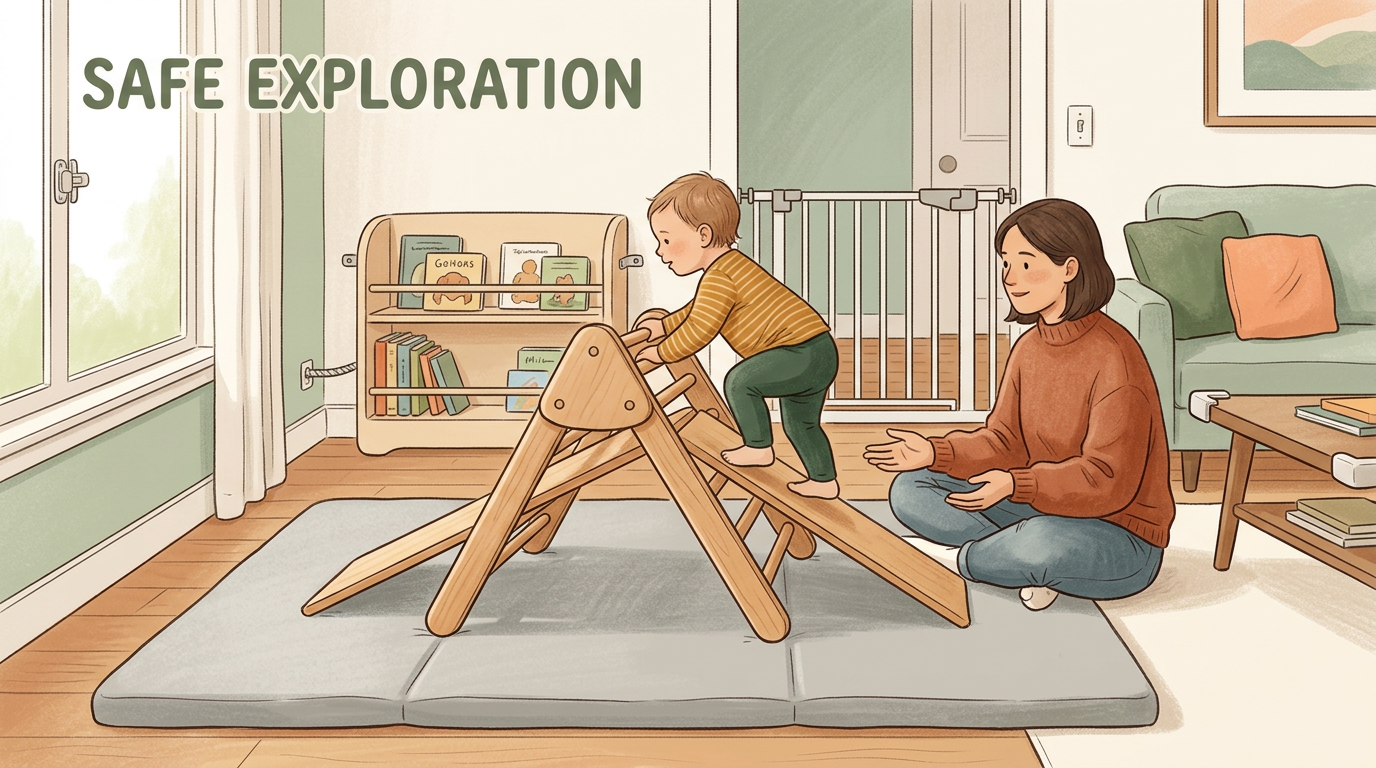
Climbing toddlers are not just stronger. They are strategic. They drag stools, stack toys, test latches, and remember which door opened yesterday. At this stage, baby proofing becomes a mix of hardware, environment design, and routine.
Reassess windows, balcony access, furniture placement, and any storage that contains medications, tools, sharp objects, or small parts. If you have older children, their art supplies, chargers, and toys may now be the new low-level hazard source.
Parents often discover that the most useful upgrades in this stage are not new products but better home systems: emptying bags onto hooks, closing bathroom doors, keeping keys and remotes off tables, and maintaining one fully safe play zone where you can say yes more often.
Quick checklist
- ✓Treat stools, toy bins, and chairs as climbing aids and place them intentionally.
- ✓Upgrade weak latches or temporary fixes your child has learned to defeat.
- ✓Revisit window safety, balcony access, and off-limit rooms.
- ✓Maintain a dedicated safe play area for independent exploration.
How to keep your checklist current without overbuying
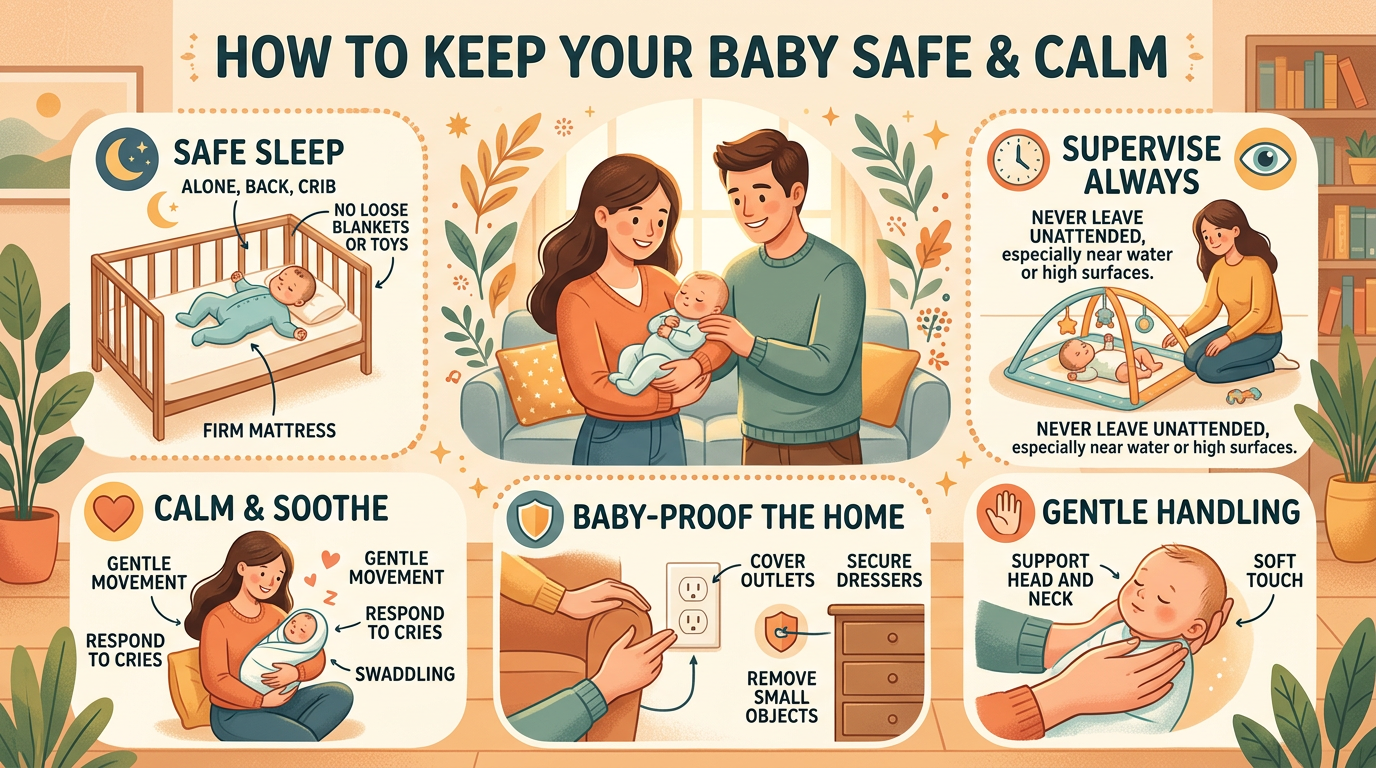
A stage-based approach prevents two common problems: buying too much too early and reacting too late. Instead of childproofing for an imaginary future home, buy for the next skill your child is likely to gain in the next one to three months.
That usually means furniture anchors and outlet coverage early, gates and locks before crawling gets fast, then more access control once climbing and handle-turning begin. Products should support your routine, not create friction so annoying that the whole family stops using them.
If you are unsure what is next, watch your child for the new behavior that keeps repeating. Repetition is the clue. The moment your baby practices the same risky motion three times in one day, you can assume it is time to upgrade the environment.
Quick checklist
- ✓Plan one stage ahead rather than two years ahead.
- ✓Replace habit-based supervision with safer environments whenever possible.
- ✓Use guide pages and room pages as your recurring audit list.
- ✓Re-check your home every few months or after developmental leaps.
Frequently asked questions
Many families begin basic baby proofing before crawling, often when rolling and scooting become consistent. The important part is finishing high-risk tasks before mobility accelerates.
Yes. Walking adds faster access, higher reach, and more falls. You should reassess stairs, corners, hot surfaces, door handles, low furniture, and anything your child can now carry or climb onto.
Toddlers are stronger, taller, and more determined. Hardware that worked for a crawler may fail when a climber can pull, twist, stack, and repeat until something opens.
Yes. Before crawling is the easiest time to do the big setup work, and it reduces the scramble that happens when new skills appear faster than expected.
Featured products
Affiliate linksProducts that support this guide
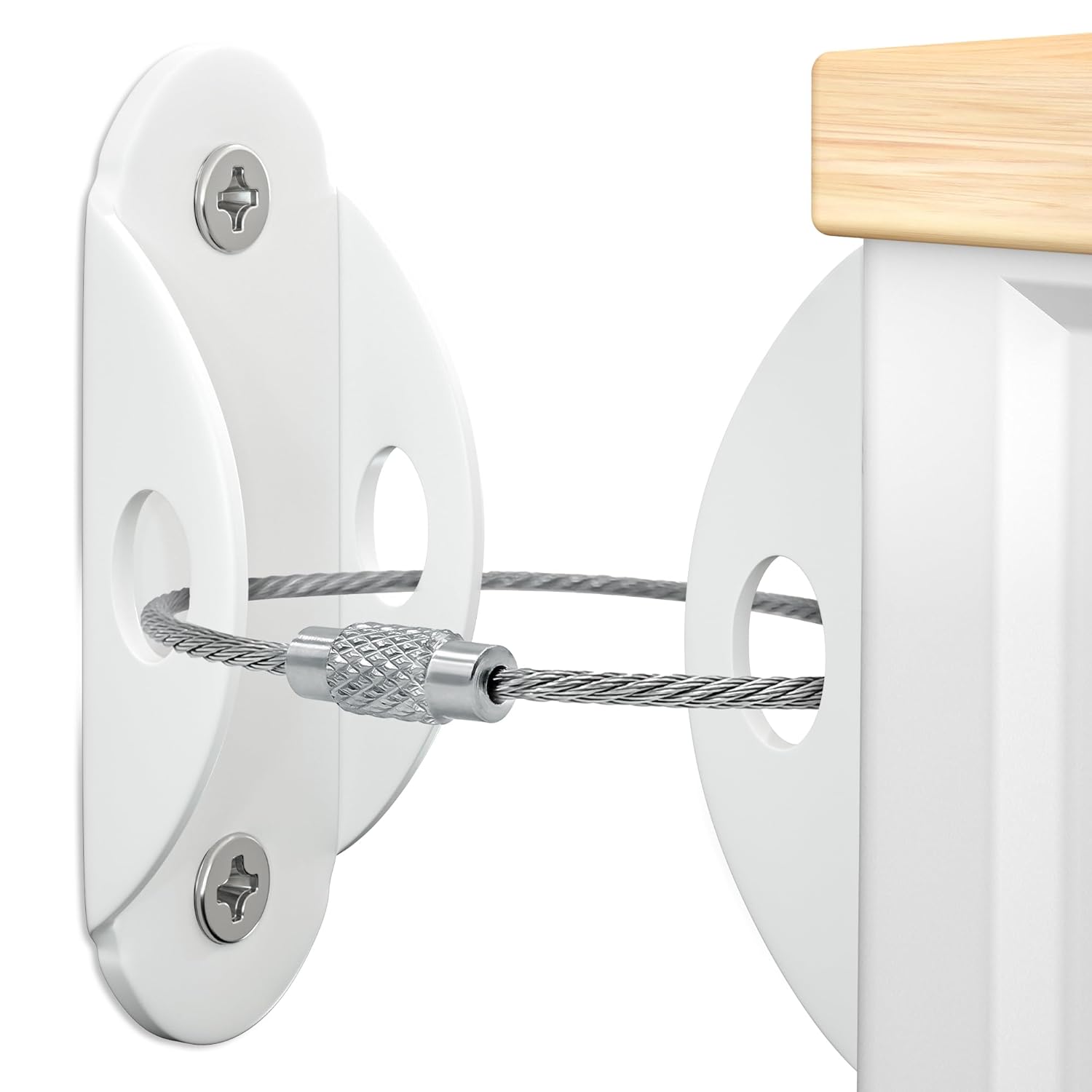
Booda Brand Furniture Anchors (10 Pack) Anti Tip Straps
Steel anti-tip straps for tall furniture and televisions, sold as a multi-pack so you can do a whole room in one afternoon. Tip-overs are one of the most common serious household injuries for toddlers, and we recommend anchoring anything taller than a child even if it feels stable when you push on it. The included hardware works for wood studs and most wall anchors; for plaster or masonry you may need different fasteners.
View product→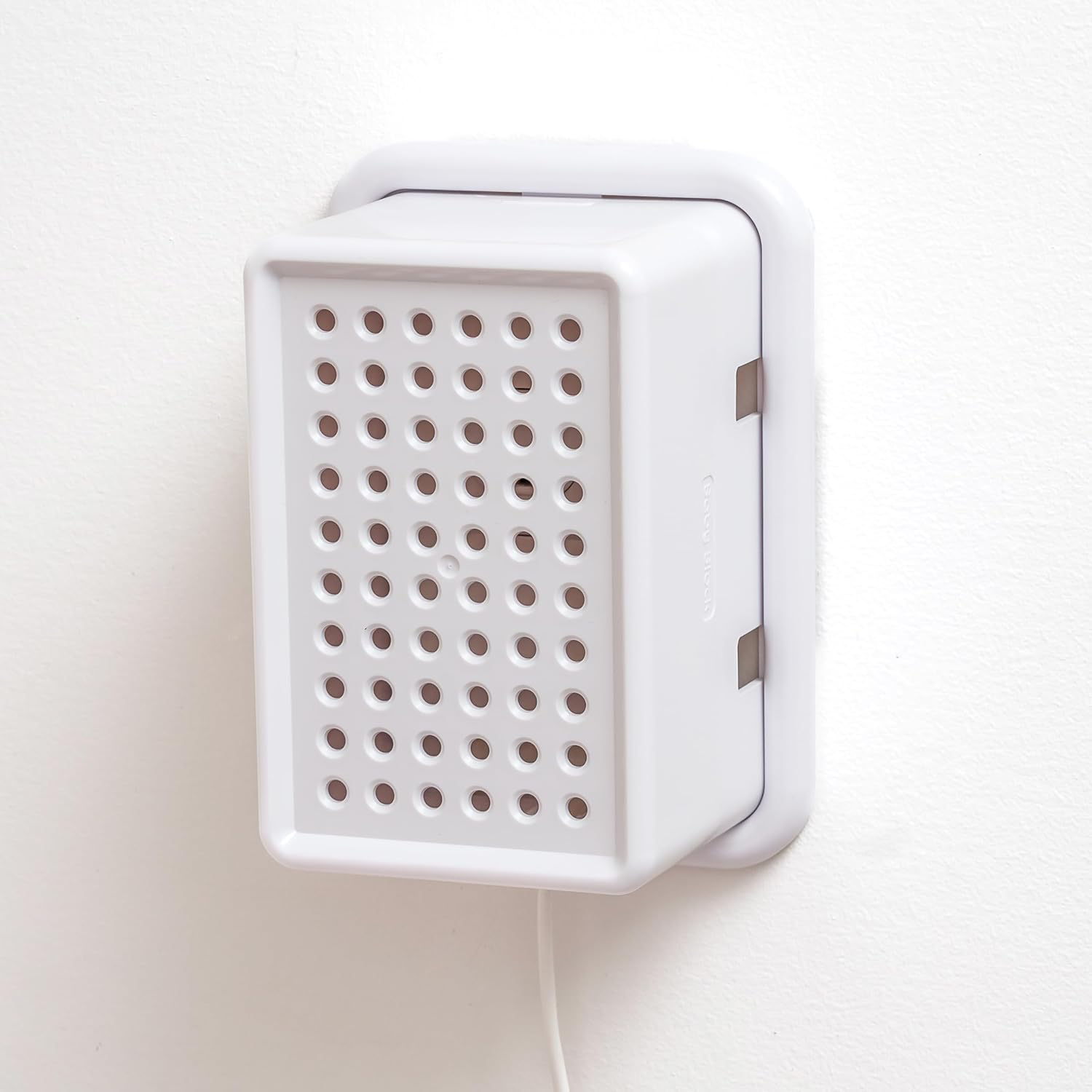
Outlet Plug Covers (24-Pack) Childproof Socket Protectors
Simple press-fit outlet caps that block unused electrical sockets from curious little fingers.
View product→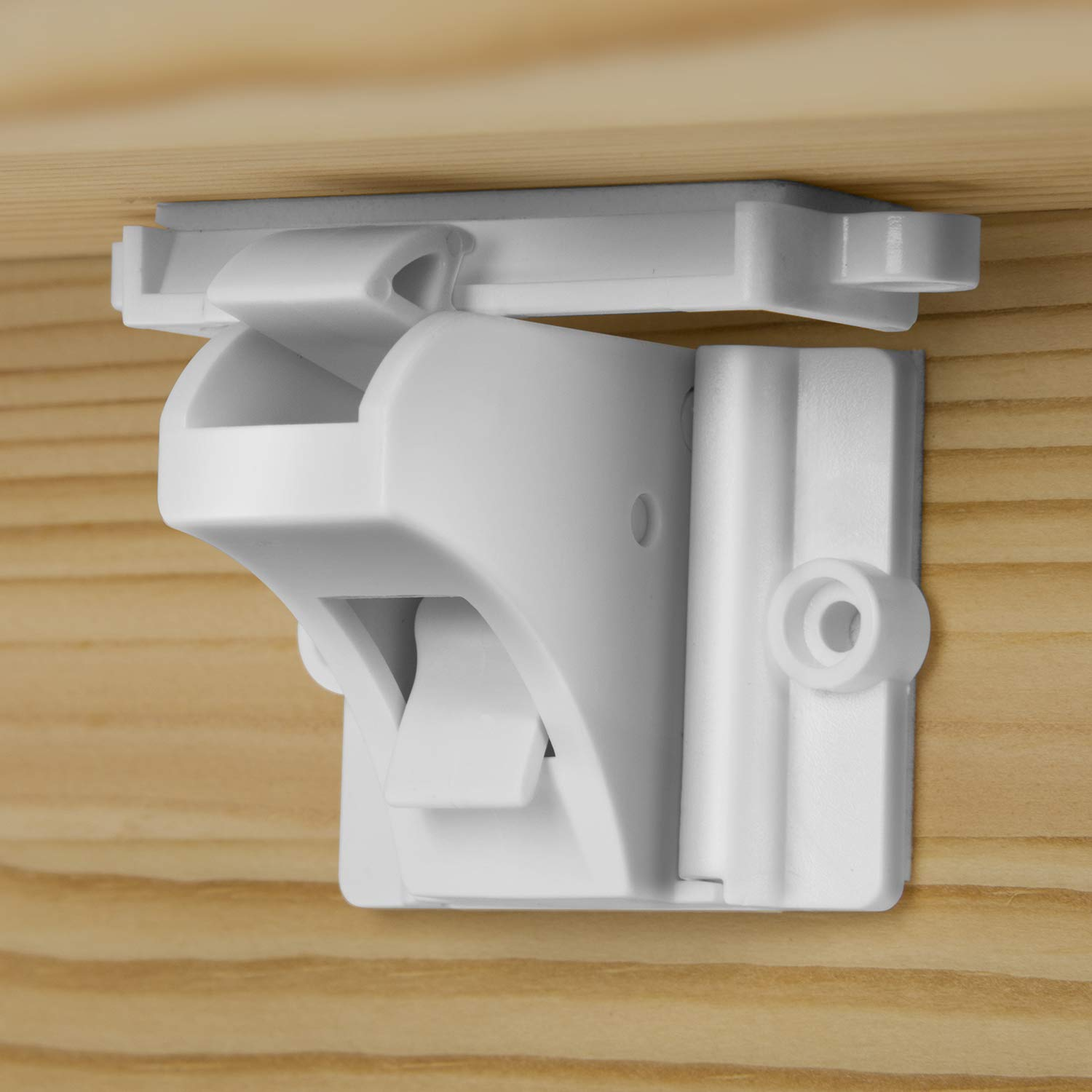
Vmaisi 20 Pack Magnetic Cabinet Locks Baby Proofing
Hidden magnetic cabinet locks that install inside cabinets and drawers for a clean look. Opened with a magnetic key, adhesive installation with no drilling required. 20-pack with keys included.
View product→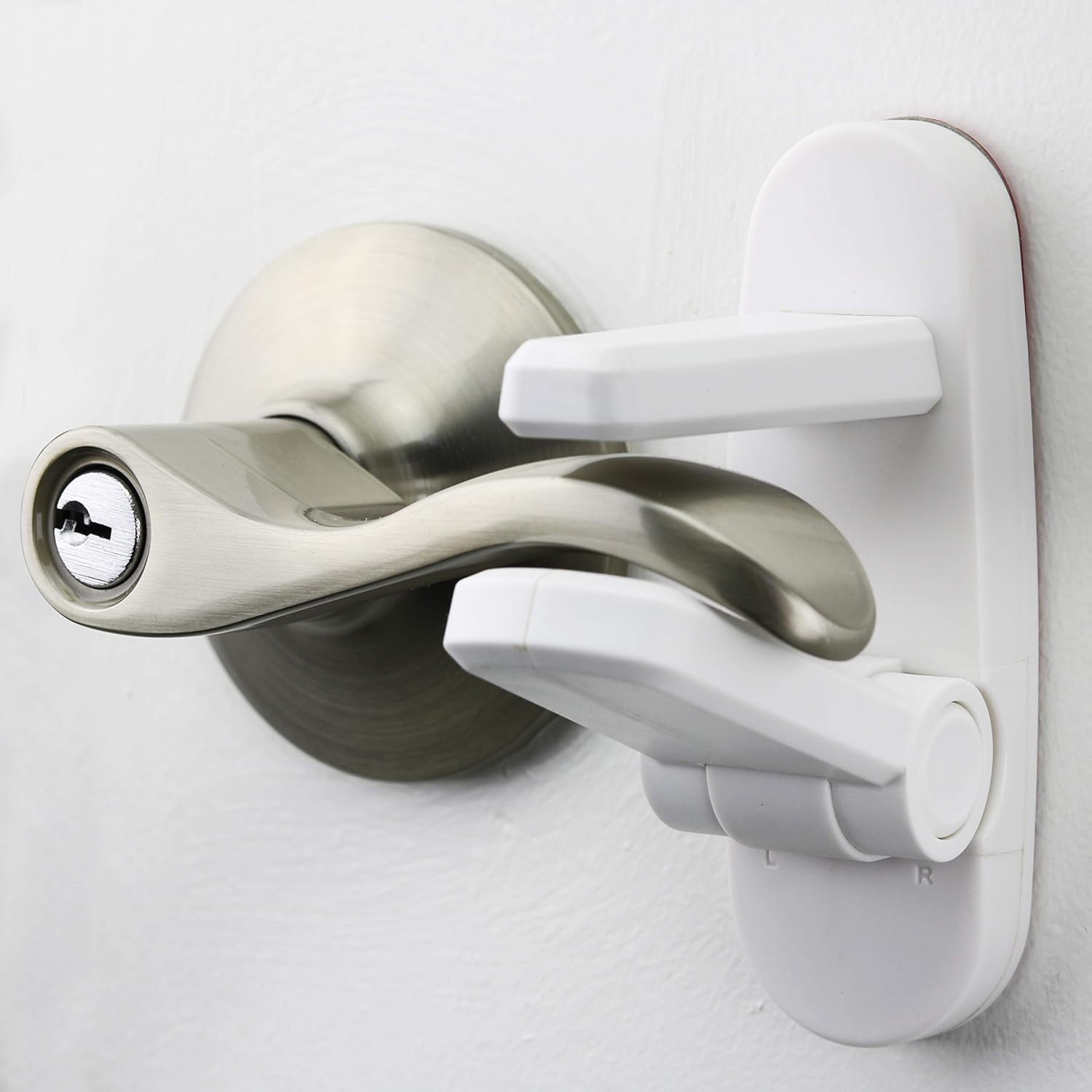
Wappa Baby Door Lever Lock (2 Pack)
Adhesive door lever locks that keep toddlers from opening lever-handle doors while still allowing adult one-hand operation.
View product→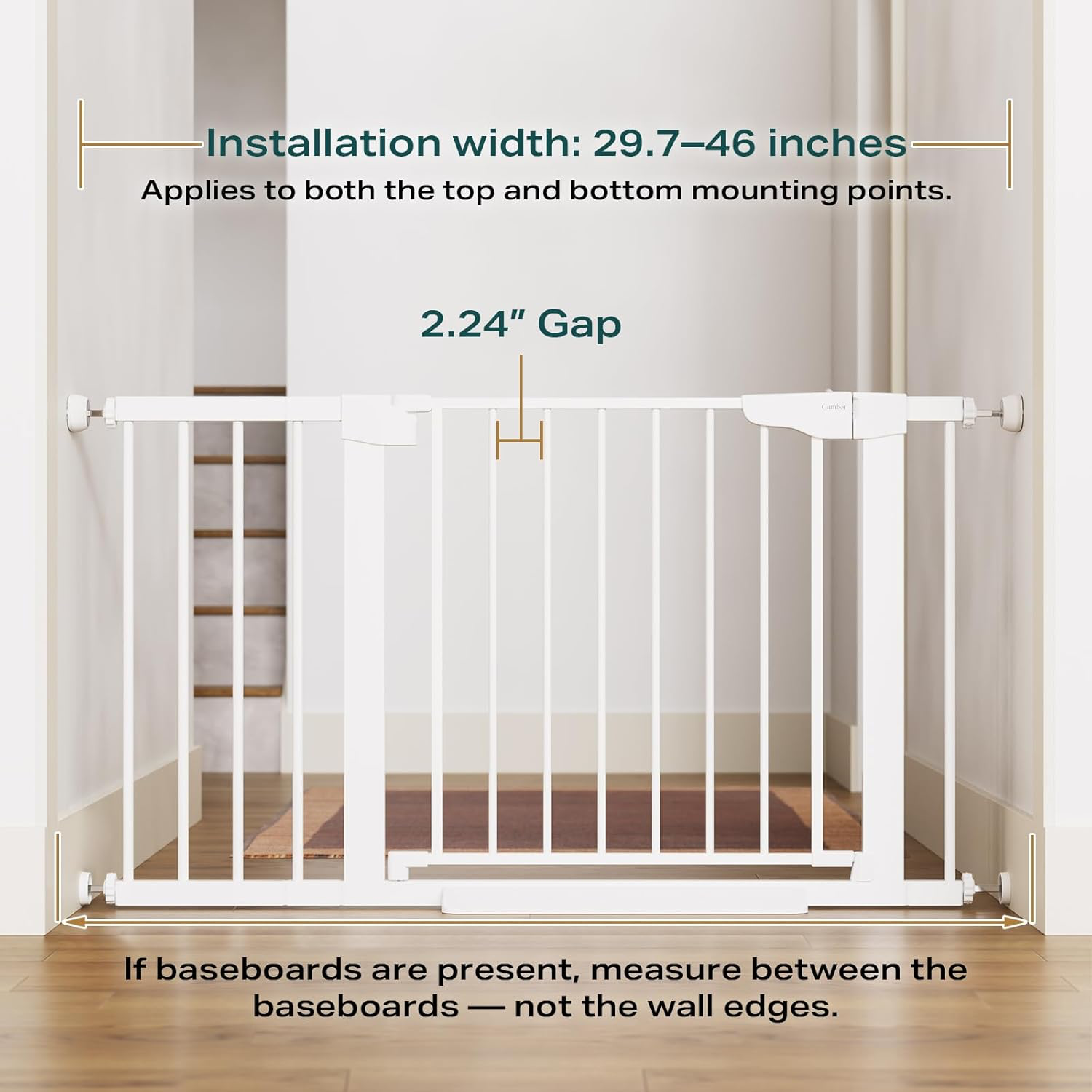
Cumbor 29.7-46 Baby Gate for Stairs
A pressure-mounted barrier sized for typical hallway and stairway openings between roughly 30 and 46 inches. We like it for renters because it sets up without drilling, and the auto-close latch helps when you walk through with a baby on your hip. Confirm it fits your specific opening before you buy.
View product→Last reviewed
Sources used for this guide
Reviewed on March 17, 2026. This content is educational and practical, but it is not a substitute for professional safety inspections or medical advice.
HealthyChildren.org / American Academy of Pediatrics
Safety for Your Child: 6 to 12 MonthsHealthyChildren.org / American Academy of Pediatrics
Movement: Babies 8 to 12 MonthsHealthyChildren.org / American Academy of Pediatrics
Make Baby's Room SafeU.S. Consumer Product Safety Commission
Anchor It! furniture tip-over safety