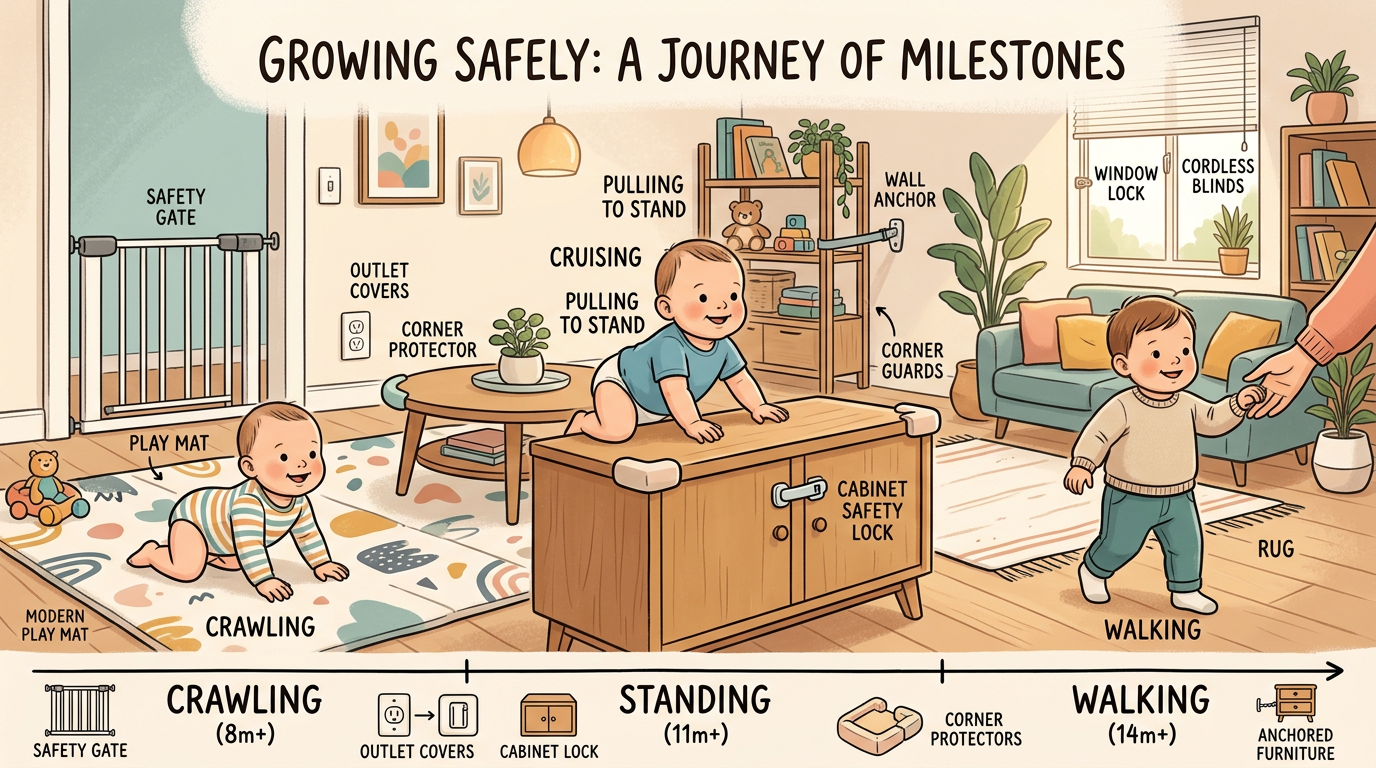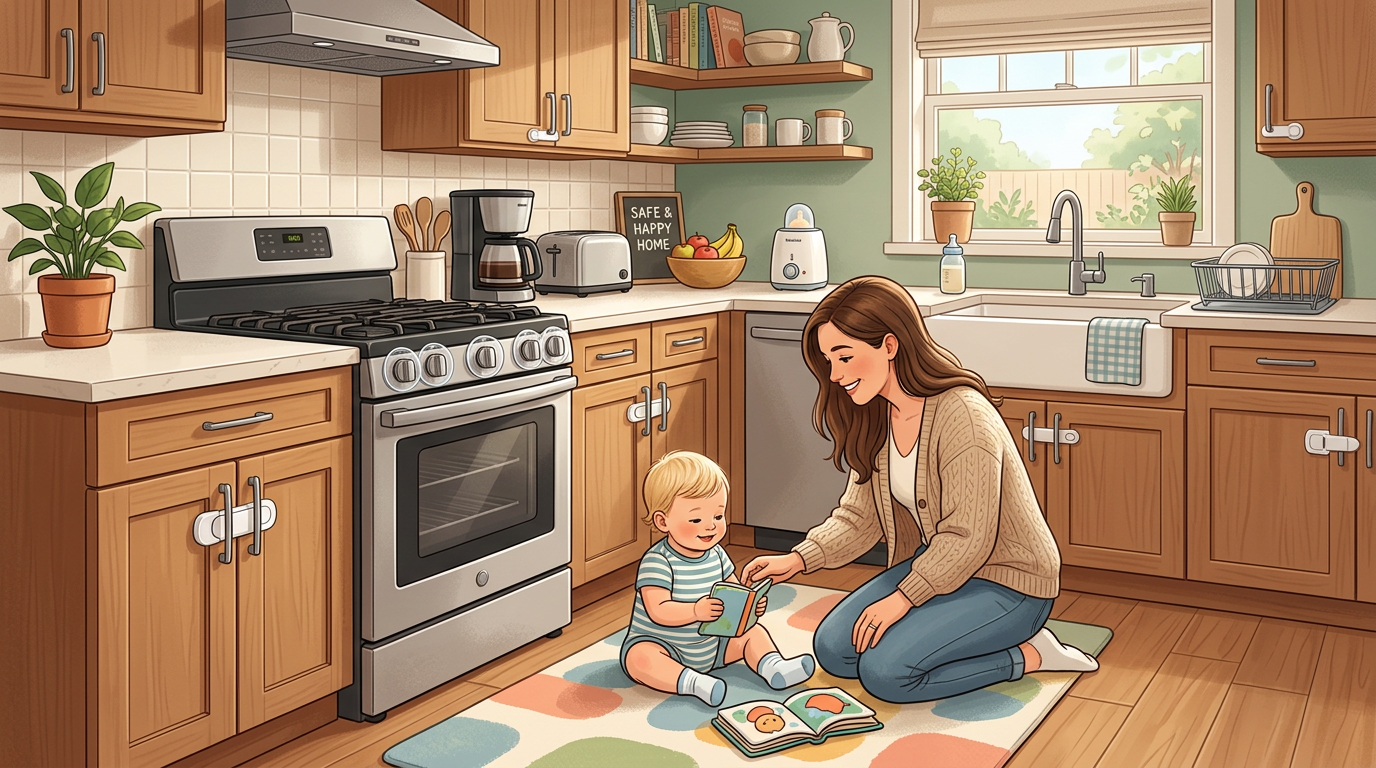
Why the kitchen is one of the hardest rooms to baby proof
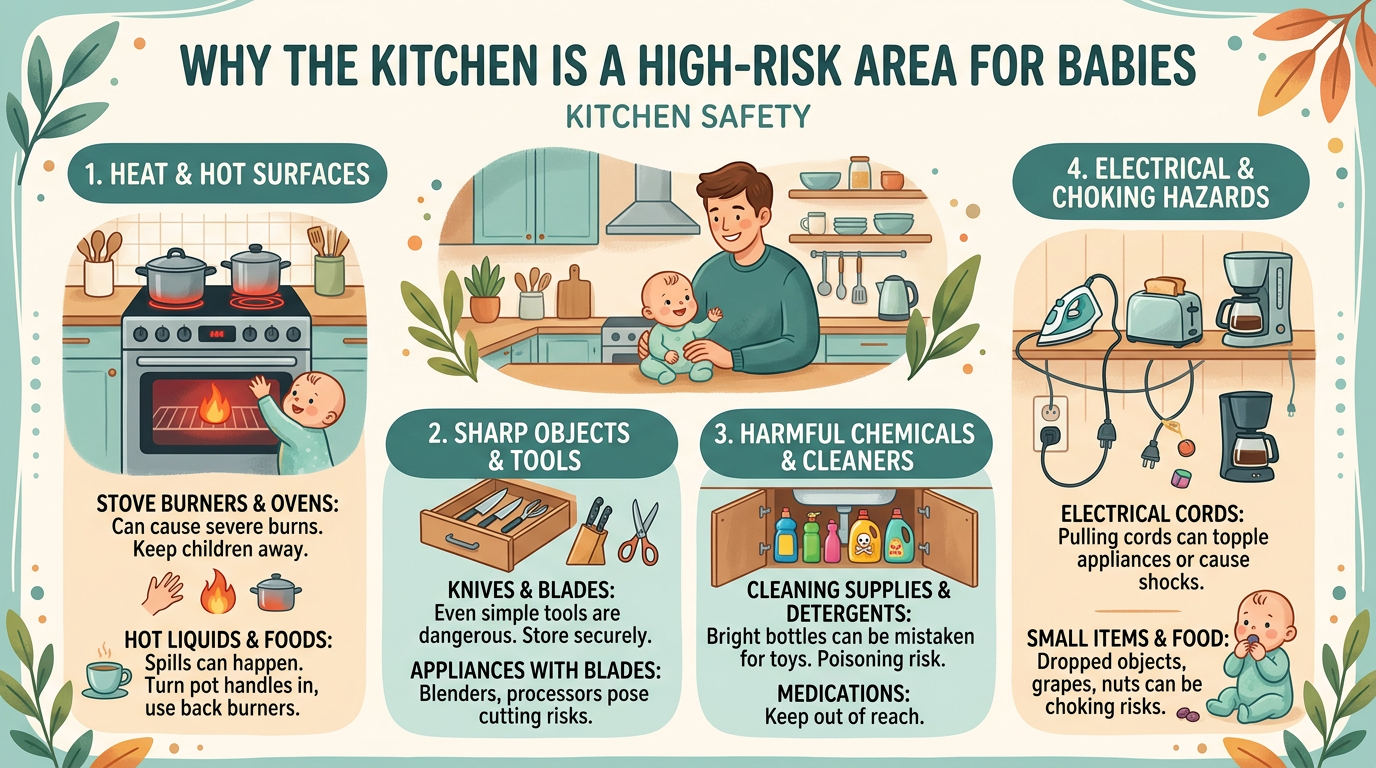
The kitchen has more high-consequence hazards per square foot than almost any other room in the house. Heat, glass, knives, cleaning chemicals, small appliances, and heavy objects all sit near one another, and many live at toddler eye level.
Unlike bedrooms or playrooms, the kitchen is also active. Adults move fast there, which makes it easier to leave a dishwasher pod on the counter, a pan handle turned outward, or a bag within reach for just a minute. Baby proofing the kitchen is less about making it perfect and more about making mistakes less costly.
Start by identifying the places where a child can quickly turn curiosity into an injury: low cabinets, the stove, the oven door, the trash area, the sink zone, and any edge where a child can pull something down.
Lock the low storage first
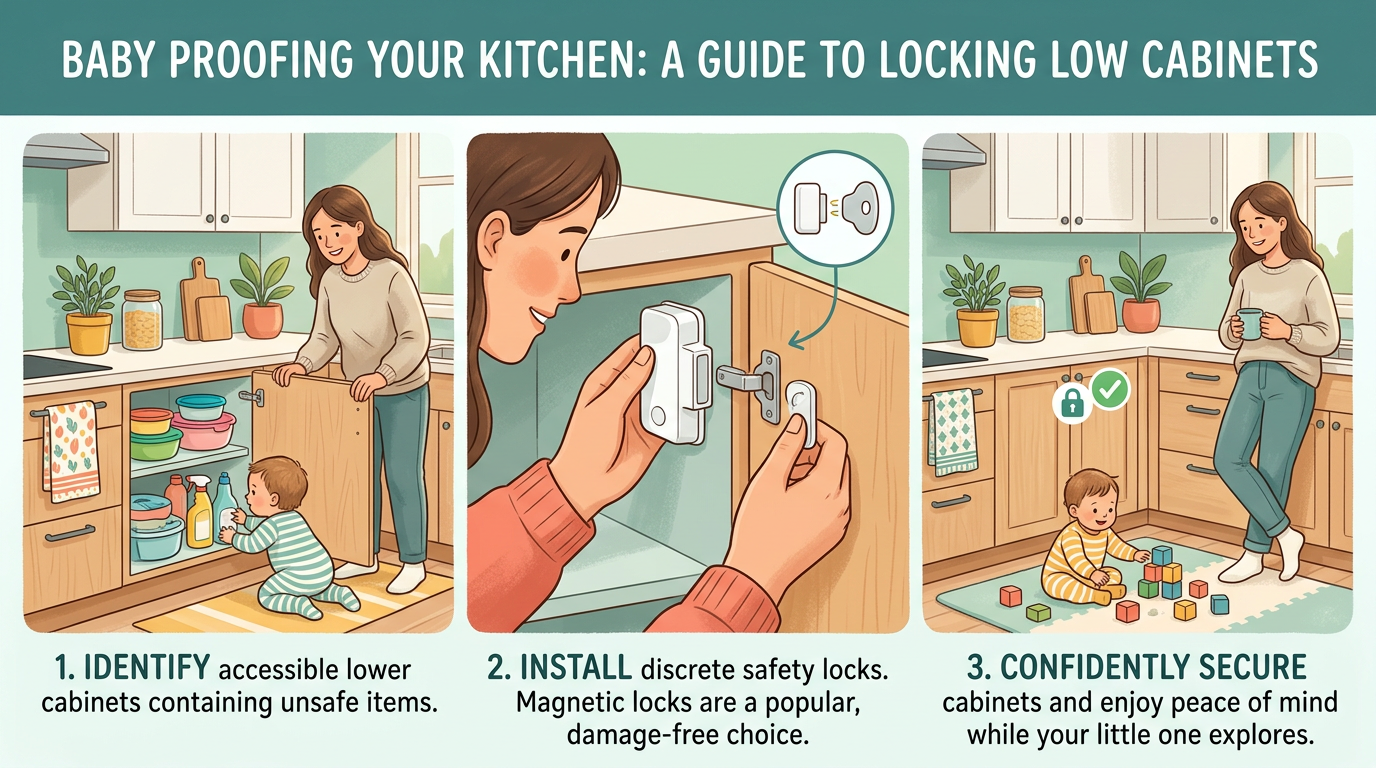
Cabinets and drawers are the first kitchen upgrade for a reason. They control access to sharp tools, breakables, small parts, alcohol, cleaners, and plastic wrap boxes with cutting edges. If a cabinet contains anything you would urgently remove from your child’s hands, it belongs behind a lock or up high.
Adhesive cabinet locks work well for most families because they install quickly and protect many standard cabinets without visible exterior hardware. Magnetic locks are useful when you want a cleaner look or extra resistance. The right choice is the one every adult in the home will use consistently.
Do not stop with cabinets. Countertop clutter migrates downward, and toddlers learn from repetition. If bags, vitamins, or snack pouches live near the edge during busy evenings, they eventually become reachable.
Quick checklist
- ✓Lock low cabinets and drawers that contain knives, cleaners, glass, or small gadgets.
- ✓Move dishwasher pods, soaps, and sprays to higher or locked storage.
- ✓Treat pet food, alcohol, and supplements as hazards too.
- ✓Create one low cabinet with safe kitchen items if you want a supervised yes-space.
Control the stove, oven, and hot-zone risks
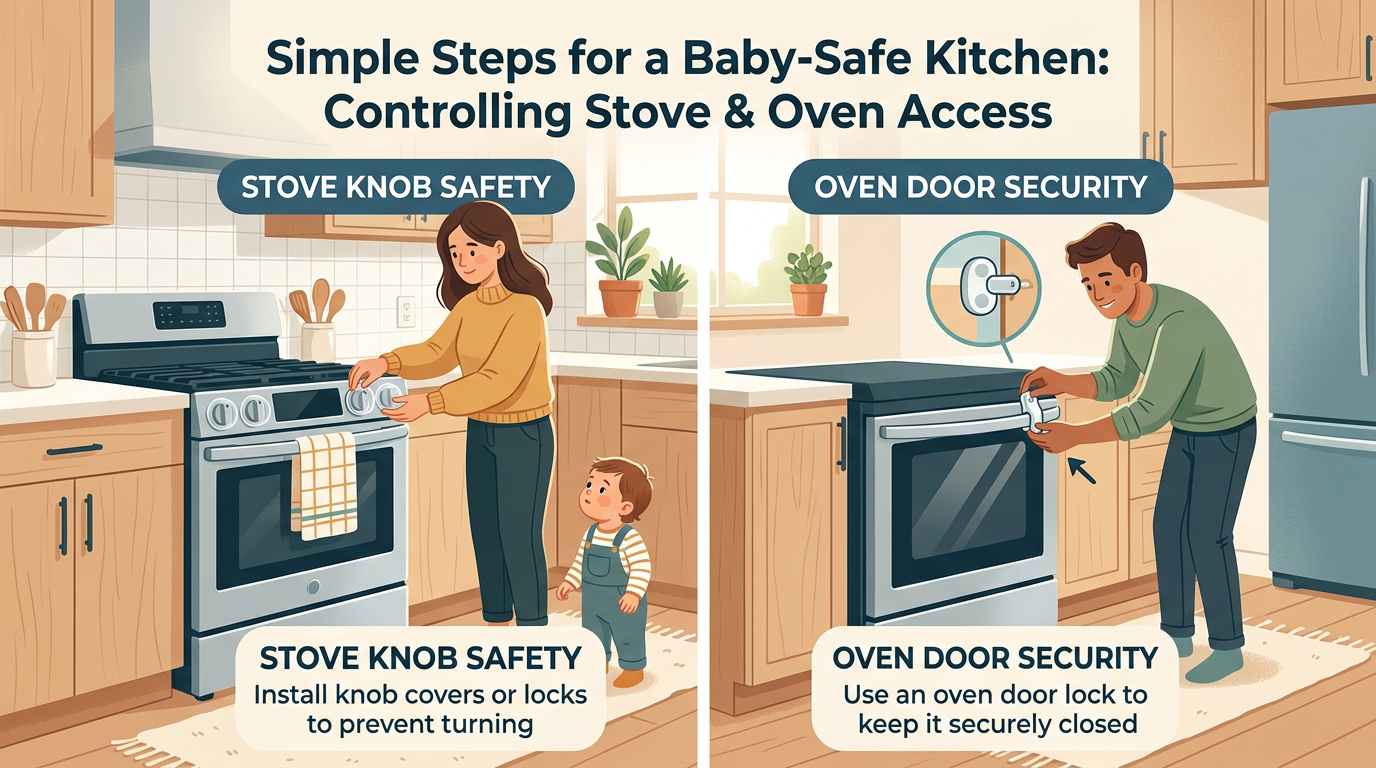
Burn prevention is the kitchen priority many parents underestimate because heat injuries happen quickly and often during normal routines. A child who can cruise or walk can grab a dangling pan handle, twist a stove knob, or pull on an oven door while you are plating dinner.
Use stove knob covers when your layout makes the controls reachable, and keep pot handles turned inward whenever possible. If your oven or range door attracts repeated pulling, an oven lock can reduce access during the stage when your child is testing every handle in sight.
Hot liquids matter just as much as appliances. Coffee mugs, soup bowls, and recently microwaved food should never cool near the edge of counters or tables. If your child can reach the cloth, placemat, or cord underneath the item, they can often reach the item too.
Quick checklist
- ✓Use stove knob covers if burners can be activated by a child.
- ✓Keep pot and pan handles turned inward.
- ✓Avoid cooling hot food or drinks near reachable edges.
- ✓Consider an oven lock if your child repeatedly pulls on the door.
Do not overlook cords, trash, and portable appliances
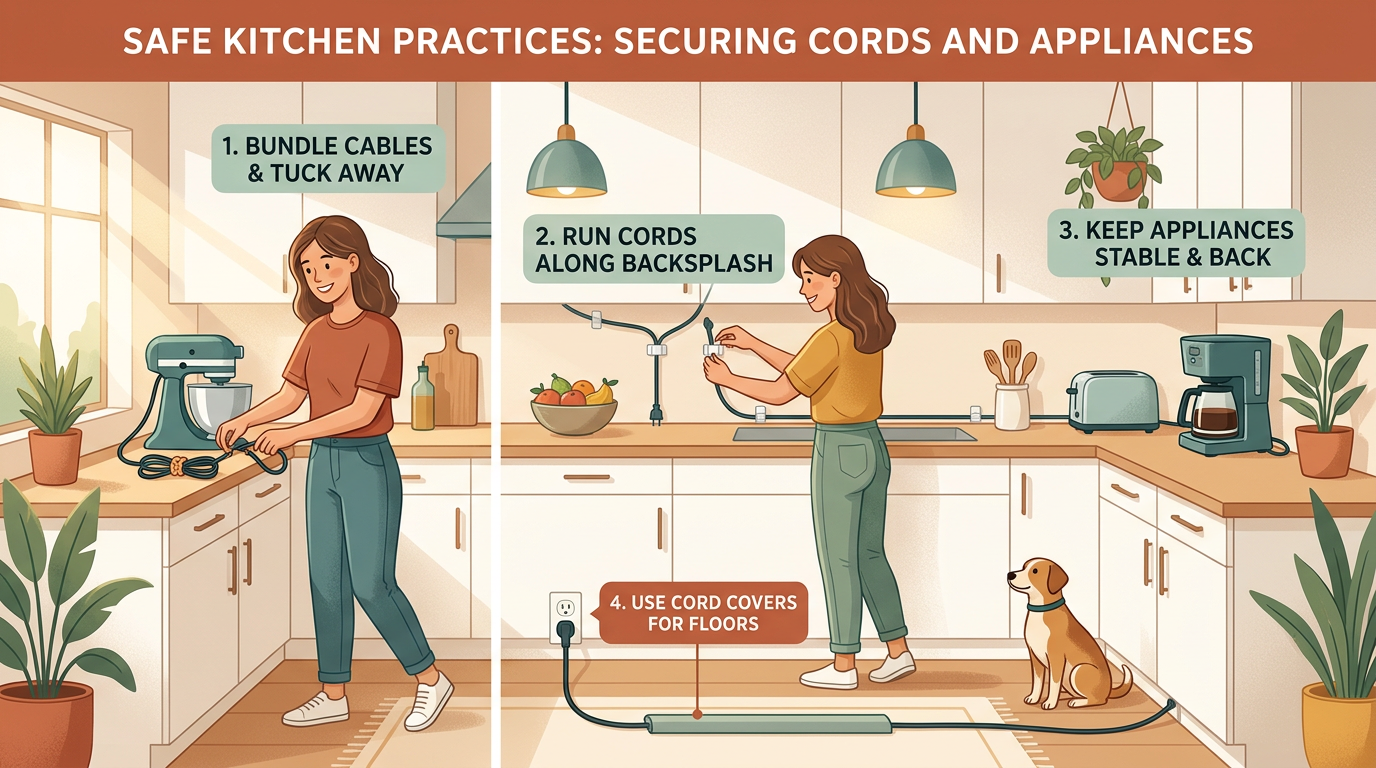
Toasters, kettles, air fryers, slow cookers, and blenders create two hazards at once: hot surfaces and pullable cords. If an appliance stays on the counter, route the cord behind the appliance and away from the edge. Better yet, unplug and store items you are not actively using.
Trash cans, recycling bins, and lower pantry shelves are often treated like housekeeping issues instead of safety issues. But they can expose children to spoiled food, sharp lids, glass, packets, or choking hazards. If your child visits the trash repeatedly, move it behind a cabinet door or use a locking setup.
Dishwashers deserve attention too. Knives, detergent, and open racks sit at floor level. Keep the dishwasher closed when possible and unload sharp items first rather than last.
Quick checklist
- ✓Route or hide appliance cords so they cannot be tugged.
- ✓Keep trash and recycling inaccessible during toddler stages.
- ✓Unload sharp dishwasher items promptly.
- ✓Store breakables and heavy serving pieces away from low edges.
Create kitchen routines that keep safety realistic
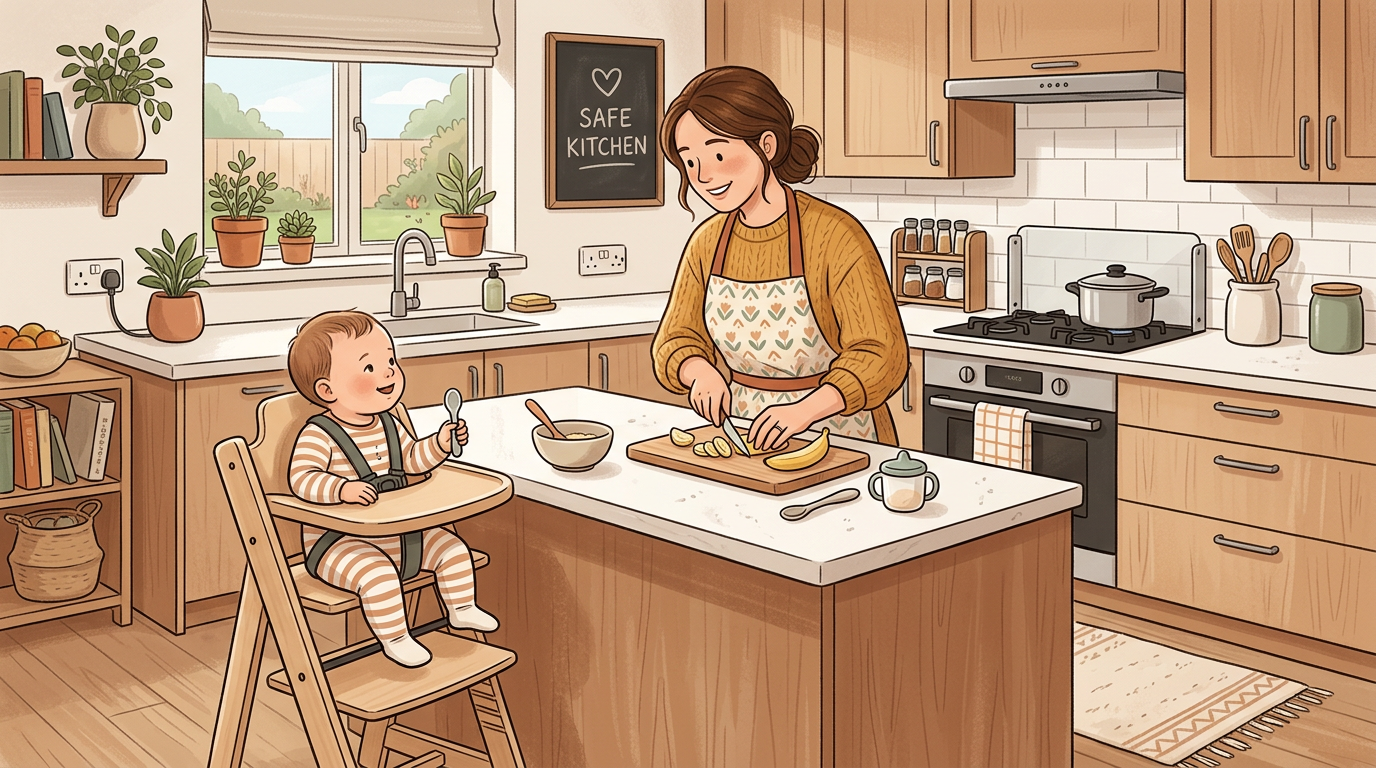
The best kitchen baby proofing setup supports how your family actually cooks. If the safety plan is inconvenient enough that adults bypass it every night, it will not last. Choose tools that reduce daily friction, like latches on the worst cabinets and a defined safe zone where your child can be nearby without reaching the hot area.
Some families use a high chair, learning tower, or gated threshold strategically during meal prep. The key is not the product itself but the rule it supports: your child has a predictable place while hot food, knives, and open doors are in motion.
Revisit the kitchen every few months. The stage when a crawler opens a cabinet is different from the stage when a toddler drags a chair to the counter. If your current setup only works because you are saying no every thirty seconds, it is time to redesign the room again.
Quick checklist
- ✓Define where your child can safely be during cooking.
- ✓Choose locks adults will use every day.
- ✓Reassess once your child starts climbing or dragging furniture.
- ✓Keep daily-use hazards out of the kitchen landing zones like islands and table edges.
Frequently asked questions
Start with low cabinets and drawers, then address the stove, oven, cleaners, sharp tools, appliance cords, and reachable hot drinks. Those steps cover the biggest kitchen injury risks first.
No. Locks are important, but you also need better storage habits, heat control, safer cord placement, and a plan for where your child is during active cooking.
Use adhesive cabinet locks, removable cord management, and no-drill solutions where possible. Renter-friendly setups can still be very effective when the main hazards are controlled intentionally.
If your toddler repeatedly opens the refrigerator, accesses unsafe items, or leaves doors open, a multi-use latch can be helpful. It is usually a second-wave product after cabinets, heat, and chemical storage are addressed.
Featured products
Affiliate linksProducts that support this guide
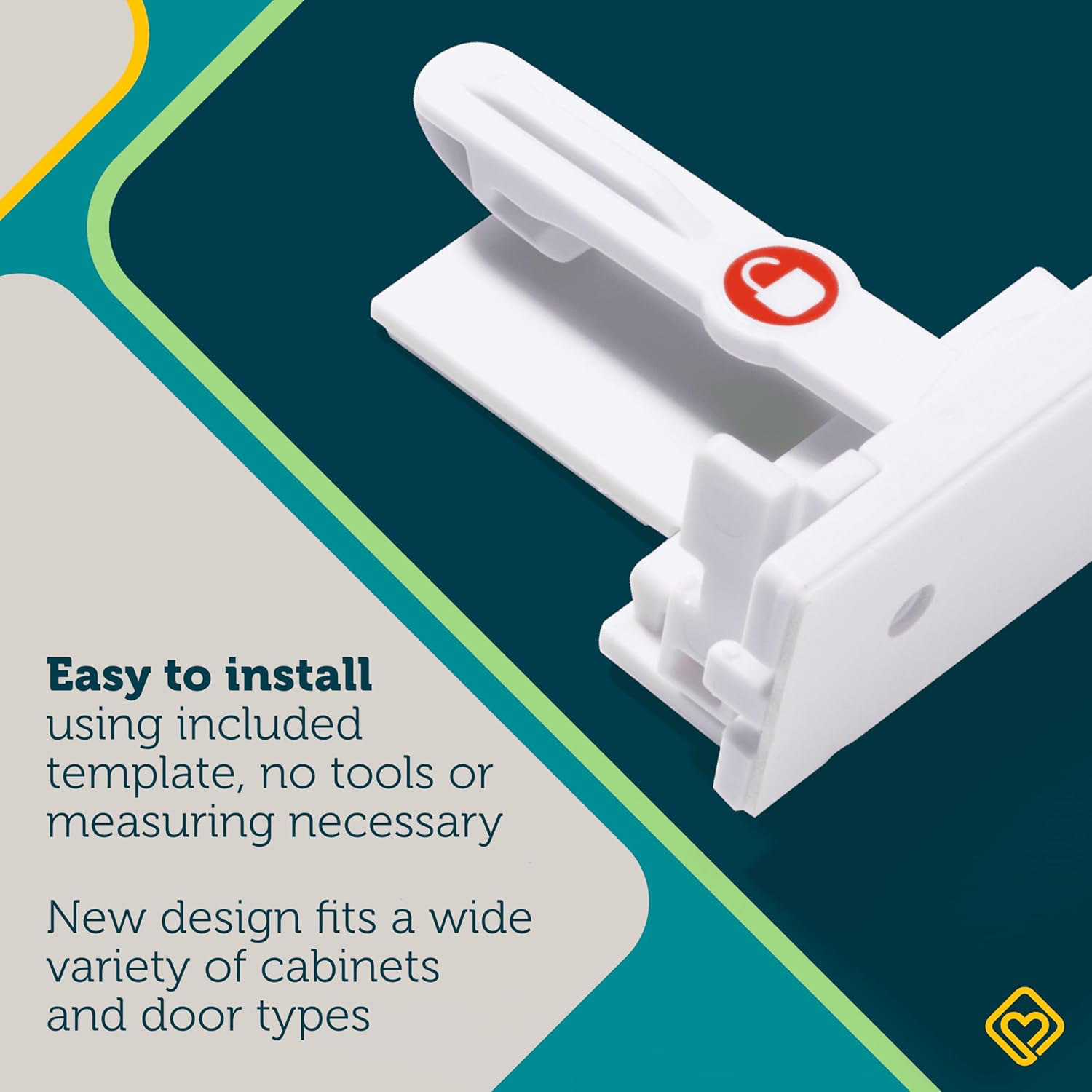
Adhesive Cabinet Locks (4-Pack) for Baby Proofing
Internal adhesive cabinet latches that help prevent toddlers from opening doors and drawers.
View product→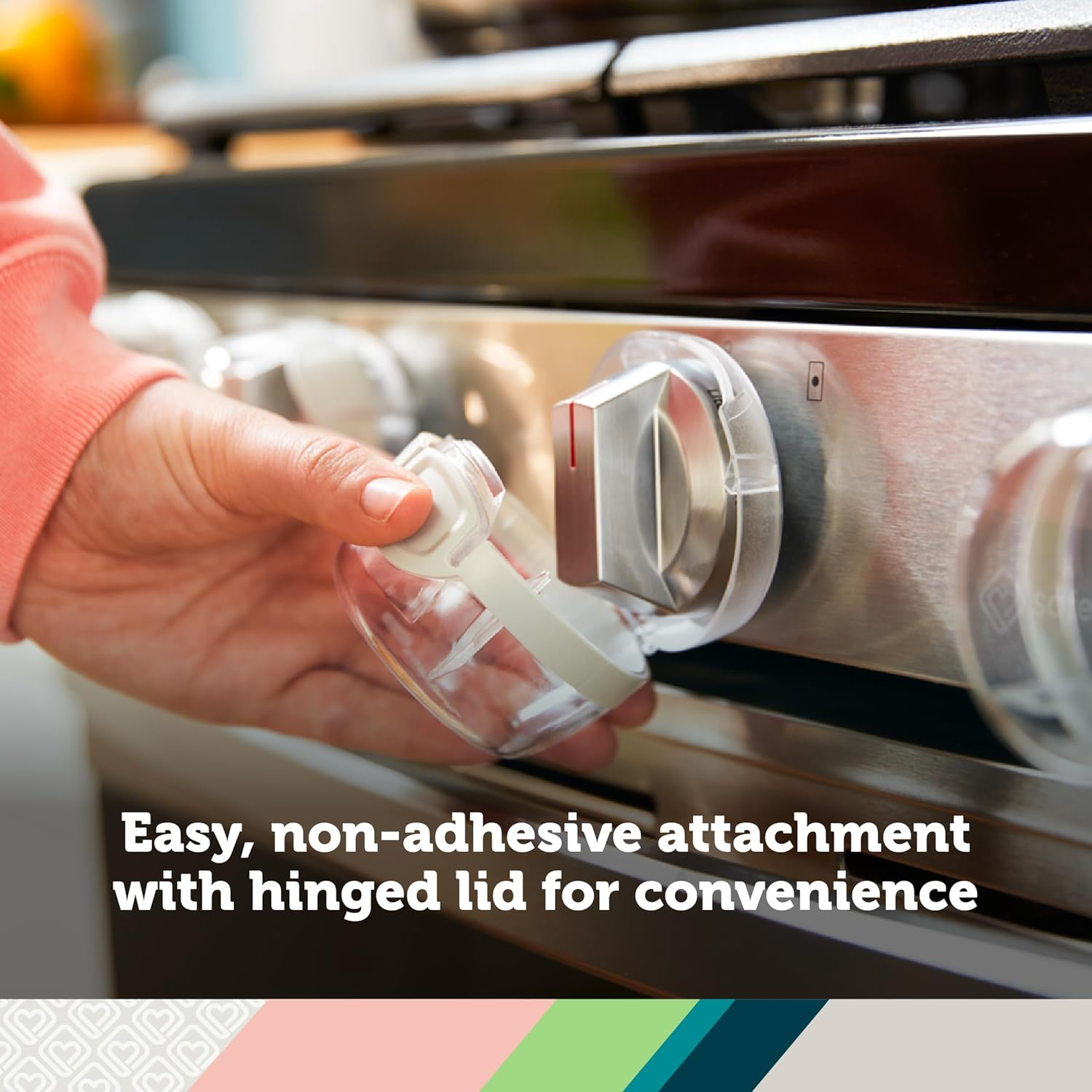
Driddle Clear Stove Knob Safety Covers (6 Pack)
Clear six-pack of stove knob safety covers that adds a child-resistant barrier over reachable gas or electric range knobs while keeping the dial position visible.
View product→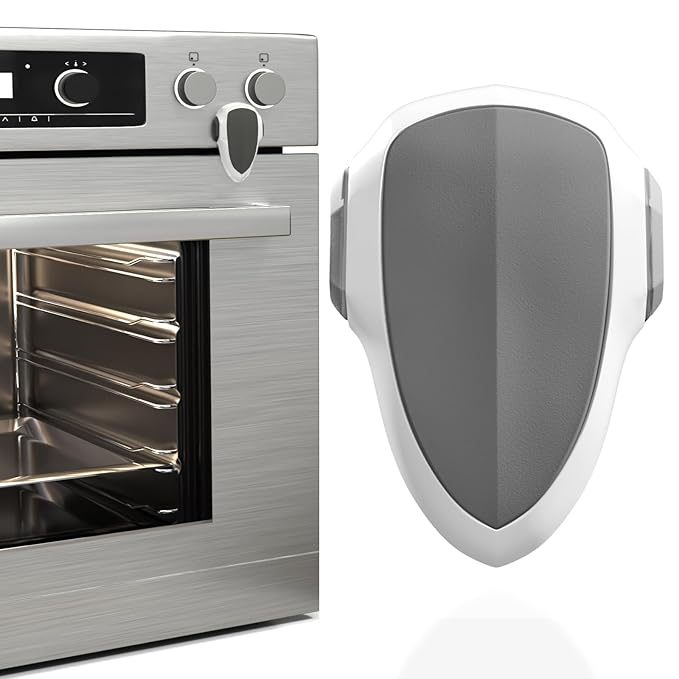
BABY PROOF ME Oven Lock Child Safety
Adhesive child-safety oven door lock with a rotating latch and adult two-button release.
View product→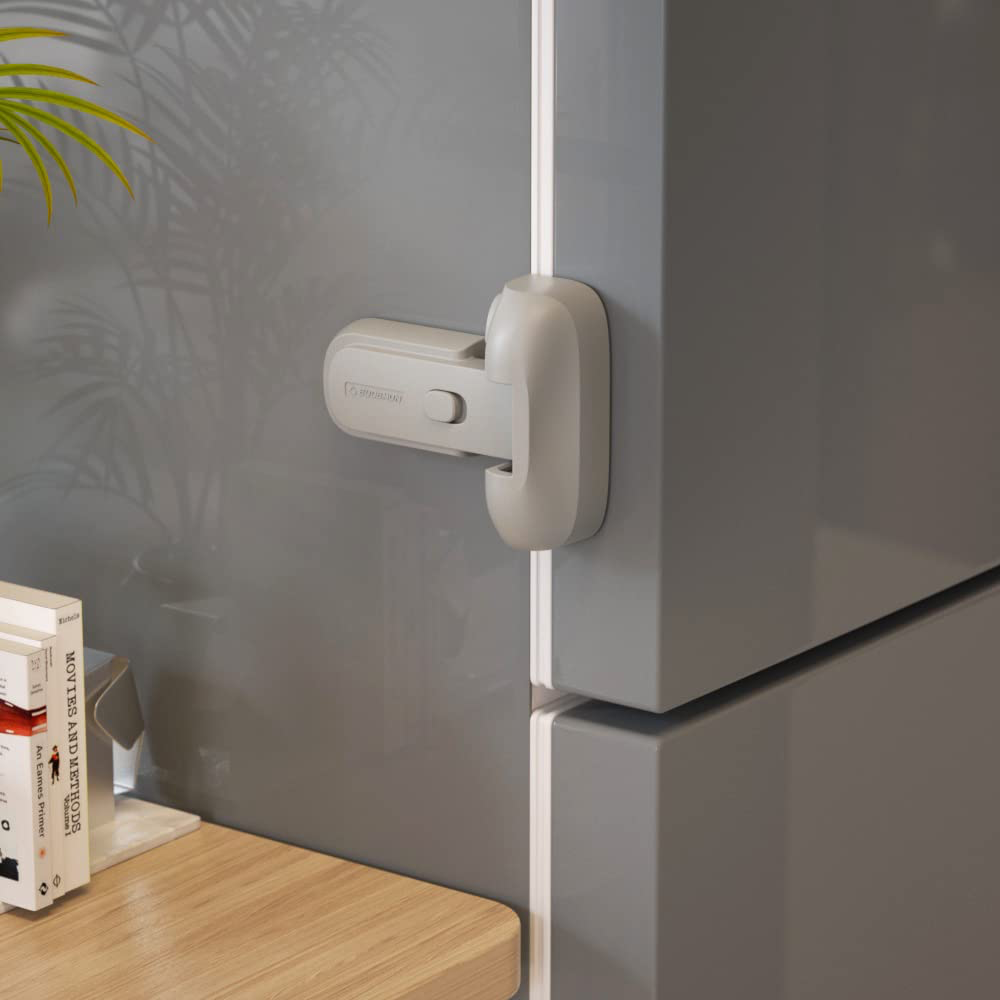
5 Pack Child Proof Refrigerator Lock, Baby Proofing Cabinet Locks, Oven Lock Child Safety, Fridge Lock, for Fridge, Drawers, Dishwasher, Oven, Cupboard, Closet, Adhesive, No Tools Need
Adhesive 5-pack of multi-use child safety latches for refrigerators, cabinets, drawers, dishwashers, ovens, and cupboards.
View product→Last reviewed
Sources used for this guide
Reviewed on March 17, 2026. This content is educational and practical, but it is not a substitute for professional safety inspections or medical advice.
HealthyChildren.org / American Academy of Pediatrics
Safety for Your Child: 6 to 12 MonthsU.S. Consumer Product Safety Commission
Childproofing your home: 12 safety devices to protect childrenSafe Kids Worldwide
Protecting children in your home