Three main categories of cabinet lock
Walk into the baby-proofing aisle and you will see dozens of cabinet locks, but they almost all fall into three categories: magnetic locks that mount inside the cabinet and open with a key, adhesive strap latches that connect the door to the frame from the outside, and internal spring-latch designs that catch the door automatically and release with a finger inside the gap.
Magnetic locks like the Eco-Baby Magnetic Cabinet Locks 12-Pack and the Vmaisi 20-pack are the cleanest looking option. Nothing is visible from the outside, and the door swings normally until the magnetic latch inside pulls a small bolt across the frame. A magnetic key, held against the door, retracts the bolt. The trade-off is that the key matters: lose it and you are prying cabinets open.
Adhesive strap latches like our Adhesive Cabinet Locks 4-Pack are the easiest to install — you peel a backing, line up the strap, and press. They handle awkward door shapes that magnets cannot, and adults find them faster to operate. They are visible from the outside, which is both their weakness (toddlers see what they are trying to defeat) and their strength (adults remember they exist).
Internal spring-latch locks, the older U-shaped style, mount around the existing door and frame. They are durable but harder to install, and they require enough gap between cabinet doors for a finger. Many newer kitchens with full-overlay cabinets do not work with this style at all.
Install difficulty and long-term durability
Adhesive locks win on install effort. Most parents can lock a small kitchen in under an hour with no tools beyond a wipe of rubbing alcohol. The catch is durability: adhesive degrades under repeated yanking, especially in humid rooms like bathrooms. Plan to inspect them monthly and replace any that have shifted.
Magnetic locks take longer to install — alignment is everything, and a sloppy first install means the bolt does not engage cleanly. The included template helps. Once installed, magnetic locks tend to last the entire baby-proofing window without intervention. They scale well to whole-home jobs.
Spring-latch locks fall in between. The install requires careful measurement, and the lock only works if the door has the right gap and clearance. When it fits, the design is mechanical and lasts indefinitely.
Quick checklist
- ✓Adhesive strap: easiest install, visible, best for two to four cabinets.
- ✓Magnetic: cleanest look, scales to whole kitchens, requires keeping a key findable.
- ✓Spring-latch: most durable, but only fits cabinets with adequate gap.
- ✓For high-stakes contents, use a keyed lockbox — not any baby-proofing lock.
Which lock holds up at which age
Children defeat different locks at different ages. A determined 14-month-old can sometimes peel an adhesive strap that was installed on a dirty surface. By 24 months, a child watching adults open and close a strap latch can sometimes mimic the motion. Magnetic locks last longer because the toddler has no visible target — they push, the door does not move, and they move on.
By age three, most children can operate strap-style locks if motivated. Many parents find that magnetic locks remain effective into preschool, especially if the key is kept somewhere routine but out of sight. By age four, the conversation shifts from physical locks to teaching what is off-limits and why.
Quick decision framework
Choose adhesive strap locks if: you are securing two to four cabinets, the contents are nuisance-level rather than dangerous, and you want to install in one afternoon. The Adhesive Cabinet Locks 4-Pack covers a typical starter kitchen.
Choose magnetic locks if: you are locking a whole kitchen plus bathrooms, you want the cleanest look, and you can commit to keeping the key findable. The 12-pack and 20-pack options scale to most homes.
Choose spring-latch locks if: your cabinets have adequate gap, you want a mechanical solution with no adhesive, and you are willing to drill or carefully measure for fit.
Step up to a keyed lockbox if: the cabinet stores firearms, prescription medications, or industrial cleaners. Baby-proofing locks are not engineered as security devices, and they should not be the only barrier between a child and a substance that could cause serious harm.
Frequently asked questions
They work on most flat-front wood, laminate, and sealed-melamine cabinets up to about one inch thick. They struggle on very thick doors, glass-front cabinets, and cabinets with strong factory magnets that interfere with the lock.
Most adhesive locks remove from sealed wood and laminate cleanly with heat and isopropyl alcohol. Glossy thermofoil cabinets can occasionally show a faint outline. Test in a low-visibility cabinet before committing to the whole kitchen.
Most kits include two keys for this reason. Keep one in routine use and one stored separately. If you lose both, contact the manufacturer for replacements before resorting to prying — replacement keys are usually inexpensive.
Most parents do not. Focus on cabinets with cleaners, medications, knives, breakables, or heavy items that could fall on a toddler. Empty Tupperware cabinets are often left unlocked deliberately as a safe play target.
A flexible multi-use latch is a better fit for refrigerators because of the door geometry, and oven door locks are designed specifically for the heat exposure. Standard cabinet locks are not rated for either application.
Featured products
Affiliate linksProducts that support this guide
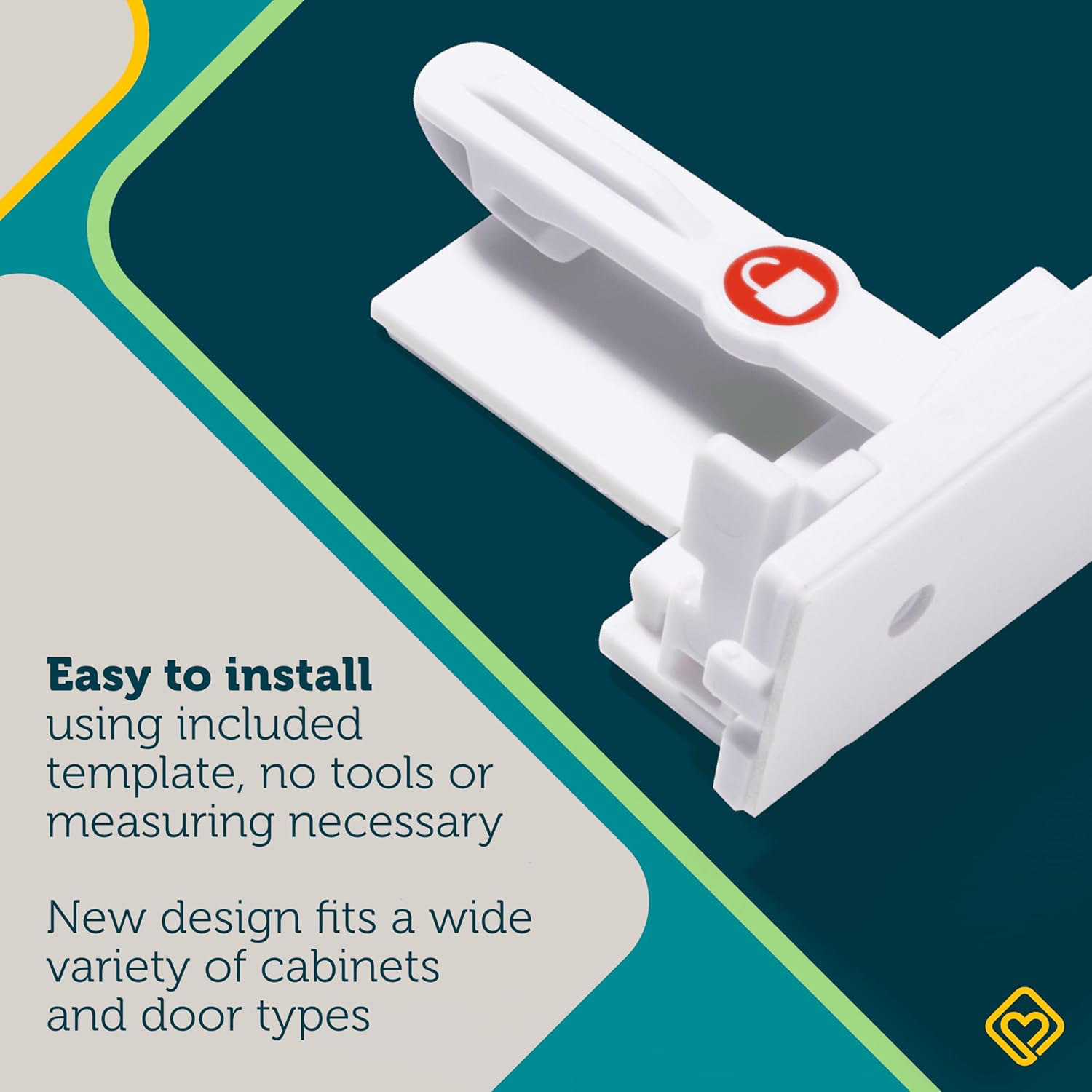
Adhesive Cabinet Locks (4-Pack) for Baby Proofing
Internal adhesive cabinet latches that help prevent toddlers from opening doors and drawers.
View product→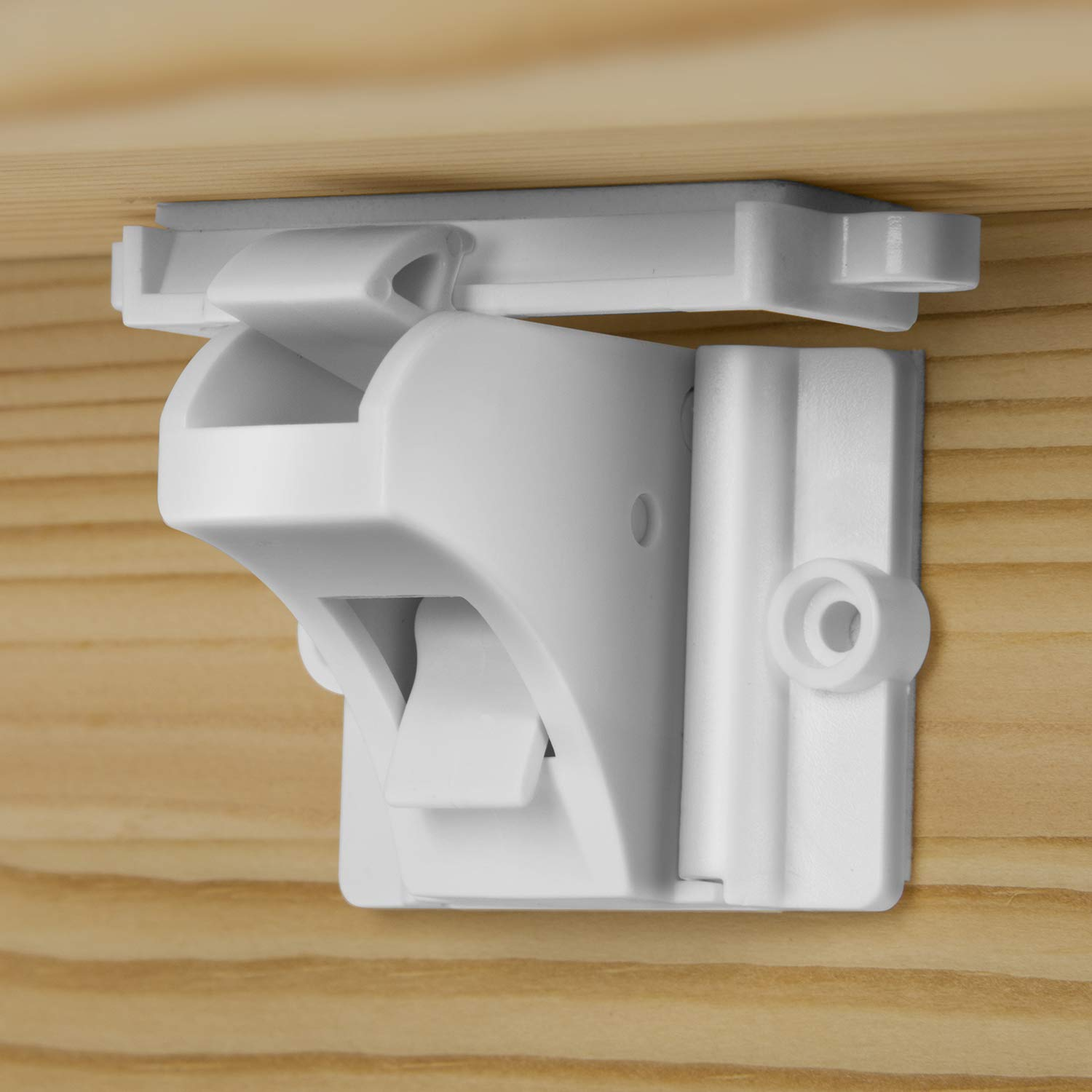
Vmaisi 20 Pack Magnetic Cabinet Locks Baby Proofing
Hidden magnetic cabinet locks that install inside cabinets and drawers for a clean look. Opened with a magnetic key, adhesive installation with no drilling required. 20-pack with keys included.
View product→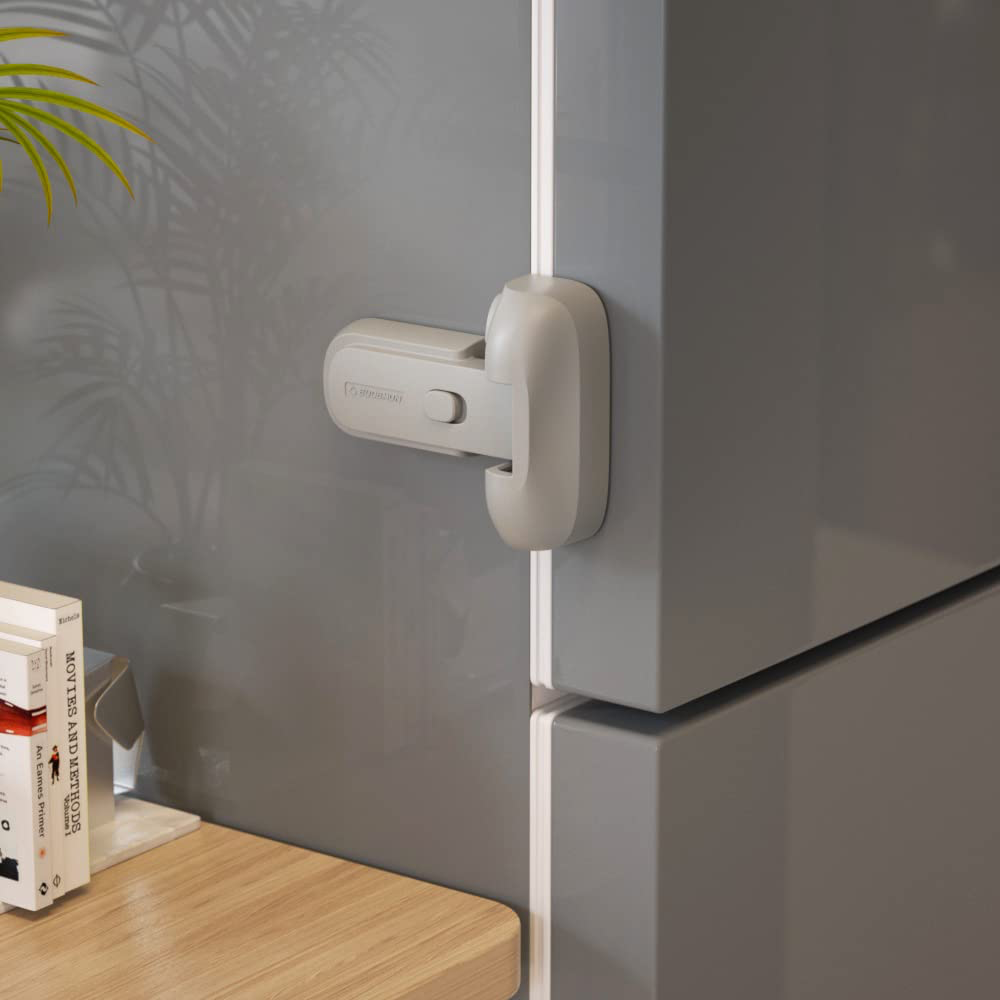
5 Pack Child Proof Refrigerator Lock, Baby Proofing Cabinet Locks, Oven Lock Child Safety, Fridge Lock, for Fridge, Drawers, Dishwasher, Oven, Cupboard, Closet, Adhesive, No Tools Need
Adhesive 5-pack of multi-use child safety latches for refrigerators, cabinets, drawers, dishwashers, ovens, and cupboards.
View product→Last reviewed
Sources used for this guide
Reviewed on April 22, 2026. This content is educational and practical, but it is not a substitute for professional safety inspections or medical advice.
U.S. Consumer Product Safety Commission
Childproofing your home: 12 safety devices to protect childrenHealthyChildren.org / American Academy of Pediatrics
Safety for Your Child: 6 to 12 MonthsSafe Kids Worldwide
Protecting children in your home