Why bathrooms are deceptively risky
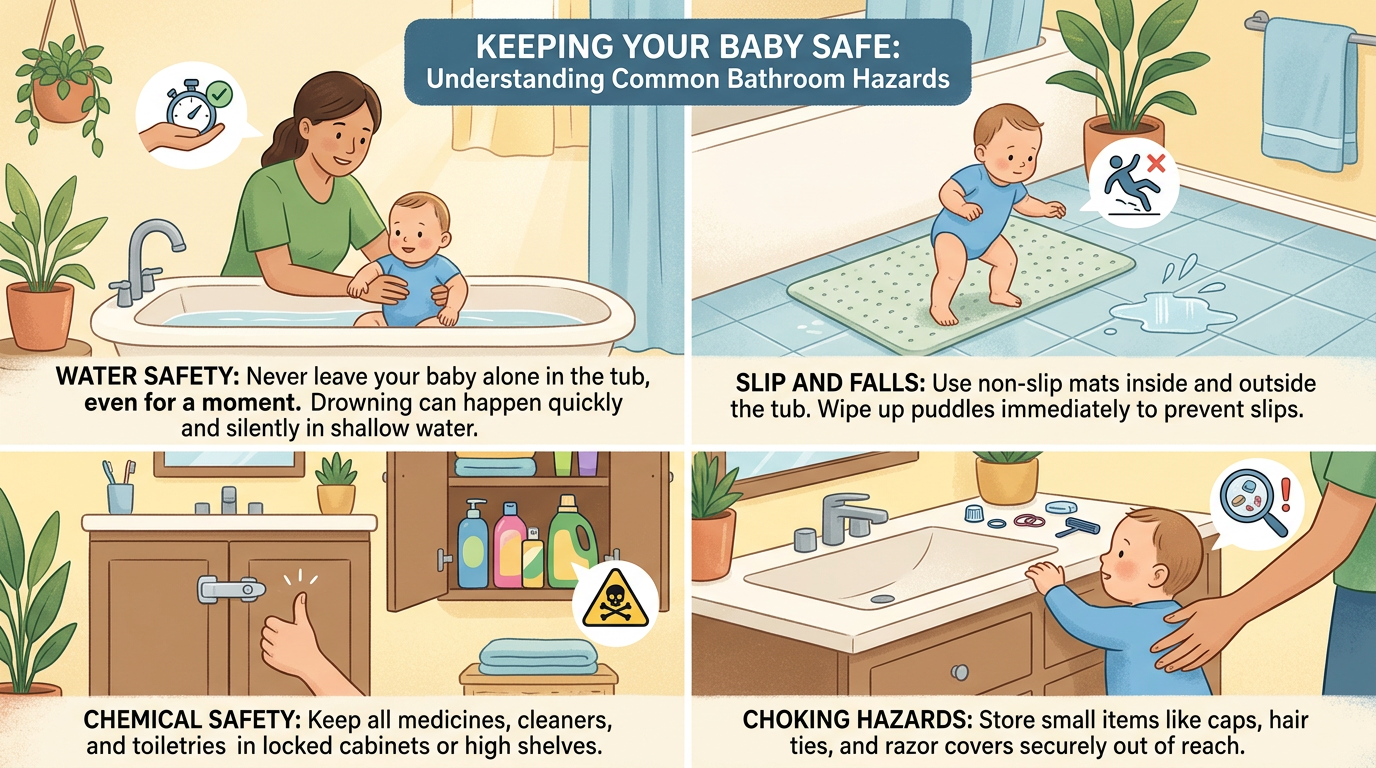
Bathrooms feel small and manageable, which is exactly why many families underestimate them. In one room you may have standing water, hard tile, hot water, sharp tools, medications, cosmetics, cleaning sprays, electrical appliances, and an unlocked toilet.
For babies and toddlers, bathrooms are high-risk because the hazards are compact and layered. A curious child does not need much time to encounter trouble there, especially once walking begins and bathroom doors start getting pushed open independently.
The first goal is simple: do not let the bathroom become a free-access play space. Control entry first, then work through the tub, toilet, storage, and floor hazards one by one.
Toilet, tub, and water safety come first
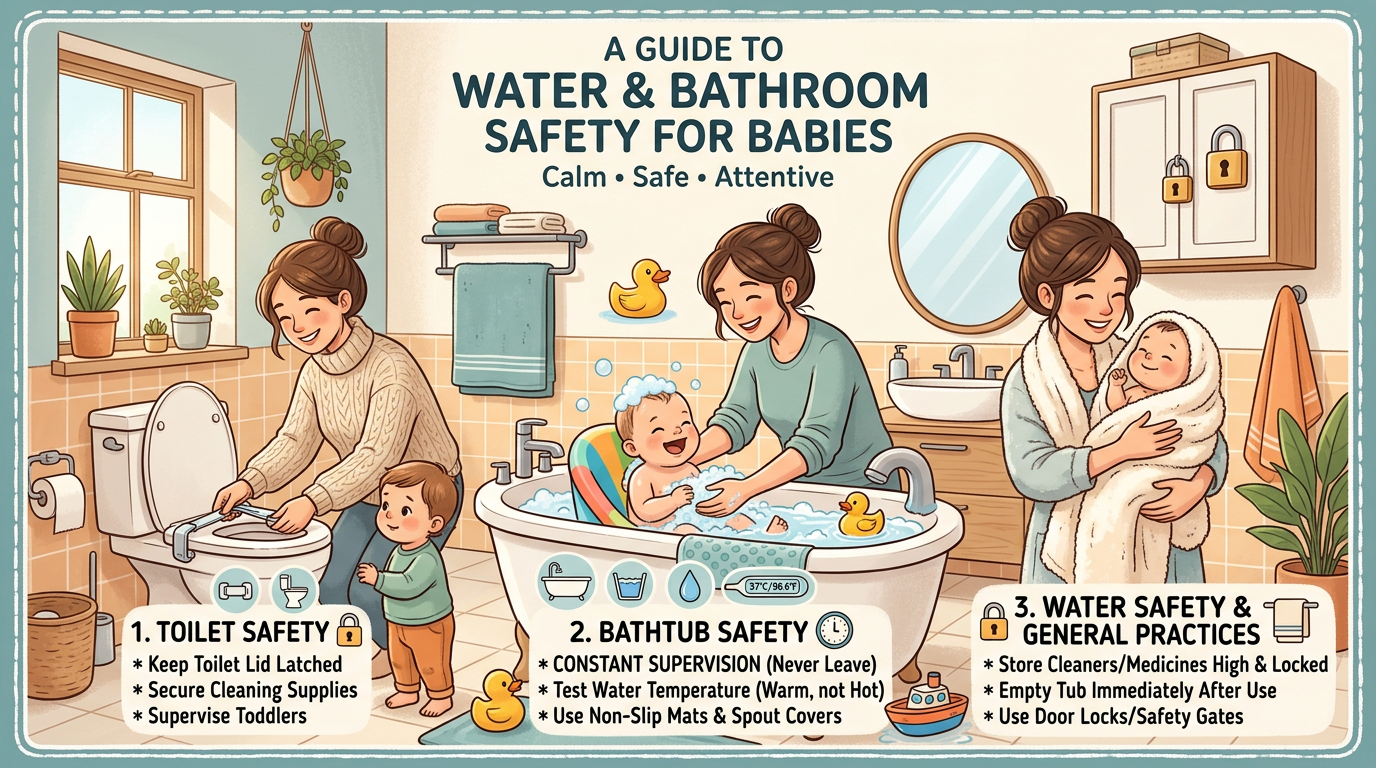
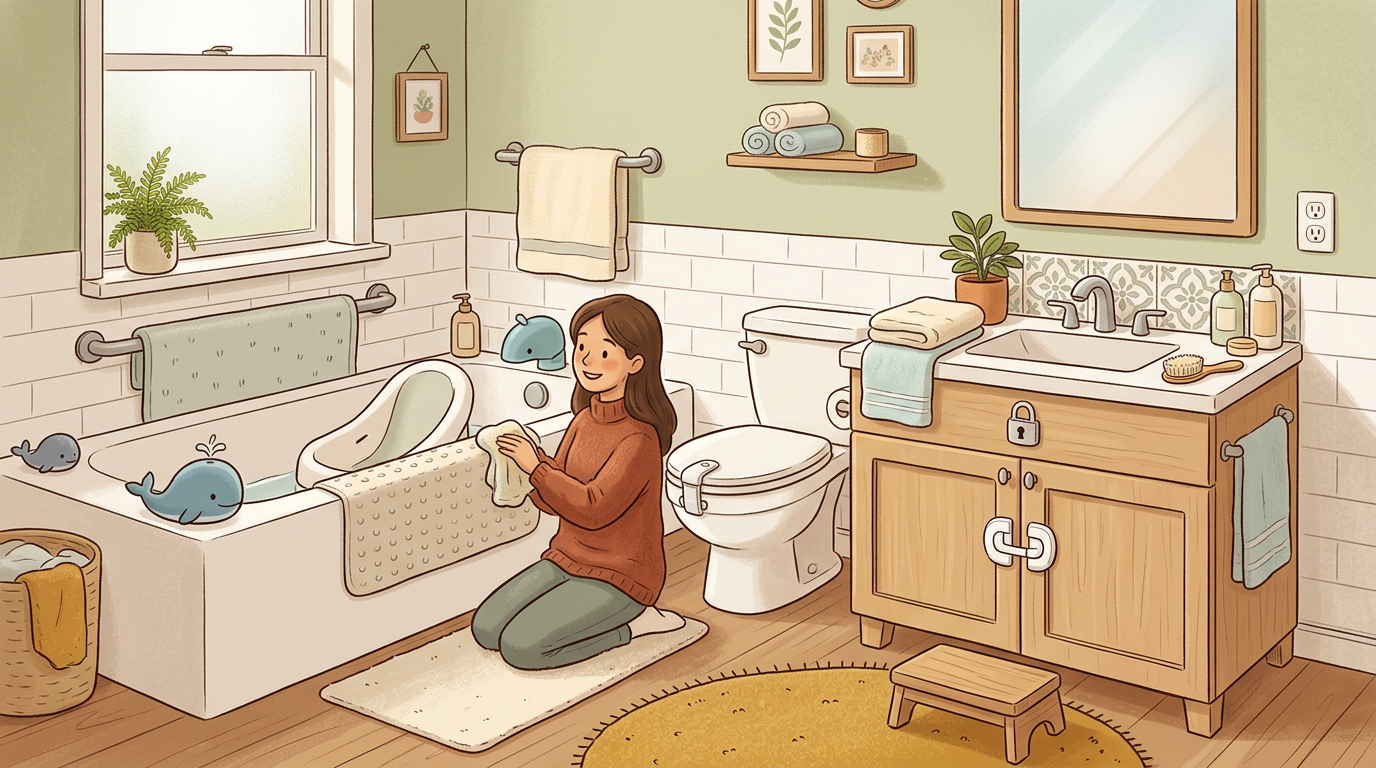
Water hazards deserve top priority. Use a toilet lock if your child can access the bathroom, and keep the toilet lid closed by habit, not just intention. During bath time, build your setup before the water starts so you are not stepping away for towels, toys, or pajamas once your child is in the room.
Bathtubs need traction and impact protection as well as supervision. Non-slip surfaces reduce slips for both children and adults, and a soft spout cover can help lower the risk of bumps during active bath play or quick standing attempts.
Bathroom safety also includes water temperature. Test the water before every bath and make sure adults in the home understand the same temperature routine so there is no confusion when someone else handles bath time.
Quick checklist
- ✓Use a toilet lock and keep lids closed.
- ✓Keep bath supplies ready before bath time starts.
- ✓Add non-slip protection in and around the tub.
- ✓Use a soft bath spout cover if your tub spout is exposed.
Secure medicines, cosmetics, and cleaners like they are all equally urgent
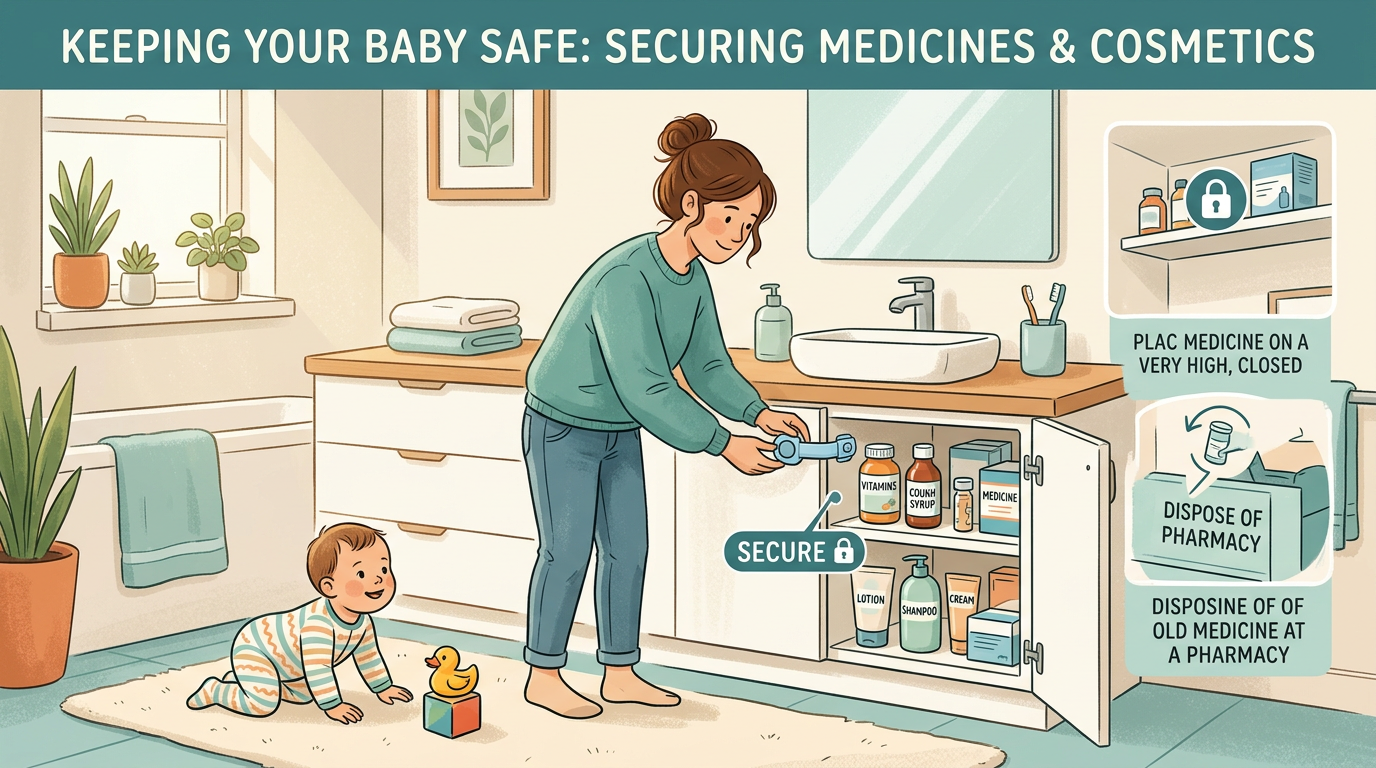
Parents often lock harsh cleaners but overlook the everyday items that sit on counters or in drawers: vitamins, pain relievers, toothpaste, mouthwash, acne products, nail tools, razors, perfume, and hair products. In a toddler’s hands, those are not routine household items. They are reachable hazards.
Move medications and cleaners high up or behind locked doors. If your bathroom has limited storage, it may be safer to relocate medications entirely to another room that is easier to secure. Purse storage matters here too because many accidental exposures happen through bags left on the floor or counter.
If you use under-sink storage, treat it the same way you would treat a low kitchen cabinet full of chemicals. Lock it or move the contents. Convenience is not worth a fast-access poison risk.
Quick checklist
- ✓Store medication high up or in a locked location.
- ✓Keep cosmetics, razors, nail clippers, and hair tools away from the counter edge.
- ✓Lock or clear the under-sink cabinet.
- ✓Keep purses, travel bags, and toiletry kits out of reach.
Do not ignore floors, cords, and bathroom entry habits
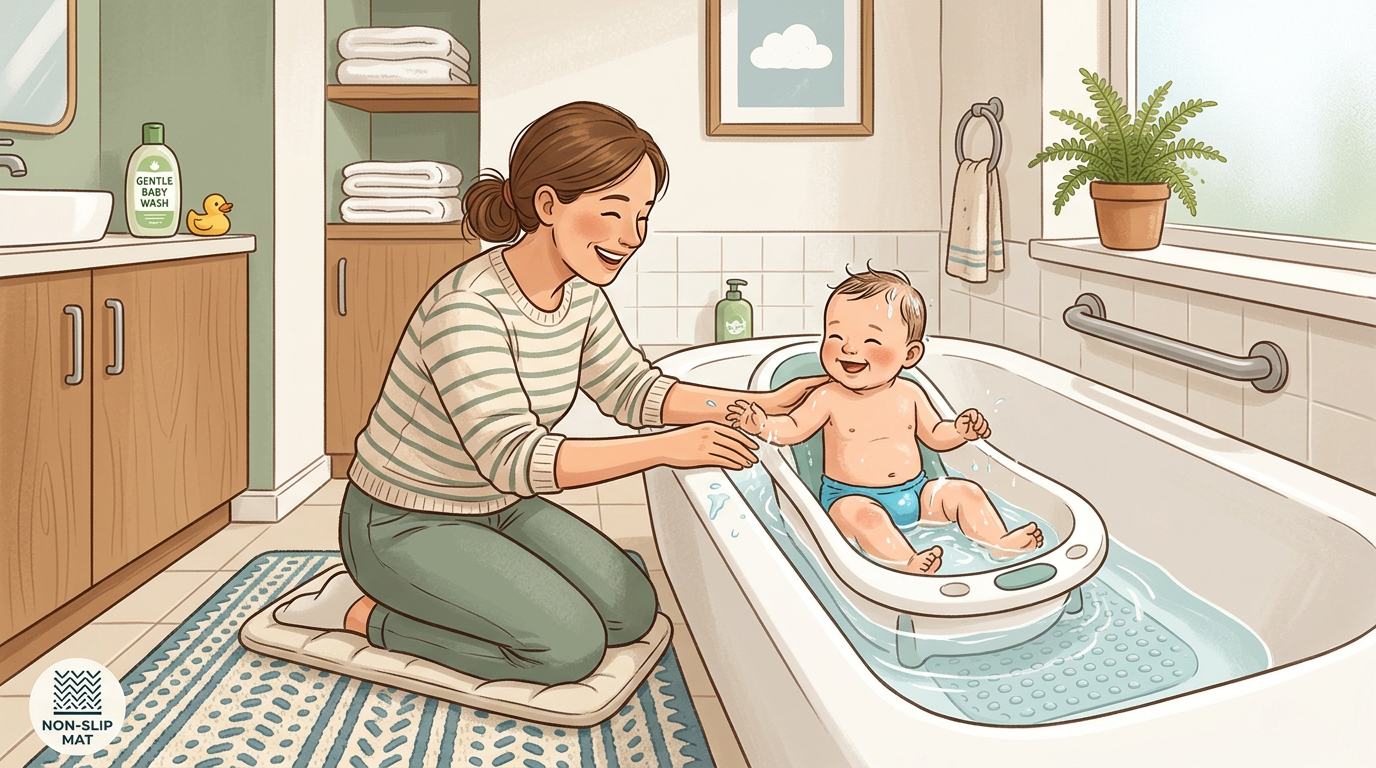
Slippery floors can turn a low-speed stumble into a head bump fast. Bath mats and quick wipe-down habits reduce risk for both children and adults carrying them. Hair tools with dangling cords also deserve attention because they can be pulled down from counters or left hot after use.
Many bathroom injuries happen because the room was left open, not because the family failed to buy a product. That is why door habits matter. If the bathroom is not fully secured, keep it closed and use a lever lock or knob strategy if needed.
The best bathroom baby proofing plans combine one or two useful products with strict routines. A toilet lock helps, but it should reinforce an already-closed door and a consistent storage habit rather than replace them.
Quick checklist
- ✓Keep cords from hair tools unplugged and stored after use.
- ✓Use non-slip mats and dry the floor quickly after baths.
- ✓Keep the bathroom door closed when not in use.
- ✓Use door controls if your child repeatedly enters the room unsupervised.
Create a repeatable bath-time routine for every caregiver
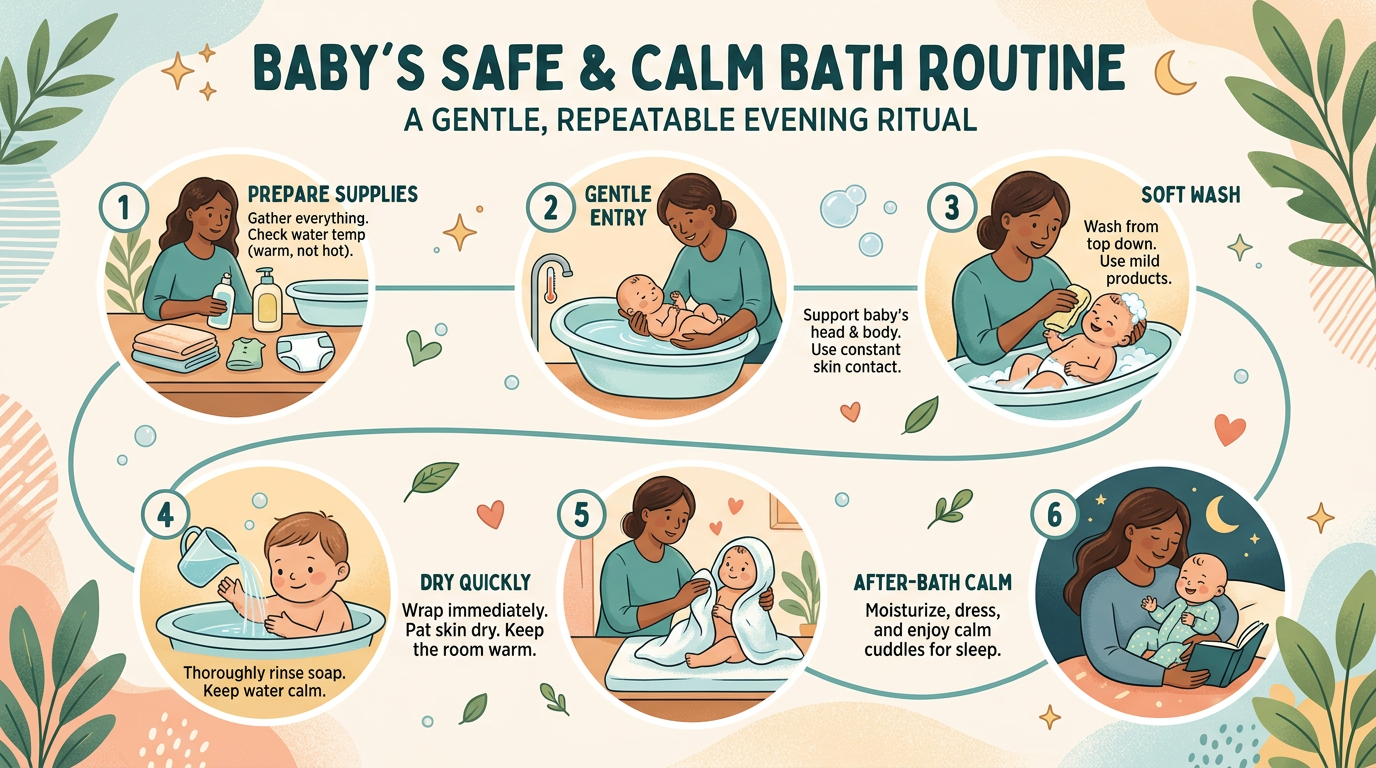
Bath safety gets better when every adult handles it the same way. Keep towels, soap, fresh clothes, and diapering supplies within reach before the bath starts. That removes the temptation to step away for one item and come right back.
If grandparents, babysitters, or older siblings help with care, show them where the safety gear lives and explain which products are essential. The strongest setup in the world fails if the adults around your child use it differently every time.
Review the bathroom again once your toddler can climb, because counters, step stools, and sink access create a second wave of risks. Bathroom safety is not just for the baby stage.
Frequently asked questions
Controlling access is the first priority. Keep the bathroom door closed, use a toilet lock if needed, and secure medicines and cleaners before focusing on smaller upgrades.
If your child can access the bathroom independently or repeatedly opens the toilet lid, a toilet lock is a practical safety layer. It works best when paired with a closed-door habit.
Move them to a higher, more secure place outside the bathroom if that is easier to lock or keep out of reach. The safest location is the one children cannot access consistently.
Focus on access control, a toilet lock if needed, non-slip protection, safer storage, and a prepared bath-time routine. Those changes cover most of the meaningful risk reduction.
Featured products
Affiliate linksProducts that support this guide
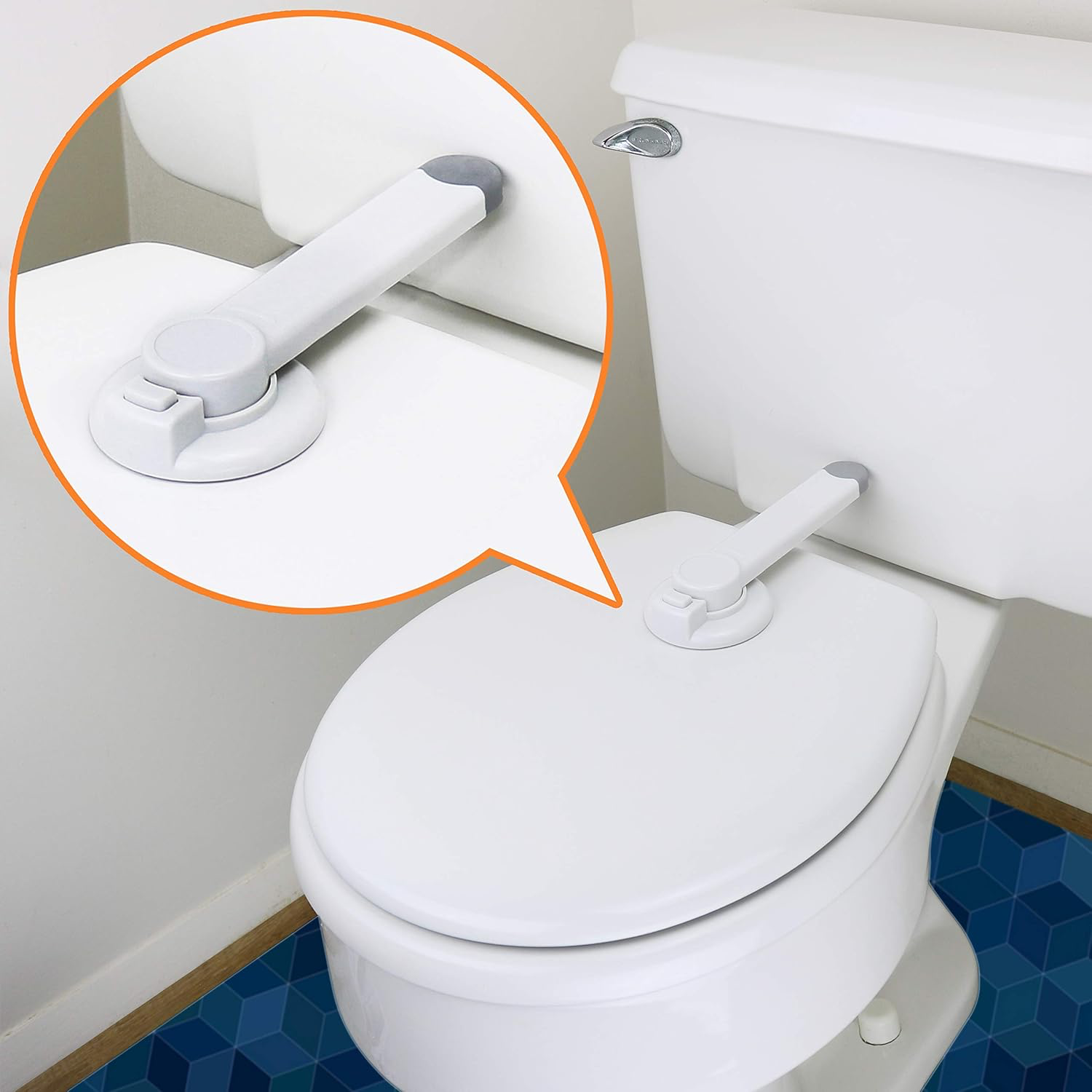
Wappa Baby Toilet Lock
Adhesive toilet lid lock that keeps curious toddlers from opening the toilet. No tools needed for installation, uses strong 3M adhesive, fits most standard toilets.
View product→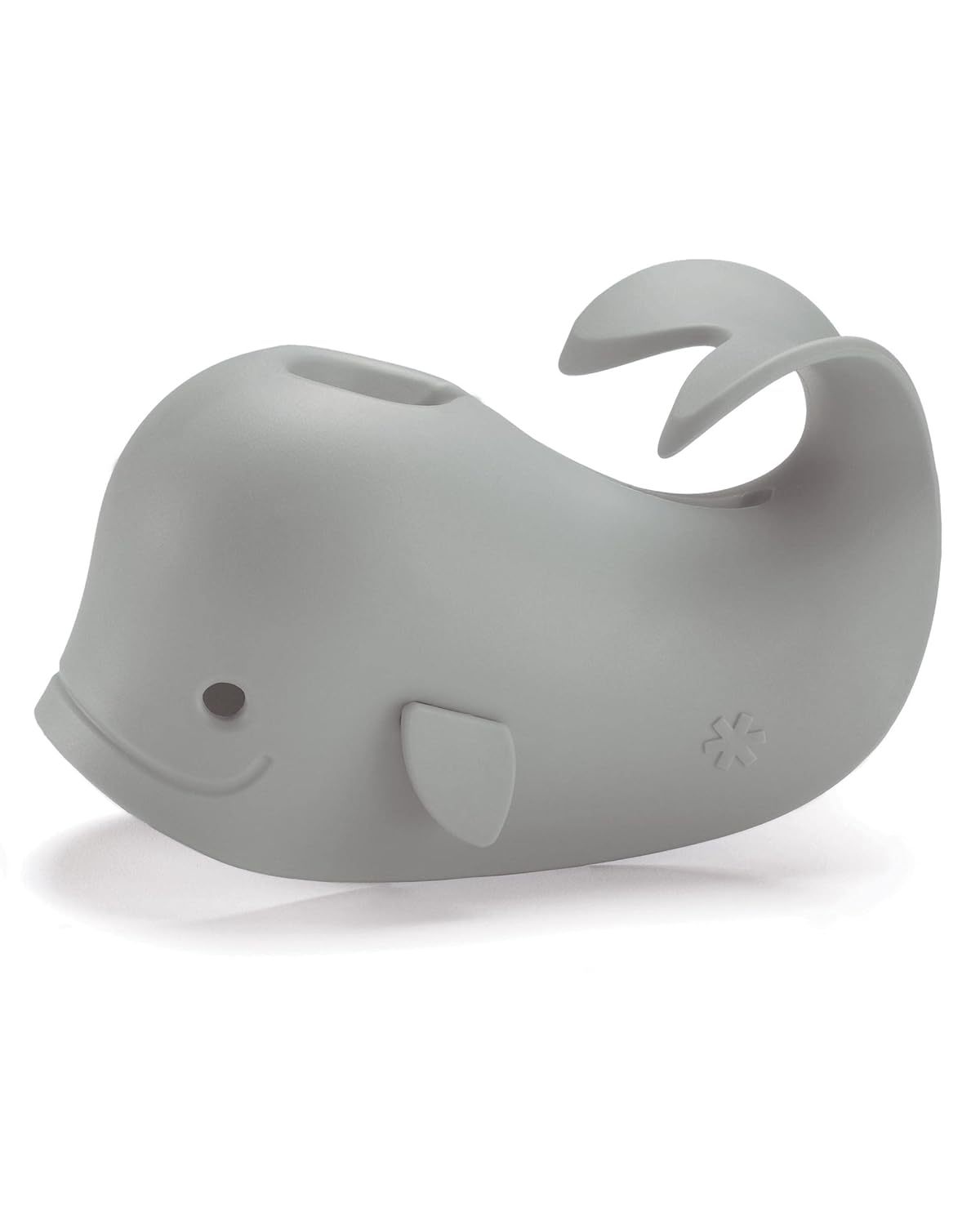
Skip Hop Moby Bath Spout Cover
Soft rubber spout cover in a whale shape that protects baby from bumping their head on the bath spout.
View product→Last reviewed
Sources used for this guide
Reviewed on March 17, 2026. This content is educational and practical, but it is not a substitute for professional safety inspections or medical advice.
HealthyChildren.org / American Academy of Pediatrics
Safety for Your Child: 6 to 12 MonthsU.S. Consumer Product Safety Commission
Childproofing your home: 12 safety devices to protect childrenSafe Kids Worldwide
Protecting children in your home