Why stairs are a top-priority hazard as soon as mobility begins
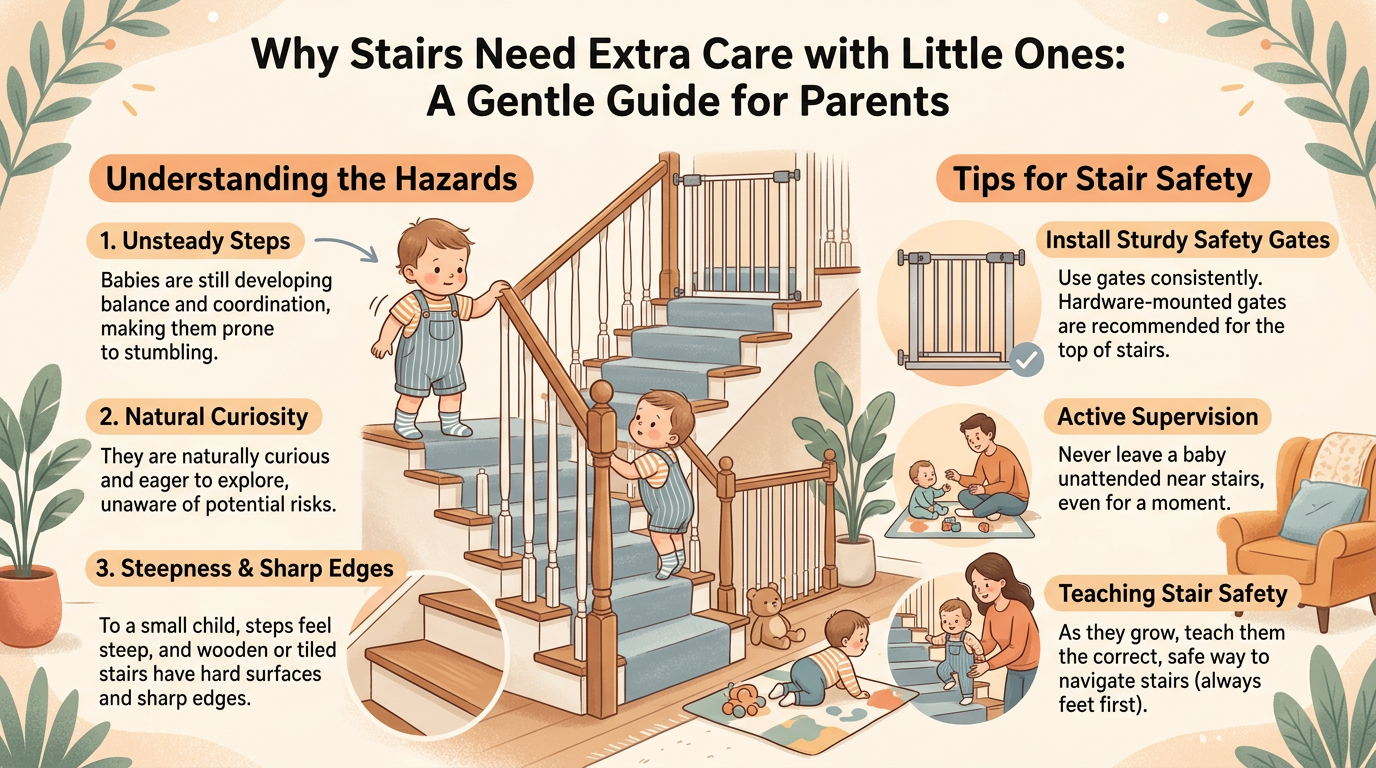
Stairs are consistently one of the most common locations for fall injuries in young children. The combination of height, hard surfaces, and the sudden transition from one level to another makes even a short staircase a serious risk. National injury data shows that stair-related falls send tens of thousands of children to emergency rooms each year, and the majority of those injuries happen at home.
Babies attempt to climb stairs earlier than most parents expect. Once a child can crawl or pull to stand, an unguarded staircase becomes a climbing challenge they will try repeatedly. The gap between first attempt and first fall can be very short, which is why stair protection needs to be in place before mobility milestones rather than after a close call.
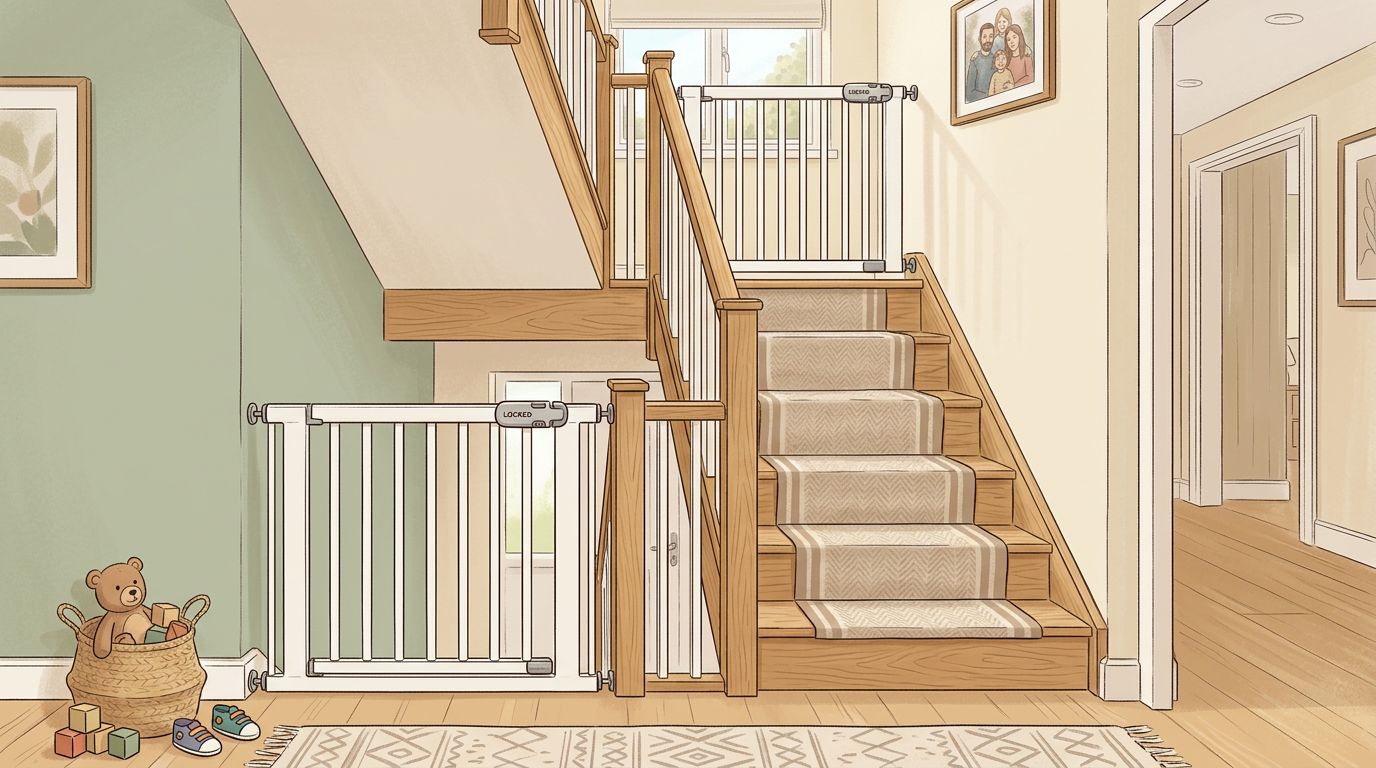
Both the top and bottom of every staircase need protection. A gate at the top prevents the most dangerous falls, while a gate at the bottom prevents unsupervised climbing that can lead to a fall from any height. Treating only one end leaves the other open to exactly the kind of access you are trying to prevent.
Quick checklist
- ✓Install gates at both the top and bottom of every staircase your child can reach.
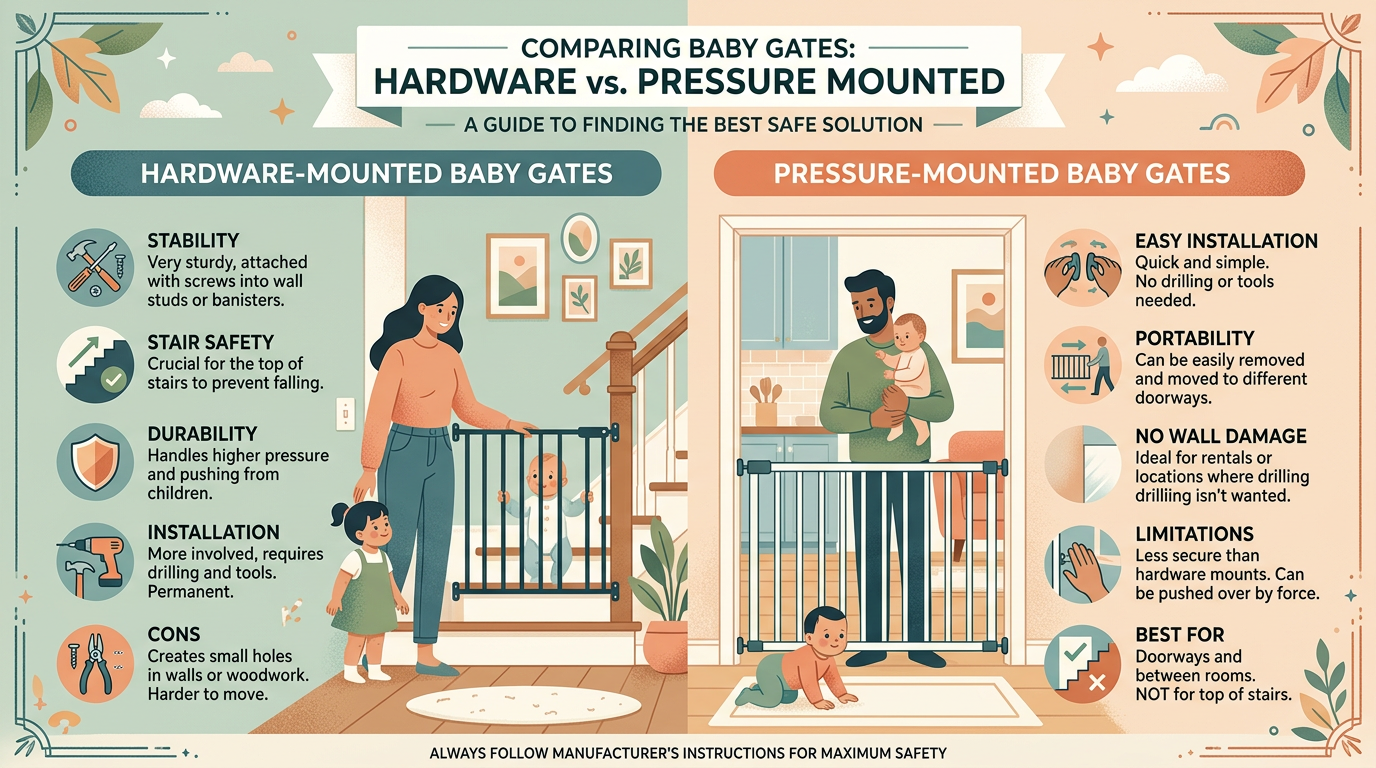
- ✓Use wall-mounted hardware gates at the top of stairs where the fall consequence is highest.
- ✓Check gate fit regularly as your child grows and tests the barrier more forcefully.
- ✓Remove climbable objects like boxes, shoes, and toys from areas near stair gates.
Doors create access risks and pinch injuries at the same time
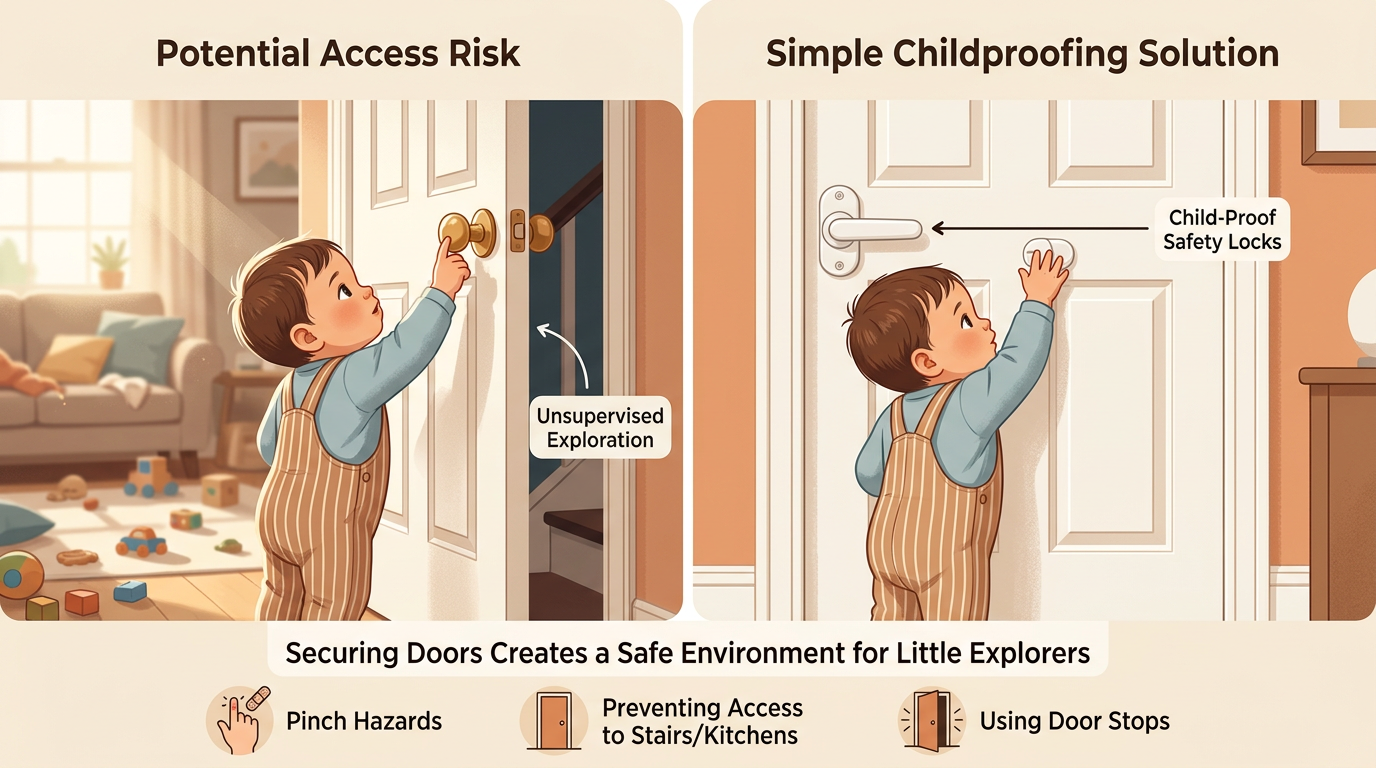
Doors are not just room dividers — they are moving objects that grant access to rooms containing hazards like cleaning supplies, toilets, hot appliances, and tools. A door left open to a bathroom or laundry room gives a mobile baby entry to some of the most dangerous spaces in the home. Controlling which doors stay open and which stay closed is one of the simplest and most effective safety strategies.
Finger-pinch injuries from doors are more common and more painful than many parents realize. The hinge side of a closing door can trap small fingers with significant force, and the closing edge presents a similar risk when a door swings shut from a draft or a sibling. These injuries can range from bruises to fractures depending on the door weight and how fast it closes.
Lever-style door handles are easier for toddlers to open than round knobs, which means rooms you thought were closed off may not stay that way for long. Once a child figures out a lever handle, they can access bathrooms, bedrooms, and utility rooms without warning. Lever locks are a straightforward fix that keeps the handle in place for children while adults can still operate the door easily.
Quick checklist
- ✓Add pinch guards to doors your child uses or passes through frequently.
- ✓Use lever locks on doors leading to bathrooms, laundry rooms, and other unsafe spaces.
- ✓Keep bathroom and laundry doors closed as a default habit, not just when you remember.
- ✓Check that door stops are securely attached and cannot be pulled off and mouthed.
Sliding doors, patio access, and glass door safety
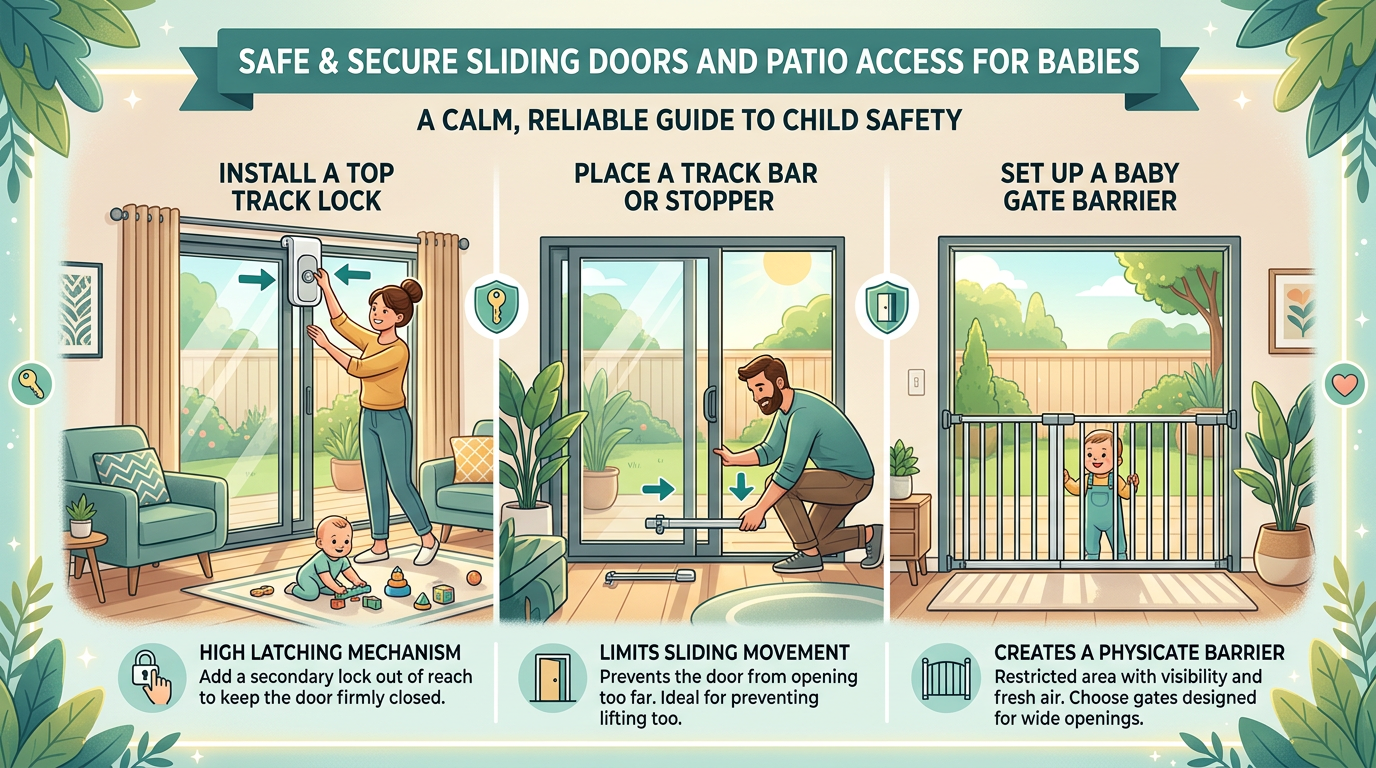
Sliding glass doors are surprisingly easy for toddlers to unlock and open. Many sliding door latches sit at a height a two-year-old can reach, and the smooth track makes the door easy to push once the latch is disengaged. A child who opens a patio door gains unsupervised access to decks, pools, driveways, and yards in seconds.
Patio and balcony access is a high-consequence hazard because the risks on the other side of the door are often severe. Falls from balconies, access to unfenced pools, and exposure to driveways and streets all become possible the moment a sliding door opens unnoticed. These are not gradual risks — they escalate instantly once a child is through the door.
Sliding door locks designed for child safety mount at adult height and prevent the door from being opened more than a few inches. They are inexpensive, simple to install, and effective at keeping the door controlled without interfering with ventilation. Keeping the lock engaged should become as automatic as locking the front door at night.
Quick checklist
- ✓Use sliding door locks mounted at adult height on all accessible sliding glass doors.
- ✓Keep patio furniture, planters, and play equipment away from balcony railings.
- ✓Add visual markers like decals to large glass doors to prevent children from walking or running into the glass.
- ✓Check that screen doors are not being treated as barriers since they cannot hold a child's weight or prevent access.
Build access control habits that every caregiver follows
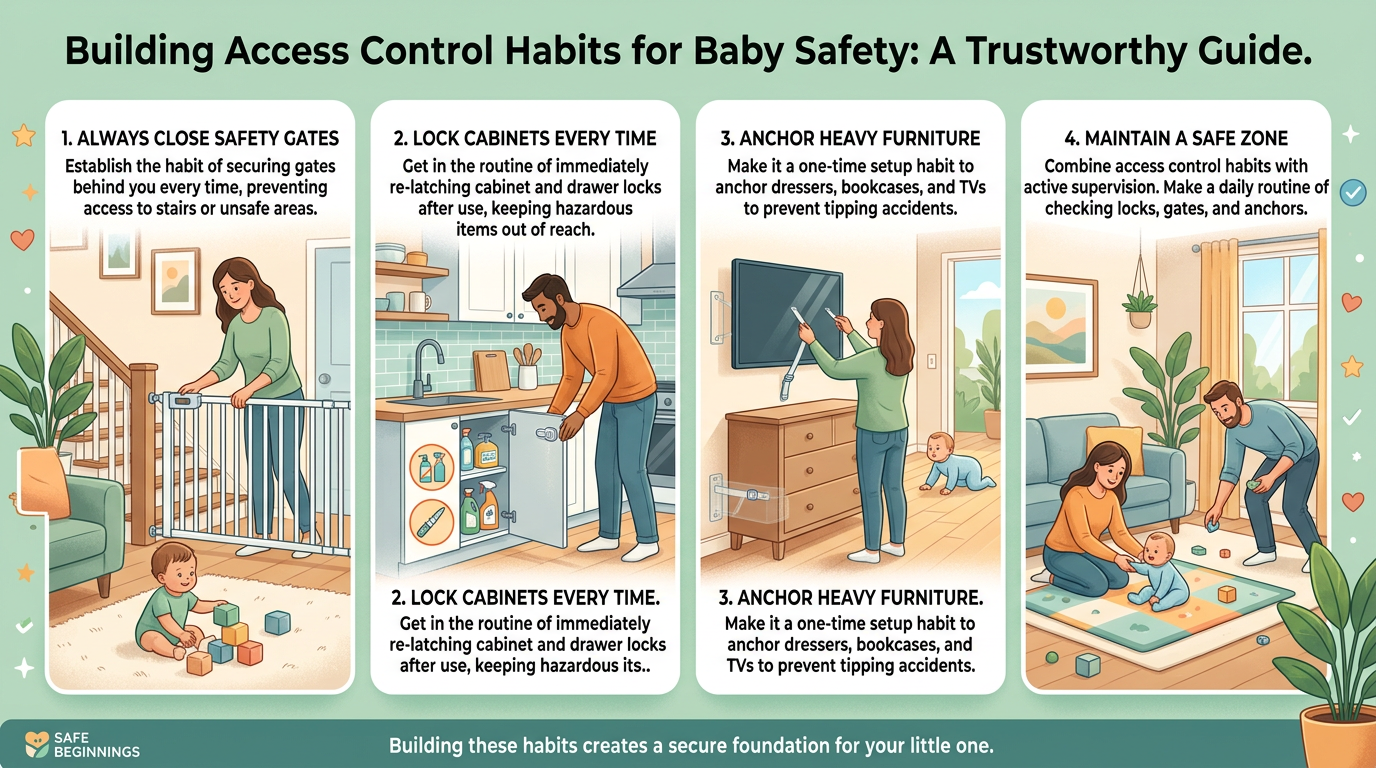
The best door hardware and stair gates in the world only work if adults use them consistently. A lever lock that gets left unlocked or a gate that stays open because it is inconvenient provides no protection at all. The habit of closing and latching matters more than the specific product, which means access control is as much about household routine as it is about installation.
Every caregiver who spends time with your child needs to understand the door and gate rules. Grandparents, babysitters, visiting family, and older siblings all need a brief explanation of which doors stay closed, which gates stay latched, and why. A quick walkthrough when someone arrives takes thirty seconds and can prevent the exact moment of inattention that leads to an injury.
Design the default state of your home to be the safe state. Gates should be closed unless an adult is actively passing through. Doors to unsafe rooms should be closed unless an adult is using them. When the safe position is the resting position, a moment of distraction does not immediately create a hazard — it just means everything stays the way it was.
Quick checklist
- ✓Make gate-closed and door-latched the default state throughout the home.
- ✓Brief every caregiver on door and gate rules when they arrive, including grandparents and sitters.
- ✓Check gates and locks after visitors leave since unfamiliar adults may not re-latch them.
- ✓Post a simple reminder near any door that must stay closed if the rule is easy to forget.
Manage room transitions as your child gets faster
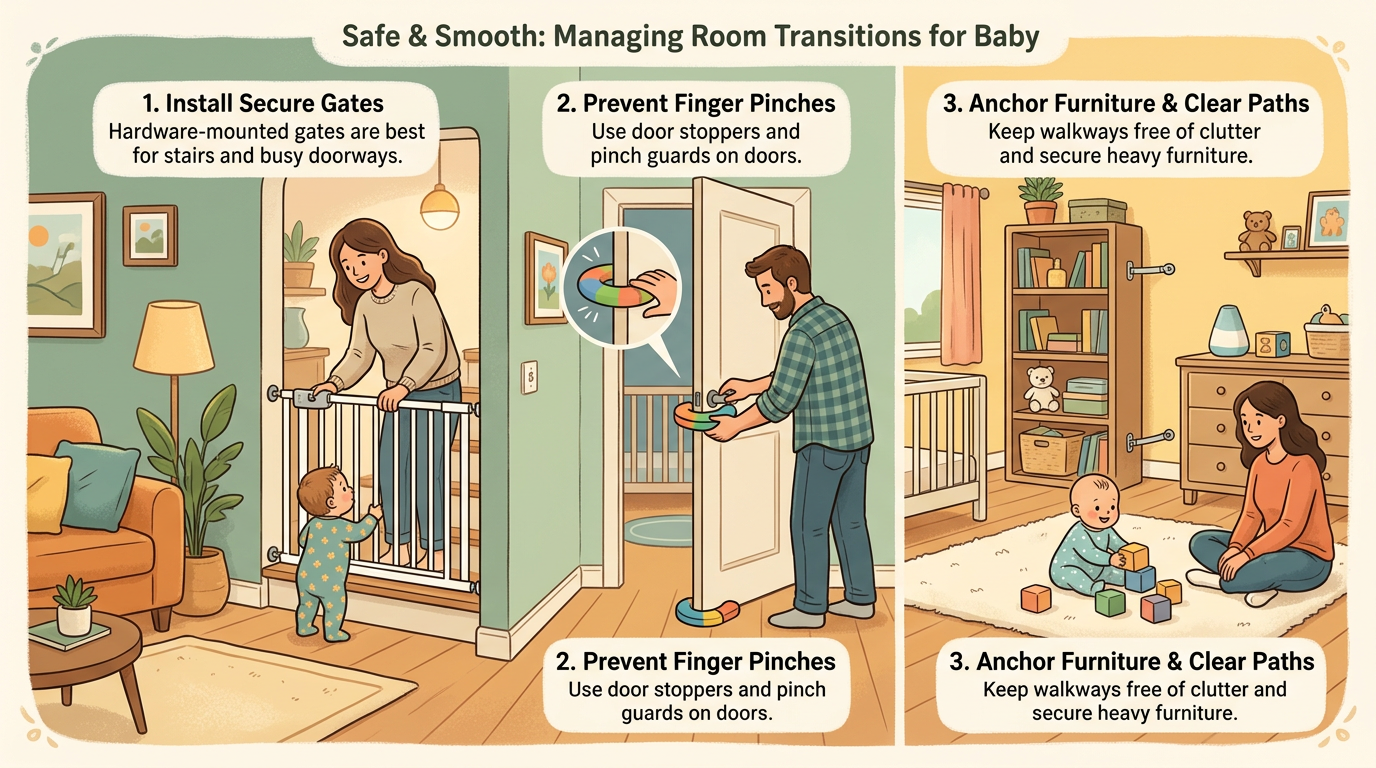
Toddlers move between rooms quickly and unpredictably. A child who was playing quietly in the living room can be in the kitchen or halfway up the stairs before you finish a sentence. As mobility increases, the spaces between rooms — hallways, landings, doorways — become the paths your child uses to reach hazards you may have already secured inside each room.
Hallways and landings are transition zones that often get overlooked during baby proofing because they seem like empty pass-through spaces. But a hallway with a slippery rug, a landing with an open stair, or a doorway that leads to an unproofed room is exactly where access control matters most. These are the corridors your child uses to get from safe to unsafe, and managing them is part of the overall plan.
Use your home's layout to create natural flow rather than fighting it. Position gates at the points where you want to control movement, keep high-traffic paths clear of tripping hazards, and accept that your child will move through the home on their own terms. The goal is to channel that movement through safe routes and block the paths that lead to uncontrolled risk.
Quick checklist
- ✓Audit hallways and landings for tripping hazards, loose rugs, and unprotected drops.
- ✓Use gates to control traffic between rooms and to block access to unproofed areas.
- ✓Remove tripping hazards like shoes, bags, and loose mats from high-traffic paths.
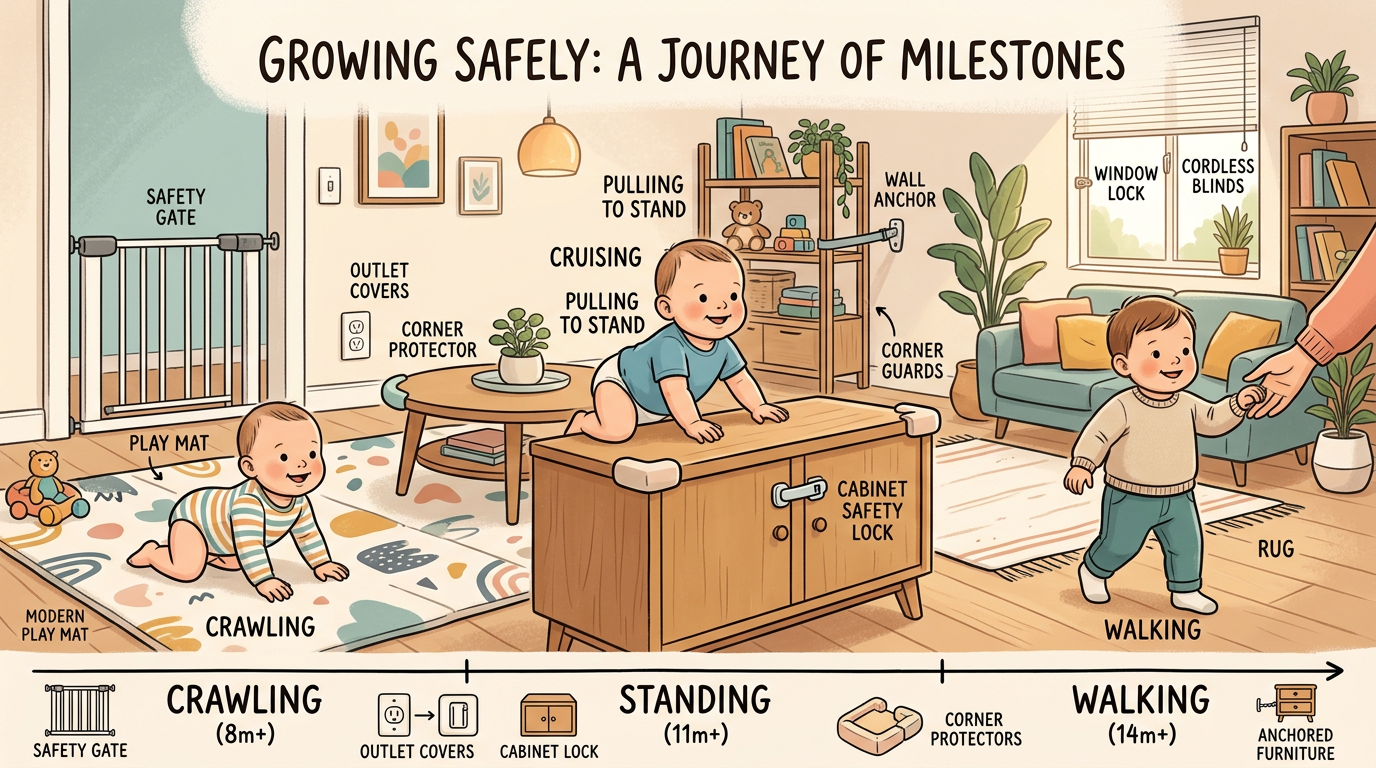
- ✓Revisit access control after each mobility milestone — crawling, walking, climbing, and running each change the equation.
Frequently asked questions
Yes. Top-of-stairs gates prevent the most dangerous falls, and bottom gates prevent unsupervised climbing.
A lever lock or cover prevents toddlers from operating lever-style handles while still being easy for adults to use.
Door-related finger injuries are more common than many parents expect. Pinch guards are a low-cost, low-effort way to reduce a painful and sometimes serious injury.
Most families remove gates when a child can navigate stairs safely and consistently, usually between ages two and three, but this depends on the child and the staircase.
Featured products
Affiliate linksProducts that support this guide
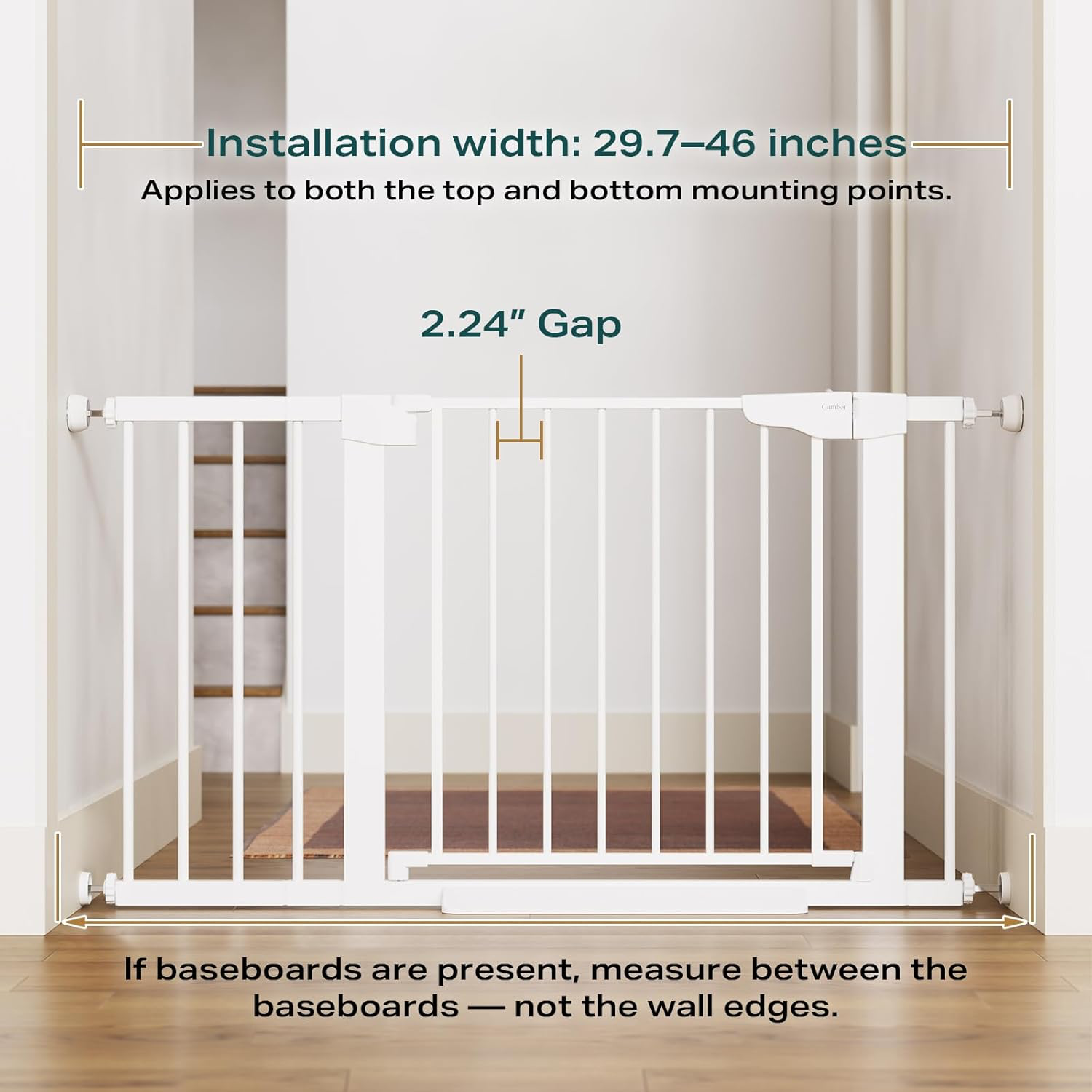
Cumbor 29.7-46 Baby Gate for Stairs
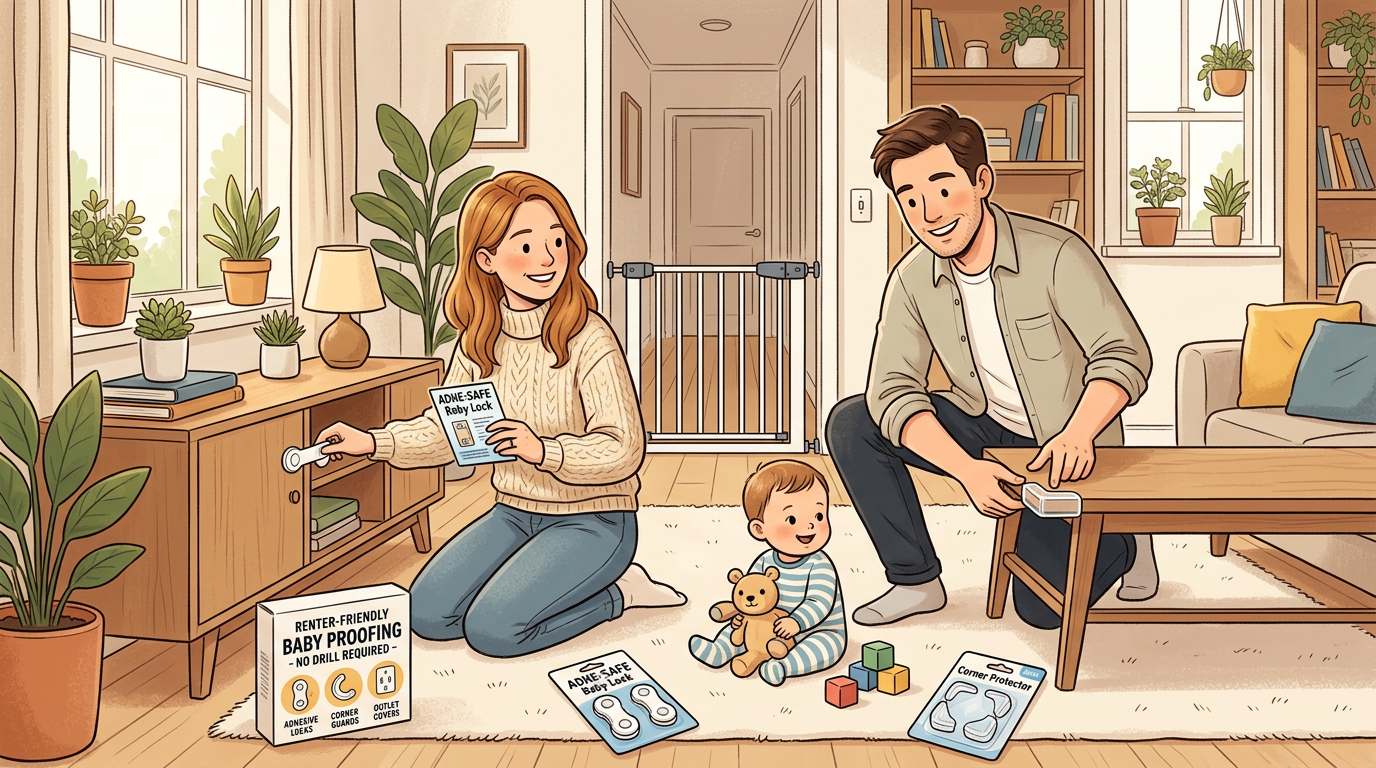
A pressure-mounted barrier sized for typical hallway and stairway openings between roughly 30 and 46 inches. We like it for renters because it sets up without drilling, and the auto-close latch helps when you walk through with a baby on your hip. Confirm it fits your specific opening before you buy.
View product→Pressure-Mounted Baby Gate for Doorways
No-drill pressure gate for doorways and low-risk openings to create clear child-safe zones.
View product→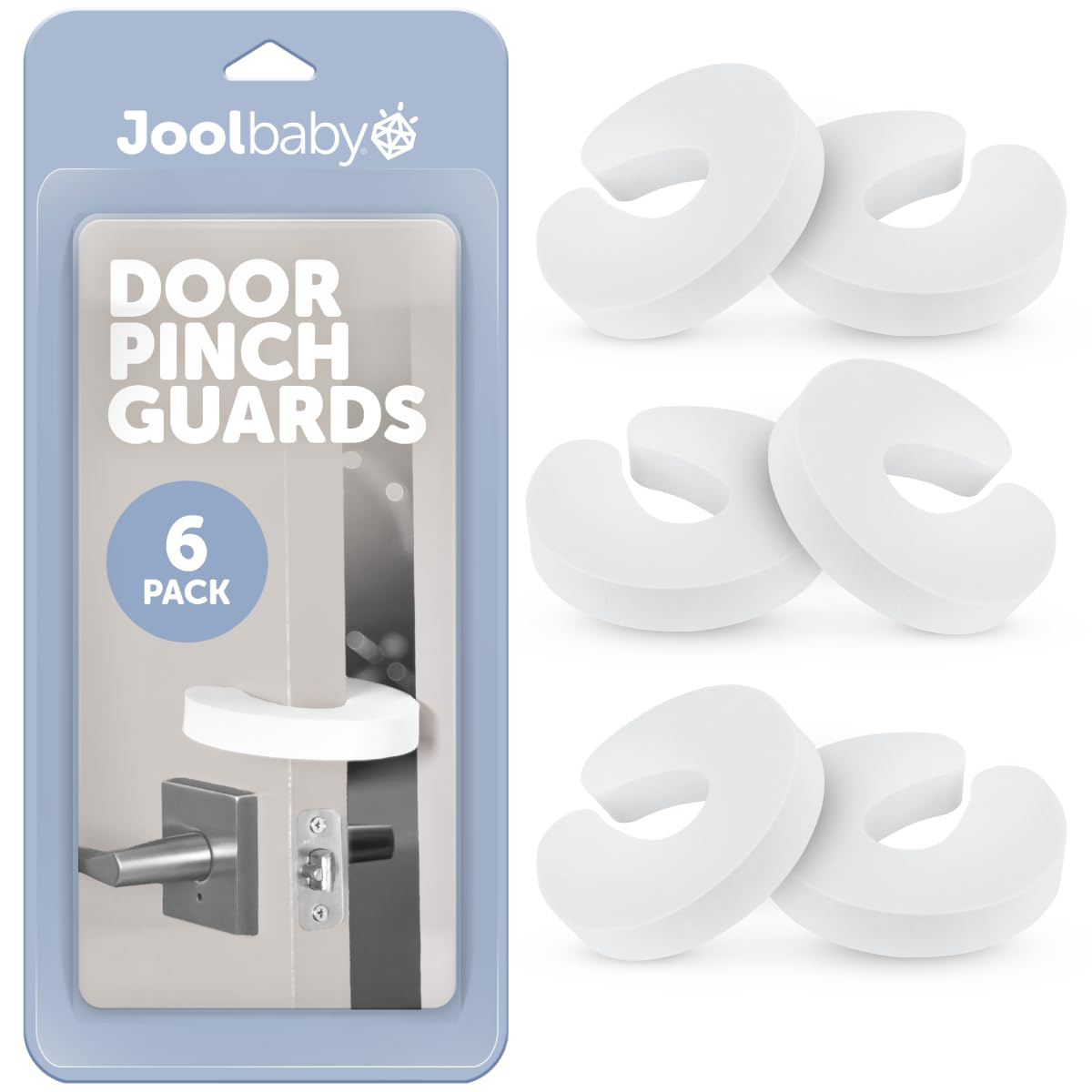
Jool Baby Door Pinch Guards (6 Pack)
Soft EVA foam door stoppers that prevent doors from fully closing, protecting little fingers from getting pinched. Also prevents door slamming and keeps pets from getting locked in rooms.
View product→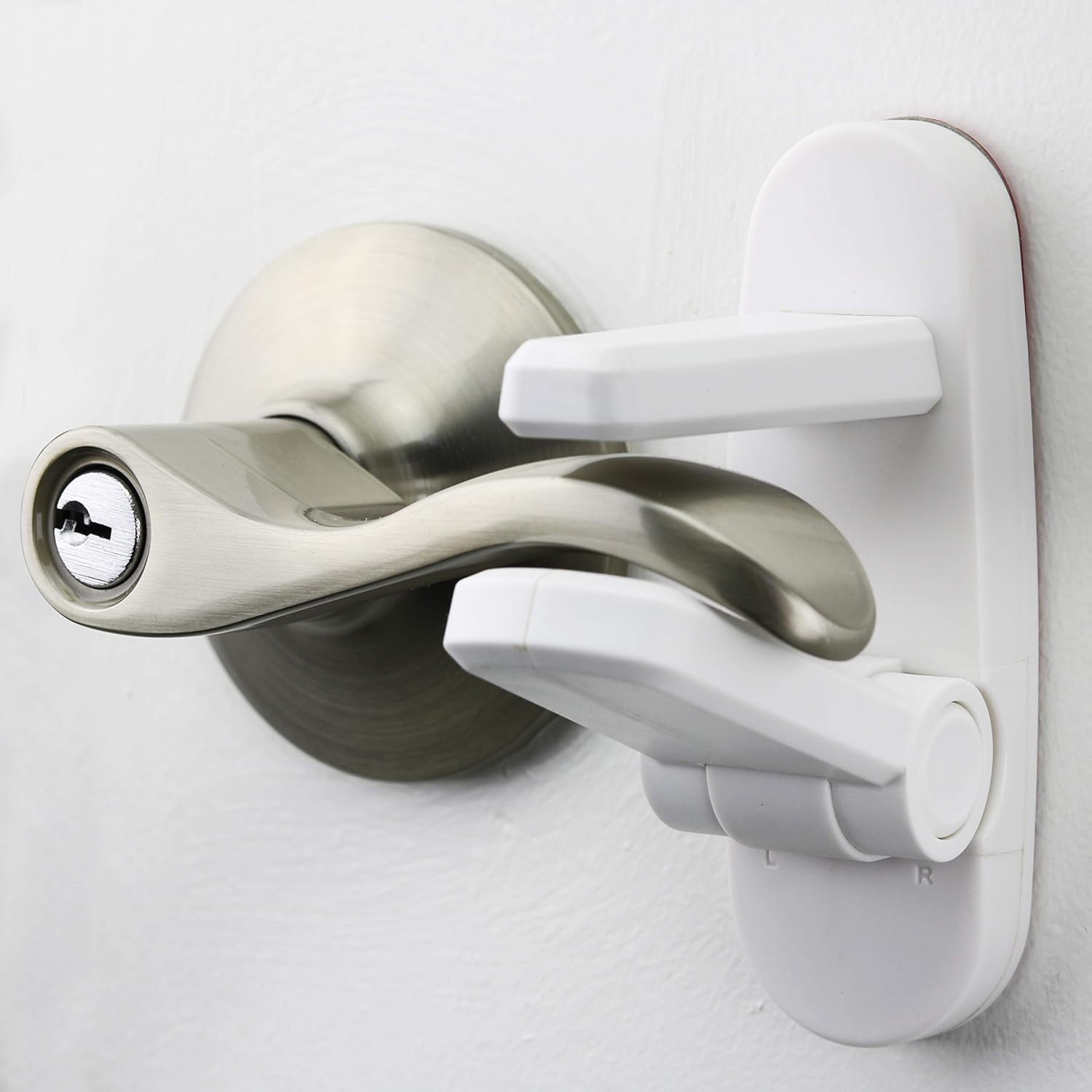
Wappa Baby Door Lever Lock (2 Pack)
Adhesive door lever locks that keep toddlers from opening lever-handle doors while still allowing adult one-hand operation.
View product→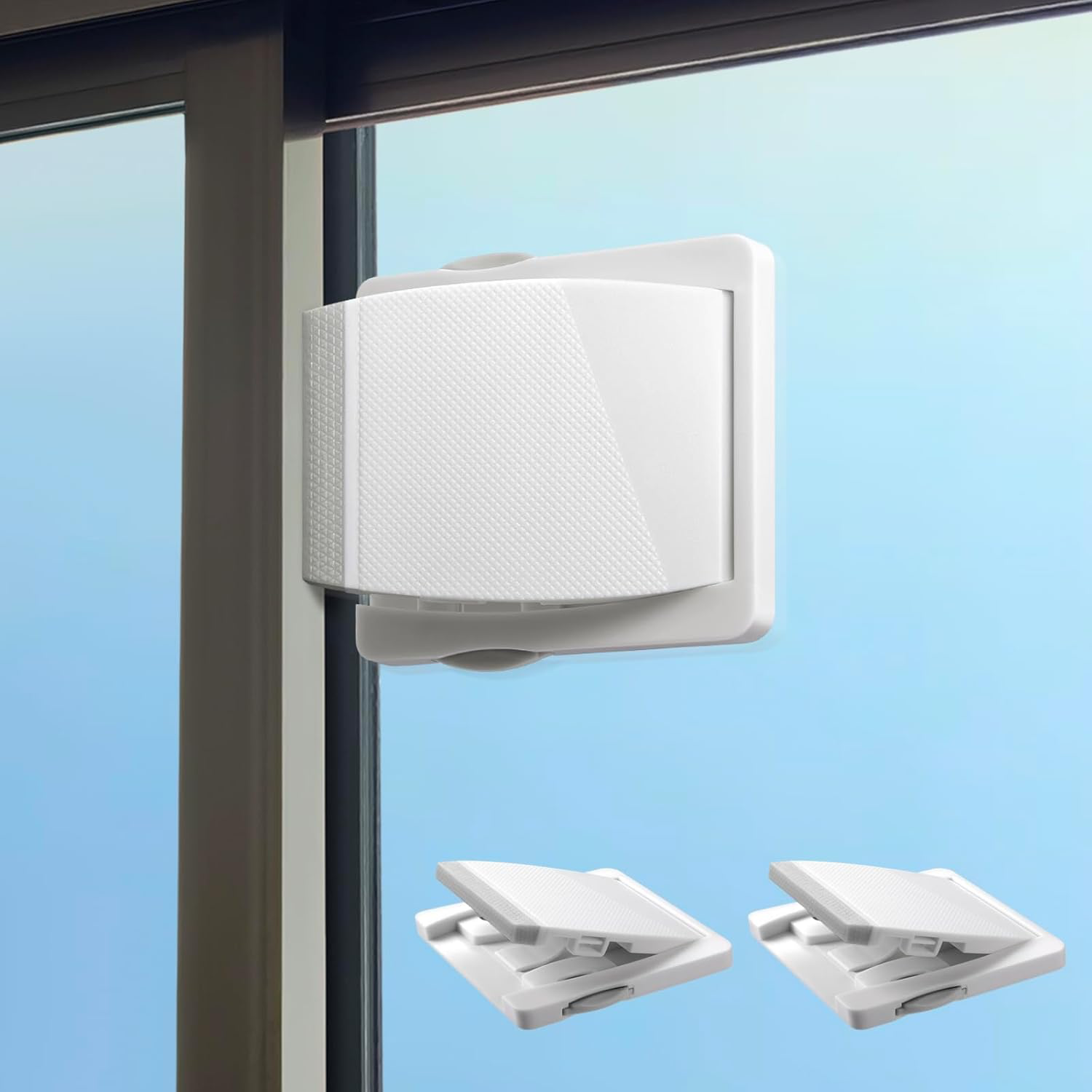
OKEA Sliding Glass Door Lock
Childproof lock designed specifically for sliding glass doors, keeping them securely shut.
View product→Last reviewed
Sources used for this guide
Reviewed on March 17, 2026. This content is educational and practical, but it is not a substitute for professional safety inspections or medical advice.
U.S. Consumer Product Safety Commission
Childproofing your home: 12 safety devices to protect childrenHealthyChildren.org / American Academy of Pediatrics
Movement: Babies 8 to 12 MonthsHealthyChildren.org / American Academy of Pediatrics
Safety for Your Child: 6 to 12 MonthsSafe Kids Worldwide
Protecting children in your home