Pressure-Mounted Baby Gate for Doorways
Stairs & Doors

Pressure-Mounted Baby Gate for Doorways

No-drill pressure gate for doorways and low-risk openings to create clear child-safe zones.

Commonly used in

All RoomsHallwayStairs

Why we feature it

A pressure gate is the right tool for a flat doorway between rooms - kitchen to dining, hallway to office. Quick to install, easy to step over, and leaves no marks on door trim. We do not recommend pressure mounting at the top of stairs.

Installation notes

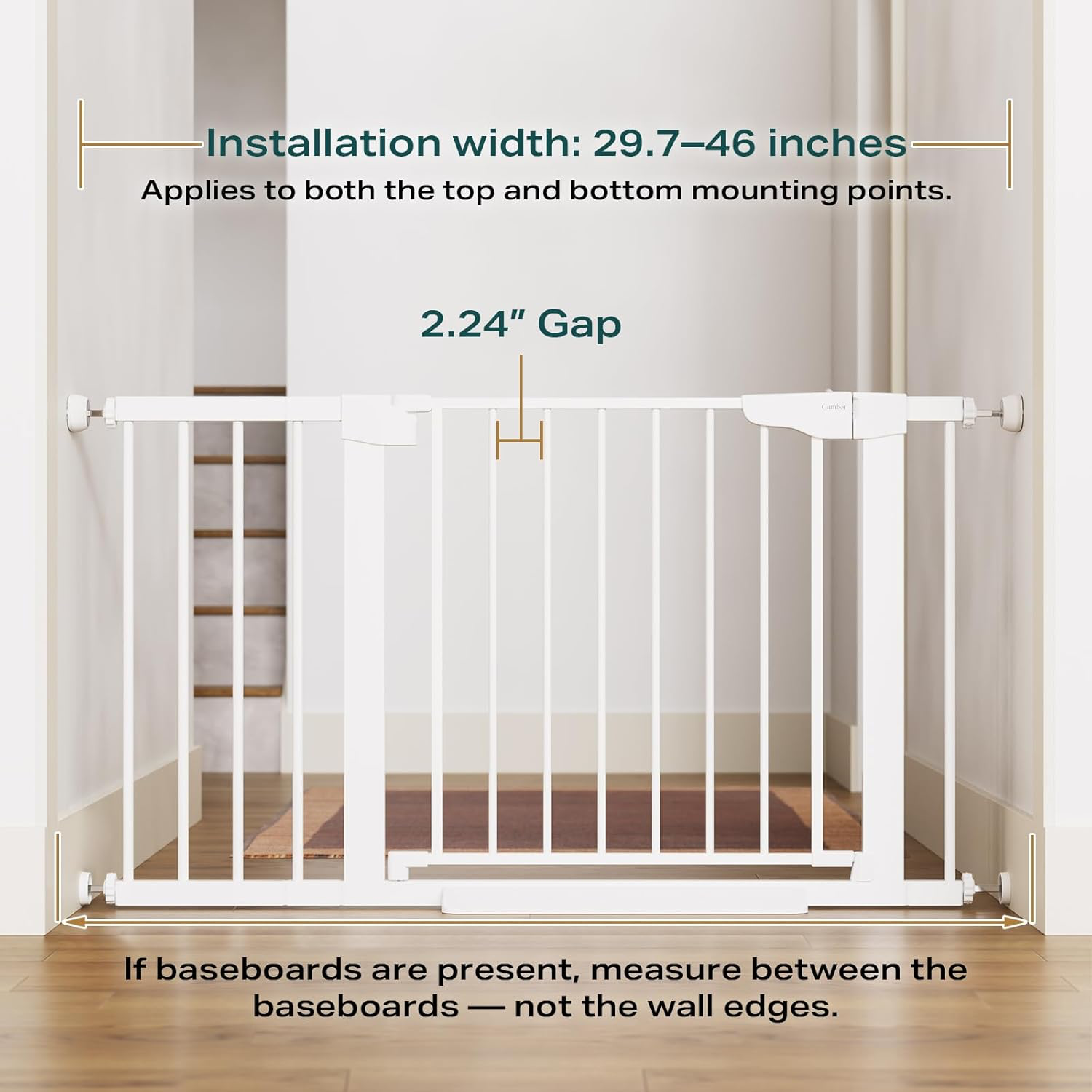
Check that both sides of the doorway have solid trim or studs to push against, not just drywall. Tighten until the gate is firm but not bowing - over-tightening cracks trim. Re-check tension every two weeks.

Renter-friendly?

Yes - this is the renter's gate. No screws, no holes, no paint damage if the rubber pads are clean. Some apartment trim can dent slightly under high pressure - back off a quarter turn if you see indentation.

Best for

Crawling (8m) through about 2.5y, or until the child can climb it.

Honest tradeoffs

  • Never use a pressure gate at the top of stairs - it can dislodge under sudden weight
  • Pets and tall toddlers can sometimes vault or push them out
  • Wide openings over 41 inches require an extension or a different gate
  • Pressure pads can mark soft latex paint - test in a low-visibility spot first

When to consider an alternative

For stair tops, a hardware-mounted gate is the only safe option. For very wide or oddly-shaped openings, a retractable mesh gate is more flexible.

As an Amazon Associate I earn from qualifying purchases.

We may receive a commission if you buy through this link, at no additional cost to you.

Opens amazon.com in a new tab. View latest price and details on Amazon.

Prices and availability are accurate as of the date/time indicated and are subject to change. Any price and availability information displayed on Amazon at the time of purchase will apply.

Editorial independence

We choose products based on safety relevance and parent-tested suitability, not commission rates. Read more about our selection methodology.

Reviewed by NestProof AI · April 2026
Buying guide

What to know before buying

Why pressure-mounted gates matter

A doorway gate creates a child-safe zone without permanent installation. For renters, for grandparents, and for any room where you want a temporary barrier — a kitchen during cooking, a home office during work hours — pressure-mounted gates are the right tool.

The key safety distinction is location. Pressure-mounted gates are appropriate for doorways and low-risk transitions. They are not appropriate at the top of stairs, where a hardware-mounted gate is the recognized standard because impact loads can dislodge a pressure mount.

What to look for when buying

Measure the opening at the bottom, middle, and top — older homes often have walls that are not perfectly parallel. Confirm the gate's range covers all three measurements with room to spare. A one-handed walk-through latch is essential because parents almost always have a child on one hip.

Look for an auto-close feature on any gate that will see heavy traffic. Gates left propped open by accident are one of the most common reasons baby gates fail in real life.

Installation tips

Tighten evenly on both sides and recheck the tension weekly for the first month. Pressure mounts loosen as wood frames flex with seasonal humidity. Add wall cups if the manufacturer provides them — they distribute load and prevent the gate from drifting under repeated impact.

Stress-test the gate by leaning into it with adult body weight before letting your child near it. If the gate shifts, retighten and retest.

Who this is best for

Doorways into kitchens, bathrooms, home offices, and laundry rooms. Bottom of staircases when paired with appropriate setup. Renters, frequent movers, and short-term visits where drilling into walls is not an option.

When this is not the right pick

Do not use a pressure-mounted gate at the top of stairs. The risk profile changes completely when a fall is possible behind the gate, and recognized child safety guidance is consistent on this point. For top-of-stairs use, choose a hardware-mounted gate.

Common questions

Pressure-Mounted Baby Gate for Doorways FAQ

Where should I not use a pressure-mounted gate?+
Do not use pressure-mounted gates at the top of stairs. The pressure fit can loosen over time and may not withstand the force of a child pushing against it near a drop. Use hardware-mounted gates in stair locations.
How do I keep a pressure-mounted gate from sliding?+
Make sure the rubber pads are clean and in contact with a flat surface. Tighten the adjustment bolts until the gate is firmly snug. Wall protector cups can help distribute pressure and protect paint while improving grip.

More in Stairs & Doors

Affiliate links

The products below contain Amazon affiliate links. As an Amazon Associate I earn from qualifying purchases.