Before baby arrives: setting expectations for pets
Pets do best when change is gradual. In the weeks before your baby's arrival, adjust routines toward what life will look like afterward — walks at different times, shorter play sessions, and quiet periods near the nursery. A sudden shift after the baby is home is harder on everyone.
Introduce new baby gear slowly. Let dogs and cats investigate strollers, bouncers, cribs, and swings before they are in constant use. If a piece of gear is off limits — like a crib or bassinet — establish that boundary before the baby is in it.
Refresh training on the basics. A reliable 'place' or 'mat' cue for dogs is one of the most useful tools when your hands are full with a newborn. For cats, make sure the nursery can be closed and that they have quiet retreat spaces away from the baby.
Quick checklist
- ✓Shift pet routines in the weeks before the baby arrives, not after.
- ✓Let pets investigate baby gear before it is in active use.
- ✓Refresh basic training, especially a 'place' or 'settle' cue.
- ✓Create quiet retreat spaces that the baby will not invade later.
The first introductions
Calm, short, and supervised beats long and emotional.
Keep early introductions short and low-key. Leashed dogs, calm energy, and brief sessions help pets form a positive association with the new family member. Reward calm behavior and end the session before anyone is overwhelmed.
Body language is the best signal. A relaxed mouth, soft eyes, and normal posture are good signs. Stiffness, hard staring, low tail wagging, or retreat are cues to end the session and try again later with more distance.
Always supervise. Even pets with a long history of gentle behavior should never be left alone with a baby or young child. Gates, crates, and closed doors are not punishments — they are the structure that lets everyone relax.
Quick checklist
- ✓Use a leash for the first several introductions with dogs.
- ✓Keep initial sessions short and end on a calm note.
- ✓Watch body language, not just behavior — reward relaxation.
- ✓Never leave pets and babies alone together, regardless of history.
Baby proofing for pet-related hazards
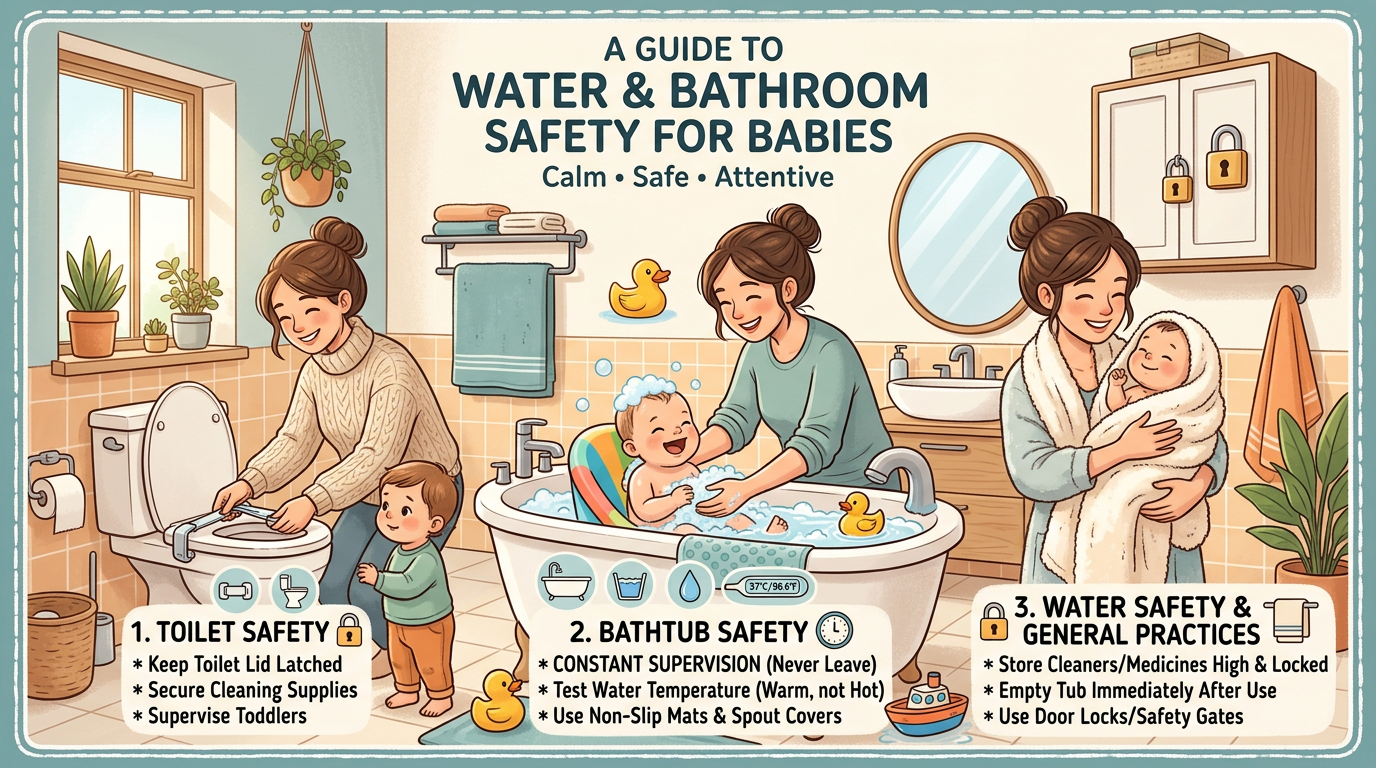
Pet food bowls sit at exactly the height a crawling baby can reach, and kibble is a choking hazard. Pet water bowls are a drowning risk for infants. Raise bowls when possible, move them into a room the baby cannot access, or switch to scheduled feeding times rather than leaving food down all day.
Pet medications are a serious risk. Flea and tick treatments, heartworm medications, and prescription pet drugs are formulated for animals and can be dangerous to children. Store them with household medications, not on counters or in pet-supply drawers.
Litter boxes, small animal cages, and reptile enclosures introduce bacteria risk. Keep them in rooms your child cannot enter, and manage hand-washing routines for everyone in the home. Pet beds and toys also accumulate hazards — small squeaker parts from dog toys, for example, are a common choking risk.
Quick checklist
- ✓Raise or relocate pet food and water bowls once your baby is crawling.
- ✓Store pet medications with other household medications, locked up.
- ✓Keep litter boxes and cages in rooms behind closed doors or gates.
- ✓Inspect pet toys for small parts and remove damaged items.
Building a calm household for the long run
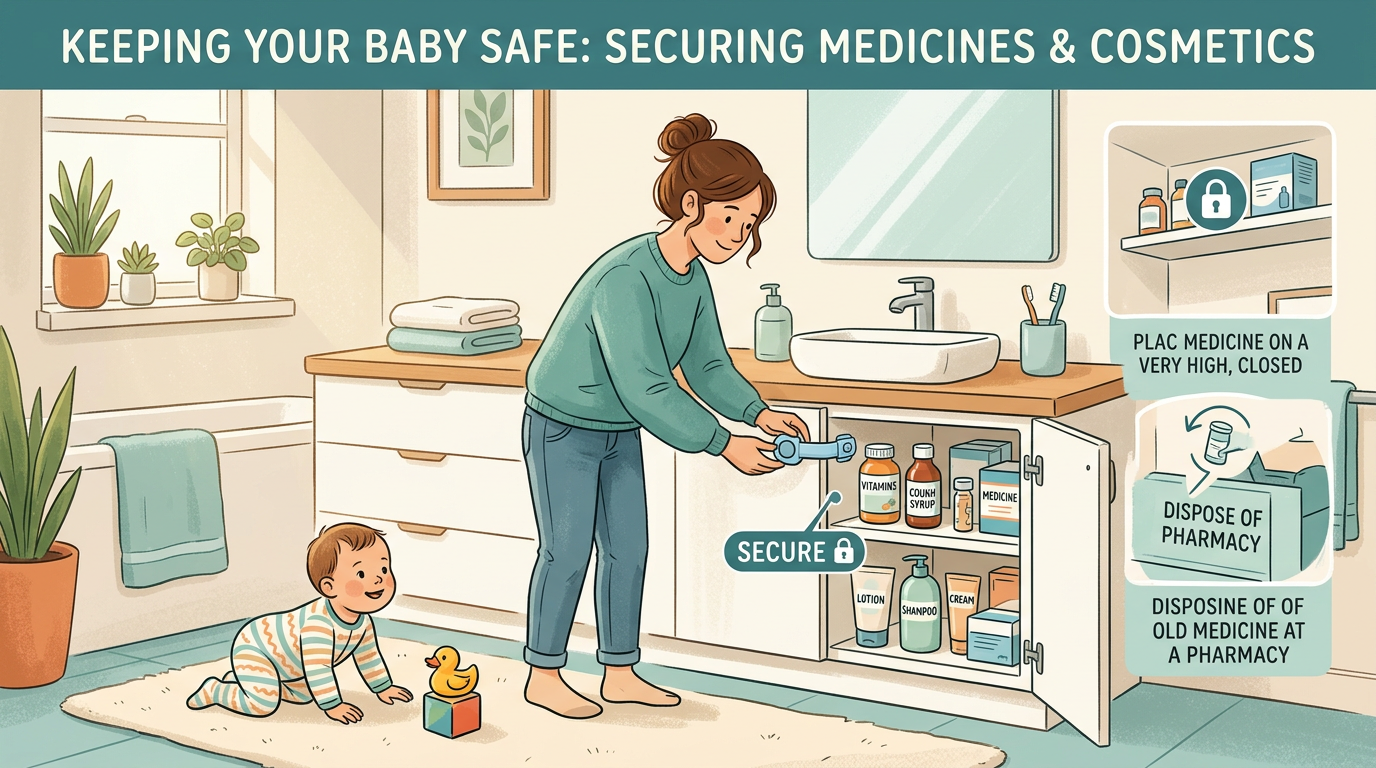
Separation zones benefit everyone. A gated room, a crate the dog actually likes, or a cat shelf the baby cannot reach all give pets a real break. Pets who never get a break from a curious toddler tend to get reactive, which is the situation you most want to avoid.
Teach gentle interaction as soon as your child can understand. 'Soft hands,' no pulling tails or ears, and letting the pet come to you are lessons that start at around eighteen months and reinforce for years. Model the behavior — your child will copy how you touch the pet more than anything you say.
If you see any real aggression, consult a veterinary behaviorist or qualified trainer quickly rather than waiting. Most issues are much easier to address early, and the sooner you address them, the more comfortable your household feels.
Quick checklist
- ✓Give pets reliable retreat zones that the baby cannot reach.
- ✓Teach soft hands and gentle interaction as soon as your child can understand.
- ✓Model calm behavior around the pet — kids copy what they see.
- ✓Address any real aggression early with a qualified professional.
Frequently asked questions
Many families introduce pets within the first few days of bringing baby home. The key factors are calm energy, short sessions, leashed introductions for dogs, and always keeping the pet supervised.
No. Even pets with long, gentle histories should not be left unsupervised with babies or young children. Use gates, crates, or closed doors whenever an adult is not actively watching.
Yes. Kibble is a choking hazard, canned pet food can contain bacteria, and pet water bowls are a drowning risk. Raise or relocate bowls once your baby is mobile.
Cats sometimes like to sleep in cribs, which is a suffocation risk for infants. Keep the nursery door closed or use a mesh crib cover designed for that purpose until the baby is older.
Persistent avoidance, growling, snapping, or stiffness around the baby are reasons to consult a veterinary behaviorist or qualified trainer quickly. Early intervention is much easier than addressing an established pattern.
Featured products
Affiliate linksProducts that support this guide
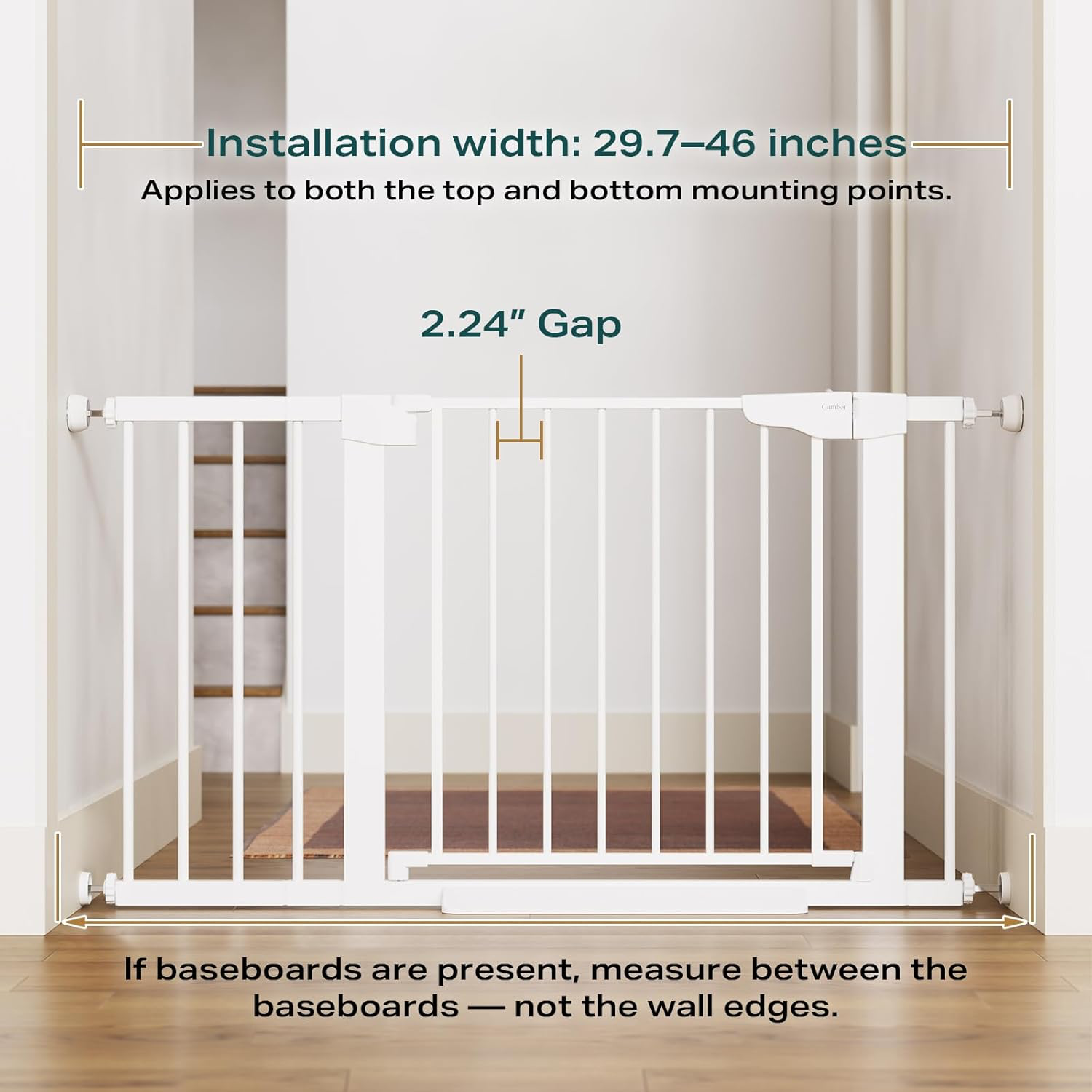
Cumbor 29.7-46 Baby Gate for Stairs
A pressure-mounted barrier sized for typical hallway and stairway openings between roughly 30 and 46 inches. We like it for renters because it sets up without drilling, and the auto-close latch helps when you walk through with a baby on your hip. Confirm it fits your specific opening before you buy.
View product→Pressure-Mounted Baby Gate for Doorways
No-drill pressure gate for doorways and low-risk openings to create clear child-safe zones.
View product→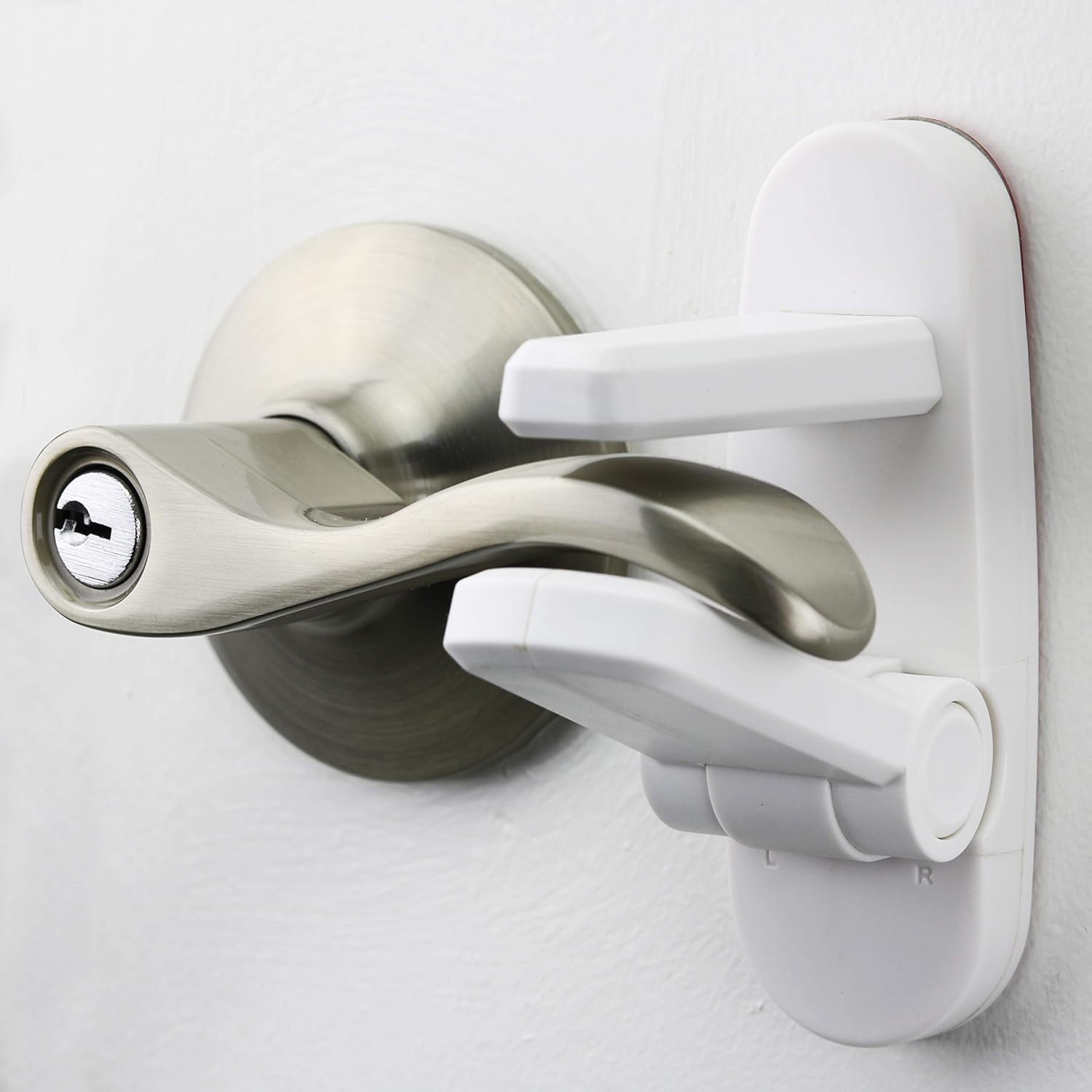
Wappa Baby Door Lever Lock (2 Pack)
Adhesive door lever locks that keep toddlers from opening lever-handle doors while still allowing adult one-hand operation.
View product→Last reviewed
Sources used for this guide
Reviewed on April 19, 2026. This content is educational and practical, but it is not a substitute for professional safety inspections or medical advice.
U.S. Consumer Product Safety Commission
Childproofing your home: 12 safety devices to protect childrenHealthyChildren.org / American Academy of Pediatrics
Safety for Your Child: 6 to 12 MonthsHealthyChildren.org / American Academy of Pediatrics
Make Baby's Room Safe