Why the living room needs attention before it looks dangerous
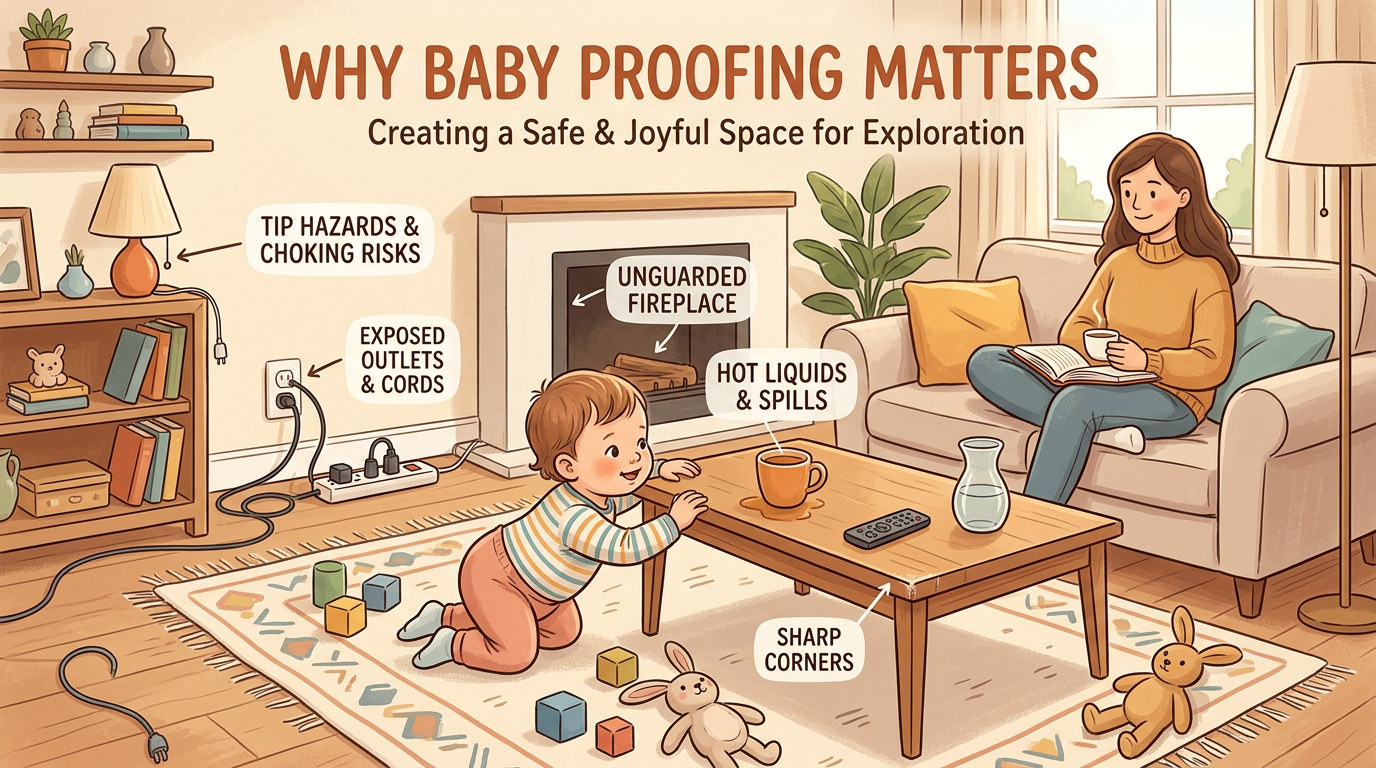
The living room rarely looks like a problem room because it is designed for comfort. But for a baby who is learning to roll, crawl, or pull to stand, the same cozy space is packed with reachable furniture edges, dangling cords, remote controls with button batteries, and shelves full of small objects that fit perfectly in a mouth.
This is typically the first room where babies practice using furniture as climbing tools. Coffee tables become support rails, bookshelves become ladders, and TV stands become targets for curious hands. Each of those interactions introduces fall, tip-over, and impact risks that adults rarely think about from standing height.
The living room is also the room families use the most, which makes complacency easy. Because adults spend hours there every day without incident, hazards hide in plain sight. The familiarity that makes the room feel safe is the same thing that delays action.
Quick checklist
- ✓Walk through the living room from floor level to see what your child will reach first.
- ✓Identify furniture that could tip, slide, or wobble when pulled on by a small child.
- ✓Note every loose cord, cable, and dangling string within three feet of the floor.
- ✓Check tabletops, shelves, and couch cushions for small objects, coins, batteries, and breakables.
Anchor furniture and eliminate tip-over risks first
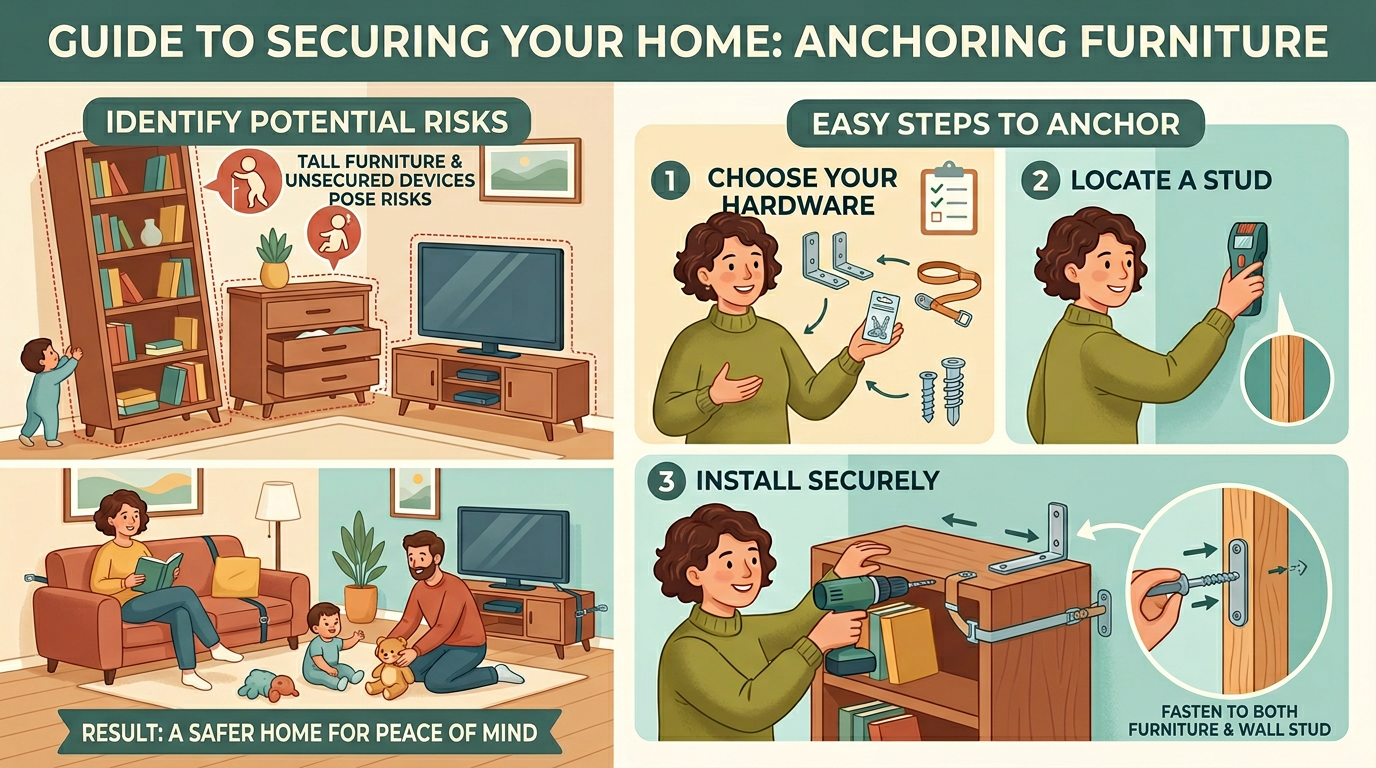
Furniture tip-overs are one of the leading causes of serious injury in young children, and the living room often has the most offenders. Bookshelves, media consoles, freestanding televisions, dressers used as side tables, and tall lamps can all become unstable when a baby pulls up on them or tries to climb.
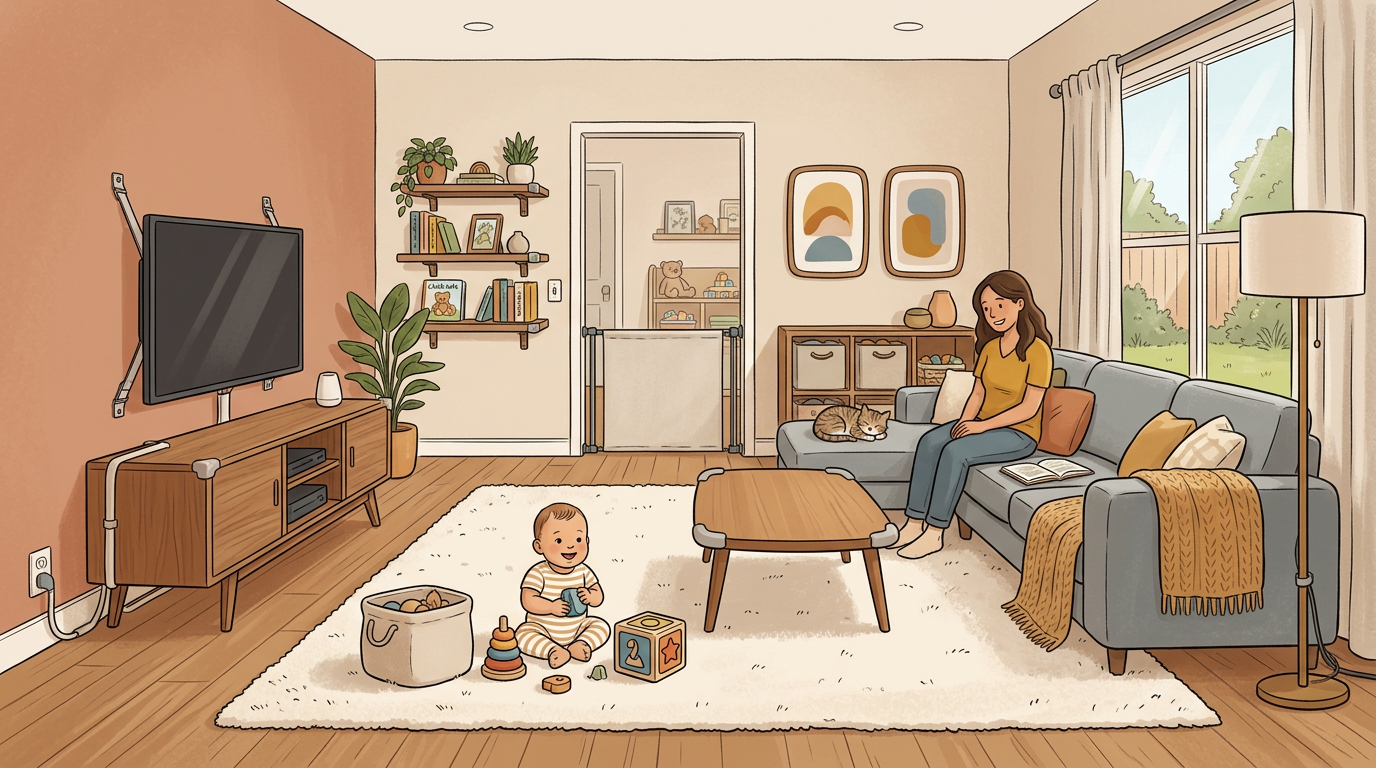
Start with the heaviest and tallest items. Use wall straps or brackets to anchor bookshelves, media cabinets, and any furniture that could shift when weight is applied to a shelf or drawer. Flat-screen TVs should be wall-mounted whenever possible. If wall-mounting is not an option, secure the TV to the stand with anti-tip straps and keep remotes and toys away from the area to reduce the temptation to reach up. The CPSC Anchor It campaign provides specific guidance on which furniture types need attention and how to secure them properly.
Do not forget about items near anchored furniture. A stable bookshelf with a toy bin placed beside it gives a toddler a step stool they did not have yesterday. Freestanding floor lamps near seating can be grabbed and toppled during a pull-up attempt. Think about each piece of furniture in relation to the objects around it.
Quick checklist
- ✓Anchor bookshelves, media consoles, dressers, and any tall or top-heavy furniture to the wall.
- ✓Mount televisions to the wall or secure them to the stand with anti-tip hardware.
- ✓Remove climbable objects like bins, footstools, and stacked toys from areas near shelving.
- ✓Check freestanding lamps and plant stands for stability when pulled or bumped.
Secure blind cords, cables, and small hazards throughout the room
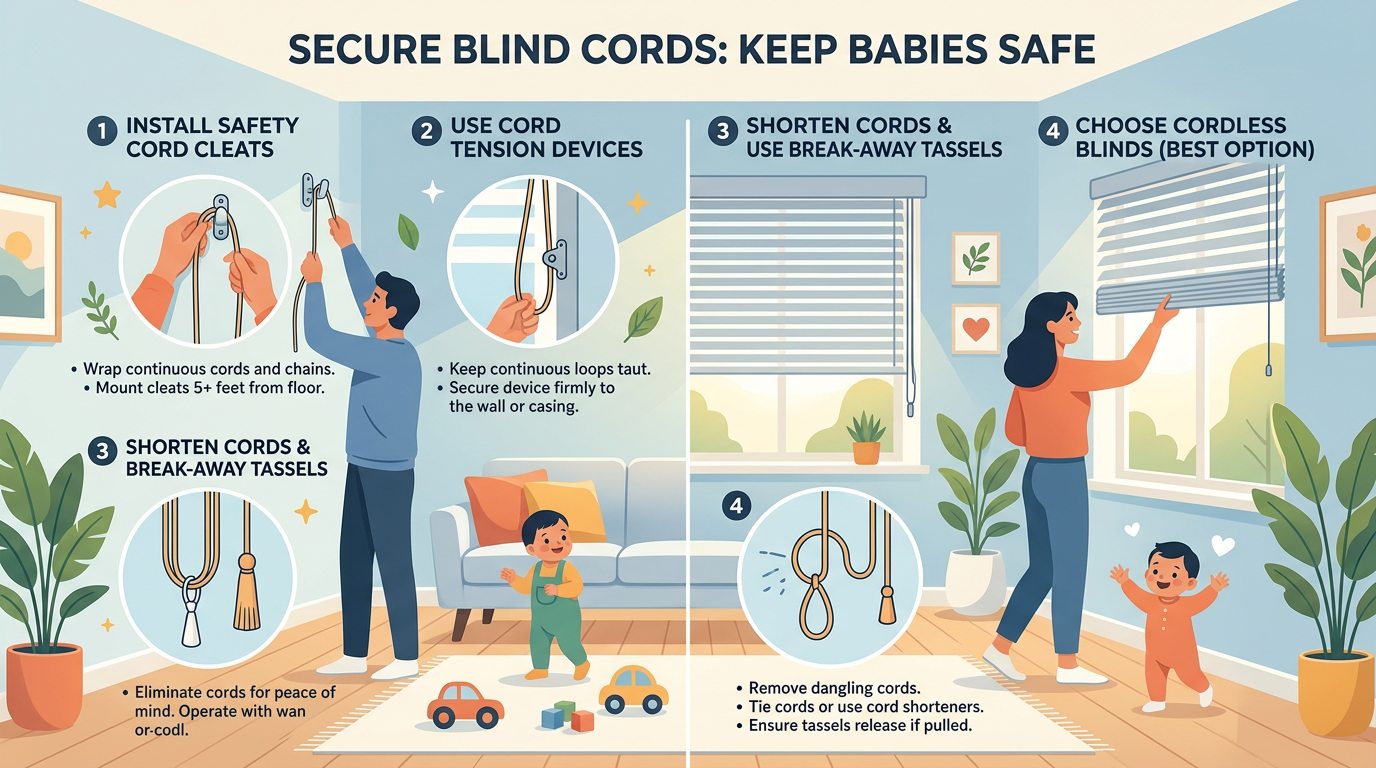
Blind cords and window covering pull-strings are a strangulation hazard that CPSC has repeatedly flagged. Young children can become entangled quickly and silently, which is why loose cords hanging within reach need to be wound up, cut, or replaced with cordless alternatives. Even cords that seem too short to be dangerous can loop around a small neck if the child is standing on furniture near the window.
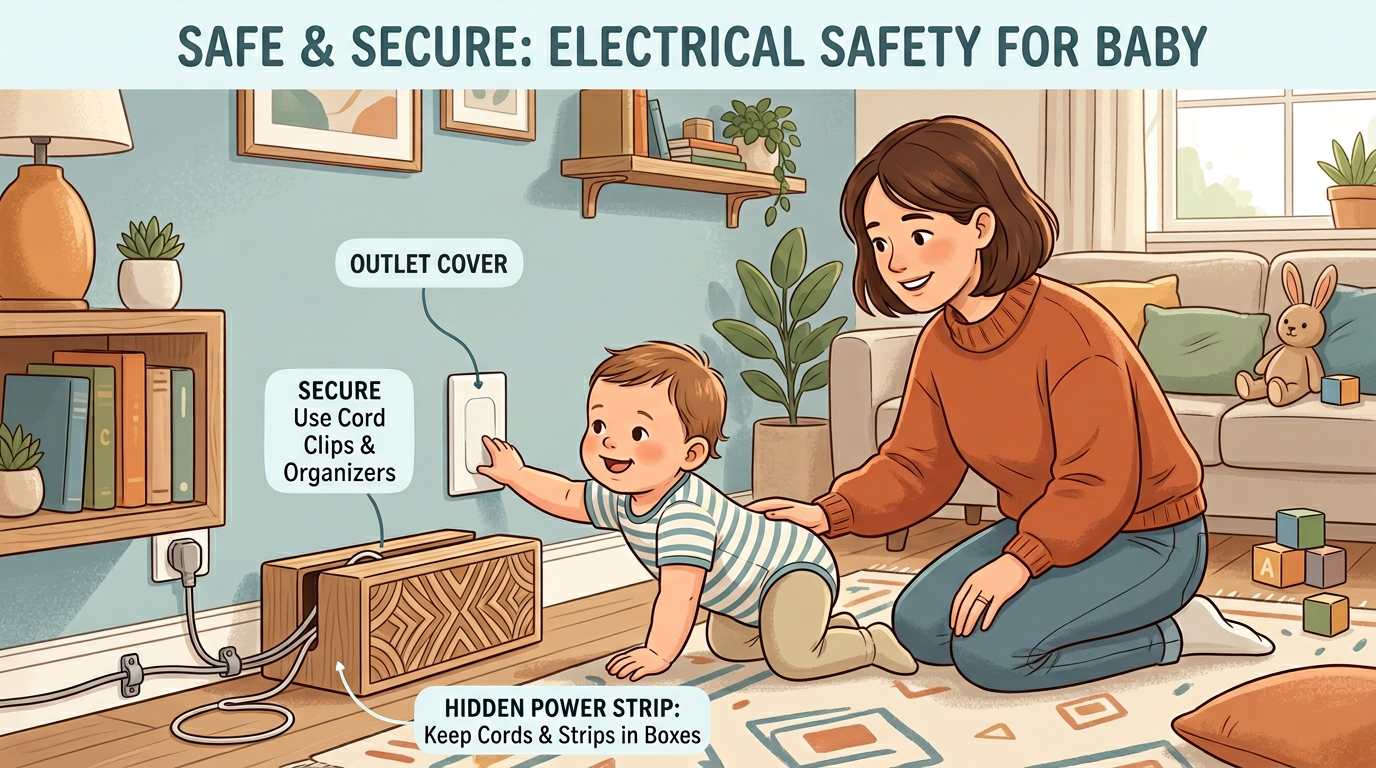
Charging cables, power strips, speaker wires, and lamp cords also deserve attention. Route them behind furniture or use cord covers to keep them flat against baseboards. A trailing cable is both a trip hazard and a pull hazard, since tugging it can bring a lamp, monitor, or charging phone down onto a child. Keep power strips behind furniture or inside enclosed cable boxes so outlets and connections stay out of sight.
Small hazards are easy to miss during a quick scan. Button batteries from remotes and toys are a serious ingestion risk, coins collect between cushions, and decorative items like candles, vases, and picture frames often contain small parts or glass. Check under and between cushions regularly, and keep remote controls in a basket or drawer rather than on a low table.
Quick checklist
- ✓Wind, clip, or replace blind cords so no loop hangs within reach of furniture or the floor.
- ✓Route charging cables, speaker wires, and lamp cords behind furniture or under cord covers.
- ✓Remove button batteries from any device stored within your child's reach or secure the battery compartment.
- ✓Check under couch cushions, between pillows, and along baseboards regularly for coins, caps, and small objects.
Protect sharp corners and hard edges where falls happen most
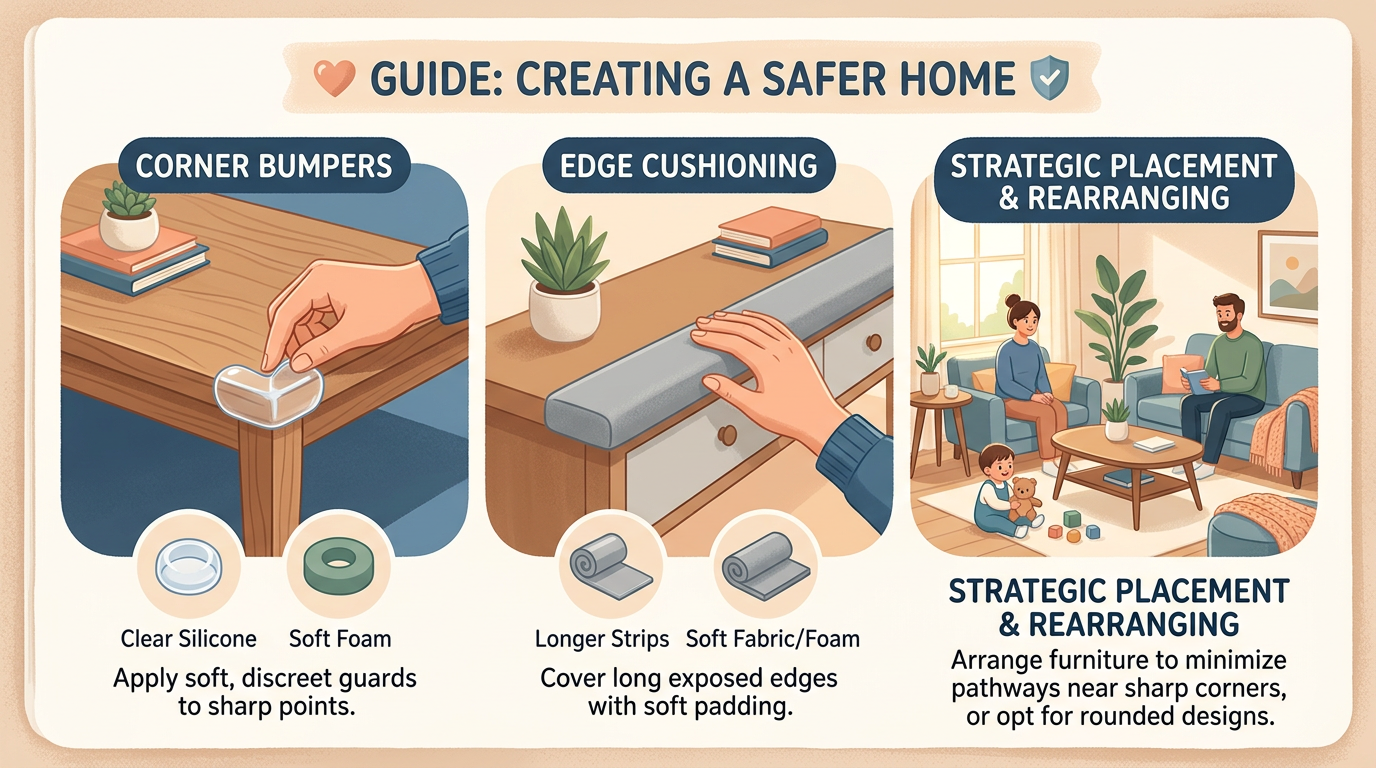
Coffee tables, fireplace hearths, and low media stands are the surfaces babies and toddlers fall against most often in the living room. Early walkers lose balance frequently, and the distance between standing upright and hitting a sharp wooden or stone edge is very short. These are not catastrophic-speed impacts, but a hard corner at forehead height can cause cuts and bruises that are entirely preventable.
Corner protectors and edge bumpers are among the most affordable and easiest baby proofing products to install. Adhesive-backed foam or silicone guards fit most standard furniture profiles and take seconds to apply. Prioritize the surfaces your child interacts with daily rather than trying to cover every edge in the room.
Some surfaces are harder to protect effectively. Glass-topped coffee tables, sharp stone hearths, and metal shelf brackets may need more than a stick-on guard. If a glass table sits at the center of your child's play area, consider replacing it temporarily or moving it to a less trafficked spot. The goal is to reduce the severity of impacts that are going to happen regardless of supervision.
Quick checklist
- ✓Add corner guards or edge bumpers to the coffee table, especially if it has squared-off edges.
- ✓Check hearth edges and stone or brick surrounds for sharp corners at crawling and standing height.
- ✓Cover sharp edges on media stands, end tables, and low shelving units.
- ✓Remove or relocate glass-topped tables from primary play areas if protective guards are not sufficient.
Use layout changes to make supervision easier
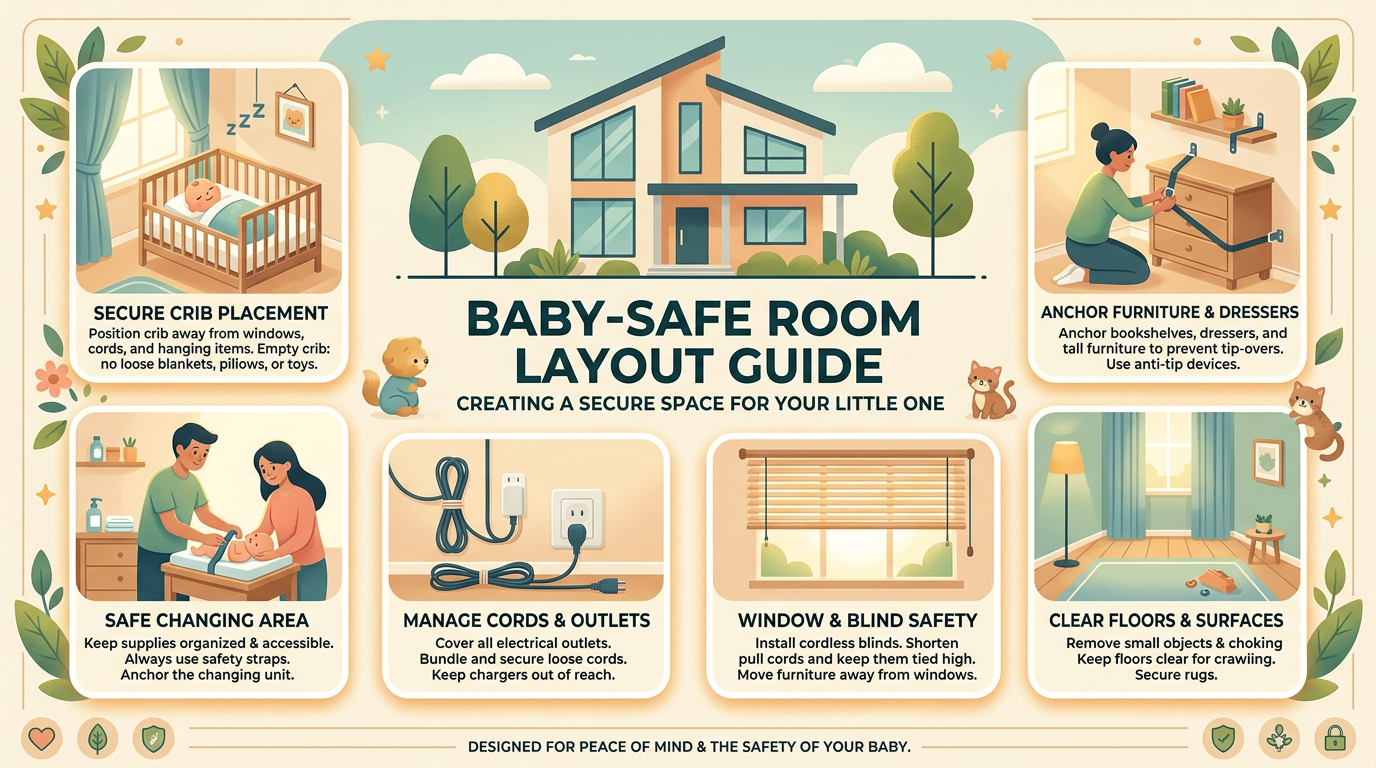
Rearranging furniture can be just as effective as buying safety products. Moving the coffee table to one side, creating an open stretch of floor for crawling practice, and positioning seating so you have a clear view of the play area all reduce risk without adding hardware. The goal is a layout where your child can explore and you can supervise without needing to be within arm's reach every second.
Designate one area of the living room as the primary play zone and keep it consistently clear of clutter, loose objects, and unanchored furniture. When toys, books, and play mats have a defined home, cleanup is easier and hidden hazards are less likely to accumulate. Accessible toy storage at child height encourages independent play in the safer zone rather than exploration of the off-limits spots.
Revisit the layout as your child grows. A floor arrangement that works well for a seven-month-old crawler may need adjustment once that same child starts walking, climbing onto couches, and reaching higher shelves. Each new stage of mobility changes which parts of the room matter most, so treat the layout as something you update rather than set once.
Quick checklist
- ✓Create a defined safe play zone with open floor space and soft surfaces.
- ✓Keep toy storage at child height so your child gravitates toward the safer area of the room.
- ✓Position seating to maintain clear sightlines to the play zone and main entry points.
- ✓Revisit the furniture layout after each major development stage: crawling, walking, and climbing.
Frequently asked questions
Focus on tip-over risks, blind cords, and outlet access first since they carry the highest injury potential. Furniture anchoring and cord management address the most serious living room hazards before you move on to corners, small objects, and layout changes.
Prioritize the surfaces your child falls against most often, like coffee tables, hearths, and low shelving. You do not need to cover every edge in the room, just the ones in the zones where your child spends the most time.
Use furniture placement, strategic barriers, and consistent storage habits to define safer zones within the open space. An open layout does not need to be fully enclosed, but it does need clear boundaries between the play area and higher-risk zones like the kitchen or stairs.
Yes, but move fragile items, small objects, and anything with button batteries above reach or behind glass. Reassess as your child's reach grows, and treat low shelves and coffee tables as part of the play zone rather than display space during the toddler years.
Featured products
Affiliate linksProducts that support this guide
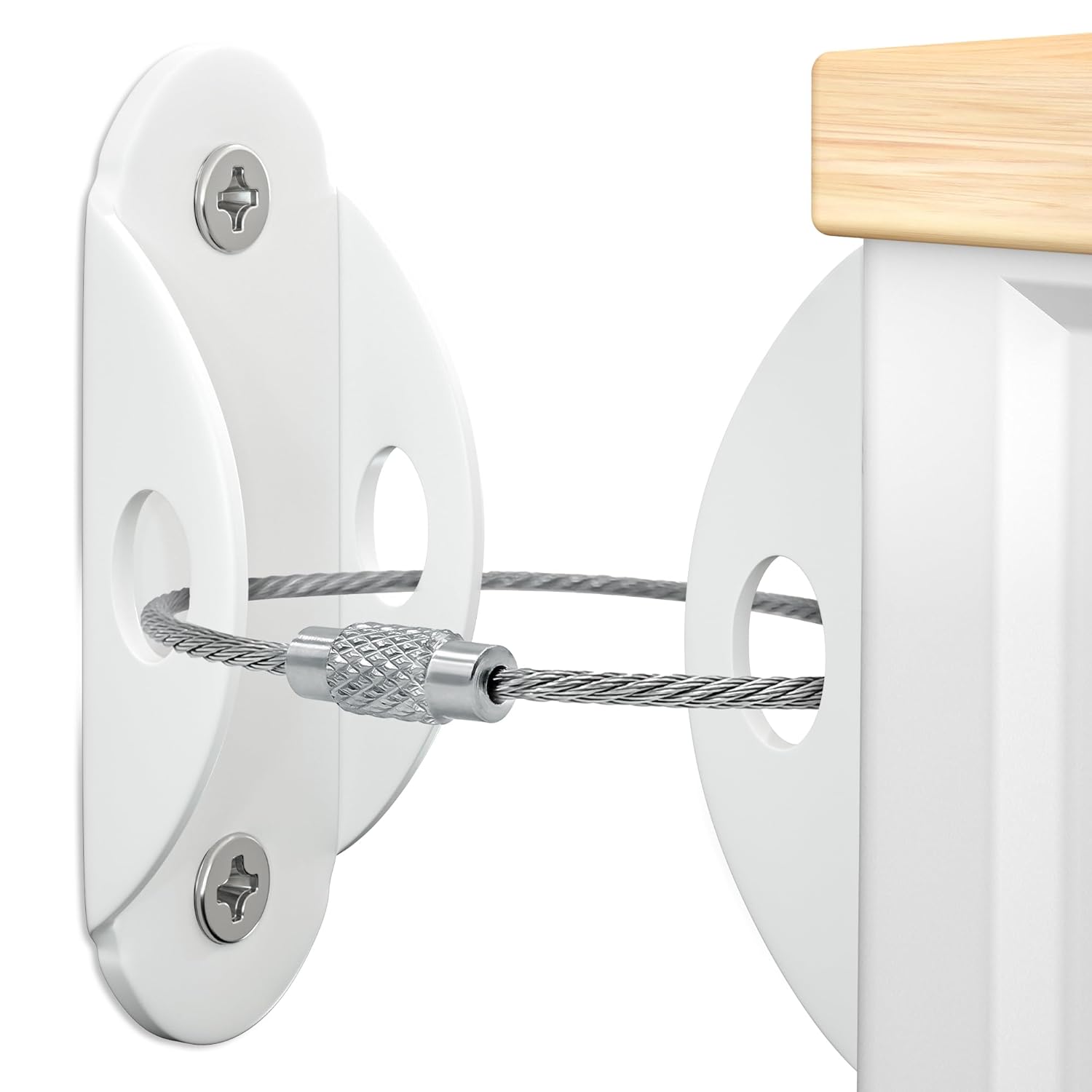
Booda Brand Furniture Anchors (10 Pack) Anti Tip Straps
Steel anti-tip straps for tall furniture and televisions, sold as a multi-pack so you can do a whole room in one afternoon. Tip-overs are one of the most common serious household injuries for toddlers, and we recommend anchoring anything taller than a child even if it feels stable when you push on it. The included hardware works for wood studs and most wall anchors; for plaster or masonry you may need different fasteners.
View product→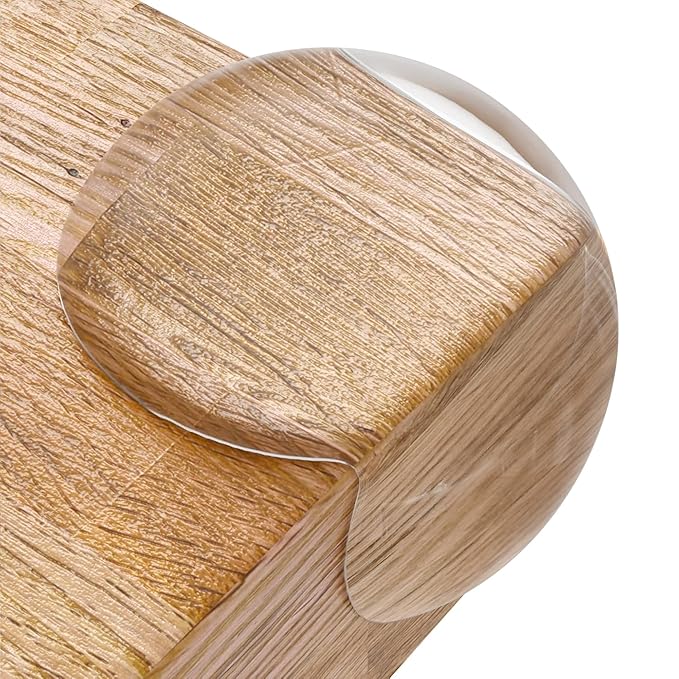
12-Pack Corner Protectors Baby Proof, Furniture Corner and Edge Safety Bumpers
Soft foam corner guards with 3M adhesive backing to cushion sharp furniture edges.
View product→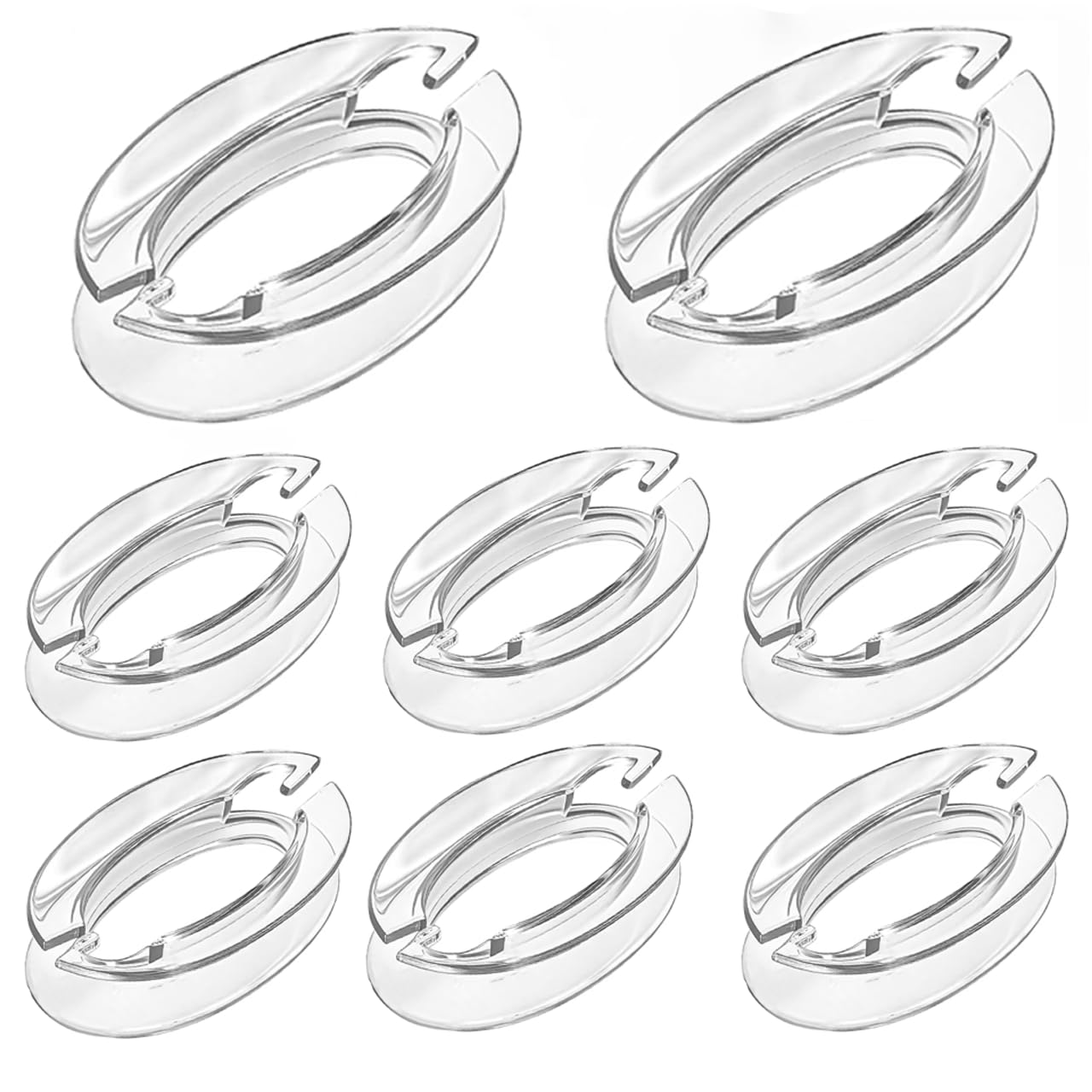
Dreambaby Blind Cord Wind-Ups
Helps keep dangling blind cords out of reach of children to prevent entanglement.
View product→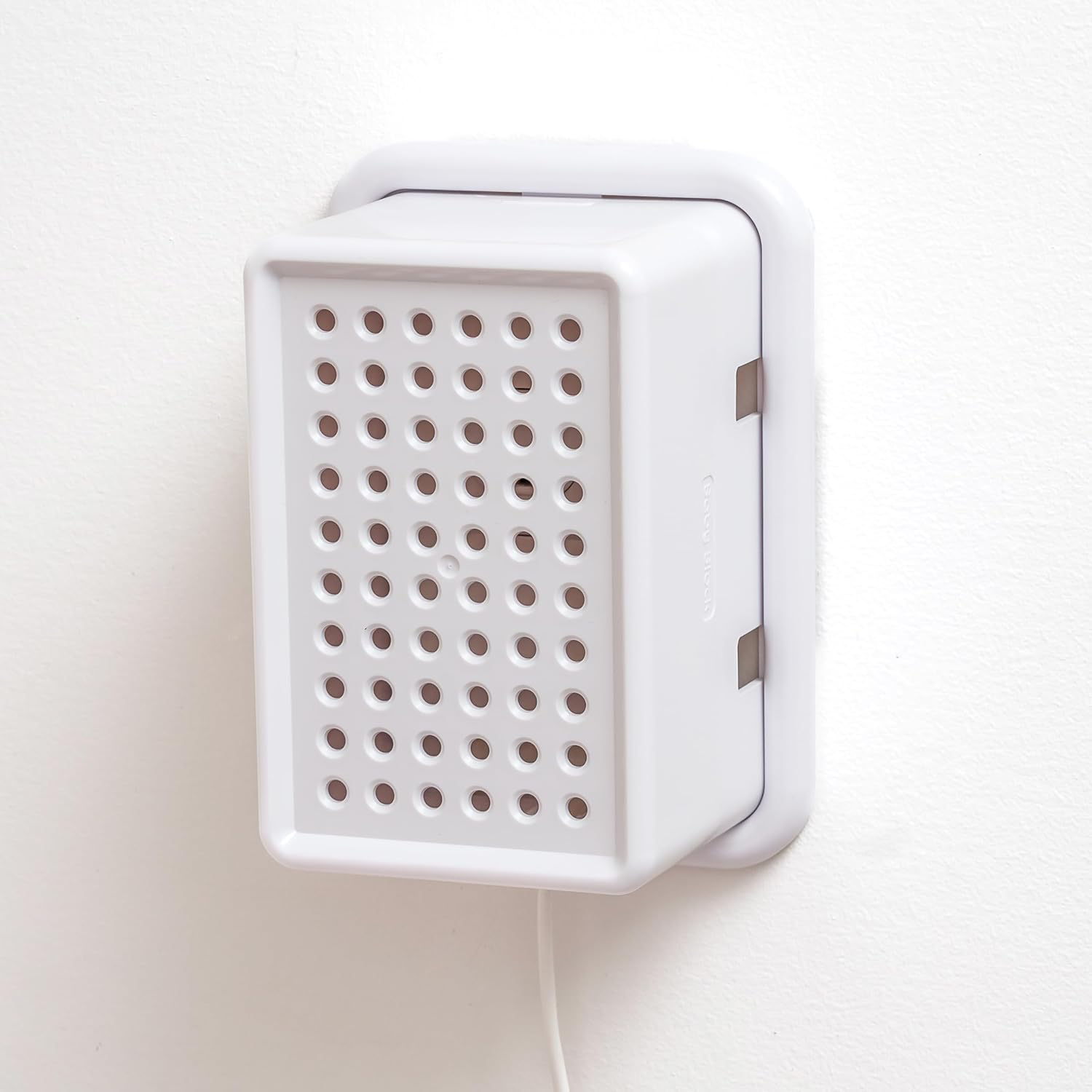
Outlet Plug Covers (24-Pack) Childproof Socket Protectors
Simple press-fit outlet caps that block unused electrical sockets from curious little fingers.
View product→Last reviewed
Sources used for this guide
Reviewed on March 17, 2026. This content is educational and practical, but it is not a substitute for professional safety inspections or medical advice.
U.S. Consumer Product Safety Commission
Anchor It! furniture tip-over safetySafe Kids Worldwide
Safe Kids home furniture and falls safety guidanceU.S. Consumer Product Safety Commission
Childproofing your home: 12 safety devices to protect childrenHealthyChildren.org / American Academy of Pediatrics
Safety for Your Child: 6 to 12 Months