Why outlets are the first electrical hazard parents notice
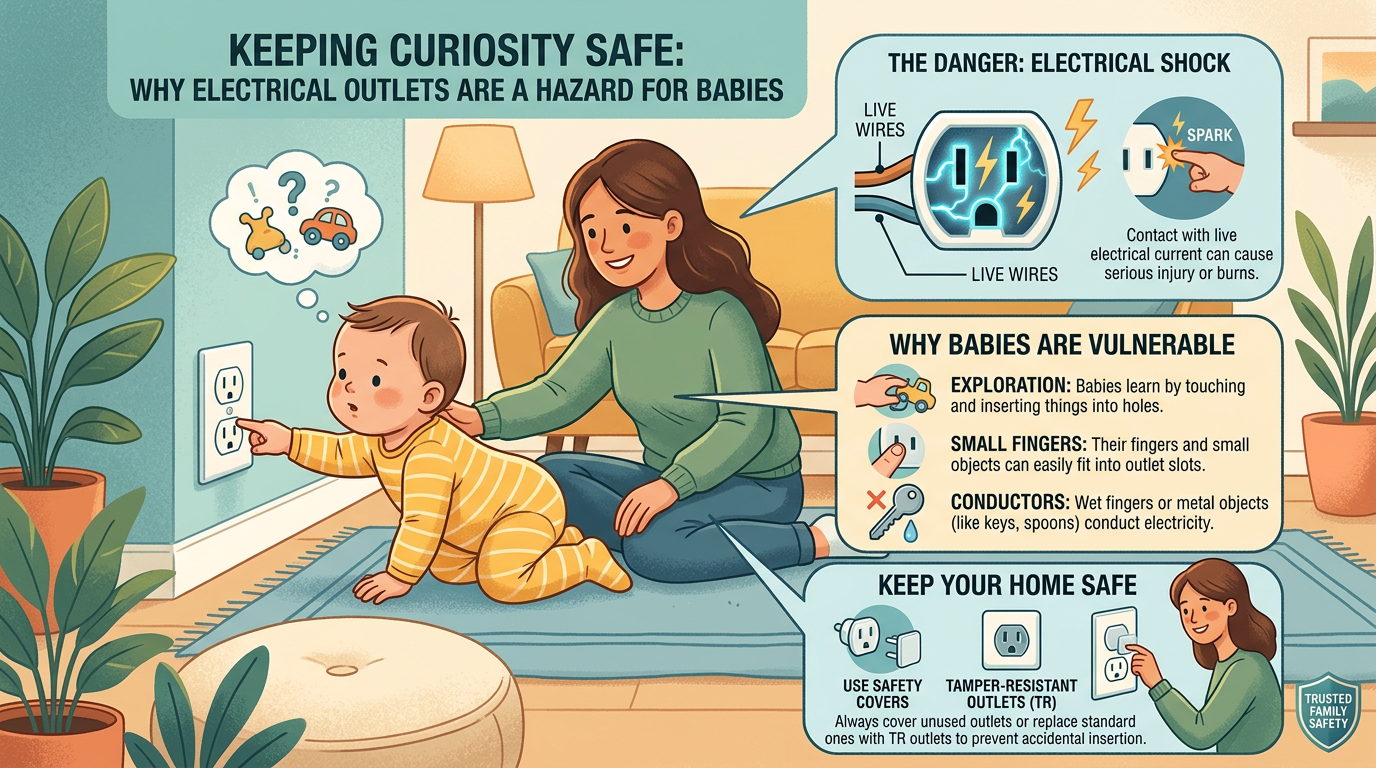
Standard wall outlets sit at the perfect height for a crawling or newly walking baby. They are visually interesting, easy to reach, and just the right size for small fingers or objects a child might try to insert. This is why outlet covers are one of the first baby proofing products most parents buy, and why they belong on every outlet your child can access.
There are two main types of outlet covers: plug-in caps that fill unused sockets, and sliding plate covers that replace the standard wall plate and slide closed when a plug is removed. Plug-in caps are inexpensive and work well for outlets you rarely use, but they can become a choking hazard if a toddler learns to pull them out. Sliding plate covers stay attached to the wall and are harder for children to defeat.
The best outlet cover is the one adults in your home will actually use consistently. If plug-in caps get left out after vacuuming or charging, switch to sliding plates. If sliding plates are too stiff for a grandparent to operate, find a model with easier action. Consistency matters more than the specific product you choose.
Quick checklist
- ✓Cover all unused outlets in living spaces, bedrooms, and hallways.
- ✓Use sliding plate covers for frequently used outlets where plug-in caps get removed and forgotten.
- ✓Check behind furniture for forgotten exposed outlets during your initial audit.
- ✓Replace loose or damaged outlet plates that leave gaps around the socket.
Manage cords before they become pull-down or strangulation risks
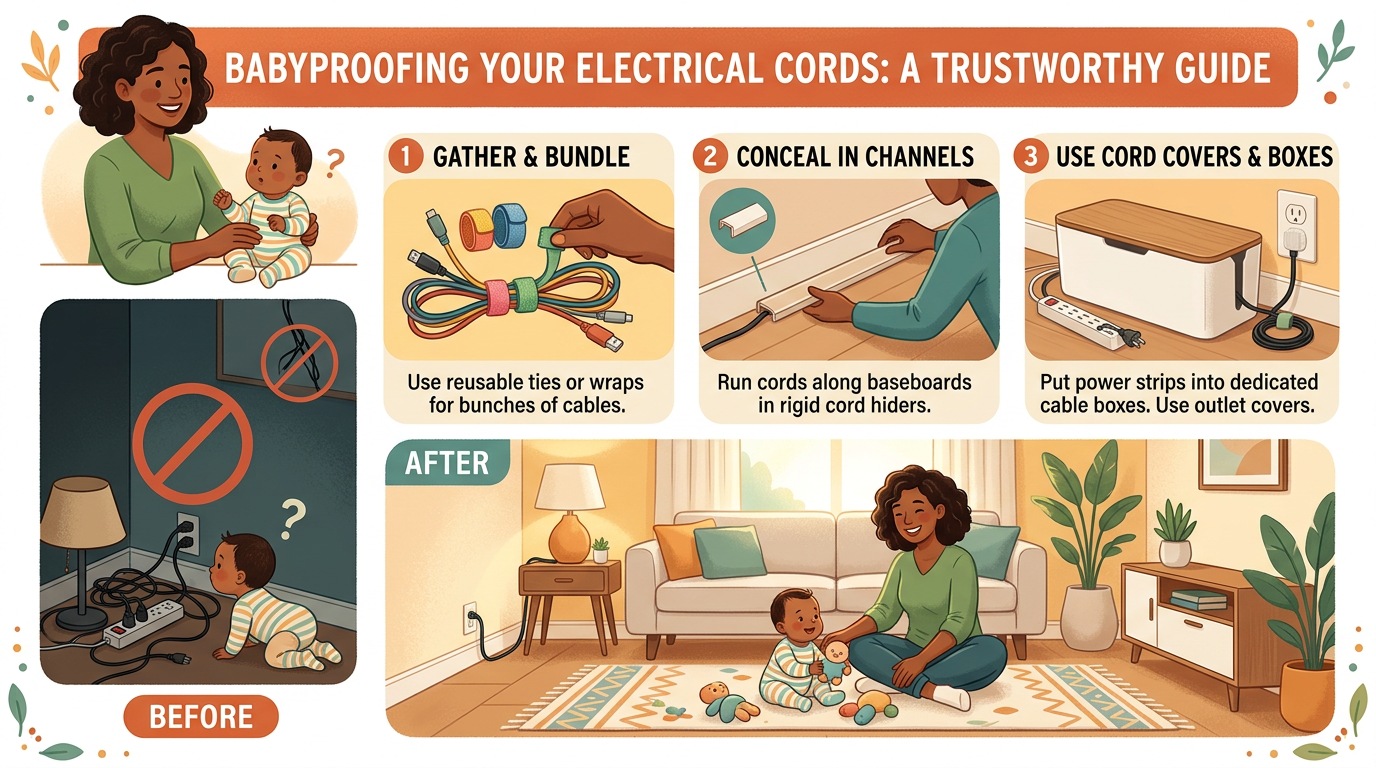
Lamp cords, phone charger cables, and appliance cords that hang below table level are pull-down hazards. A toddler who grabs a dangling cord can pull a lamp, iron, or heavy appliance off a surface and onto themselves. Route cords behind furniture or along baseboards where they cannot be reached, and keep appliances pushed back from counter edges when cords trail down the front.
Looped or dangling cords in bedrooms and living areas also pose a strangulation risk, especially for young children in cribs or play areas. Window blind cords, baby monitor cables, and decorative string lights are common culprits. Any cord that forms a loop large enough to fit around a child's neck needs to be shortened, secured flat against the wall, or replaced with a cordless alternative.
Cord covers and cable management clips are inexpensive tools that help keep cords flush against walls or furniture legs. They do not need to look perfect. The goal is to eliminate any cord a child could grab, pull, or wrap around themselves. Focus on the rooms where your child spends the most time and work outward from there.
Quick checklist
- ✓Route lamp and appliance cords behind furniture and away from edges.
- ✓Secure loose charging cables above reach or inside drawers when not in use.
- ✓Eliminate looped or dangling cords in bedrooms, nurseries, and play areas.
- ✓Use cord covers or cable clips in high-traffic areas where cords cross the floor.
Keep power strips hidden and inaccessible
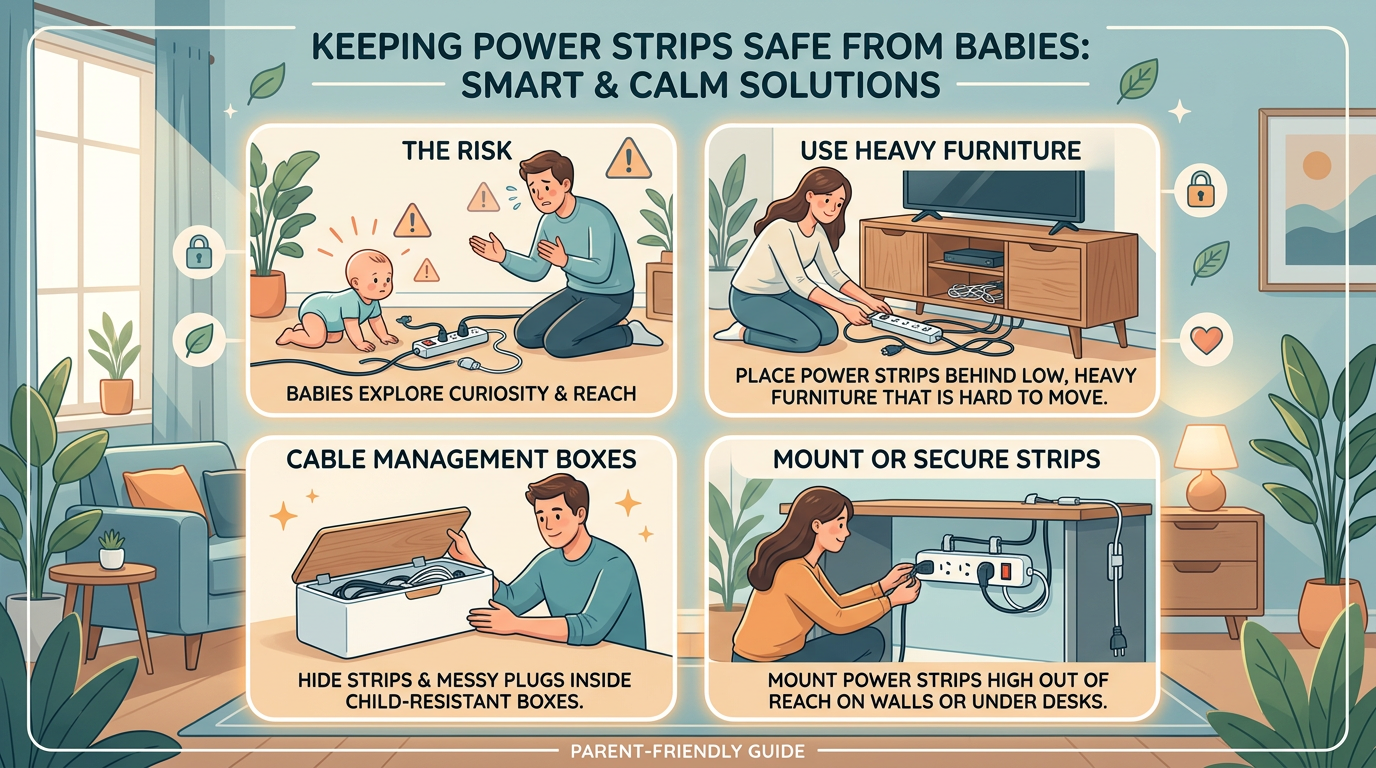
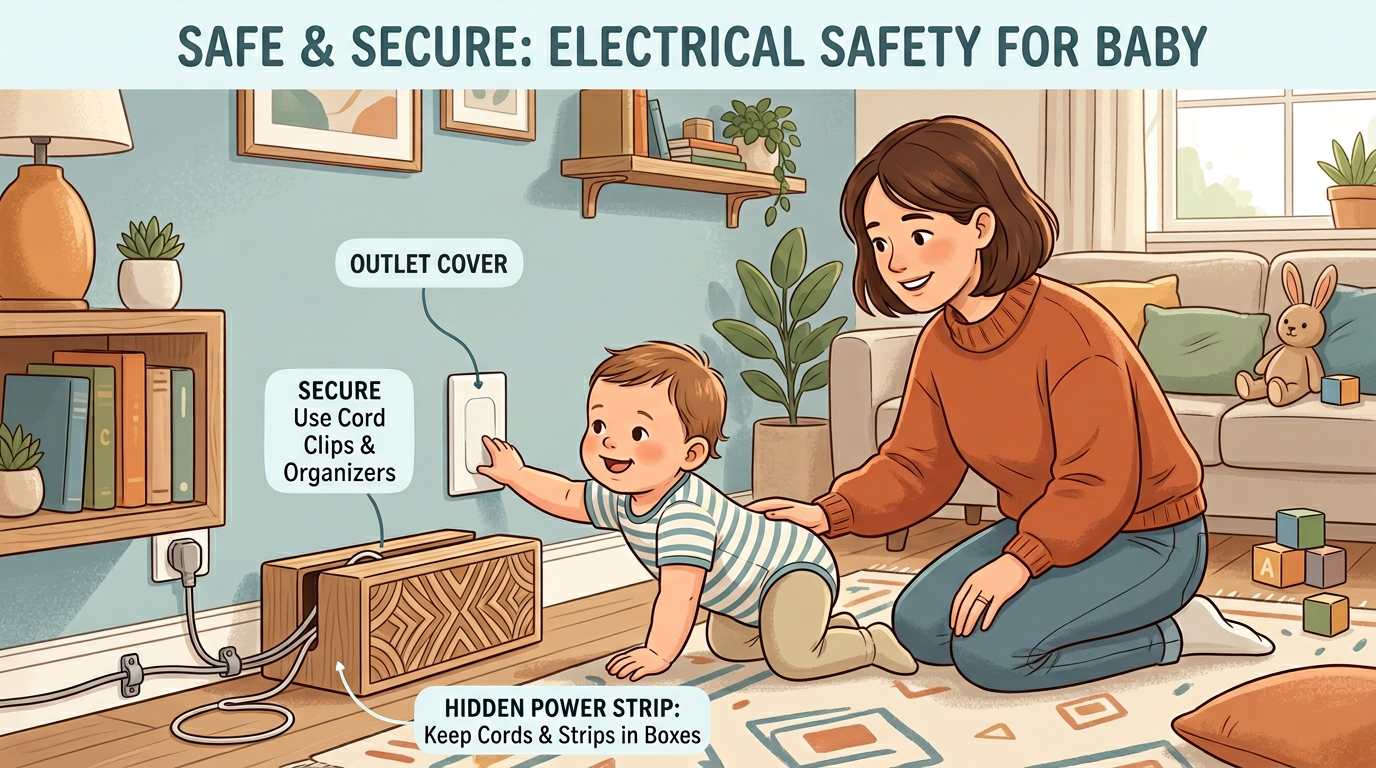
Power strips are fascinating to toddlers because they have multiple openings, glowing switches, and often sit right at floor level. A child who finds a power strip may try to insert fingers, toys, or small metal objects into the sockets. The combination of accessible outlets and exposed wiring makes an unsecured power strip one of the more concentrated electrical hazards in a home.
The simplest fix is placement. Tuck power strips behind entertainment centers, under desks, or inside cable management boxes that keep them enclosed. If a power strip cannot be hidden behind furniture, a locking power strip cover can prevent a child from accessing the sockets directly. The cover adds a step for adults but removes the hazard entirely for small hands.
Avoid running power strips across open floor space where a child plays or crawls. If you need to bridge a gap between an outlet and a device, treat the extension cord or strip as a temporary solution and find a way to relocate the device or add an outlet closer to where it is needed. Overloaded strips near play areas create both electrical and tripping hazards.
Quick checklist
- ✓Move power strips behind or under furniture so they are out of sight and reach.
- ✓Use power strip covers if the strip cannot be relocated to a hidden spot.
- ✓Keep extension cords as short-term solutions rather than permanent wiring.
- ✓Check that power strips are not overloaded or showing signs of damage.
Watch for seasonal and temporary electrical hazards
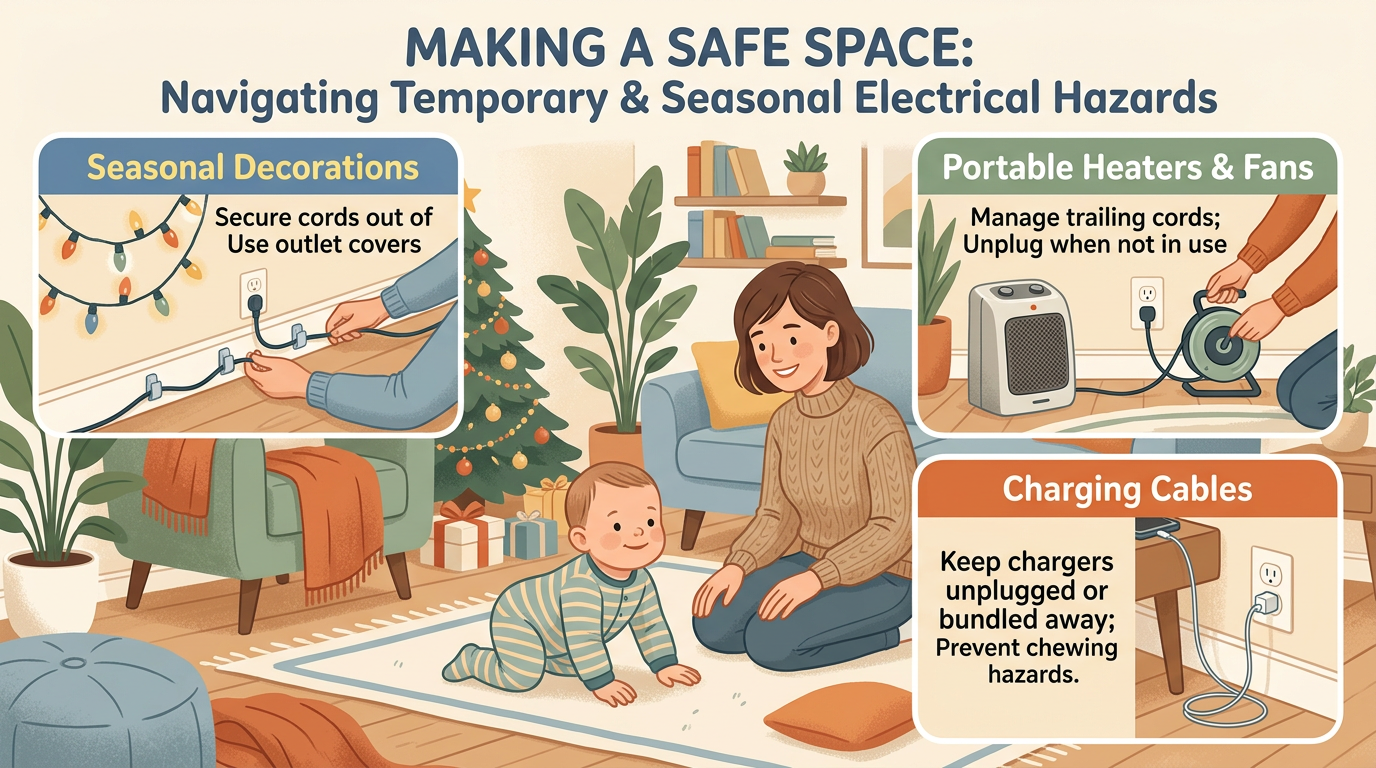
Holiday lights introduce new cords, heat sources, and small bulbs into rooms that are otherwise well secured. String lights draped at low levels or across furniture create both a strangulation and a burn risk for curious toddlers. If you use holiday lights, keep them above reach, secure cords tightly to walls or mantels, and unplug them when you are not in the room.
Outdoor gatherings and parties often bring extension cords across patios, through doorways, or across living areas where children play. These temporary setups bypass the cord management you have already done inside the home. Walk the space before children arrive and tape down or reroute any cords that cross play zones or high-traffic paths.
Portable heaters and fans with exposed cords are seasonal hazards that appear in bedrooms and living rooms during temperature extremes. A space heater cord pulled by a toddler can topple a hot appliance, and fan blades on older models may not have child-safe grilles. Place portable heating and cooling devices behind furniture barriers and keep their cords secured against the wall.
Quick checklist
- ✓Secure holiday light cords above reach and unplug them when unattended.
- ✓Unplug and store seasonal electrical items when the season ends or they are not in active use.
- ✓Keep portable heaters and fans behind barriers with cords secured against walls.
- ✓Check guest rooms and visiting spaces for temporary electrical hazards before children arrive.
Do a whole-home electrical audit once and revisit after each stage
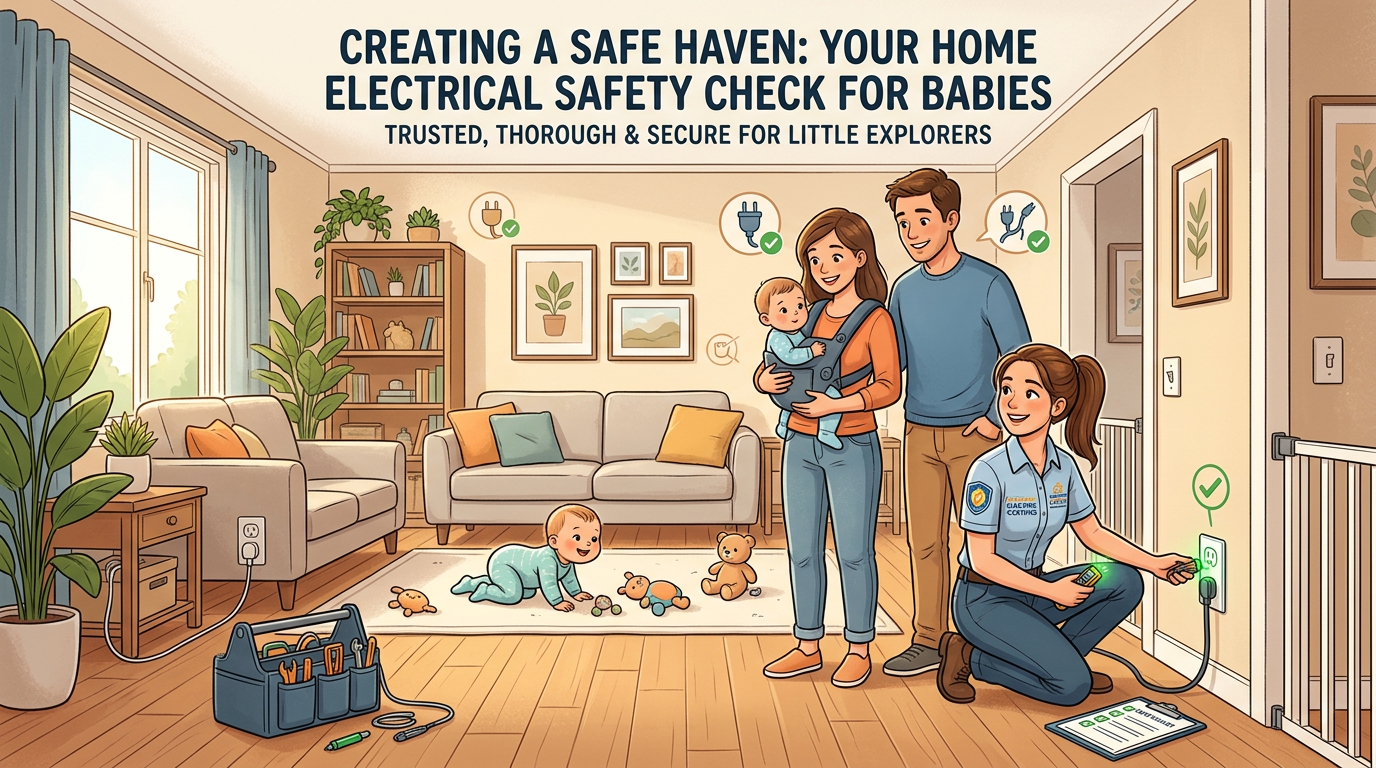
Rather than discovering electrical hazards one room at a time as your child finds them, do a single walk-through of your entire home looking specifically for outlets, cords, power strips, and exposed wiring. Get down to floor level in every room and look at what a crawling baby would see and reach. This one pass usually takes less than an hour and catches hazards parents overlook when they only focus on the nursery or living room.
Include the rooms you might not think of as baby spaces. Laundry rooms, garages, utility closets, and home offices often have exposed outlets, dangling cords, and power tools with accessible plugs. If your child can access the room, even briefly while you carry laundry or grab a tool, it needs the same electrical audit as the main living areas.
Revisit your electrical setup at each major mobility milestone. A baby who starts crawling can reach floor-level outlets. A toddler who starts climbing can reach countertop appliance cords. A preschooler who starts opening drawers and doors can access utility rooms and home offices you previously kept closed. Each stage brings new electrical surfaces within reach.
Quick checklist
- ✓Walk every room at floor level looking for exposed outlets, cords, and power strips.
- ✓Check the garage, laundry room, and utility areas for overlooked electrical hazards.
- ✓Revisit the audit after your child reaches crawling, walking, and climbing milestones.
- ✓Replace any outlet covers or cord fixes your child has learned to defeat.
Frequently asked questions
Sliding plate covers are generally more convenient and harder for children to remove than plug-in caps. Choose the type adults in your home will use consistently.
Cover every outlet your child can reach, including behind furniture where outlets are often forgotten. As your child grows, their reach changes.
Extension cords are best treated as temporary solutions. If you need one, secure it against the wall and away from your child's reach. Permanent cord needs should use proper outlets.
Most families keep outlet covers until a child understands electrical safety, usually around age four or five. Some parents keep them longer for peace of mind.
Featured products
Affiliate linksProducts that support this guide
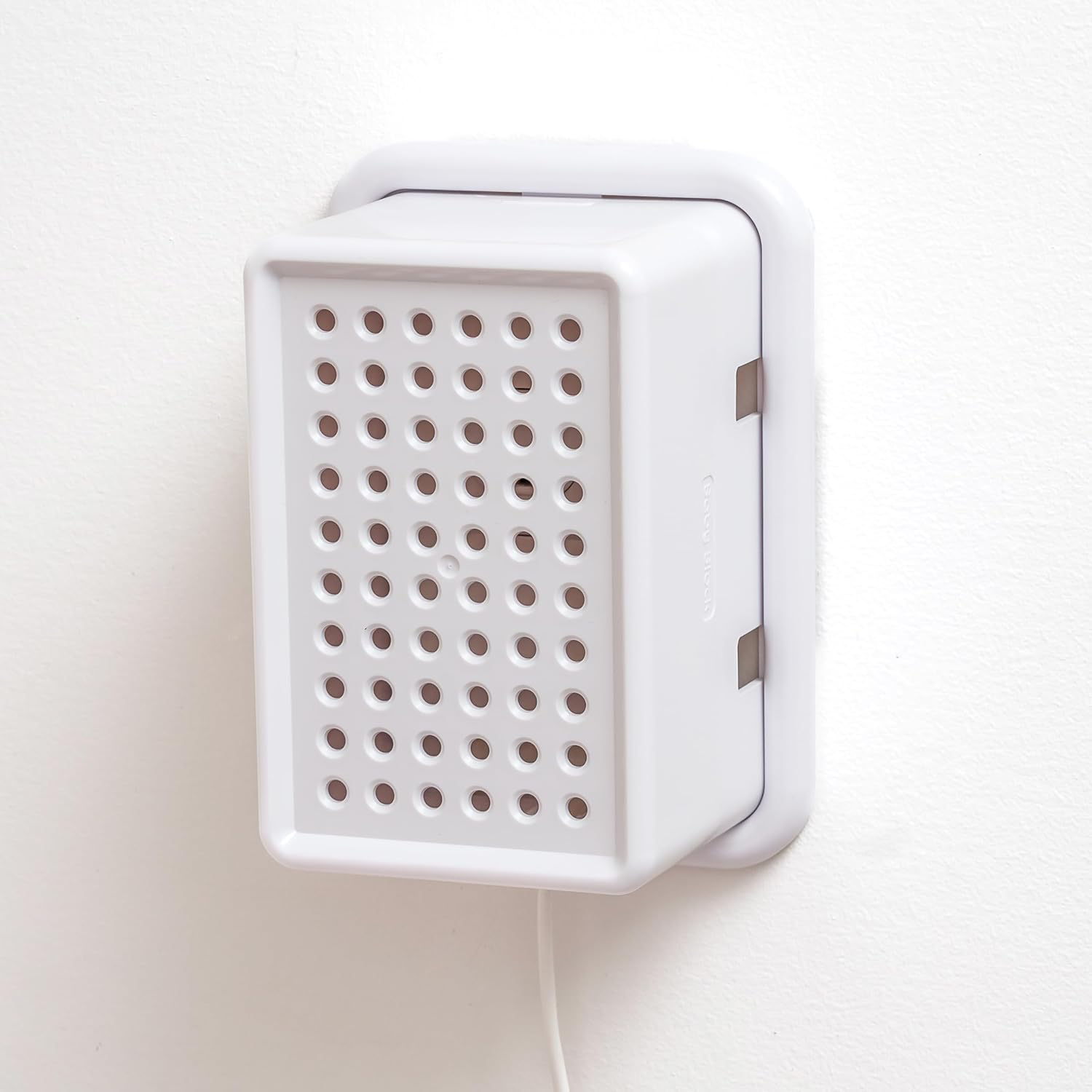
Outlet Plug Covers (24-Pack) Childproof Socket Protectors
Simple press-fit outlet caps that block unused electrical sockets from curious little fingers.
View product→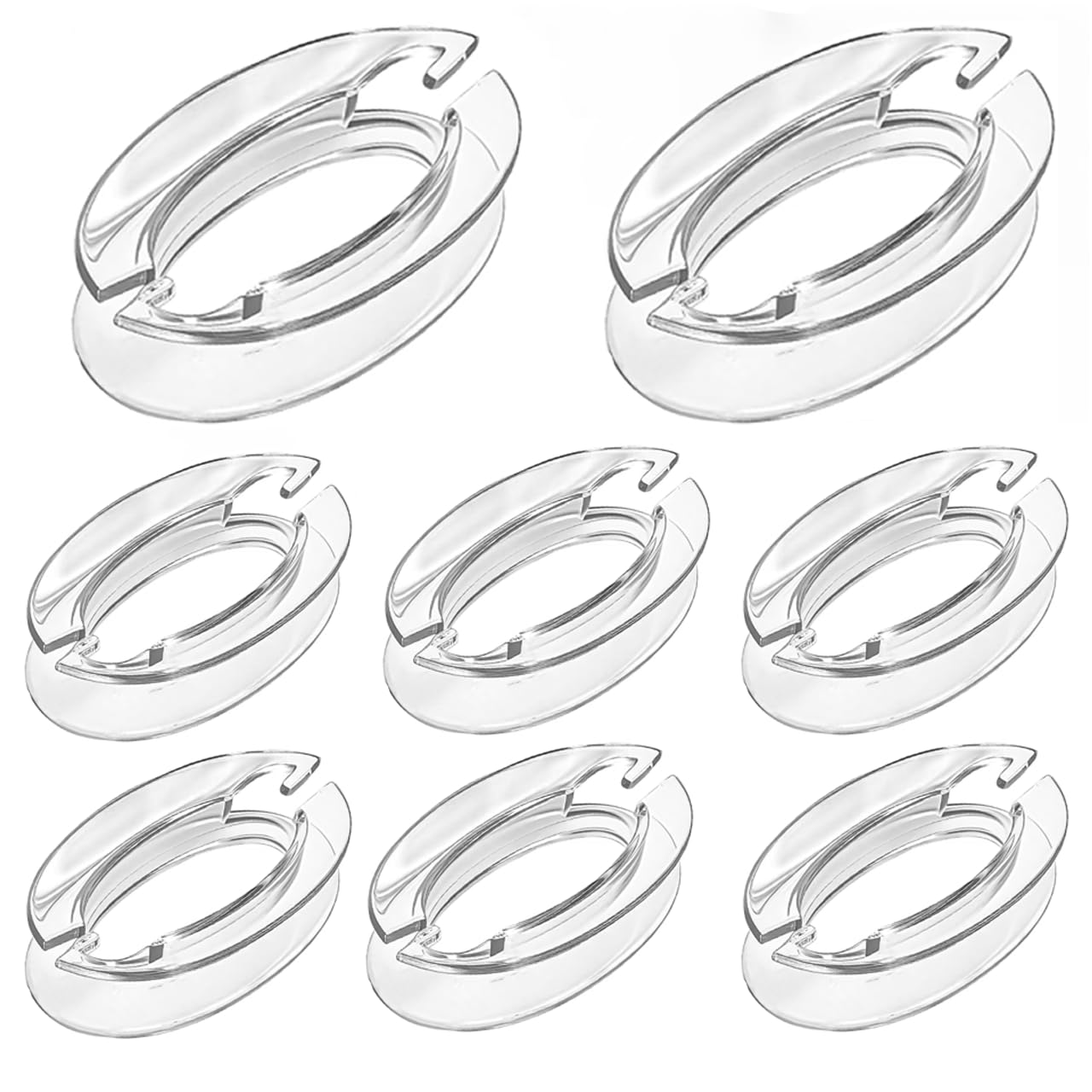
Dreambaby Blind Cord Wind-Ups
Helps keep dangling blind cords out of reach of children to prevent entanglement.
View product→Last reviewed
Sources used for this guide
Reviewed on March 17, 2026. This content is educational and practical, but it is not a substitute for professional safety inspections or medical advice.
U.S. Consumer Product Safety Commission
Childproofing your home: 12 safety devices to protect childrenHealthyChildren.org / American Academy of Pediatrics
Safety for Your Child: 6 to 12 MonthsSafe Kids Worldwide
Protecting children in your home