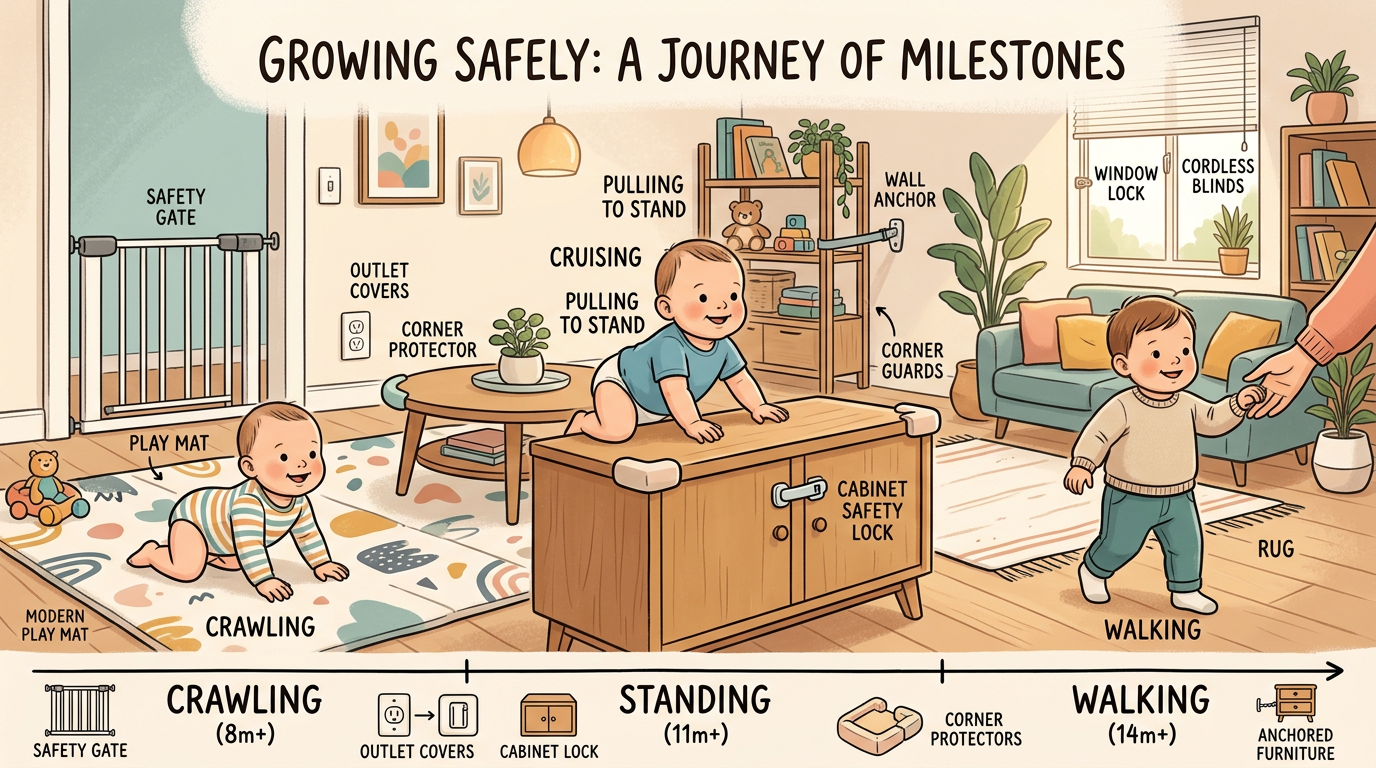
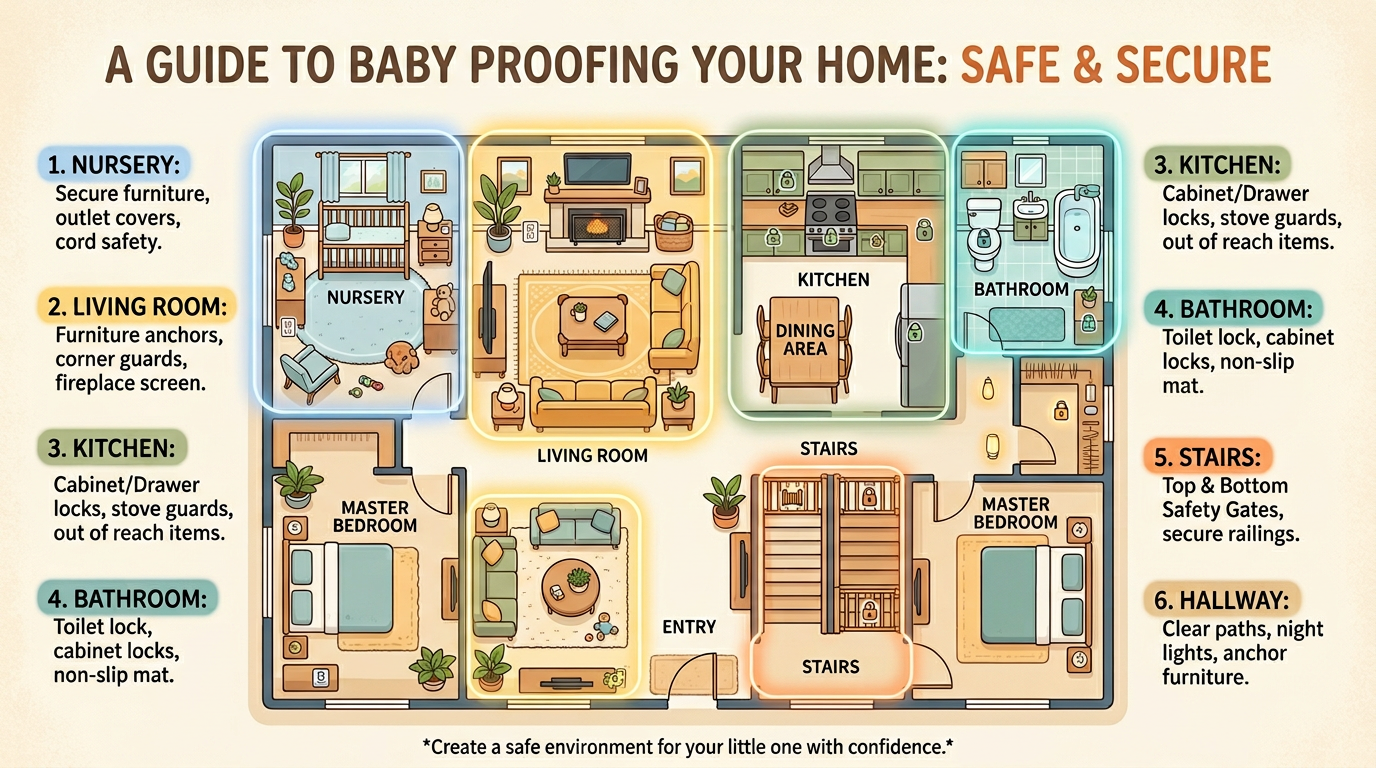
What to keep in a portable baby proofing kit
A small zippered pouch handles a surprising amount of household risk. The goal is not to replicate your home — it is to address the few hazards most likely to come up during a short visit. Outlet plug covers, two or three adhesive cabinet locks, a couple of corner protectors, and a small roll of painter's tape for taping back loose cords cover most situations.
If stairs are part of the visit, a pressure-mounted gate that travels well is worth carrying for longer stays. For shorter stops, a closed door at the top of stairs and direct supervision is often enough. Adding a thermometer for bath water and a small first aid kit rounds out a kit that fits in any diaper bag.
Quick checklist
- ✓Outlet plug covers (a small handful is enough).
- ✓Two to three adhesive cabinet locks for hazardous cabinets.
- ✓Corner protectors for one or two sharp edges.
- ✓Painter's tape for cord control without residue.
- ✓Pressure-mounted gate for longer stays.
A quick room-by-room walk on arrival
Once bags are down, a five-minute walk through the home from a crawler's eye level identifies the most common visiting hazards. In the kitchen, the items most often missed are cleaning supplies under the sink, dishwasher pods left out, and dangling appliance cords. In the living room, low magazines, remote-control batteries, and tip-prone side tables come up most.
Bathrooms are usually the highest-density risk per square foot in any home: medications on counters, razors at edge level, and toilet lids left open. The simplest fix is also the most effective — keep the bathroom door closed when the room is not in use and treat any unsupervised access as a hazard.
Quick checklist
- ✓Kitchen: secure under-sink cabinet, tuck cords back from counter edges.
- ✓Living room: anchor or move tip-prone side tables, store small decor.
- ✓Bathroom: keep the door closed, move medications high, lower toilet lid.
- ✓Bedrooms and stairs: confirm dresser stability and gate options.
Talking with grandparents respectfully and collaboratively
Grandparents raised children too, often without many of the products on shelves today. Some safety guidance has changed; some has not. A useful approach is to share the changes that come from updated research — for example, anchored furniture and cordless window coverings — and to position other choices as your family's preferences rather than corrections.
Framing matters. 'Would you mind if we leave the toilet lid down while we are here?' lands differently than 'You need to lock your toilet.' Inviting grandparents to be part of the safety routine — handing them an outlet cover, walking the kitchen together — usually works better than handing over a checklist and stepping back.
Quick checklist
- ✓Lead with what has changed in current pediatric guidance.
- ✓Invite grandparents into the walkthrough rather than directing it.
- ✓Frame requests as preferences when the underlying risk is low.
- ✓Thank grandparents specifically for the changes they make.
When grandparents host often: semi-permanent setups
If grandparents host overnight stays regularly, semi-permanent setups make every visit calmer. A pressure-mounted gate that lives at the top of the stairs, a small set of permanent cabinet locks on the cleaning cabinet, and an anchored dresser in the guest room remove the same conversations every time you visit.
Some families keep a duplicate set of basics at grandparents' homes — a small bin with outlet covers, corner guards, and a folded gate. This avoids forgetting items at home and signals that safety travel is a normal part of visits, not a one-time inconvenience.
Frequently asked questions
Lead with what has changed in current guidance, invite them into the process, and frame lower-risk requests as your family's preferences. Most grandparents welcome being part of the routine when they feel respected rather than corrected.
Outlet plug covers, two or three adhesive cabinet locks, a couple of corner protectors, painter's tape for cord control, and a small first aid kit cover most short visits. Add a pressure-mounted gate for longer stays where stairs are involved.
For short visits, attentive supervision plus a small portable kit usually covers the main risks. Permanent installations are usually only worth the effort once visits become frequent or overnight.
Anchors are reasonable when a child visits often or stays overnight. Tip-overs can happen during a single climbing event, so any tall freestanding furniture in spaces the child uses is worth securing.
Focus first on the highest-consequence items: anchored furniture, locked cabinets with cleaners or medicines, and gates at stairs. Lower-risk items can be supervised rather than installed if pushback is significant.
Yes. Bringing your own gear is common and avoids asking grandparents to install permanent products on their schedule. Removable gates and adhesive locks come off cleanly when the visit ends.
Featured products
Affiliate linksProducts that support this guide
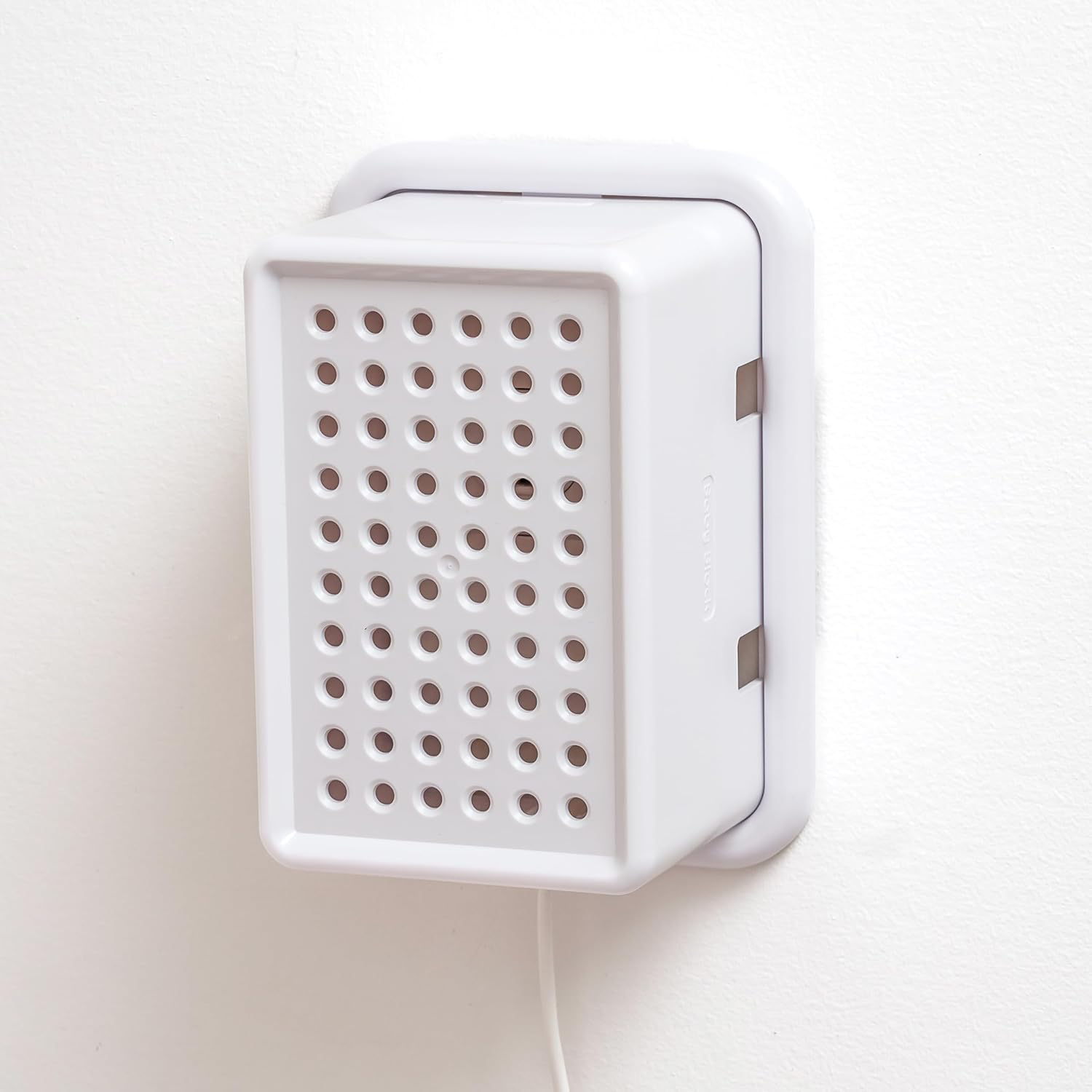
Outlet Plug Covers (24-Pack) Childproof Socket Protectors
Simple press-fit outlet caps that block unused electrical sockets from curious little fingers.
View product→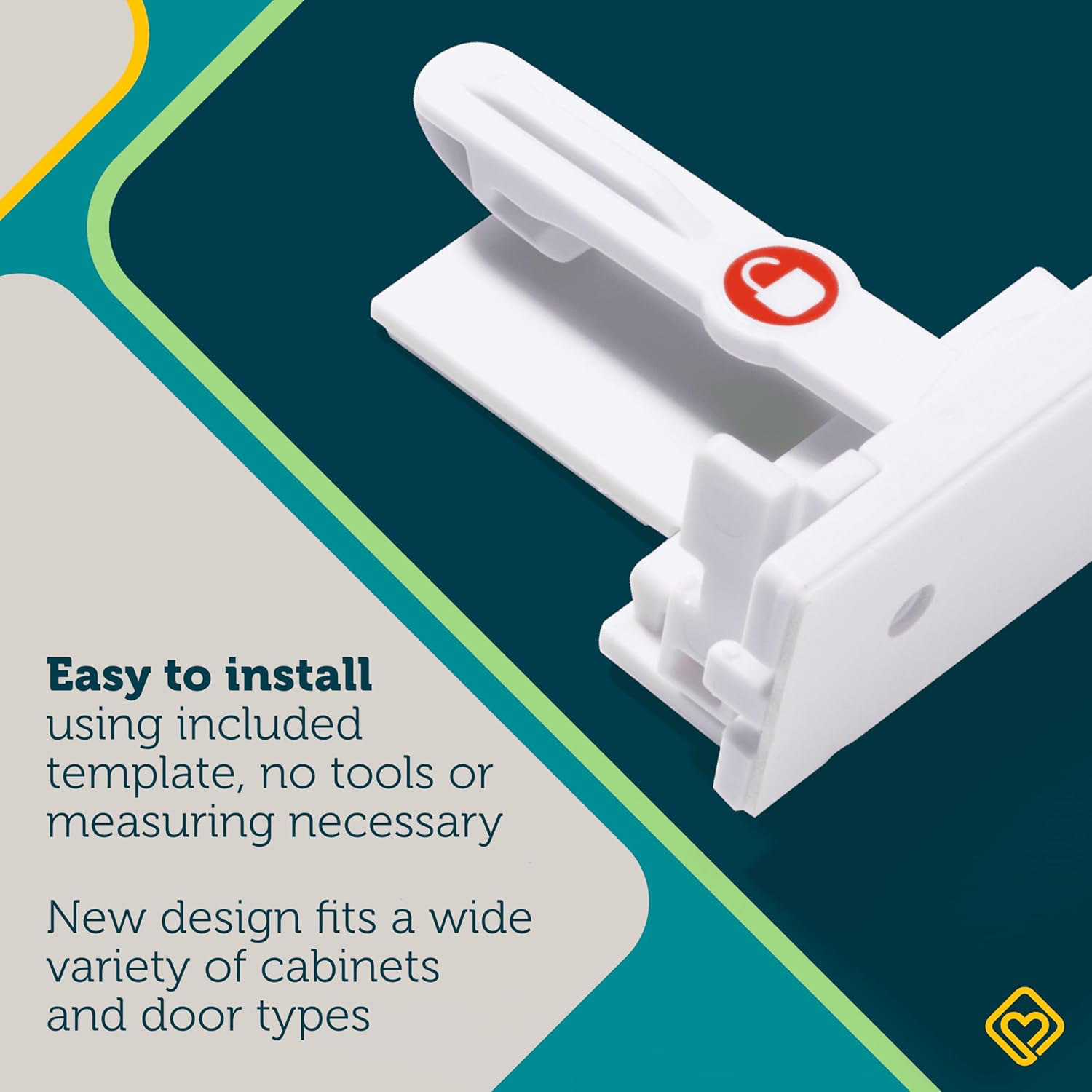
Adhesive Cabinet Locks (4-Pack) for Baby Proofing
Internal adhesive cabinet latches that help prevent toddlers from opening doors and drawers.
View product→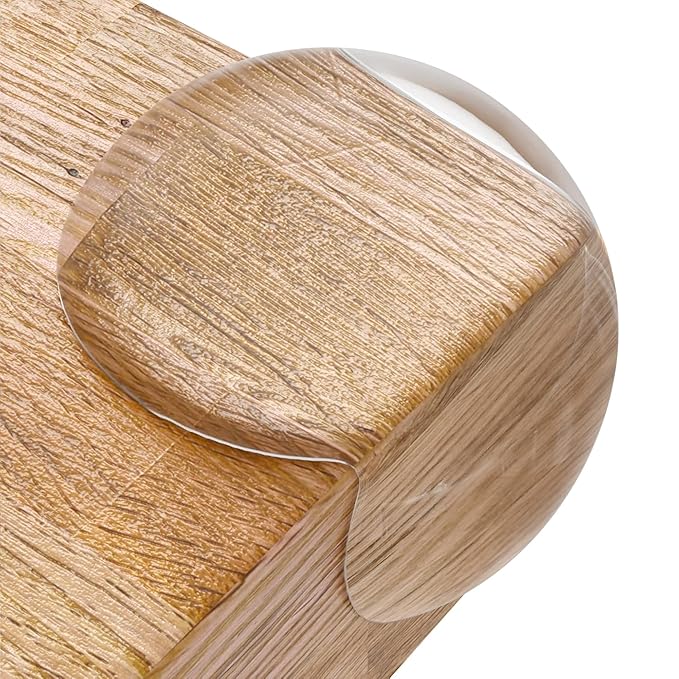
12-Pack Corner Protectors Baby Proof, Furniture Corner and Edge Safety Bumpers
Soft foam corner guards with 3M adhesive backing to cushion sharp furniture edges.
View product→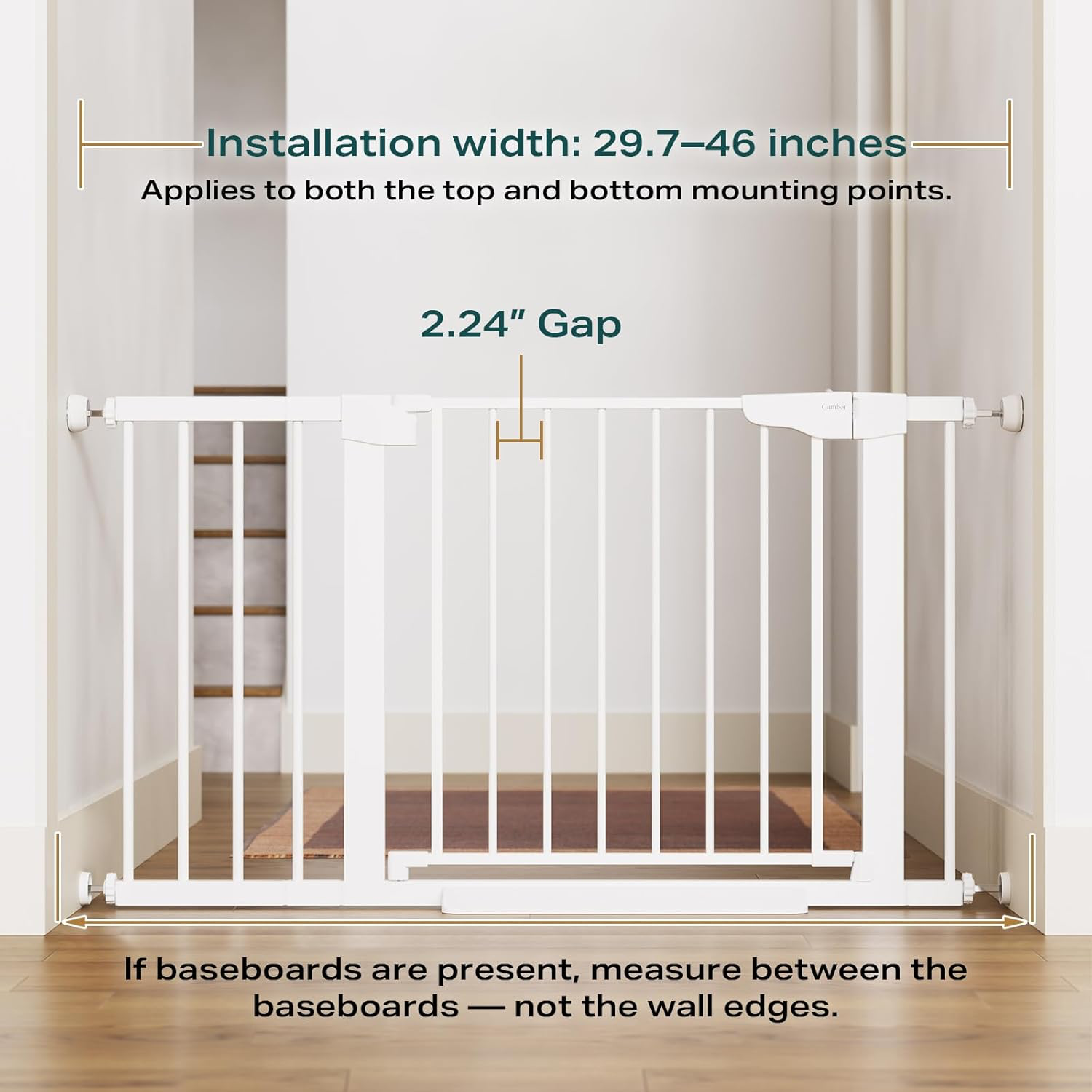
Pressure-Mounted Baby Gate for Doorways
No-drill pressure gate for doorways and low-risk openings to create clear child-safe zones.
View product→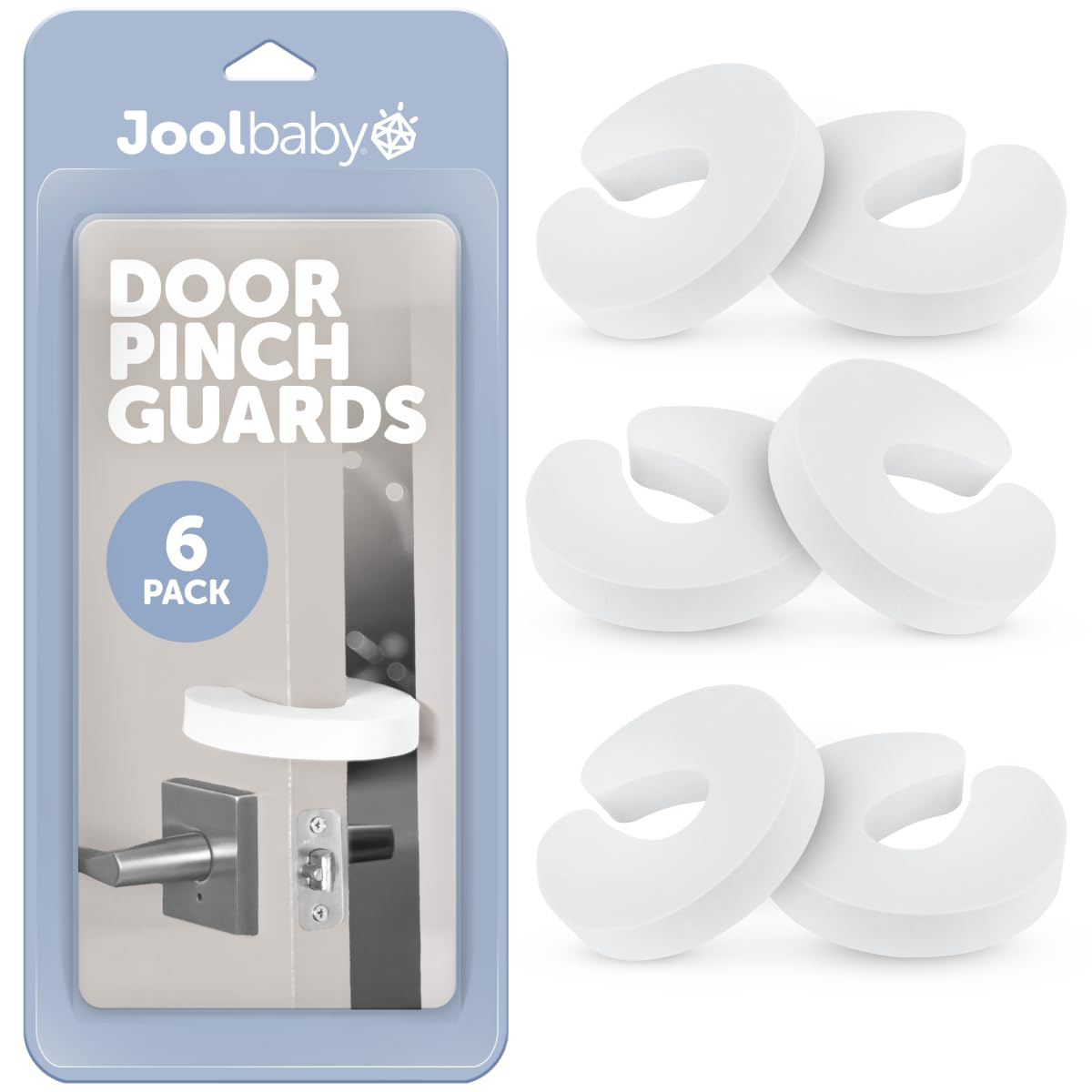
Jool Baby Door Pinch Guards (6 Pack)
Soft EVA foam door stoppers that prevent doors from fully closing, protecting little fingers from getting pinched. Also prevents door slamming and keeps pets from getting locked in rooms.
View product→Last reviewed
Sources used for this guide
Reviewed on April 25, 2026. This content is educational and practical, but it is not a substitute for professional safety inspections or medical advice.
U.S. Consumer Product Safety Commission
Childproofing your home: 12 safety devices to protect childrenHealthyChildren.org / American Academy of Pediatrics
Safety for Your Child: 6 to 12 MonthsSafe Kids Worldwide
Protecting children in your home