Smoke and carbon monoxide alarms: placement and maintenance
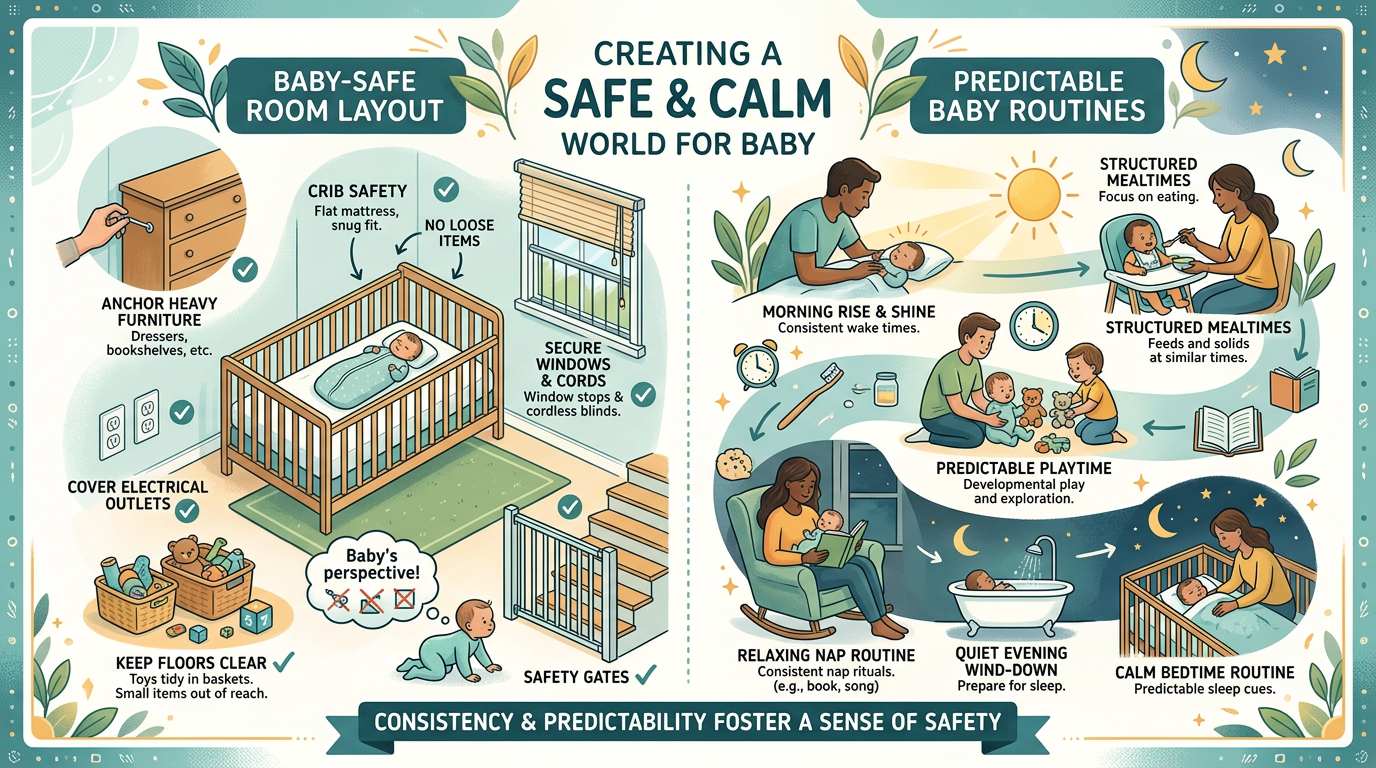
Install smoke alarms on every level of the home, inside every bedroom, and outside every sleeping area. Interconnected alarms — where one triggers all of them — give the longest possible warning, which matters most when a baby cannot wake themselves or walk out.
Carbon monoxide alarms belong on every level and near every sleeping area. CO is odorless, colorless, and can cause symptoms that mimic the flu, so a working alarm is the only reliable way to detect it. Common CO sources include gas furnaces, water heaters, fireplaces, generators, and attached garages.
Test alarms monthly and replace the batteries at least once a year if they are not sealed long-life units. Smoke alarms should be replaced every ten years; CO alarms every five to seven, depending on the manufacturer.
Quick checklist
- ✓Install smoke alarms on every level and inside every bedroom.
- ✓Install CO alarms on every level and near sleeping areas.
- ✓Test alarms monthly; replace batteries at least yearly.
- ✓Replace smoke alarms every ten years and CO alarms per manufacturer guidance.
Building an escape plan that includes a baby
A plan with two exits per room and a pre-assigned rescuer for each child handles most real emergencies.
Every home should have two ways out of each room, a meeting point outside, and an assigned adult for each child who cannot self-evacuate. Practice the plan at least twice a year, including once at night. A plan that only exists on paper usually does not work under stress.
Keep a clear path from the nursery to the nearest exit. Avoid piling laundry, toys, or furniture in hallways, and make sure the bedroom door can close fully — a closed door is one of the best passive barriers against fire and smoke.
If you use upper-floor bedrooms, have a plan for getting down. Escape ladders for adults are useful but cannot safely be used to carry an infant. In a real fire, if you cannot reach an exit, close the door, seal gaps with clothing or bedding, and signal from a window while calling 911.
Quick checklist
- ✓Identify two exits from every room and a meeting point outside.
- ✓Assign a specific adult to each child who cannot self-evacuate.
- ✓Practice the plan at least twice a year, including at night.
- ✓Close bedroom doors at night — a closed door slows fire and smoke.
Everyday habits that lower fire risk
Most home fires start in the kitchen. Stay in the kitchen while cooking, turn pot handles inward, and keep flammable items away from the stove. Never leave a cooking fire unattended, and keep a lid nearby to smother a small grease fire rather than reaching for water.
Candles, space heaters, and fireplaces are the next common starters. Use flameless candles when possible, keep space heaters at least three feet from any flammable material, and never leave either running in an unattended room or while the family is asleep.
Lithium-ion batteries in phones, tablets, scooters, and e-bikes have become a growing fire cause. Charge them on hard surfaces, not beds or couches, and unplug once fully charged. Replace any battery or device that has been damaged or that shows swelling.
Quick checklist
- ✓Never leave cooking unattended; keep a lid nearby for grease fires.
- ✓Keep space heaters three feet from flammable items and off while sleeping.
- ✓Charge lithium-ion devices on hard surfaces and unplug when full.
- ✓Replace any battery or charger that is damaged, swollen, or overheating.
Carbon monoxide in everyday family life
Most CO exposures in homes come from equipment that is worn, poorly vented, or misused. Have gas furnaces, water heaters, and fireplaces inspected annually. Never run a generator inside a home, garage, or near an open window, and never warm up a car in an attached garage, even briefly.
Attached garages are a common CO source because exhaust fumes drift into the house through door gaps and shared walls. Keep the car outside the garage when you start it, and consider a CO alarm in the rooms adjacent to the garage in addition to the sleeping areas.
Early symptoms of CO exposure — headache, nausea, dizziness — can look like a cold or flu. If multiple people in the home feel symptoms that clear up outside, treat it as a possible CO leak, leave the home, and call 911.
Quick checklist
- ✓Inspect gas appliances and fireplaces every year.
- ✓Never run a generator inside a home, garage, or near an open window.
- ✓Do not start or warm up vehicles inside attached garages.
- ✓Treat shared flu-like symptoms that clear up outside as a CO concern.
Frequently asked questions
At minimum, one on every level of the home, one inside every bedroom, and one outside every sleeping area. Interconnected alarms are strongly recommended.
On every level of the home and near every sleeping area. Follow the manufacturer's height guidance, and include one near an attached garage if you have one.
Test every smoke and CO alarm monthly. Replace batteries at least once a year unless the unit is a sealed long-life alarm. Replace smoke alarms every ten years.
A small kitchen-rated extinguisher is useful, but only if everyone in the home knows how to use it and only for small contained fires. For anything larger, get out and call 911.
Assign an adult responsible for each non-mobile child before any emergency happens. Practice the route at night and time it. If you cannot safely reach an exit, close the door, seal gaps, and signal from a window while calling 911.
Featured products
Affiliate linksProducts that support this guide
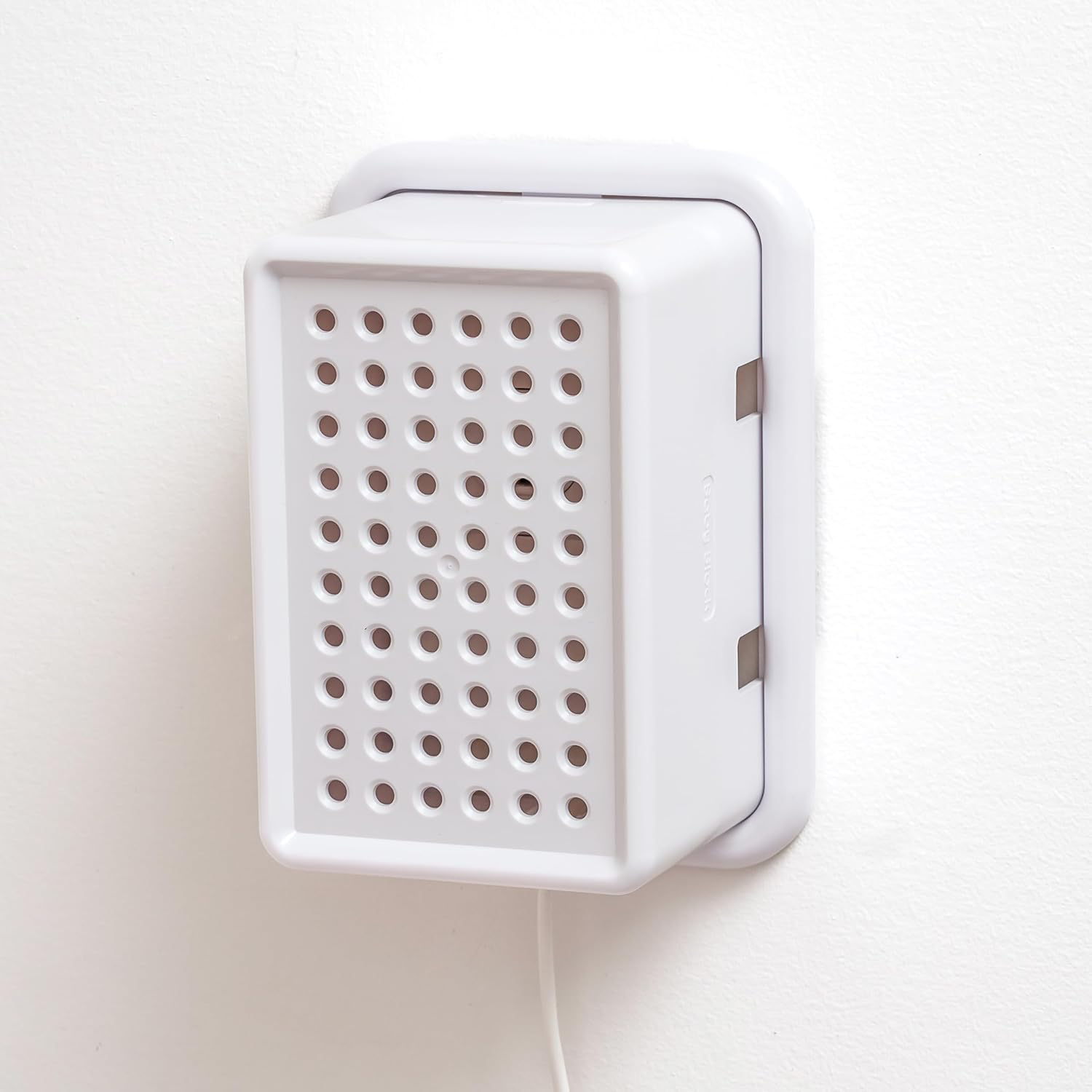
Outlet Plug Covers (24-Pack) Childproof Socket Protectors
Simple press-fit outlet caps that block unused electrical sockets from curious little fingers.
View product→
Driddle Clear Stove Knob Safety Covers (6 Pack)
Clear six-pack of stove knob safety covers that adds a child-resistant barrier over reachable gas or electric range knobs while keeping the dial position visible.
View product→
BABY PROOF ME Oven Lock Child Safety
Adhesive child-safety oven door lock with a rotating latch and adult two-button release.
View product→Last reviewed
Sources used for this guide
Reviewed on April 20, 2026. This content is educational and practical, but it is not a substitute for professional safety inspections or medical advice.
U.S. Consumer Product Safety Commission
Childproofing your home: 12 safety devices to protect childrenHealthyChildren.org / American Academy of Pediatrics
Make Baby's Room SafeSafe Kids Worldwide
Protecting children in your home