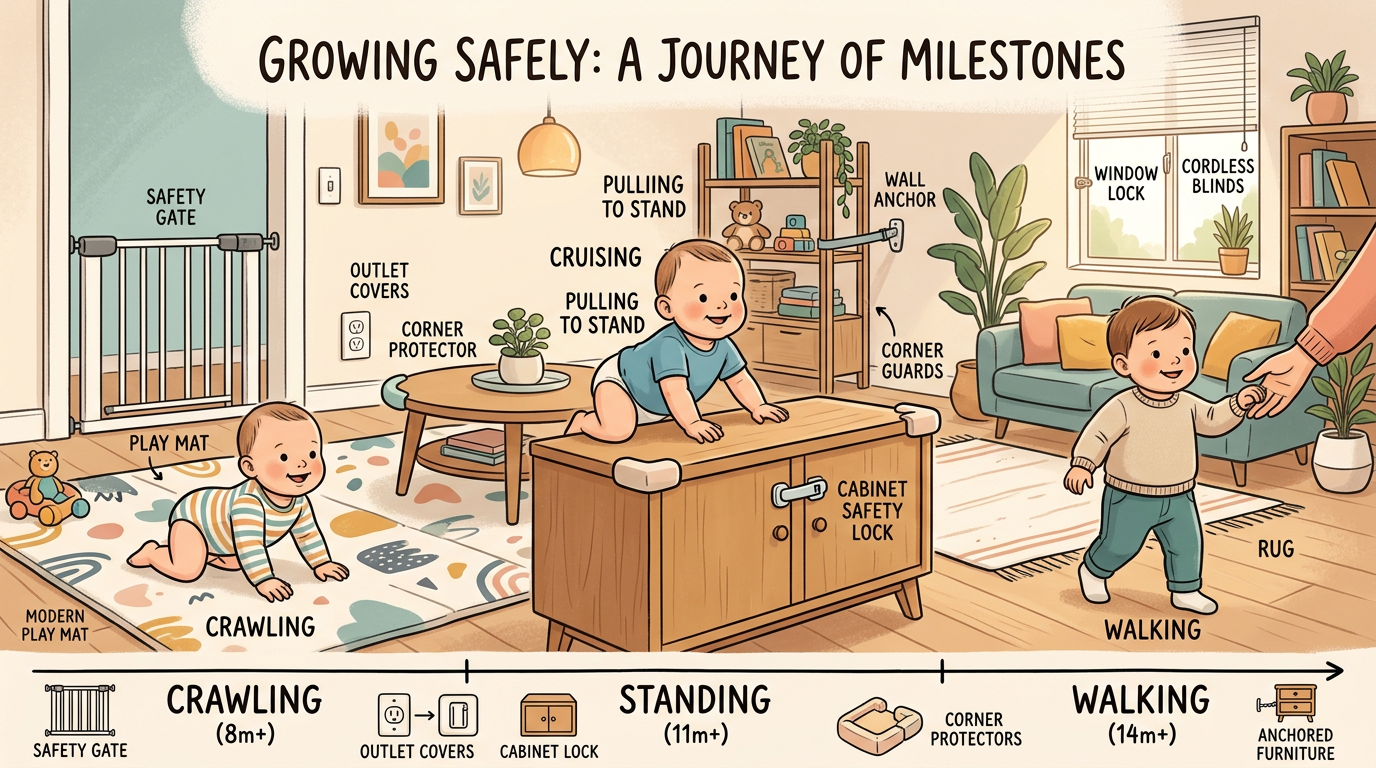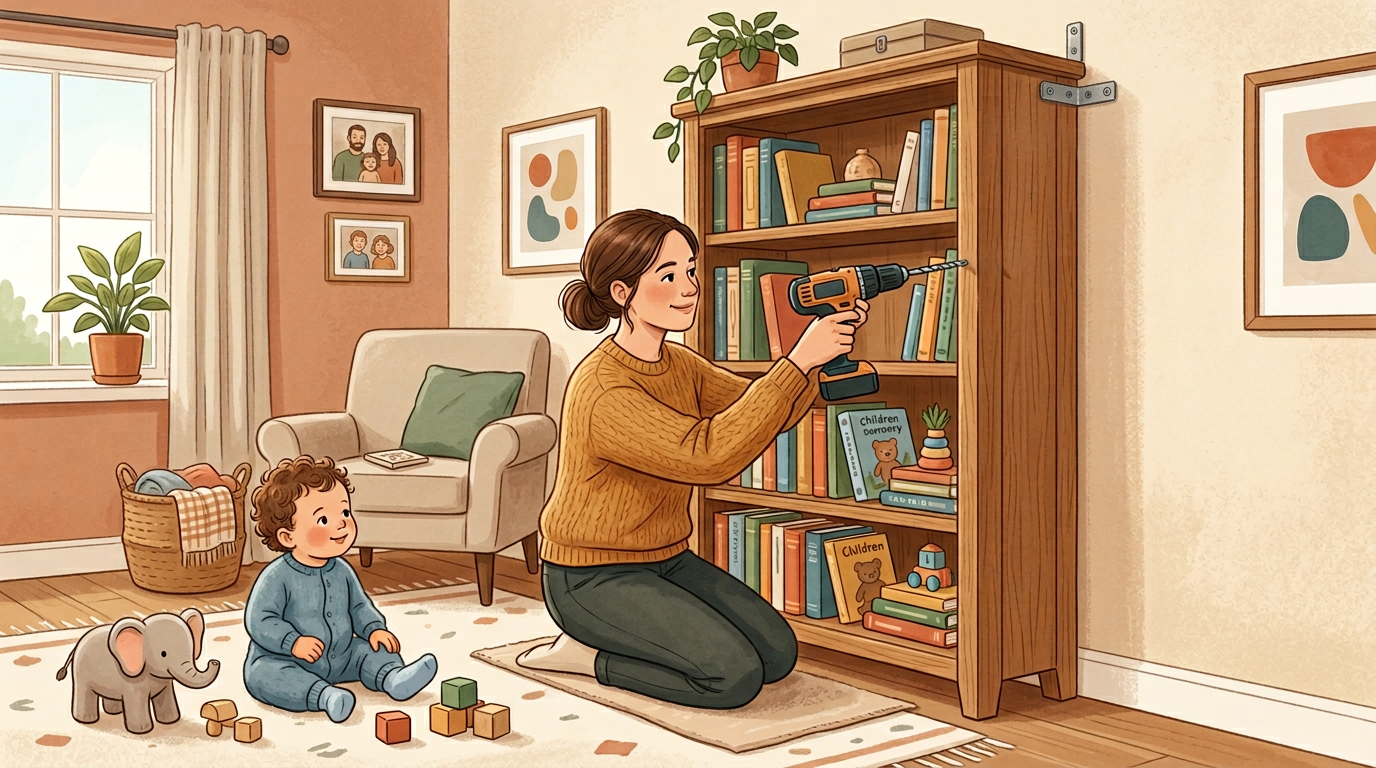
Why furniture tip-overs are one of the most serious home hazards
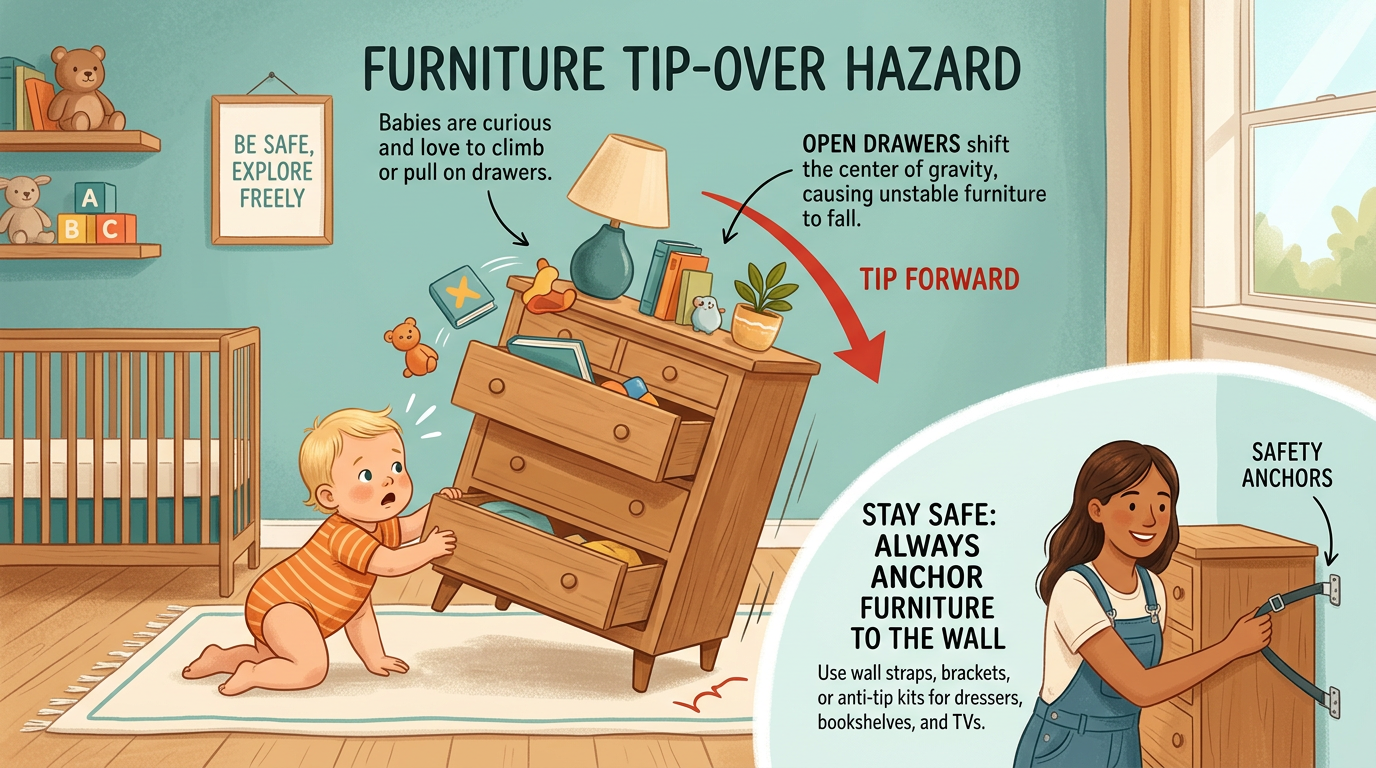
Furniture tip-overs are responsible for thousands of emergency room visits involving young children every year in the United States alone. The CPSC has tracked this hazard for decades, and the data consistently shows that dressers, TVs, and bookshelves are the most common items involved. These are everyday pieces of furniture that look perfectly stable to adults but become dangerously unstable when a child pulls on a drawer or tries to climb.
Children use open dresser drawers as steps without understanding the physics involved. Each extended drawer shifts the center of gravity forward, and the weight of even a small child on the lowest drawer can be enough to bring a tall dresser down. The entire sequence — drawer open, foot placed, furniture tipping — can happen in under two seconds, which is faster than most adults can cross a room.
Tip-overs happen faster than adults can react, and they happen in rooms where children spend the most time. Bedrooms and living rooms account for the majority of incidents because those rooms contain the furniture children interact with daily. The familiarity of these spaces makes it easy to underestimate the risk, but the weight and momentum of a falling dresser or TV can cause severe crush injuries even from a relatively short height.
Quick checklist
- ✓Identify every freestanding piece of furniture over 30 inches tall in your home.
- ✓Check dressers, bookshelves, TVs, and media consoles for stability when pulled or leaned on.
- ✓Note which items have drawers that children can open and use as climbing steps.
- ✓Prioritize items in bedrooms and play areas where children spend unsupervised time.
How to anchor furniture to the wall properly
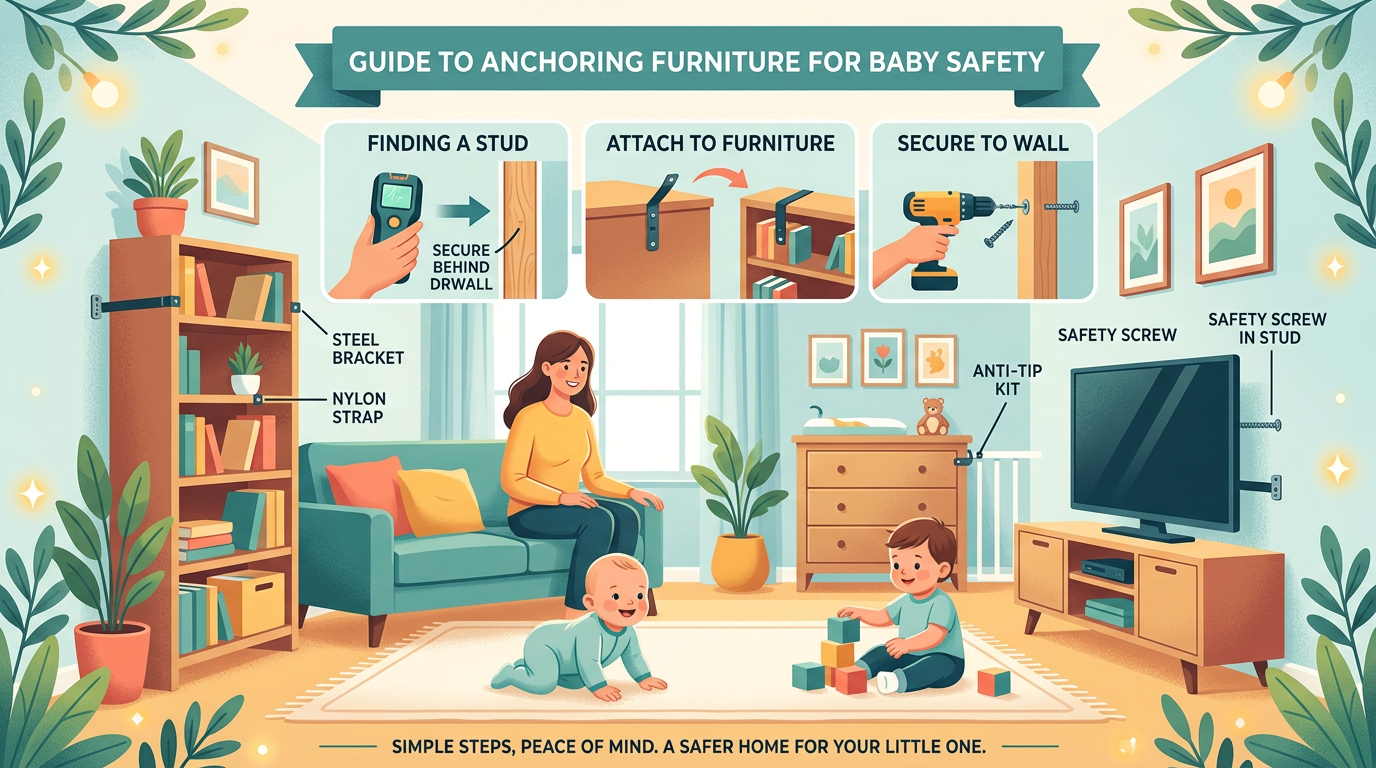
Wall anchor kits are simple to install and widely available at hardware stores and online retailers. A typical kit includes a strap or bracket that attaches to the back of the furniture and a corresponding mount that secures to the wall. The entire installation takes about five to ten minutes per piece of furniture and requires only basic tools — a drill, a stud finder, and the included hardware.
Choosing the right anchor for your wall type matters. Drywall over wood studs is the most common situation, and anchoring into the stud provides the strongest hold. If you cannot hit a stud, toggle bolts rated for your wall type are the next best option, though they are less ideal for heavy items like loaded bookshelves. Plaster, concrete, and brick walls each require different fastener types, so check the anchor kit instructions or ask at the hardware store if you are unsure.
The most common installation mistakes are anchoring into drywall alone without hitting a stud, placing the anchor too low on the furniture, and not testing the connection after installation. The anchor point on the furniture should be near the top to counteract the tipping motion, and the wall mount should be at the same height or slightly higher. After installation, pull firmly on the furniture to confirm the anchor holds before considering it done.
Quick checklist
- ✓Use furniture anchor straps rated for the weight of the item you are securing.
- ✓Secure the anchor into a wall stud whenever possible for the strongest hold.
- ✓Test the anchor by pulling firmly on the furniture after installation to confirm it holds.
- ✓Re-check anchors every few months as furniture shifts from use and children pulling on it.
Mount or secure televisions regardless of size
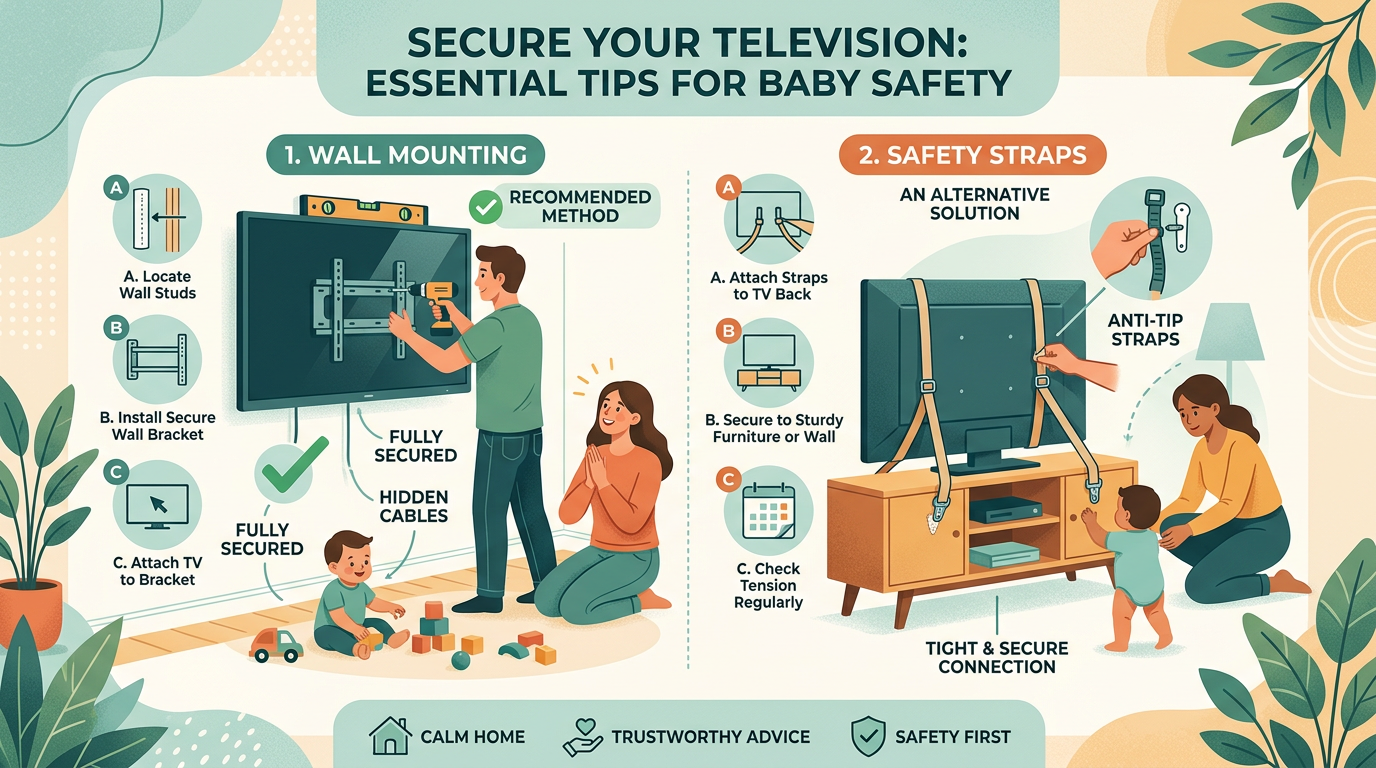
Flat-screen televisions are top-heavy relative to their bases and can tip forward when pulled, bumped, or climbed on. Even smaller screens can cause serious injury when they fall from a stand onto a child below. The thin profile that makes modern TVs attractive also makes them unstable on flat surfaces, especially when placed on furniture that is not designed to secure them.
Wall mounting is the safest option for any television in a home with young children. A properly installed wall mount eliminates the tip-over risk entirely and keeps the screen out of reach. Most wall mounts are rated for a wide range of screen sizes and weights, and installation into wall studs provides a secure hold that does not depend on the stability of any furniture underneath.
For families who cannot wall-mount due to rental restrictions or wall construction, standalone TV straps provide a meaningful safety layer. These straps attach the TV to the furniture it sits on, preventing it from tipping forward even if the stand is bumped or a child pulls on the screen. They are not as secure as a wall mount, but they are far safer than leaving a television completely unsecured.
Quick checklist
- ✓Wall-mount televisions whenever possible, securing the mount into wall studs.
- ✓Use TV anti-tip straps if wall mounting is not an option in your living situation.
- ✓Keep remote controls, toys, and attractive objects away from TV areas to reduce reaching and climbing.
- ✓Remove furniture your child could use as a step to climb toward the television.
Use placement to reduce climbing temptation
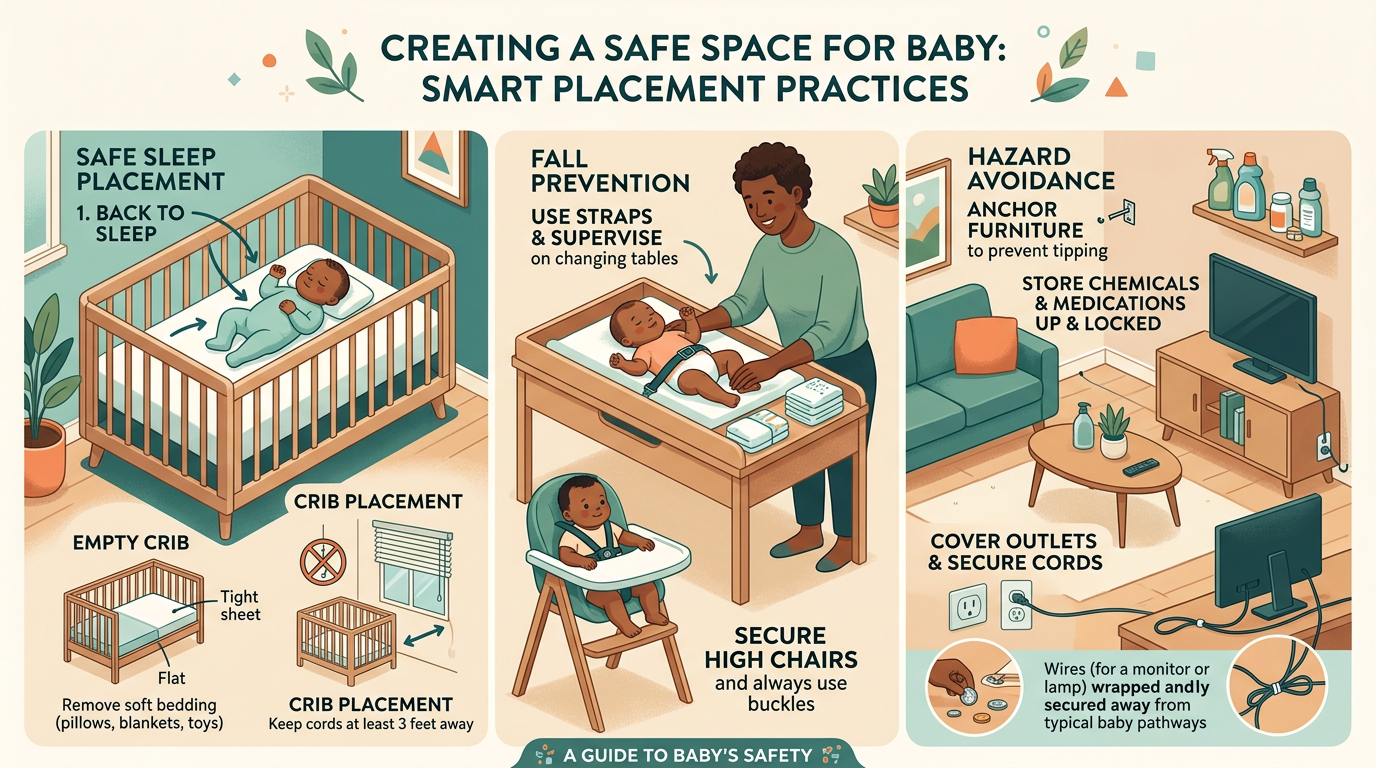
Anchoring prevents the worst outcome, but smart placement reduces how often a child is tempted to climb in the first place. Chairs, step stools, toy bins, and ottomans placed next to tall furniture give children a launching point they would not have otherwise. Moving these items away from dressers, bookshelves, and TV stands removes the easy first step that starts most climbing attempts.
Drawer pulls and knobs at low heights invite small hands to grab and pull. If your dresser has decorative knobs on the lowest drawers, consider removing them temporarily or replacing them with flat pulls that are harder for small fingers to grip. This does not replace anchoring, but it reduces the frequency of the interaction that leads to the most dangerous moments.
Placement strategy is a complement to anchoring, not a replacement for it. A dresser without nearby step stools is still dangerous if it is not anchored, because children will eventually find a way to climb it using the drawers alone. Think of placement as the first layer of defense and anchoring as the layer that catches what placement misses.
Quick checklist
- ✓Move chairs, step stools, and ottomans away from tall furniture and shelving.
- ✓Remove or replace low drawer knobs that are easy for small hands to grip and climb on.
- ✓Keep toys, books, and attractive items off the tops of high shelves where they tempt reaching.
- ✓Treat any open drawer as a potential stepping opportunity and close drawers after every use.
Furniture anchoring for renters
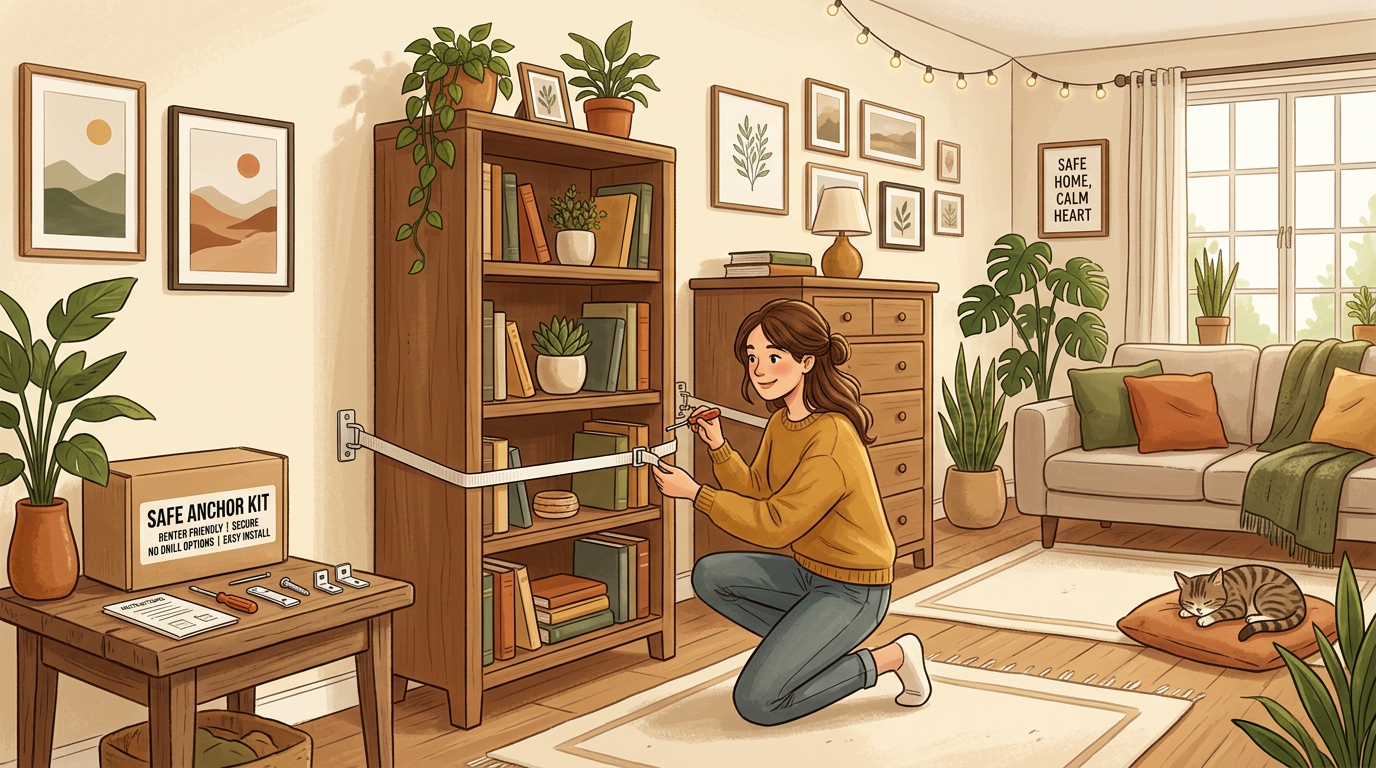
Renters often hesitate to anchor furniture because they worry about wall damage and lease violations. This is understandable, but the risk of a furniture tip-over is too high to skip anchoring entirely. A child's safety is worth more than a small wall repair, and most anchor installations leave holes no larger than a standard picture hook.
Several anchor methods are designed with renters in mind. Some use smaller screws that leave minimal holes, and others use adhesive-backed mounts for lighter furniture. For heavy items like loaded bookshelves and dressers, screw-in anchors into studs remain the safest option, but the resulting holes are easily patched with spackle and a dab of paint during move-out.
Many landlords will grant written permission for safety anchoring when asked directly. Frame the request around child safety rather than decoration, and offer to repair any holes when you move out. Some property managers are already familiar with the CPSC Anchor It recommendations and will approve the request quickly. If your landlord refuses, document the request in writing and anchor the furniture anyway — the safety calculus strongly favors protection over a potential deposit dispute.
Quick checklist
- ✓Ask your landlord for written permission to install furniture anchors for child safety.
- ✓Use anchors with small footprints and minimal hardware for easier wall repair at move-out.
- ✓Document the installation with photos so you can show the scope of work during move-out.
- ✓Never skip anchoring a dangerous piece of furniture solely because of a lease — the risk is too high.
Frequently asked questions
Start with dressers in bedrooms and any freestanding TV. Then move to bookshelves, media consoles, and nightstands.
Wall studs provide the strongest hold. If a stud is not available, use toggle bolts or anchors rated for your wall type, but studs are always preferred for heavy items.
Yes. Many landlords will approve it, and the small repair from removing an anchor is minor compared to the risk of a tip-over. Ask for written approval.
Check them every few months and any time you move furniture. Children pulling on drawers can loosen anchors over time.
Featured products
Affiliate linksProducts that support this guide
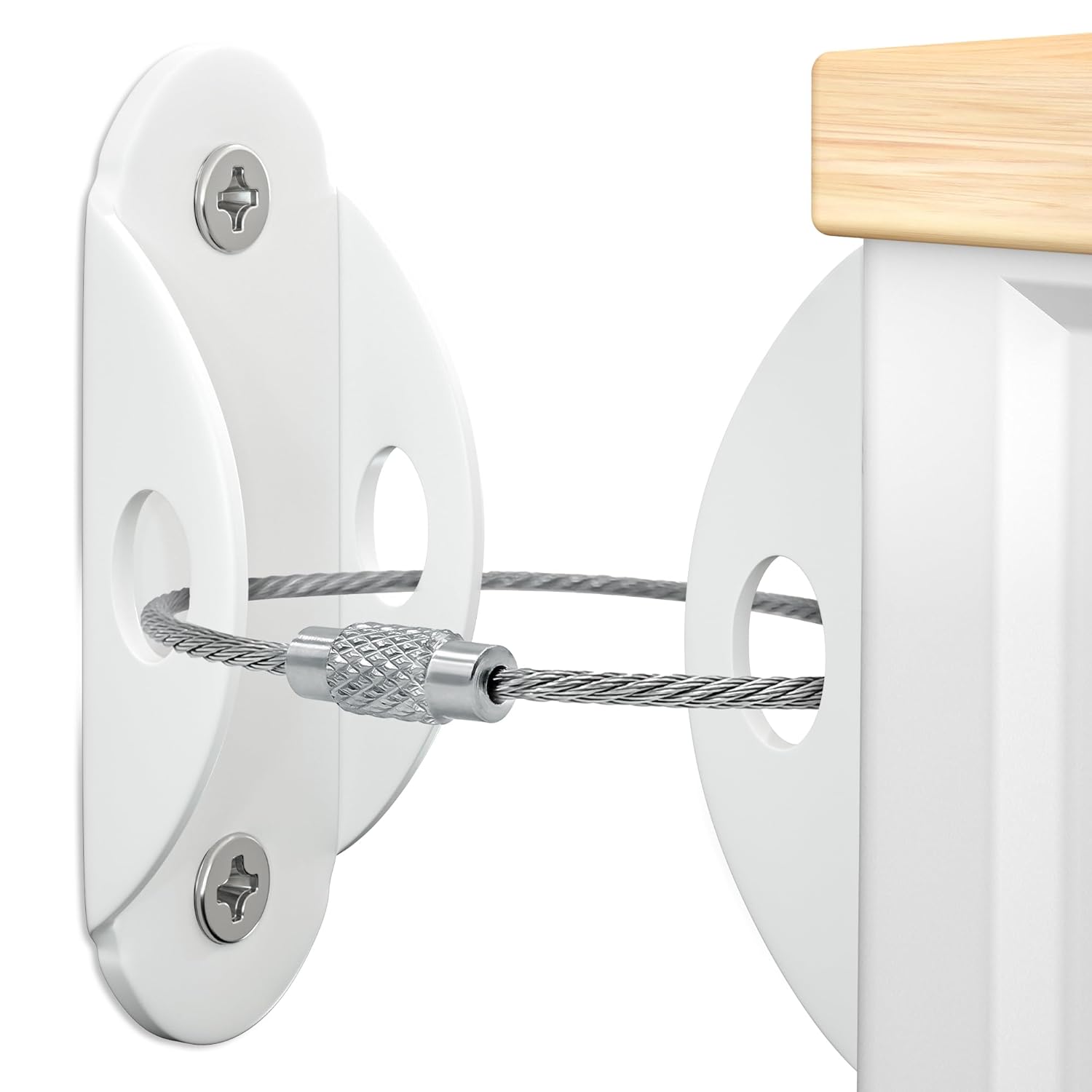
Booda Brand Furniture Anchors (10 Pack) Anti Tip Straps
Steel anti-tip straps for tall furniture and televisions, sold as a multi-pack so you can do a whole room in one afternoon. Tip-overs are one of the most common serious household injuries for toddlers, and we recommend anchoring anything taller than a child even if it feels stable when you push on it. The included hardware works for wood studs and most wall anchors; for plaster or masonry you may need different fasteners.
View product→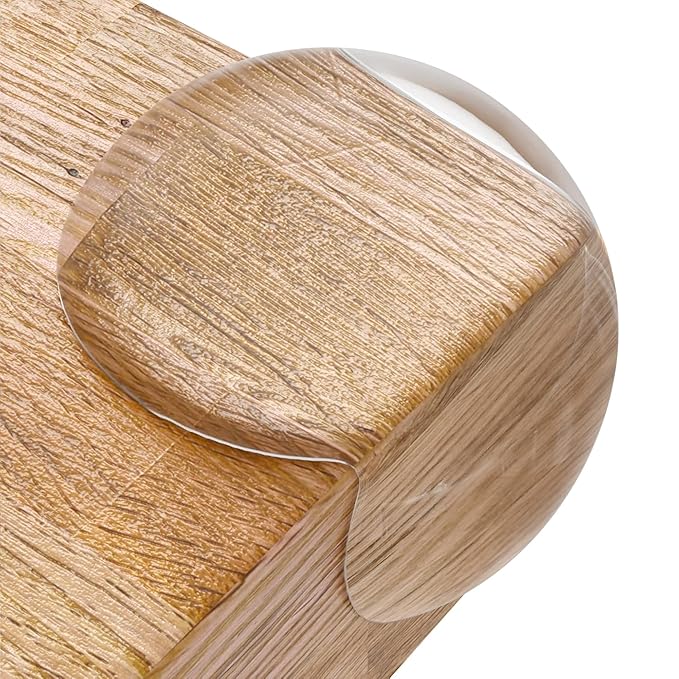
12-Pack Corner Protectors Baby Proof, Furniture Corner and Edge Safety Bumpers
Soft foam corner guards with 3M adhesive backing to cushion sharp furniture edges.
View product→Last reviewed
Sources used for this guide
Reviewed on March 17, 2026. This content is educational and practical, but it is not a substitute for professional safety inspections or medical advice.
U.S. Consumer Product Safety Commission
Anchor It! furniture tip-over safetyU.S. Consumer Product Safety Commission
Federal safety standard for dressers and clothing storage unitsSafe Kids Worldwide
Safe Kids home furniture and falls safety guidanceU.S. Consumer Product Safety Commission
Childproofing your home: 12 safety devices to protect children