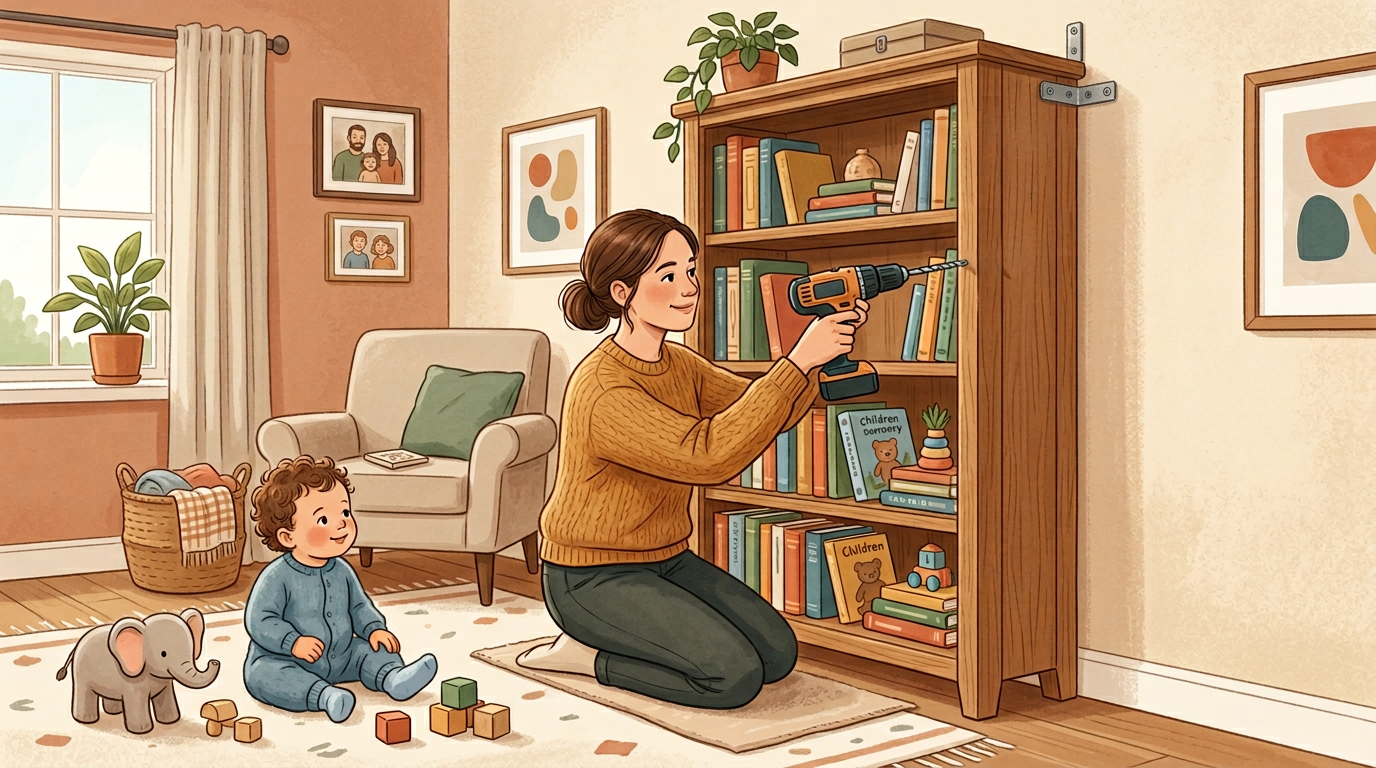
Why anchoring matters more than parents expect
Furniture tip-overs are tracked carefully by the U.S. Consumer Product Safety Commission, and the data has driven new federal standards for clothing storage units. The piece of furniture most parents underestimate is not the bookshelf — it is the dresser. A toddler pulling open the bottom two drawers and stepping in turns the whole unit into a lever.
The underlying principle is simple: anything taller than the child should be anchored, even if it feels stable when an adult pushes on it. Adult force is applied at the top, but a climbing child applies force halfway up where the leverage is much greater.
Nylon straps, steel straps, and dedicated TV mounts
Nylon straps are the most common style sold in baby-proofing kits. Two fabric loops connect via a buckle or velcro, with one end screwed into the furniture and the other into the wall. They are inexpensive and easy to install, but nylon weakens over years of heat and UV exposure, and the velcro variants slowly lose grip strength.
Steel straps, like the Booda Furniture Anchors 10-Pack in our catalog, are stronger, more durable, and tolerate heat better. The metal-on-metal connection does not stretch or sag. For a tall dresser or any piece a child can plausibly climb, steel is worth the small cost difference.
Dedicated TV mounts and TV anti-tip straps are a separate category. A flat-screen TV is dense and concentrated at one point, so a generic furniture strap is rarely engineered for the load. A wall-mount that puts the TV directly on the wall is the most reliable solution; a dedicated TV anti-tip strap rated for the screen's weight is the second-best option for TVs that must sit on a stand.
Quick checklist
- ✓Nylon straps: cheapest, easiest, fine for short or lightweight pieces.
- ✓Steel straps: stronger and more durable, the right default for dressers and tall bookshelves.
- ✓TV mounts and dedicated TV straps: rated for the screen's weight, more reliable than generic straps.
- ✓Re-check tightness every six months — wood furniture flexes and screws can loosen.
What you anchor into matters as much as the strap
A strap is only as strong as what it screws into. The gold standard is a wood stud — typically two-by-four lumber behind the drywall, spaced 16 inches apart in most homes. A standard wood screw into a stud will hold under any plausible toddler load.
When no stud is available where you need to anchor, drywall toggles and self-drilling anchors carry the load instead. Heavy-duty toggle bolts (the kind with metal wings that flip open behind the wall) hold more than plastic anchors, and they are worth using even for a single anchor point. Avoid the small plastic expansion anchors that come in cheap kits — they pull straight out of drywall under climbing force.
Plaster walls behave differently. Older homes with lath-and-plaster walls need longer screws to reach the lath, and toggle bolts can crack the plaster on insertion. If you are unsure, drill a small pilot hole and check what comes out — clean white drywall dust means modern drywall, while gritty grey or brown debris suggests plaster.
Masonry and concrete walls (in basements or some apartment buildings) need masonry anchors and a hammer drill. Standard wood screws will not hold.
Quick decision framework
Choose nylon straps if: you are anchoring a single short or light piece, the wall has a clear stud behind it, and you accept replacing the strap every few years.
Choose steel straps if: you are doing a whole-room anchoring pass, the furniture is taller than the child, or the unit is a dresser, bookshelf, or wardrobe. The 10-pack typically covers a nursery and a family room together.
Choose a dedicated TV solution if: you have any flat-screen TV the child can pull on. A wall mount is best; a TV-specific anti-tip strap rated for the screen's weight is the next-best option.
Step up to toggle bolts or masonry anchors if: there is no stud where you need to anchor, or the wall is plaster or concrete. Do not rely on the small plastic anchors that come in basic kits for any climbable piece.
Frequently asked questions
Yes. The risk is too high relative to the cost — each anchor leaves a small screw hole that spackles in two minutes at move-out. Most landlords accept this trade given the alternative.
Outlets are usually attached to a stud on one side. Knock along the wall and listen for a solid (non-hollow) tone. Push pins can also confirm — a pin that meets resistance an inch in is hitting a stud.
Velcro straps work for short-term use but lose grip strength over time. For long-term anchoring of dressers and tall bookshelves, a buckled nylon or steel strap holds more reliably.
Yes, and you should — flat-pack dressers are commonly involved in tip-over reports. Use a wider washer behind the strap so the screw does not pull through the particle-board back, and anchor into a wall stud.
Every six months is a reasonable habit. Wood furniture expands, contracts, and flexes, and screws can loosen slightly over time.
Generally yes, because the wall takes the load directly. If the TV must sit on a stand, anchor both the stand and the TV separately, and confirm any TV strap is rated for the screen's weight.
Featured products
Affiliate linksProducts that support this guide
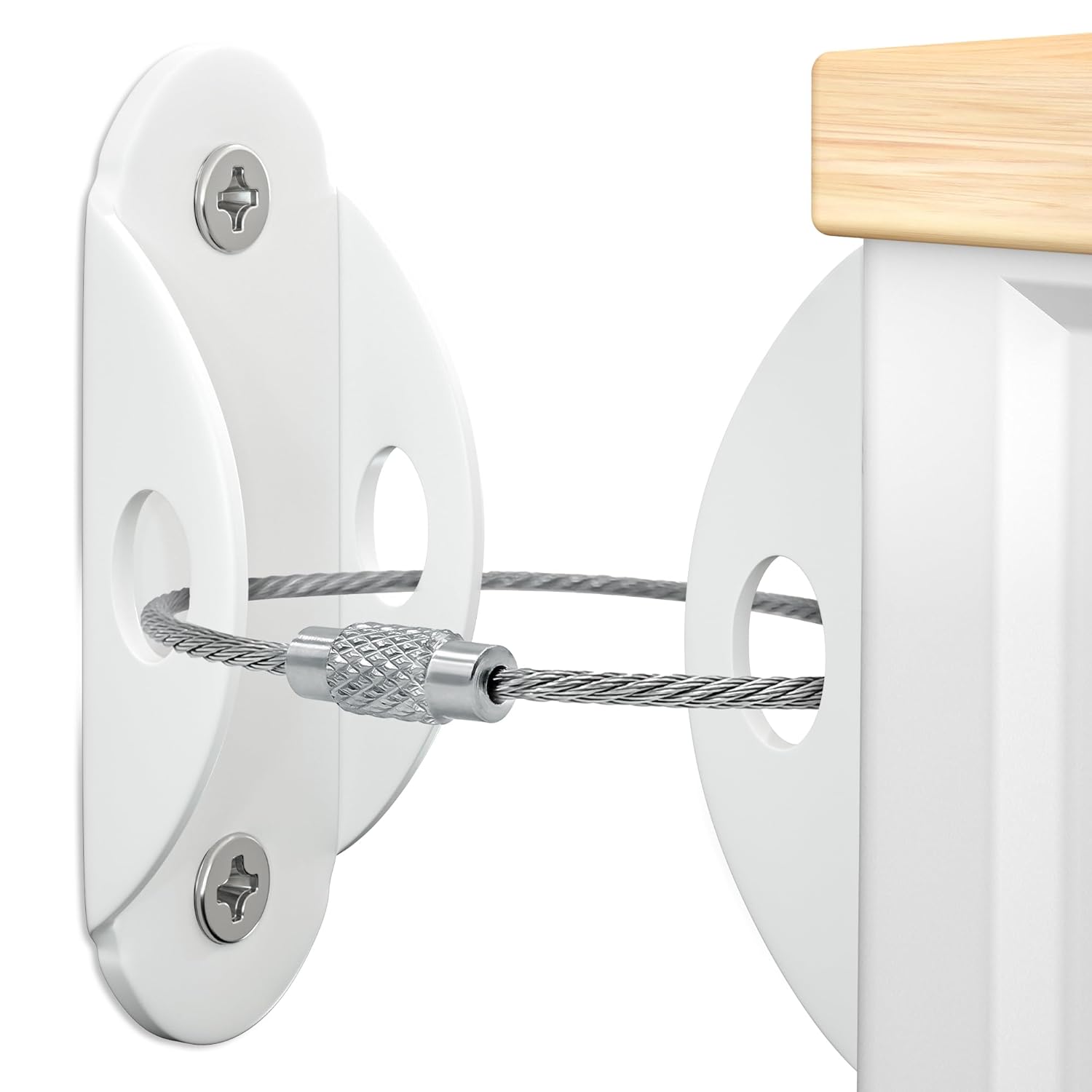
Booda Brand Furniture Anchors (10 Pack) Anti Tip Straps
Steel anti-tip straps for tall furniture and televisions, sold as a multi-pack so you can do a whole room in one afternoon. Tip-overs are one of the most common serious household injuries for toddlers, and we recommend anchoring anything taller than a child even if it feels stable when you push on it. The included hardware works for wood studs and most wall anchors; for plaster or masonry you may need different fasteners.
View product→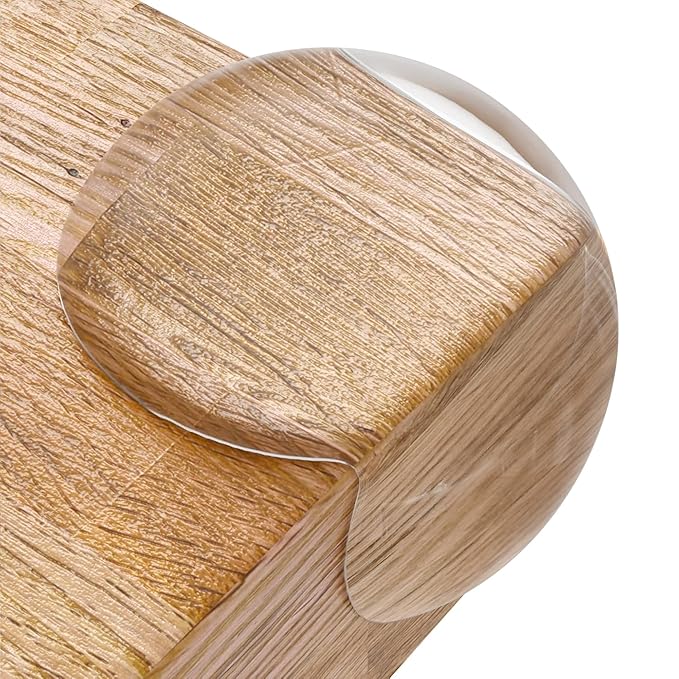
12-Pack Corner Protectors Baby Proof, Furniture Corner and Edge Safety Bumpers
Soft foam corner guards with 3M adhesive backing to cushion sharp furniture edges.
View product→Last reviewed
Sources used for this guide
Reviewed on April 22, 2026. This content is educational and practical, but it is not a substitute for professional safety inspections or medical advice.
U.S. Consumer Product Safety Commission
Anchor It! furniture tip-over safetyU.S. Consumer Product Safety Commission
Federal safety standard for dressers and clothing storage unitsSafe Kids Worldwide
Safe Kids home furniture and falls safety guidanceU.S. Consumer Product Safety Commission
Childproofing your home: 12 safety devices to protect children