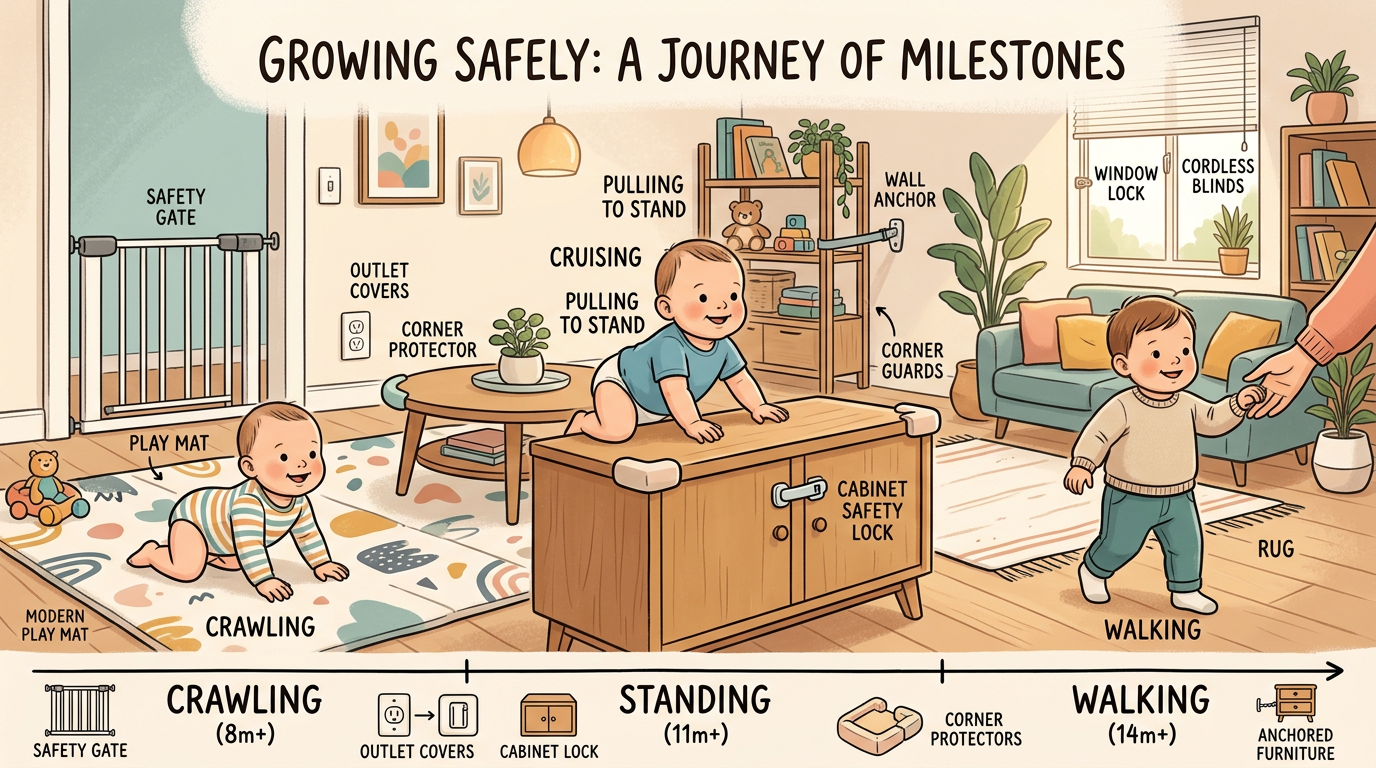
The three main outlet cover styles
When parents start baby proofing, the outlet aisle can feel surprisingly crowded. Most products fall into three buckets: plug caps that press into unused sockets, sliding plate covers that replace the existing wall plate and self-close when nothing is plugged in, and full box covers that wrap around an outlet plus a cord that needs to stay connected. Each style solves a slightly different problem, and many homes end up using a mix.
Plug caps are the cheapest and fastest. They press into the slots of an unused outlet and sit flush. Many parents find them perfect for outlets behind couches, beds, and dressers — places where nothing is ever plugged in but a curious crawler can still wander. The trade-off is that an older toddler can sometimes pry one out, and a loose cap is small enough to be a choking concern.
Sliding outlet covers replace the existing wall plate. A spring-loaded panel covers the slots whenever a plug is removed, then slides back when an adult inserts a new plug. They cost more and require a screwdriver, but there is nothing for a child to remove and pocket, which many parents find reassuring in nurseries and play areas.
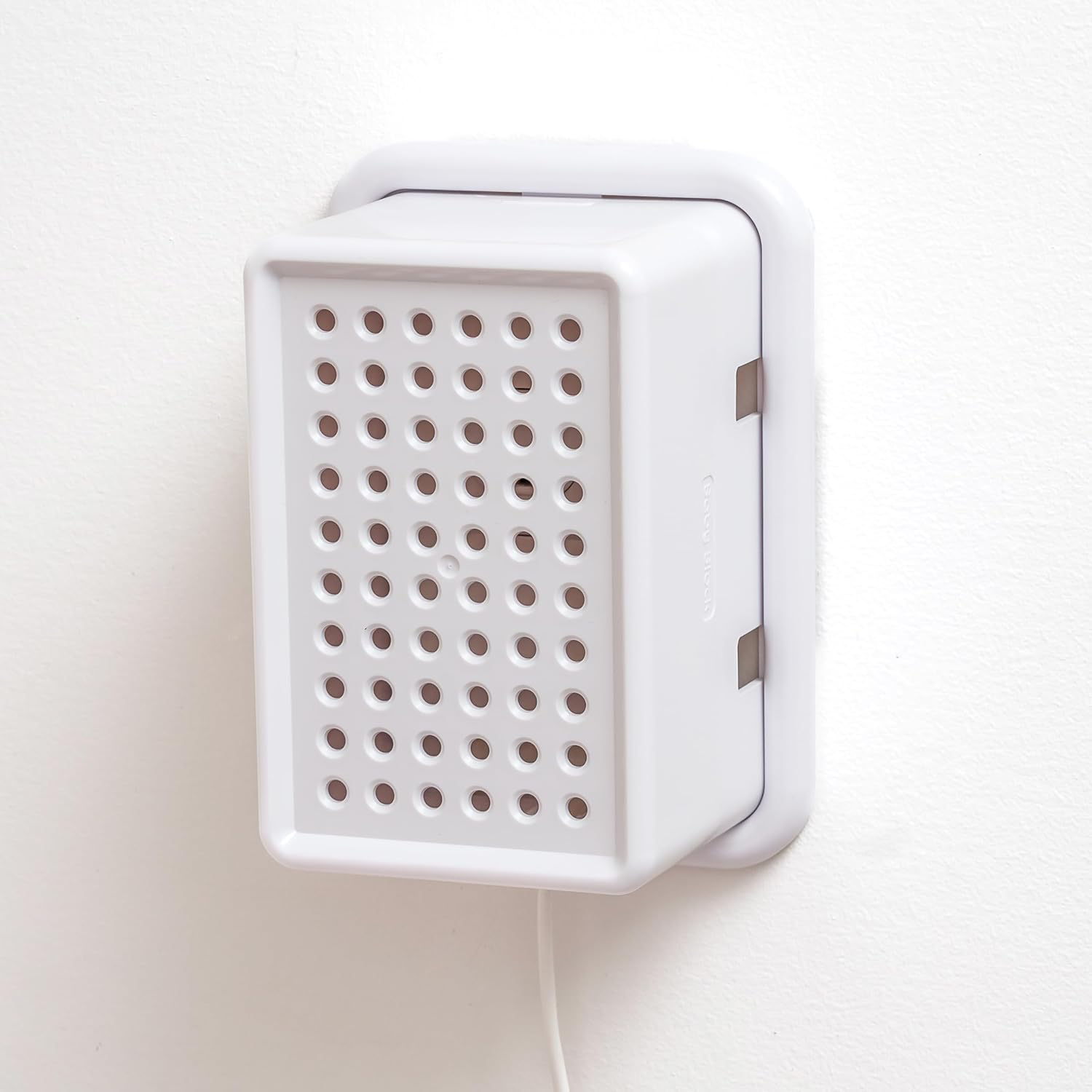
Outlet box covers are larger plastic shells that screw over an outlet that has a cord already plugged in — think a lamp, a baby monitor, or a humidifier. They keep curious fingers off the prongs at the gap where a small plug meets the wall. They are the right tool when you cannot simply unplug the cord and cap the outlet.
How the three styles compare in daily use
Cost is the most visible difference. A 24-pack of plug caps runs a few dollars, sliding plate covers cost several dollars each, and box covers fall in the middle per outlet. The hidden cost, though, is consistency. Adults who unplug a cord and forget to replace a cap are the most common reason plug caps fail in real homes. Sliding covers remove that step entirely.
Durability is the second axis. A plug cap depends on a child's interest level — once they discover they can pull one out with a fingernail, the cap becomes useless and a choking concern. Sliding covers and box covers do not give the child anything to grab. Both can last the entire baby-proofing window with no maintenance.
Aesthetics matter too, especially in a living room. Plug caps disappear into the wall but only on outlets that stay unused. Sliding covers look almost identical to a normal wall plate. Box covers are visibly bulky, which is the trade for keeping a cord secure.
Quick checklist
- ✓Plug caps: cheapest, fastest, best for outlets that stay unused.
- ✓Sliding covers: best for daily-use outlets in nurseries, kitchens, and play areas.
- ✓Box covers: the only option when a cord must stay plugged in.
- ✓Tamper-resistant receptacles: the most durable underlying fix in homes built before 2008.
Best fit by room
In a nursery, sliding covers tend to be worth the extra cost because the room sees daily activity, lamps move around, and the humidifier or monitor often shares a wall plate. In a living room, a mix usually makes sense: a box cover behind the couch where the lamp lives, sliding covers near the play mat, and plug caps on any outlets the child cannot reach but the dog might.
In bathrooms and kitchens, GFCI outlets are usually mounted higher and many have non-standard faceplates. Confirm fit before ordering sliding covers — some kits do not fit recessed GFCIs cleanly. In bedrooms, the biggest pattern parents miss is the outlet behind the crib. A simple plug cap is fine there since nothing is plugged in, but recheck once the crib is moved or the child climbs.
Quick decision framework
Choose plug caps if: the outlet is permanently unused, the child is under about 18 months, and the cost matters. The Outlet Plug Covers 24-Pack we list in the catalog is a reasonable baseline for the unused outlets behind furniture in any home.
Choose sliding covers if: the outlet is in regular adult use, the child is approaching the cap-removal age, or the room sees a lot of toddler floor time.
Choose box covers if: a cord must stay plugged in and a child can reach the outlet. Common scenarios include lamps, baby monitors, sound machines, and humidifiers.
If your home was built before 2008, also consider replacing receptacles with tamper-resistant outlets during any small electrical project. Covers stack on top of TR outlets as a second layer in nurseries and play rooms.
Frequently asked questions
They are widely used and inexpensive, but most pediatric safety guidance now favors tamper-resistant outlets or sliding covers because a removed cap can become a small choking hazard. Plug caps work best on outlets that stay permanently unused.
Tamper-resistant outlets are designed to block single-prong objects, which addresses the main risk. Many parents still add a sliding cover or plug cap as a visible secondary layer, especially in nurseries.
An outlet box cover wraps around an outlet that has a cord already plugged in, preventing a child from pulling the cord partly out and contacting the prongs. Use it for lamps, monitors, and humidifiers in reachable locations.
Some kits fit standard GFCI outlets, others do not. Measure your faceplate and check the product's listed compatibility before buying — recessed or non-standard GFCI plates are the most common fit issue.
Most parents keep some form of outlet protection in place until around age four. By that age, children usually understand the basic rule, but a habit of leaving outlets safe rarely hurts.
Featured products
Affiliate linksProducts that support this guide
Last reviewed
Sources used for this guide
Reviewed on April 22, 2026. This content is educational and practical, but it is not a substitute for professional safety inspections or medical advice.
U.S. Consumer Product Safety Commission
Childproofing your home: 12 safety devices to protect childrenHealthyChildren.org / American Academy of Pediatrics
Safety for Your Child: 6 to 12 MonthsHealthyChildren.org / American Academy of Pediatrics
Make Baby's Room Safe