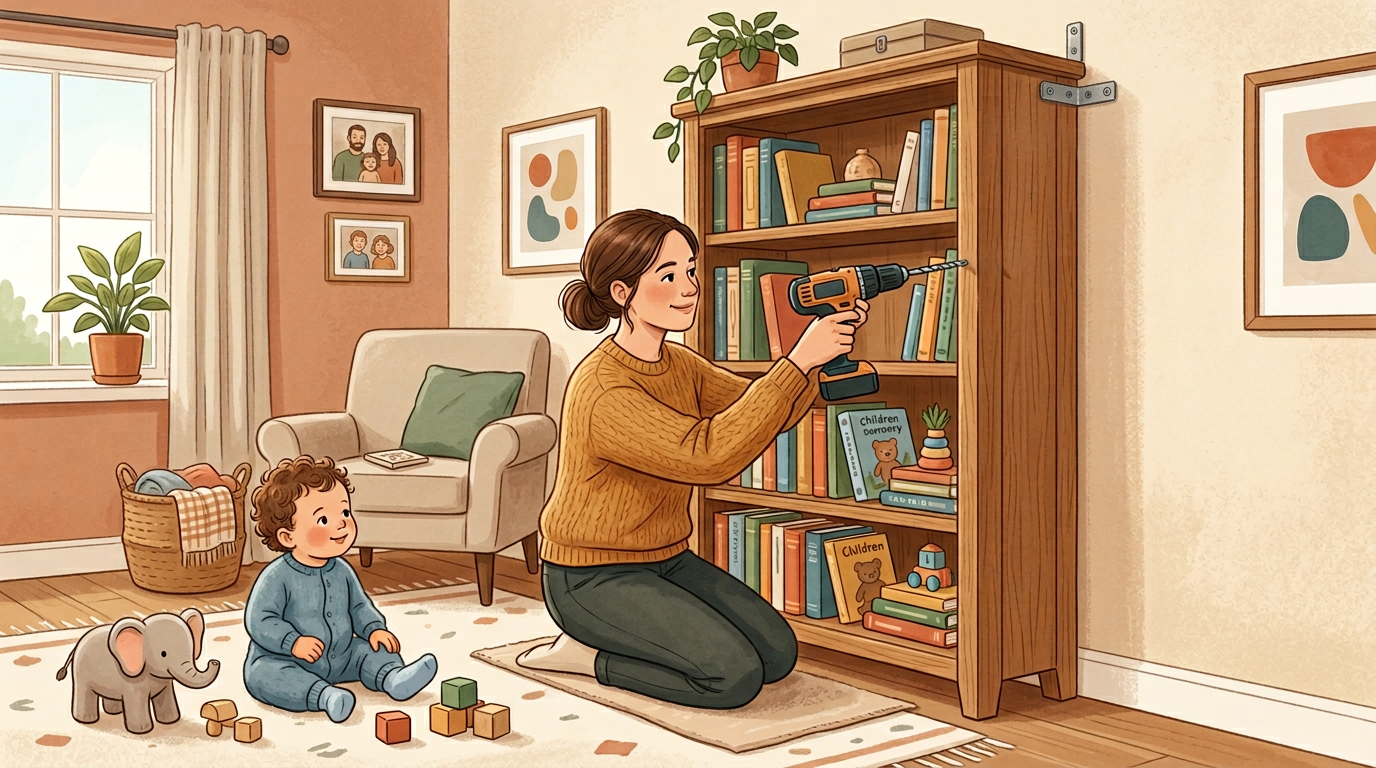
The three main edge-protection styles
When a baby starts pulling to stand, the height of every coffee table, hearth, and TV stand suddenly becomes head-height. There are three main families of products that address this: foam corner protectors that cushion a single point, silicone bumpers that wrap rounded or curved edges, and continuous L-shape guards that run the entire length of an edge.
Foam corner protectors are the most common starter choice. They sit on the four corners of a coffee table or hearth, attach with 3M backing, and absorb the worst of an impact. The 12-Pack Corner Protectors in the catalog cover a typical living room with corners to spare.
Silicone bumpers are softer, more flexible, and better suited to rounded edges or glass tabletops where a hard foam piece will not sit flat. Many parents find silicone more visually acceptable in a finished living room — it sits closer to the surface and blends with darker furniture.
L-shape guards are continuous strips that run along an entire edge. They are the right tool for a long fireplace hearth, a banquette bench, or a low bookshelf where individual corner pieces leave gaps. They are bulkier visually, but they protect the full length of the edge rather than just the points.
Material durability and adhesion
Foam compresses over months of use. A piece that springs back at six months may stay flattened by twelve. Plan to replace foam guards once they no longer rebound when pressed. The adhesive itself usually outlasts the foam.
Silicone is more durable as a material — it does not compress, it cleans easily, and it tolerates spills and humidity better than foam. The trade-off is that silicone bumpers are usually thinner, so they cushion less than dense foam in a hard impact. Many parents use silicone in dining rooms (where spills are routine) and foam in living rooms (where impact cushioning matters more).
Adhesion is the single biggest reason guards fall off. Cold furniture, dust, polish residue, unfinished wood, and chalk-painted surfaces all break the bond. Wipe with rubbing alcohol, let it fully dry, press for 30 seconds, and let the adhesive cure for 24 hours before stress-testing. Skipping any of those steps is the most common failure mode.
Quick checklist
- ✓Clean each surface with rubbing alcohol and let it fully dry before applying.
- ✓Press firmly for 30 seconds and avoid tugging for 24 hours.
- ✓Inspect daily for chewing — toddlers sometimes pull guards off and put them in their mouths.
- ✓Replace foam guards when they no longer spring back.
Where each style works best
Coffee tables: foam corner protectors on each corner cover the four impact points where a falling child usually lands. If the table has a glass top, add silicone bumpers along the front edge where a forehead might catch.
Stone or brick fireplace hearths: an L-shape guard along the entire edge plus dense foam at the corners. Hearths are unusually unforgiving — the surface is harder than wood, and many serious falls in this age range happen here.
TV stands and low bookshelves: corner guards on the four points, plus a furniture anchor strap on the unit itself. Cushioning an edge is meaningless if the whole bookshelf can topple.
Dining tables and benches: silicone is usually the better choice because it tolerates spills and wipe-downs. Many families remove the guards once the child clears the table edge by sitting at it normally — usually around 30 months.
Quick decision framework
Choose foam corner protectors if: the furniture has standard square corners, impact cushioning matters more than appearance, and you want the lowest cost. The 12-Pack handles most living rooms.
Choose silicone bumpers if: the edge is rounded, glass, or in a spill-prone room, and you want a cleaner look. Silicone also tolerates outdoor furniture better in a covered patio.
Choose L-shape continuous guards if: the edge is long and straight (hearth, banquette, low shelf), and gaps between point-style corners would still leave hazards.
If you have an unusually hard surface — a stone hearth, a marble coffee table — layer dense foam at the corners over a continuous L-shape strip. That combination handles both point impact and edge slides.
Frequently asked questions
They reduce the severity of an impact but do not prevent the fall itself. Many parents find they meaningfully reduce the worst outcomes of a fall during the early walking stage. Pair them with rugs, clear walking paths, and supervision.
On clean, sealed surfaces with proper application, adhesive usually lasts the full baby-proofing window — about 18 to 24 months. Cold, dusty, or unfinished surfaces can cause failure within weeks.
On sealed wood and laminate, most adhesive removes cleanly with a hairdryer and slow peel. Unfinished wood, chalk paint, and matte-finished surfaces sometimes lose a thin layer. Test in a low-visibility area first.
Inspect daily and replace any that have detached, since a chewed piece can be a small choking concern. Some parents switch to L-shape guards because they are harder to peel up at the corner. Once a child is consistently removing guards, the room may be ready to outgrow them.
Silicone tolerates covered outdoor use better than foam, but most adhesives are not rated for direct sun and rain. For outdoor furniture, consider rearranging the play area instead of relying on guards.
Featured products
Affiliate linksProducts that support this guide
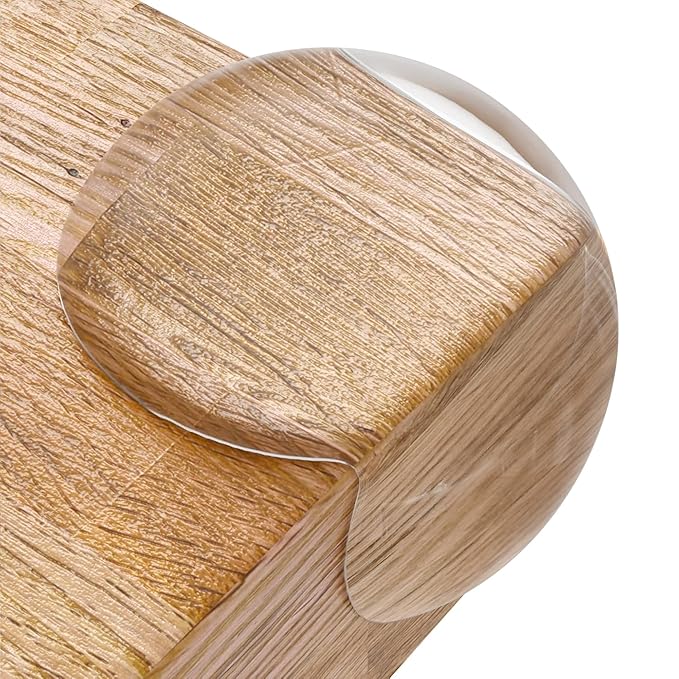
12-Pack Corner Protectors Baby Proof, Furniture Corner and Edge Safety Bumpers
Soft foam corner guards with 3M adhesive backing to cushion sharp furniture edges.
View product→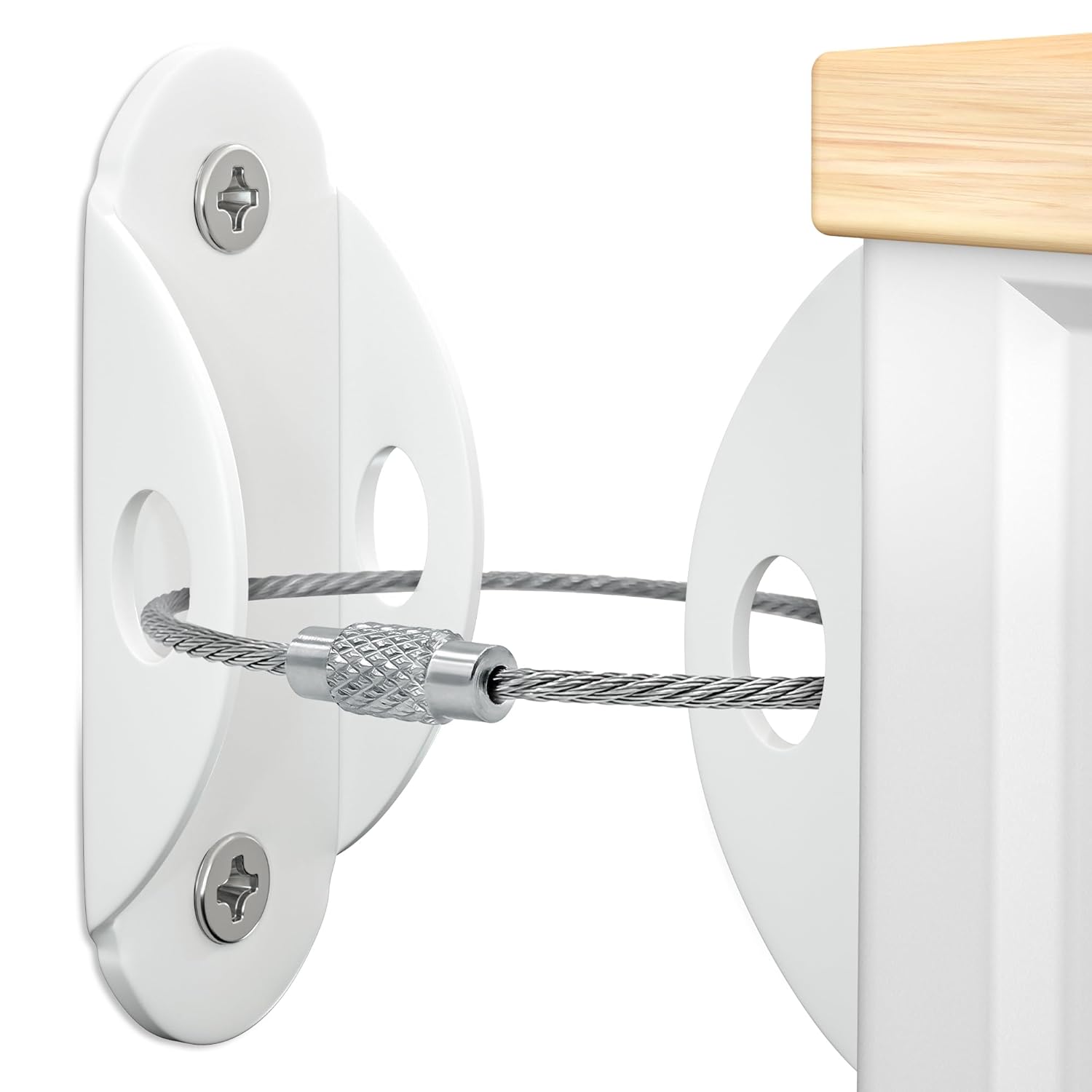
Booda Brand Furniture Anchors (10 Pack) Anti Tip Straps
Steel anti-tip straps for tall furniture and televisions, sold as a multi-pack so you can do a whole room in one afternoon. Tip-overs are one of the most common serious household injuries for toddlers, and we recommend anchoring anything taller than a child even if it feels stable when you push on it. The included hardware works for wood studs and most wall anchors; for plaster or masonry you may need different fasteners.
View product→Last reviewed
Sources used for this guide
Reviewed on April 22, 2026. This content is educational and practical, but it is not a substitute for professional safety inspections or medical advice.
U.S. Consumer Product Safety Commission
Childproofing your home: 12 safety devices to protect childrenHealthyChildren.org / American Academy of Pediatrics
Safety for Your Child: 6 to 12 MonthsHealthyChildren.org / American Academy of Pediatrics
Movement: Babies 8 to 12 Months