Window falls are preventable with locks and smart furniture placement
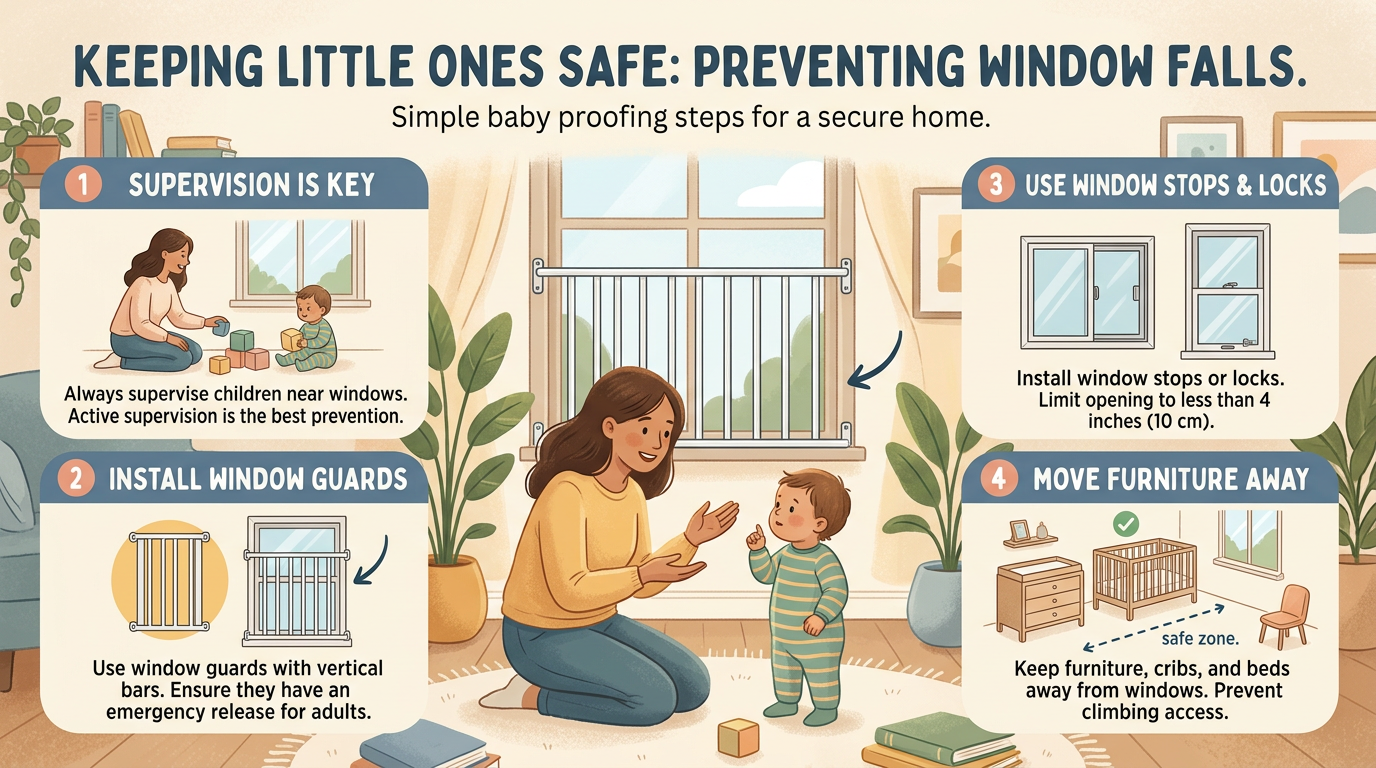
Window falls are a leading cause of serious injury in young children, particularly in multi-story homes and apartments. Children are naturally drawn to windows for the view, the light, and the fresh air, and they can push through a standard window screen with very little effort. Every year, emergency rooms treat thousands of children who have fallen from windows, and many of these falls result in severe or fatal injuries that were entirely preventable.
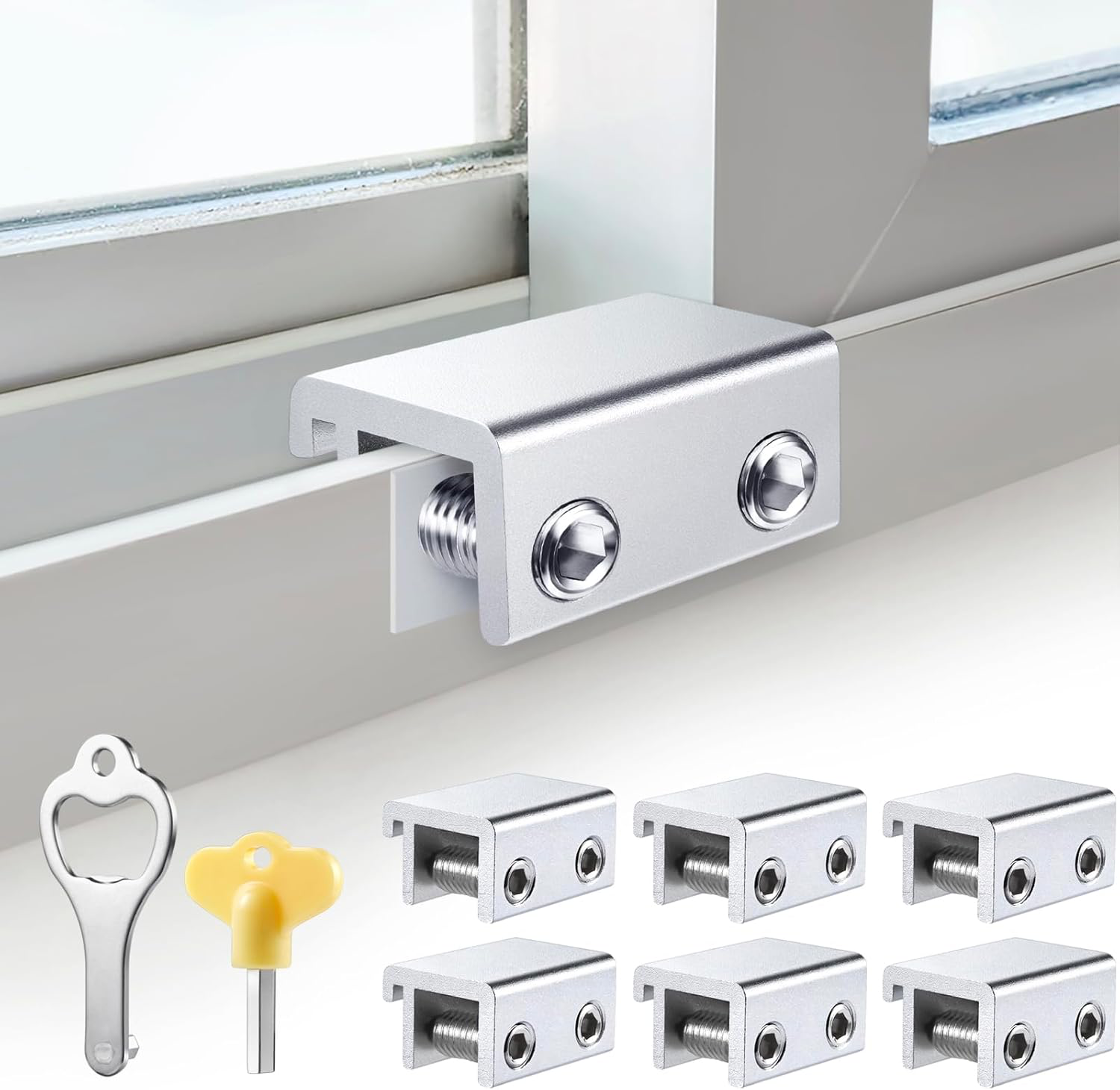
Window locks and window stops are the primary line of defense. Locks prevent the window from being opened at all, while stops allow it to open only a few inches for ventilation without creating a gap wide enough for a child to pass through. Both types are inexpensive, install in minutes, and work on most standard window styles including double-hung, sliding, and casement windows.
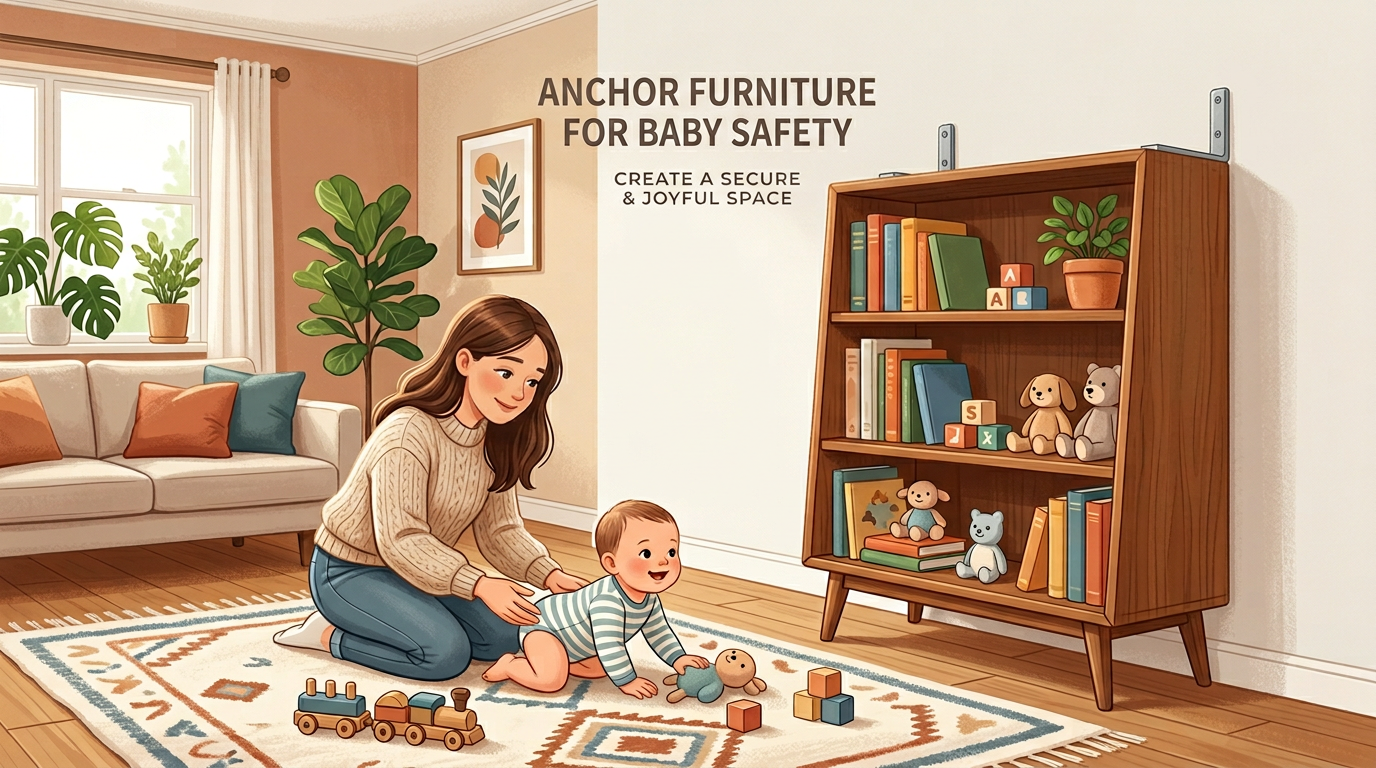
Furniture placement near windows is just as important as the lock itself. A bed, chair, dresser, or toy bin positioned near a window gives a child the height they need to reach the sill and lean against the screen. Moving climbable furniture away from windows eliminates the access point that makes the hazard reachable in the first place, and it works as a backup even when a lock is installed.
Quick checklist
- ✓Install window locks or window stops on all reachable windows, especially on upper floors.
- ✓Never rely on window screens as fall prevention — they are designed for insects, not children.
- ✓Move beds, chairs, dressers, and toy bins away from windows to eliminate climbing access.
- ✓Check that children cannot reach window latches by climbing on nearby furniture or windowsills.
Blind cords are a strangulation risk that deserves immediate attention
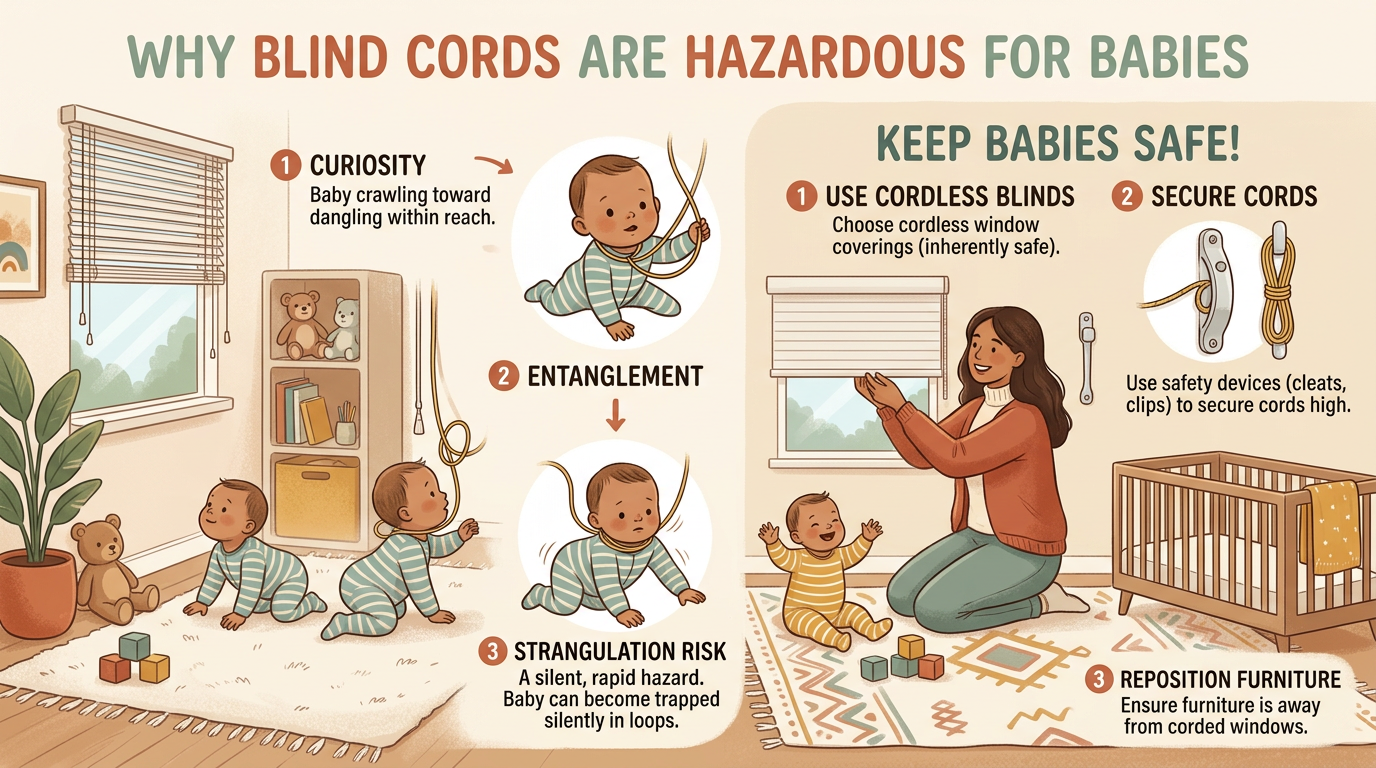
The CPSC has documented hundreds of child deaths related to window covering cords over the past several decades, making blind cord strangulation one of the most well-documented and preventable home hazards. Young children can become entangled in a looped cord within seconds, and because the entanglement often happens silently, it can go unnoticed even when a caregiver is in the next room.
Looped pull cords pose the highest risk because they create a ready-made noose at a height that matches a toddler's neck. Inner lift cords that run through the blinds can also become exposed and create loops when blinds are raised unevenly or when the cord mechanism wears over time. Both types of cord need to be addressed, not just the visible pull string.
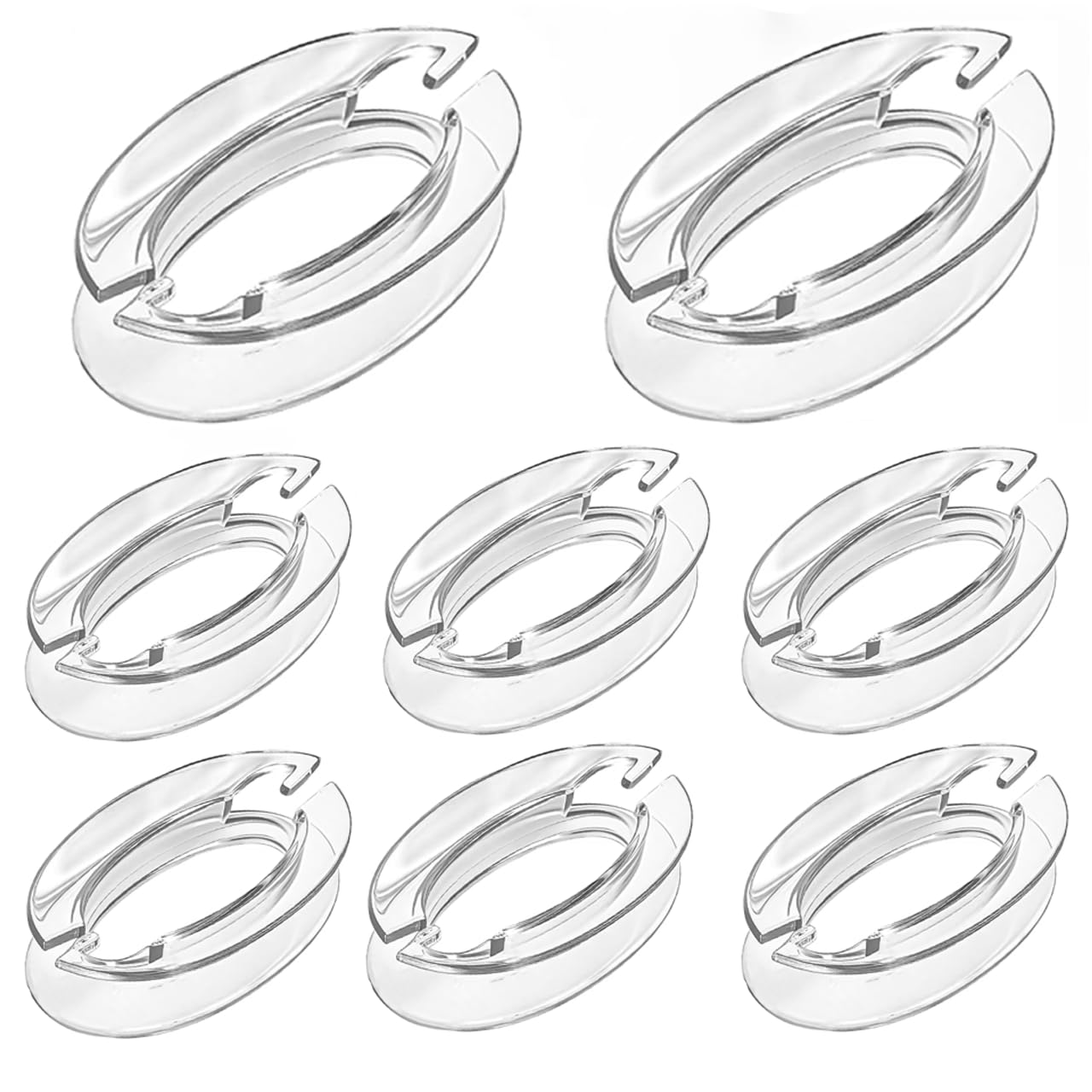
The safest long-term solution is replacing corded blinds with cordless alternatives. Cordless blinds, cellular shades, and motorized window coverings eliminate the hazard entirely rather than managing it. If full replacement is not immediately possible, cord winders, cleats, and tension devices can secure existing cords out of reach as an interim measure — but replacement should remain the goal.
Quick checklist
- ✓Replace corded blinds with cordless alternatives in every room if possible.
- ✓Use cord winders or cord cleats to secure existing cords well above a child's reach.
- ✓Cut looped pull cords into two separate cords to eliminate the loop strangulation risk.
- ✓Check every room in the home for accessible blind cords, including bedrooms and guest rooms that may be overlooked.
Choose safer window coverings when replacing blinds
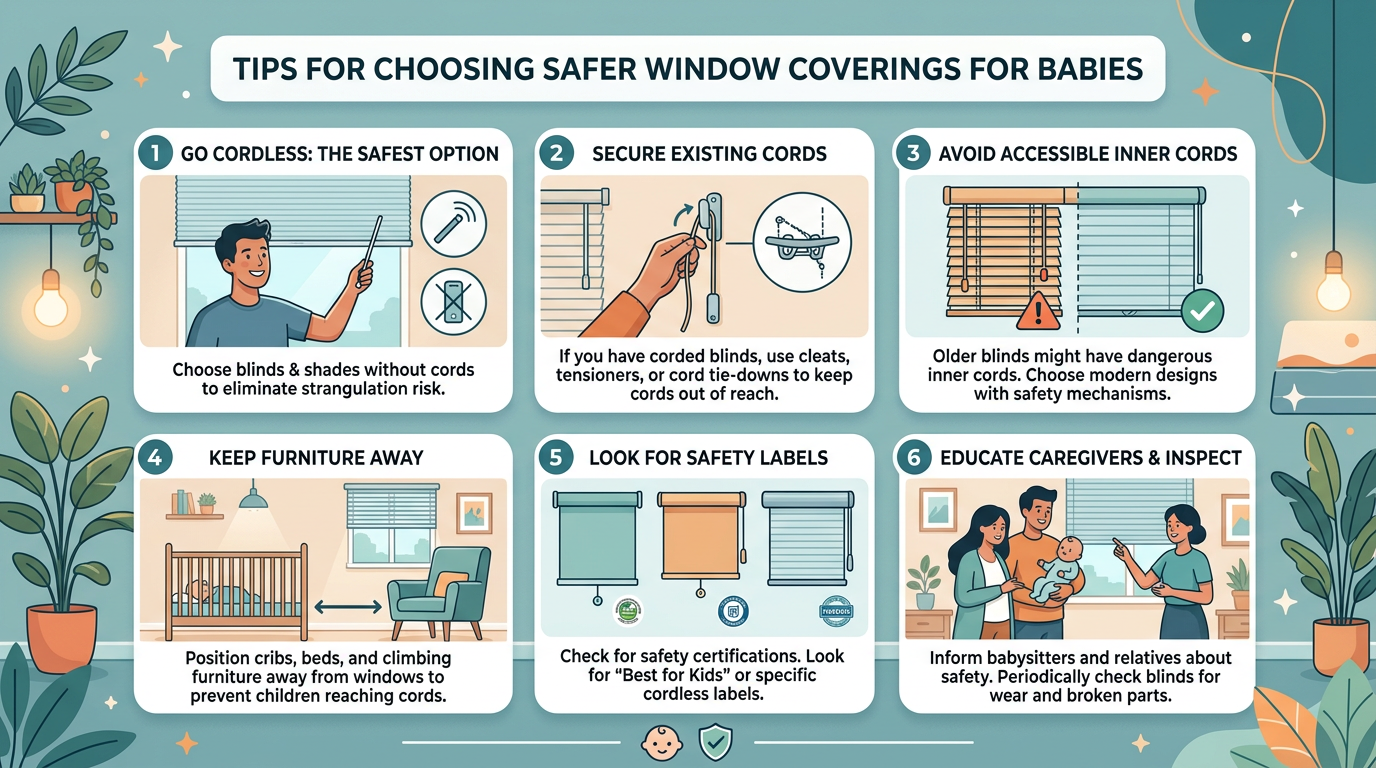
Cordless blinds and shades are now widely available at every price point, from budget-friendly options at home improvement stores to custom-fitted treatments from specialty retailers. The cost difference between corded and cordless versions has narrowed significantly in recent years, making the upgrade accessible for most families. When buying new window coverings for any room, cordless should be the default choice.
Cellular shades, roller blinds, and Roman shades all come in cordless versions that operate with a push-up or spring-loaded mechanism. Motorized shades are another option for hard-to-reach windows or for families who want the convenience of remote or timer-controlled coverings. Both options eliminate cords entirely and add no ongoing maintenance or safety checks.
Retrofitting existing corded blinds is possible but less reliable than full replacement. Cord condensers, winding devices, and tension mounts can reduce cord accessibility, but they depend on correct installation and consistent use. If you retrofit, treat it as a temporary step and plan to replace the blinds when the budget allows, prioritizing the rooms where your child sleeps and plays.
Quick checklist
- ✓Choose cordless blinds or shades for all new window covering installations.
- ✓Consider motorized shades for hard-to-reach windows or rooms where manual operation is inconvenient.
- ✓Remove or retrofit old corded blinds in children's bedrooms and play areas first.
- ✓Ask about child-safe cord-free options when ordering custom window treatments.
Do a room-by-room window and cord audit
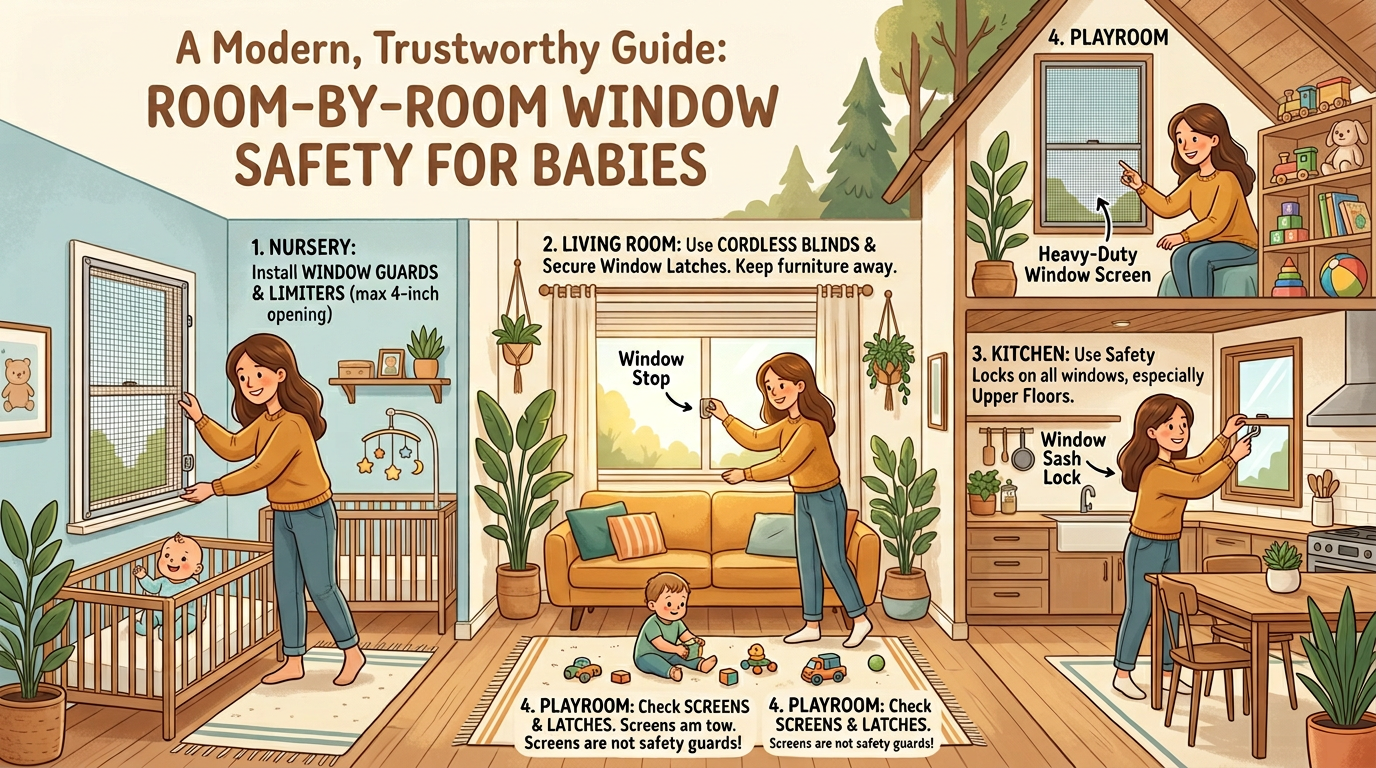
A window and cord audit is a one-time task that takes less than an hour and has an outsized impact on safety. Walk through every room in the home with a checklist and inspect each window for lock function, screen condition, furniture proximity, and cord accessibility. This single pass will reveal hazards you may not have noticed because they blend into the background of daily life.
Do not skip rooms your child does not normally access. Guest bedrooms, home offices, and utility rooms still have windows and blinds, and children are drawn to rooms they do not usually enter precisely because those spaces are novel. A cord in a guest room is just as dangerous as a cord in the nursery if a child reaches it during a brief unsupervised moment.
Revisit the audit as your child grows taller and more mobile. A window latch that was out of reach at eighteen months may be accessible at two and a half when the child can climb onto a bed or pull a chair to the window. Each stage of growth changes which windows and cords are within the zone of risk, so treat this audit as something you repeat at key milestones rather than a single checkbox.
Quick checklist
- ✓Check every window in the home for lock function, screen condition, and furniture proximity.
- ✓Check every blind and shade for accessible cords, including inner lift cords and rear-facing strings.
- ✓Prioritize bedrooms, play areas, and any room with upper-floor windows for immediate action.
- ✓Revisit the audit after each major development stage — pulling up, walking, and climbing each expand the risk zone.
Frequently asked questions
No. Window screens are designed to keep insects out, not to hold a child's weight. Never rely on a screen as a safety barrier.
Cordless blinds eliminate one of the most dangerous home hazards for young children. If full replacement is not possible, secure existing cords with cleats or winders as an immediate step.
Start with windows in bedrooms, play areas, and any window near climbable furniture. Upper-floor windows carry the highest fall risk.
Keeping windows closed works as a short-term strategy, but children can learn to open them. Window locks provide a reliable backup that does not depend on adult habits alone.
Featured products
Affiliate linksProducts that support this guide
Last reviewed
Sources used for this guide
Reviewed on March 17, 2026. This content is educational and practical, but it is not a substitute for professional safety inspections or medical advice.
U.S. Consumer Product Safety Commission
Childproofing your home: 12 safety devices to protect childrenSafe Kids Worldwide
Safe Kids home furniture and falls safety guidanceHealthyChildren.org / American Academy of Pediatrics
Make Baby's Room Safe